
算法透明度

Search documents
Vitalik:不需要更多的 EVM 链或 L1, 呼吁构建真正创新的东西
Xin Lang Cai Jing· 2026-02-05 09:58
Core Viewpoint - Vitalik Buterin, the founder of Ethereum, reiterates his stance on Layer 2 (L2) solutions, criticizing the practice of merely copying EVM chains and connecting them to Ethereum through optimistic bridges, suggesting that this approach stifles creativity and innovation [1] Group 1 - Buterin emphasizes that there is no need for more EVM chains or Layer 1 (L1) solutions, as Ethereum L1 is expanding and will provide ample block space [1] - He calls for the development of truly innovative solutions, such as privacy features, application-specific efficiency, or ultra-low latency [1] - Buterin supports the idea of application chains that are deeply connected to L1 or "institutional L2" that can bring algorithmic transparency [1]
“平台不欢迎有毒的流量”,抖音如何驾驭算法?
Sou Hu Cai Jing· 2026-01-23 16:11
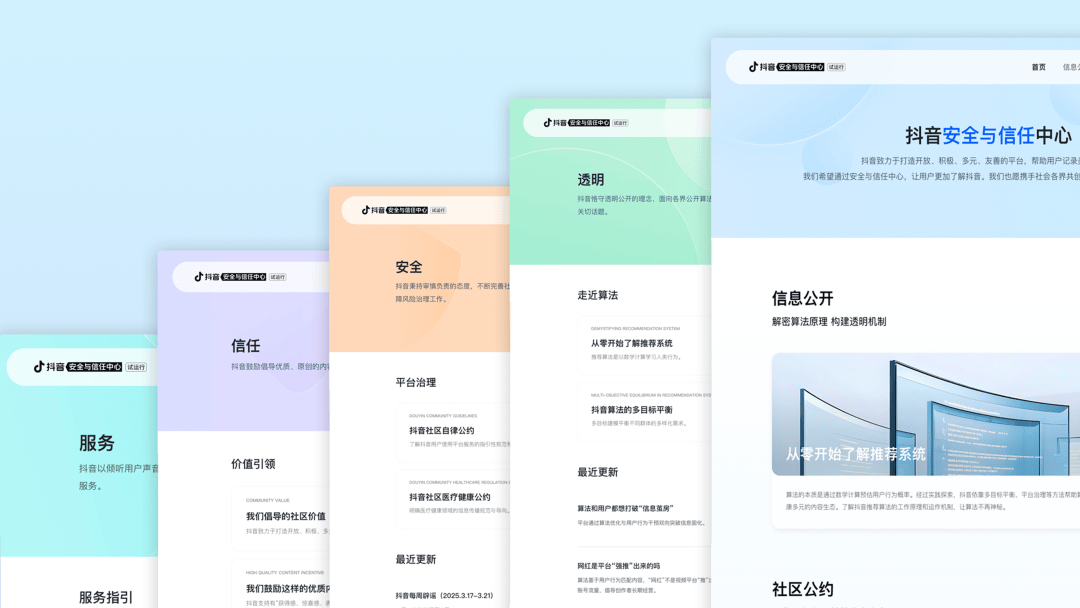
Core Viewpoint - The opening of the recommendation algorithm by the social media platform X aims to enhance algorithm transparency and user trust, reflecting a broader trend in algorithm governance across various platforms [1][2]. Group 1: Algorithm Transparency and Governance - X's CEO Elon Musk announced the open-sourcing of the platform's recommendation algorithm, which will be updated every four weeks, to improve transparency [1]. - In China, algorithm governance has become essential for major platforms, with regulatory bodies implementing measures to prevent algorithm misuse [1]. - Douyin (TikTok) launched a "Safety and Trust Center" in March 2025 to publicly share algorithm principles and governance systems, attracting over 1.5 million visits [5][7]. Group 2: User Trust and Engagement - Douyin's content operations head, Li Xiangyu, emphasized that transparency in algorithm principles is intended to build user trust and understanding [2][10]. - The platform conducts quarterly user trust surveys to assess its performance and areas for improvement, focusing on social responsibility and content authenticity [5]. Group 3: Algorithm Functionality and Challenges - Douyin's recommendation algorithm scores videos based on user interactions, but it faces challenges from content that manipulates engagement metrics, such as clickbait [7][10]. - The platform is aware of negative phenomena like "rage bait," which can lead to toxic engagement and is actively working to mitigate such content through algorithm adjustments [11][12]. Group 4: Addressing Negative Content and User Experience - Douyin has implemented rules to govern extreme and inflammatory content, aiming to foster a rational discussion environment [13][16]. - The platform's efforts to combat "rage bait" and "information cocoons" are part of a broader strategy to enhance user experience and engagement [16][17]. Group 5: AI and Rumor Management - Douyin has integrated AI technology for rumor management, significantly reducing the exposure of false information by 90% since its implementation [21][26]. - The platform faces challenges in identifying and managing rumors due to the lack of authoritative sources and the potential for misinformation in external databases [21][26].

短视频平台大变天!流量规则洗牌!
Sou Hu Cai Jing· 2025-11-24 08:13
Core Insights - A significant shift in traffic rules is occurring due to the "Clear Action" initiated by the Central Cyberspace Administration of China, leading to collective actions by platforms like Douyin, Xiaohongshu, Weibo, Kuaishou, WeChat Video Account, and Bilibili to enhance algorithm transparency and user empowerment [1][3] Group 1: Algorithm Transparency and User Empowerment - Platforms are enhancing algorithm transparency by publicly disclosing operational rules and promoting user awareness of recommendation logic and intervention mechanisms [3] - Douyin has launched a Safety and Trust Center and organized open days to explain its recommendation logic and governance outcomes [3] - Weibo has improved the transparency of its trending algorithms by publicizing ranking rules and introducing trending heat tags to indicate underlying factors [3] Group 2: Content Recommendation Optimization - WeChat Video Account has introduced user-friendly materials to explain its algorithm recommendations and launched features to help users avoid "information cocoons" [3] - Douyin has upgraded its management assistant and introduced content preference evaluation features to visualize users' recent browsing activities [3] - Xiaohongshu has implemented content preference evaluation and adjustment features to facilitate user access to diverse recommended content [3] Group 3: Positive Content Promotion and Risk Mitigation - Kuaishou is leveraging positive algorithms to enhance the discovery of uplifting and trustworthy content, ensuring that such content is prominently featured in recommendations [3] - WeChat Video Account has developed a dual mechanism for friend recommendations and algorithm recommendations to continuously improve its identification and suppression models for inappropriate content [3] - Douyin has introduced a verification mechanism to prevent malicious behaviors such as staged content and misleading edits [3] Group 4: User Control and Feedback Mechanisms - Platforms are continuously optimizing features for interest preference management and content feedback to allow users to adjust algorithmic recommendations [3] - Kuaishou provides users with detailed interest preference management tools, enabling them to adjust the intensity of content recommendations based on personal preferences [3] - Weibo has introduced various negative feedback options for users to express disinterest, ensuring a more precise response to user needs [3] Group 5: Future Trends in Internet Traffic - By 2025, the internet platform traffic competition is expected to evolve into a more intricate phase, characterized by accelerated rule iterations, diversified user mindsets, and technological disruptions [3]

热搜榜不能“跑偏”
Jing Ji Ri Bao· 2025-11-19 01:30
Group 1 - The National Cyberspace Administration has taken measures against certain platforms for issues related to harmful information appearing on hot search lists and damaging the online ecosystem [1] - Hot search lists serve as an important channel for users to obtain information and influence public opinion, but some platforms have been dominated by celebrity activities and gossip, leading to the spread of extreme content [1] - The prevalence of inappropriate content on hot search lists is attributed to the platforms' significant influence in setting dissemination rules, often deflecting responsibility onto algorithms when issues arise [1] Group 2 - The Beijing Cyberspace Administration has encouraged local platforms to disclose algorithm rules to enhance transparency and enable effective public supervision [2] - Platforms are urged to balance commercial value with public interest in algorithm design, ensuring that entertainment and sensational content do not overshadow serious topics [2] - Continuous monitoring by regulatory bodies is necessary, and companies that evade public oversight through "professional barriers" should be warned, promoting industry self-discipline and collaborative governance [2] Group 3 - There are still uncertainties regarding the rules governing algorithm recommendations, especially concerning public issues, necessitating clearer regulatory requirements and refined rules for better compliance and oversight [3]
美参议员提议取消TikTok禁令 设置两个要求
Feng Huang Wang· 2025-08-01 01:27
Core Viewpoint - Senator Ed Markey is drafting a bill to legally lift the ban on TikTok in the U.S., seeking a new approach to avoid the ban without violating existing laws [1] Group 1: Legislative Context - In 2024, the U.S. Congress passed the "ban if not sold" law, requiring ByteDance to sell TikTok's U.S. operations or face a ban [1] - Former President Trump granted TikTok three extensions, allowing its continued availability in app stores [1] Group 2: Proposed Legislation - The proposed "TikTok Transparency and Data Security Act" aims to allow TikTok to operate in the U.S. under two main conditions: algorithm transparency and data access restrictions [1] - The algorithm transparency requirements include four key points: access for researchers, public data access, research liability protection, and transparency reporting [2] Group 3: Data Access Restrictions - TikTok must store U.S. user personal information on physical servers located within the U.S. and is prohibited from transferring this information to foreign adversaries [2]