用户自主选择权

Search documents
免密支付“易开难关”!诱导开通、隐蔽扣费问题多
Shen Zhen Shang Bao· 2026-02-09 12:43
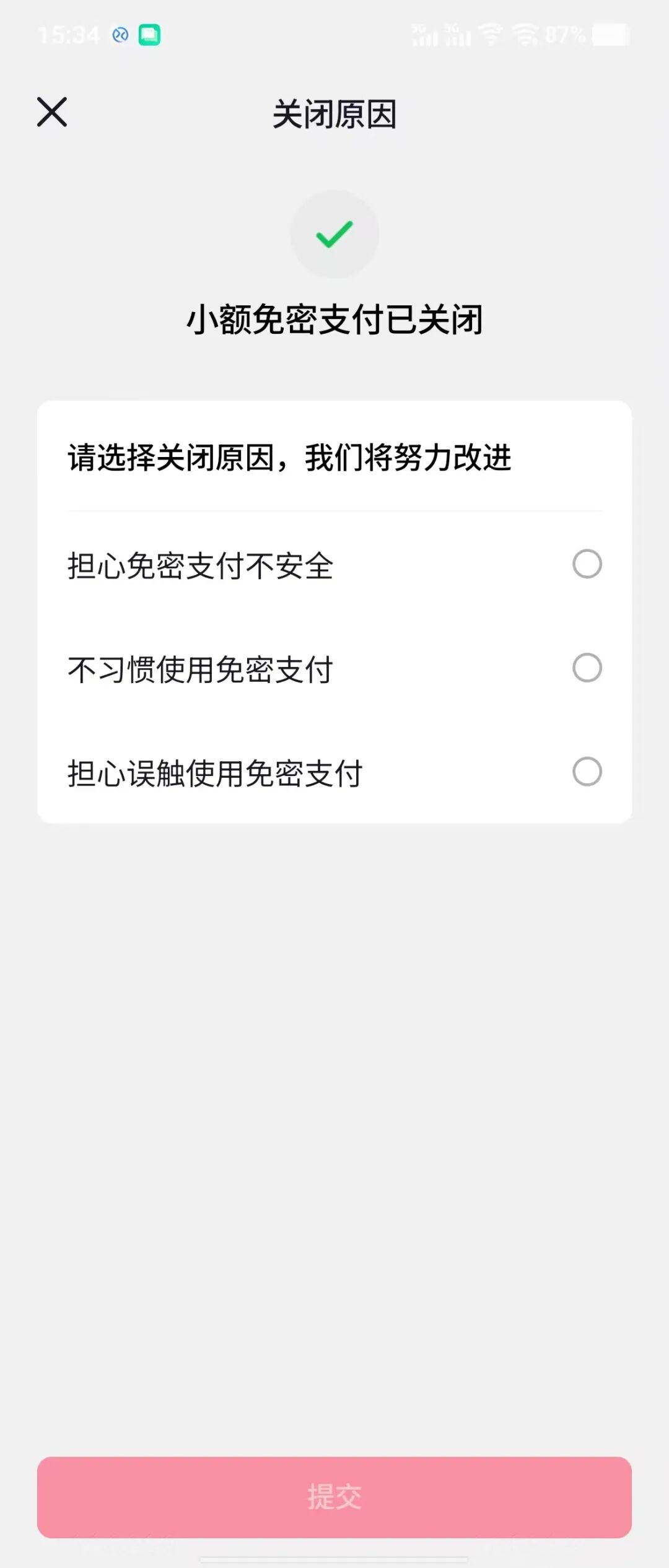
Core Viewpoint - The issue of difficulty in canceling "no-password payment" has gained market attention, with consumers reporting that it is easy to activate but challenging to deactivate [1][9]. Group 1: Consumer Complaints - Consumers have expressed frustration over the hidden and complicated process of canceling "no-password payment," often requiring multiple steps to complete [1][9]. - A significant number of complaints have been recorded, with 16,122 complaints related to "no-password payment" in 2025, averaging 44 complaints per day, primarily concerning unintentional activation and difficult cancellation [9]. Group 2: User Experience Challenges - The activation of "no-password payment" can occur with a single click, often with default settings that consumers may overlook, while the cancellation process involves navigating through several pages [1][9]. - Older consumers, such as a 60-year-old woman, have reported confusion and difficulty in managing payments due to the automatic deduction feature associated with "no-password payment" [7][9]. Group 3: Industry Practices - Some platforms are accused of implementing "friction design" to complicate the cancellation process, thereby encouraging consumers to remain subscribed and generate ongoing revenue for the platforms [9]. - The Chinese Payment and Clearing Association has called for payment service providers to enhance security management for "no-password payment," emphasizing the need for clear user consent and information disclosure [10].

短视频平台大变天!流量规则洗牌!
Sou Hu Cai Jing· 2025-11-24 08:13
Core Insights - A significant shift in traffic rules is occurring due to the "Clear Action" initiated by the Central Cyberspace Administration of China, leading to collective actions by platforms like Douyin, Xiaohongshu, Weibo, Kuaishou, WeChat Video Account, and Bilibili to enhance algorithm transparency and user empowerment [1][3] Group 1: Algorithm Transparency and User Empowerment - Platforms are enhancing algorithm transparency by publicly disclosing operational rules and promoting user awareness of recommendation logic and intervention mechanisms [3] - Douyin has launched a Safety and Trust Center and organized open days to explain its recommendation logic and governance outcomes [3] - Weibo has improved the transparency of its trending algorithms by publicizing ranking rules and introducing trending heat tags to indicate underlying factors [3] Group 2: Content Recommendation Optimization - WeChat Video Account has introduced user-friendly materials to explain its algorithm recommendations and launched features to help users avoid "information cocoons" [3] - Douyin has upgraded its management assistant and introduced content preference evaluation features to visualize users' recent browsing activities [3] - Xiaohongshu has implemented content preference evaluation and adjustment features to facilitate user access to diverse recommended content [3] Group 3: Positive Content Promotion and Risk Mitigation - Kuaishou is leveraging positive algorithms to enhance the discovery of uplifting and trustworthy content, ensuring that such content is prominently featured in recommendations [3] - WeChat Video Account has developed a dual mechanism for friend recommendations and algorithm recommendations to continuously improve its identification and suppression models for inappropriate content [3] - Douyin has introduced a verification mechanism to prevent malicious behaviors such as staged content and misleading edits [3] Group 4: User Control and Feedback Mechanisms - Platforms are continuously optimizing features for interest preference management and content feedback to allow users to adjust algorithmic recommendations [3] - Kuaishou provides users with detailed interest preference management tools, enabling them to adjust the intensity of content recommendations based on personal preferences [3] - Weibo has introduced various negative feedback options for users to express disinterest, ensuring a more precise response to user needs [3] Group 5: Future Trends in Internet Traffic - By 2025, the internet platform traffic competition is expected to evolve into a more intricate phase, characterized by accelerated rule iterations, diversified user mindsets, and technological disruptions [3]