管理理念

Search documents
最无能的管理:“我只看结果”
3 6 Ke· 2026-01-13 00:14
Group 1 - The negative impact of focusing solely on results includes creating a divide between management and subordinates, leading to a lack of collaboration and shared responsibility [3][4] - Ignoring the process can overlook critical details that are essential for business success, as exemplified by Amazon's focus on underlying factors affecting results [6][7] - Management that only looks at results lacks the ability to identify team weaknesses and adjust strategies, resulting in a diminished business acumen [12][13] Group 2 - Effective management requires attention to both process and results, as highlighted by the quote from Jack Ma about the importance of both aspects [14] - Pre-communication and consensus on goals are essential for ensuring that subordinates understand and accept their objectives [15][16] - Continuous tracking and support during the execution phase can significantly enhance the likelihood of achieving desired results [18][20] Group 3 - Post-project reviews are crucial for learning from both successes and failures, allowing for the identification of systemic issues and the formulation of new goals [32][34] - A focus on understanding the underlying causes of outcomes, rather than just the outcomes themselves, is vital for effective management [34][35]
我用10年时间,从任正非这里读懂了两个字——公平!(管理核心)
Sou Hu Cai Jing· 2025-11-21 06:50
Core Viewpoint - The controversy surrounding Yu Minhong's "Antarctic Letter" stems from employee dissatisfaction with perceived inequalities between themselves and their boss, highlighting a broader workplace sentiment regarding fairness [1] Group 1: Employee Sentiment - Employees express frustration over the disparity between their hard work and the luxurious lifestyle of their boss, leading to a call for fairness in the workplace [1] - The underlying issue is the perception of fairness, with employees desiring equal opportunities for enjoyment and experiences, such as travel [1] Group 2: Management Philosophy - The essence of Ren Zhengfei's management philosophy is identified as "fairness," although achieving consensus on what constitutes fairness between management and employees is challenging [3] - The concept of "unfairness" is presented as a necessary step towards achieving fairness, indicating that disparities can drive organizational dynamics [3] Group 3: Importance of Fairness - Fairness is described as a timeless principle in management, with historical references emphasizing the need for equitable treatment to maintain morale and cooperation among team members [4] - The story of "Yang Zhen" illustrates the consequences of perceived unfairness, reinforcing the idea that equitable treatment is crucial for team cohesion [5][6] Group 4: Value Distribution - Huawei's employee stock ownership system is highlighted as a mechanism to ensure that contributors are rewarded fairly, emphasizing the significance of proper benefit distribution [5] - The principles of value distribution at Huawei include efficiency, fairness, and sustainability, aiming to create a competitive and motivated workforce [7] Group 5: Leadership Approach - Effective leadership is characterized by impartiality and a focus on value contribution, which fosters respect and minimizes employee grievances [8] - Fairness is distinguished from egalitarianism, with the notion that rewarding excellence is essential for maintaining vitality and competition within the organization [8][9] Group 6: Conclusion - Ren Zhengfei's approach to fairness and justice in management is commended as a model for other leaders to emulate, emphasizing the importance of equitable treatment in fostering a successful organizational culture [10]


陈春花:战略思维就是选择不做什么
Sou Hu Cai Jing· 2025-10-29 00:46
Core Insights - The essence of a company's success lies in its strategic thinking and the ability to implement strategies, which cannot be replaced by management concepts [2][4] - Strategic thinking focuses on making choices about what to do and what not to do, rather than merely solving immediate problems [3][7] - Management efforts often address current issues, while strategic efforts are about future positioning and value creation [5][6] Strategic Thinking vs. Management - Strategic thinking is fundamentally about making choices that determine a company's fate, while management deals with unavoidable issues that arise in business operations [6][10] - Companies must prioritize strategic choices over problem-solving to ensure long-term survival and growth [5][11] - A clear distinction exists between strategic thinking (what to pursue) and management (how to address problems) [7][12] Importance of Sustainable Development - Strategic choices should be based on sustainable development rather than immediate profitability, as profit is a result of strategic decisions [8][9] - Companies focusing solely on problem-solving risk missing future opportunities and may become stagnant [8][11] - Historical data suggests that even long-established companies may not survive if they fail to adapt strategically [8][9] Environmental Interaction - Companies must align their strategies with environmental changes to maintain competitiveness and seize growth opportunities [13][14] - Understanding and responding to shifts in consumer behavior and industry dynamics is crucial for sustained success [13][14] - Companies that engage with their environment and adapt to changes are more likely to thrive [14]

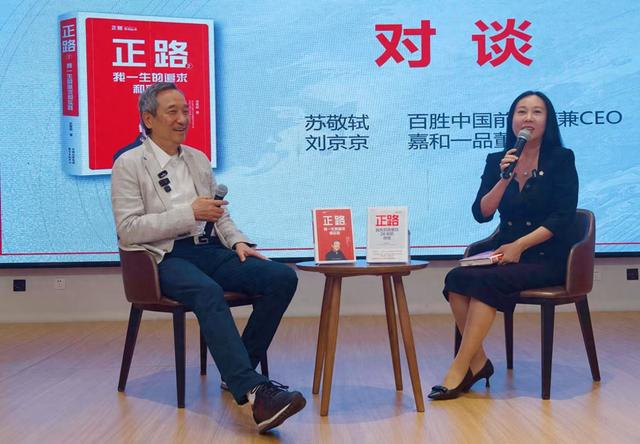
苏敬轼携新作《正路2》与读者见面,分享26年传奇经历与商业智慧
Bei Jing Ri Bao Ke Hu Duan· 2025-07-02 02:56
Core Insights - The event featured the book launch of "Zheng Lu 2" by Su Jing Shi, former Chairman and CEO of Yum China, who shared his 26-year journey leading KFC and Pizza Hut in China [1][3] - Su emphasized that success is not accidental but results from a series of high-quality and efficient decisions [3][5] Group 1: Book Content and Themes - "Zheng Lu 2" focuses on practical insights in key areas such as brand rejuvenation, store development, supply chain management, new product development, digital marketing, crisis management, food safety, team building, and financial oversight [5] - The book consists of 21 chapters that aim to help readers deeply understand Su's management philosophy through real-life experiences and case studies [5][7] Group 2: Author's Background and Philosophy - Su Jing Shi's background includes an MBA from the Wharton School and a successful career at Procter & Gamble, where he became one of the "Three Chinese Heroes" [3] - He believes that true learning involves integrating knowledge into actionable insights, emphasizing the importance of thinking critically and solving problems effectively [7] Group 3: Audience Engagement and Impact - The event provided a unique opportunity for attendees to engage with a business legend and gain valuable insights applicable to students and young professionals [9] - Liu Jingjing, the chairman of Jiahe Yipin, highlighted the relevance of Su's experiences for current students and young professionals seeking to excel in their careers [7][9]