系统级协同

Search documents
上市苏企,加速竞逐千亿级储能新赛道
Xin Hua Ri Bao· 2025-10-19 21:40
Core Insights - The Chinese energy storage industry has reached a historic milestone with domestic monthly bidding scale exceeding 11GW, and a significant increase in capital market storage index by over 40% this year [1][5] Industry Growth and Trends - The domestic energy storage industry is characterized by "high growth and high heat," with a notable increase in bidding scale for energy storage systems and EPC projects, reaching 11.7GW/33.3GWh in September, representing year-on-year growth of 57.5% and 103.7% respectively [1] - The trend of "going global" is prominent, with companies like Trina Solar securing the first overseas GWh-level order in China, showcasing a shift from passive adaptation to active support of the grid [1][2] - The global expansion of energy storage companies is evolving from equipment export to "technology standard output and localized operations," with companies like Xianeng and Trina Solar leading the way [2] Technological Advancements - Companies are focusing on technological innovation to enhance operational efficiency and reduce costs, as seen with Trina Solar's self-developed battery cells and network-type technology, which has led to a significant increase in overseas orders [2][3] - The introduction of AI-driven models for energy price prediction and load management is becoming a key factor in valuation, as demonstrated by the collaboration between Xianeng and Ant Group [2] Market Dynamics - The energy storage market is witnessing a shift in valuation logic, moving from a focus on installation scale and market share to an emphasis on technological barriers and operational efficiency [2][5] - The average bidding price for energy storage systems has rebounded to 0.64 yuan/Wh, reflecting a 30.6% increase, driven by tight supply and technological upgrades [5] Infrastructure Development - The establishment of a regional energy storage peak-shaving system in Jiangsu marks a significant step in integrating energy storage as a key infrastructure component within the power grid [5] - Companies are investing in advanced manufacturing capabilities to support the scalable development of energy storage, with automated production lines and flexible manufacturing processes being implemented [5] Challenges and Future Outlook - The industry faces challenges related to a lack of clear value compensation mechanisms, which hinders long-term healthy development [6] - The energy storage sector is undergoing a transformation from "scale" to "efficiency," and from "domestic" to "global," positioning itself as a core node in the new power system [6]

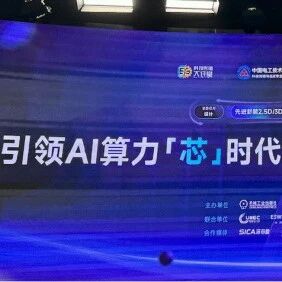
AI算力“芯”时代来临:国产厂商共谋突破
半导体芯闻· 2025-10-09 09:49
Core Insights - The article emphasizes the critical role of computing power in driving technological innovation in the context of accelerating AI development, highlighting the need for China’s semiconductor industry to achieve full-chain autonomy from design to manufacturing and testing [1][4]. Group 1: Forum Overview - The forum titled "Leading the AI Computing Power 'Chip' Era - Creating a New Era for the Semiconductor Industry" was successfully held in Beijing, co-organized by Zhuhai Silicon Core Technology Co., Ltd. and the Machinery Industry Press [1]. - This event integrated various high-coupling topics such as CPO, RISC-V, EDA/IP, and storage-computing integration, marking a shift towards a more collaborative industry perspective [3]. Group 2: Industry Collaboration and Standards - The forum signaled a proactive approach by domestic companies to establish local standards and data sharing, which are essential for creating a Chiplet ecosystem that ensures interoperability and reliability among different manufacturers [4]. - The establishment of cross-manufacturer joint verification platforms and Chiplet standard interface alliances is proposed to enhance competitiveness in advanced packaging and system-level collaboration [4][16]. Group 3: Expert Insights - Five core reports were presented, analyzing advanced technology paths from a full-chain perspective, focusing on the development of silicon photonics, Chiplet, and heterogeneous integration [5][7]. - Experts discussed the necessity of advanced packaging technologies to overcome performance bottlenecks as traditional methods approach physical limits, emphasizing the importance of reliability validation during the design phase [11][12]. Group 4: Key Technologies and Trends - CPO technology, which integrates optical and electronic components on the same substrate, is highlighted as a core focus area, with domestic companies making significant progress in establishing a complete supply chain [8]. - RISC-V architecture is gaining traction in AI chip design, driven by the rise of large models like ChatGPT, with an emphasis on scenario-driven development and ecosystem building [9]. Group 5: Future Directions - The forum concluded with discussions on breaking down traditional boundaries between chip design, packaging, and testing, advocating for a collaborative mechanism to enhance system-level capabilities [14]. - The potential for a long-term competitive advantage in the semiconductor industry is recognized, contingent upon the successful implementation of collaborative innovations and the establishment of a unified ecosystem [16].