系统级Agent

Search documents
美团AI浏览器,被龙虾截胡了
Sou Hu Cai Jing· 2026-03-09 02:17
Core Viewpoint - Meituan has launched its AI browser Tabbit, entering a competitive market dominated by established tech giants, despite lacking a history in browser products or search services [2][3]. Group 1: Product Launch and Controversy - Tabbit was launched on March 2 and quickly faced plagiarism allegations from an independent developer regarding similarities to an open-source project [2]. - The controversy was resolved after Tabbit acknowledged its misunderstanding of the GPL open-source license and removed the disputed code [2]. Group 2: Strategic Positioning - Meituan's entry into the AI browser market raises questions about its competitive edge, given its background in local services rather than technology [3]. - The AI browser concept has gained traction, differing from traditional browsers by providing direct answers to user queries instead of links [3]. Group 3: Technical Capabilities - Tabbit claims to offer features such as intelligent dialogue, smart agents, and tag management, but lacks significant innovation compared to existing products [4]. - Testing showed that Tabbit performed adequately in basic tasks but struggled with complex operations and cross-platform interactions [15][12]. Group 4: Market Context and Competition - The AI browser market is seen as technically complex and immature, with unclear business models, yet Meituan aims to establish a presence in the AI consumer product space [16][20]. - Competitors like ByteDance and Alibaba are advancing their AI products, shifting focus from basic functionality to user experience and integration into daily tasks [16]. Group 5: Future Prospects - The potential of AI browsers to connect B-end merchants with C-end consumers could create a complete information-to-transaction loop if developed successfully [18]. - Tabbit's ability to showcase agent capabilities is crucial for Meituan, as it seeks to demonstrate its AI model's effectiveness in real-world applications [19].



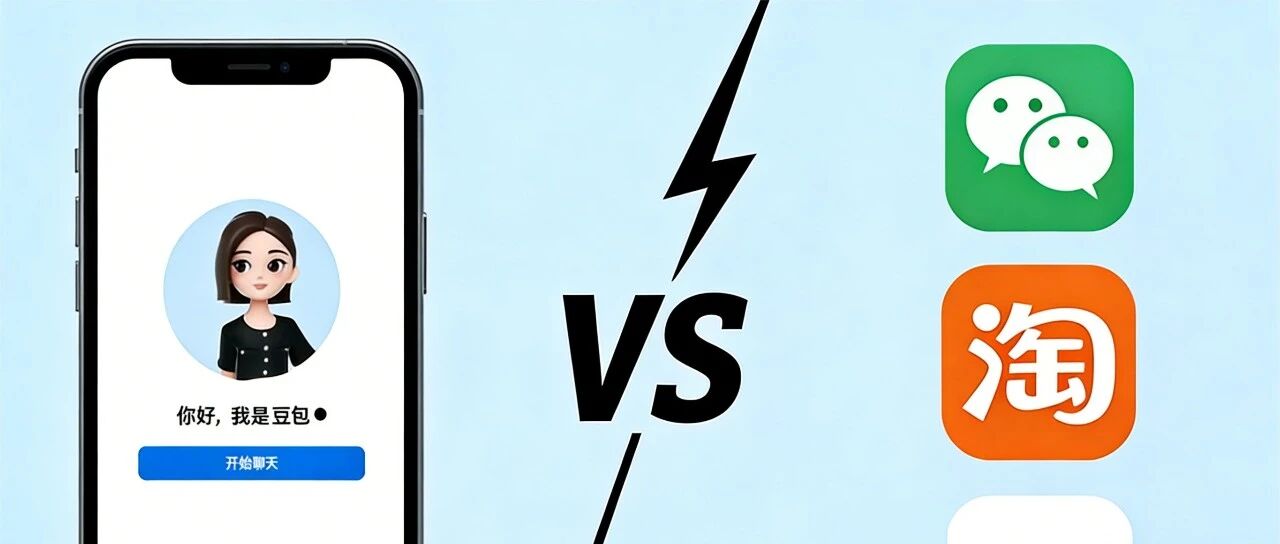
豆包手机引发的思考:AgentVS超级App,AI公司VS手机厂商
新财富· 2025-12-16 08:22
Core Viewpoint - The launch of the Doubao mobile assistant by ByteDance represents a significant step towards the realization of system-level AI agents, challenging the dominance of super apps like WeChat and Alipay in the mobile ecosystem [2][14][27] Group 1: Doubao Mobile Assistant Launch - On December 1, ByteDance's Doubao team released a technical preview of the Doubao mobile assistant, which collaborates deeply with phone manufacturers at the operating system level to enable cross-application automation [2] - The initial batch of 30,000 units sold out instantly, but within two days, major super apps like WeChat, Alipay, Taobao, and Meituan blocked the Doubao mobile assistant [3] Group 2: AI Agent Development - The Doubao mobile assistant demonstrates the feasibility of GUI agents, completing a closed-loop attempt for AI phones, but raises questions about its practical utility in real-world scenarios [5] - The evolution of AI agents has transitioned from fixed scripts and rule engines to a stage where GUI intelligent agents can understand and operate across applications, as seen with advancements from companies like Microsoft and Anthropic [6][7] Group 3: System-Level Agent vs. Super Apps - The system-level agent can understand user intent and orchestrate multiple apps, moving the focus from an app-centric model to a user-intent-centric model [8][10] - The core advantages of system-level agents include the ability to organize tasks across multiple apps and theoretical platform neutrality, alleviating long-standing issues like fragmented cross-app processes [11][12] Group 4: Industry Dynamics and Conflicts - The emergence of the Doubao mobile assistant has highlighted the conflict between system-level agents and super apps, with super apps responding defensively to protect their user entry points [14][15] - The long-term outcome may not be the elimination of one model over the other, but rather a redefinition of power boundaries and responsibilities between system-level agents and super apps [17] Group 5: Manufacturer Strategies - Different manufacturers are adopting varied strategies regarding AI agents, with Huawei integrating agents into its operating system, Xiaomi focusing on ecosystem integration, and Apple maintaining a single official agent [19][23][24] - The competitive landscape suggests a future where multiple agents coexist in the Android ecosystem, while iOS maintains a clearer structure with one official agent and several plugins [24][25]