AI浏览器

Search documents
美团AI浏览器,被龙虾截胡了
Sou Hu Cai Jing· 2026-03-09 02:17
Core Viewpoint - Meituan has launched its AI browser Tabbit, entering a competitive market dominated by established tech giants, despite lacking a history in browser products or search services [2][3]. Group 1: Product Launch and Controversy - Tabbit was launched on March 2 and quickly faced plagiarism allegations from an independent developer regarding similarities to an open-source project [2]. - The controversy was resolved after Tabbit acknowledged its misunderstanding of the GPL open-source license and removed the disputed code [2]. Group 2: Strategic Positioning - Meituan's entry into the AI browser market raises questions about its competitive edge, given its background in local services rather than technology [3]. - The AI browser concept has gained traction, differing from traditional browsers by providing direct answers to user queries instead of links [3]. Group 3: Technical Capabilities - Tabbit claims to offer features such as intelligent dialogue, smart agents, and tag management, but lacks significant innovation compared to existing products [4]. - Testing showed that Tabbit performed adequately in basic tasks but struggled with complex operations and cross-platform interactions [15][12]. Group 4: Market Context and Competition - The AI browser market is seen as technically complex and immature, with unclear business models, yet Meituan aims to establish a presence in the AI consumer product space [16][20]. - Competitors like ByteDance and Alibaba are advancing their AI products, shifting focus from basic functionality to user experience and integration into daily tasks [16]. Group 5: Future Prospects - The potential of AI browsers to connect B-end merchants with C-end consumers could create a complete information-to-transaction loop if developed successfully [18]. - Tabbit's ability to showcase agent capabilities is crucial for Meituan, as it seeks to demonstrate its AI model's effectiveness in real-world applications [19].



我体验了美团的AI浏览器,任务跑到一半窗口关了,全没了
3 6 Ke· 2026-03-05 01:06
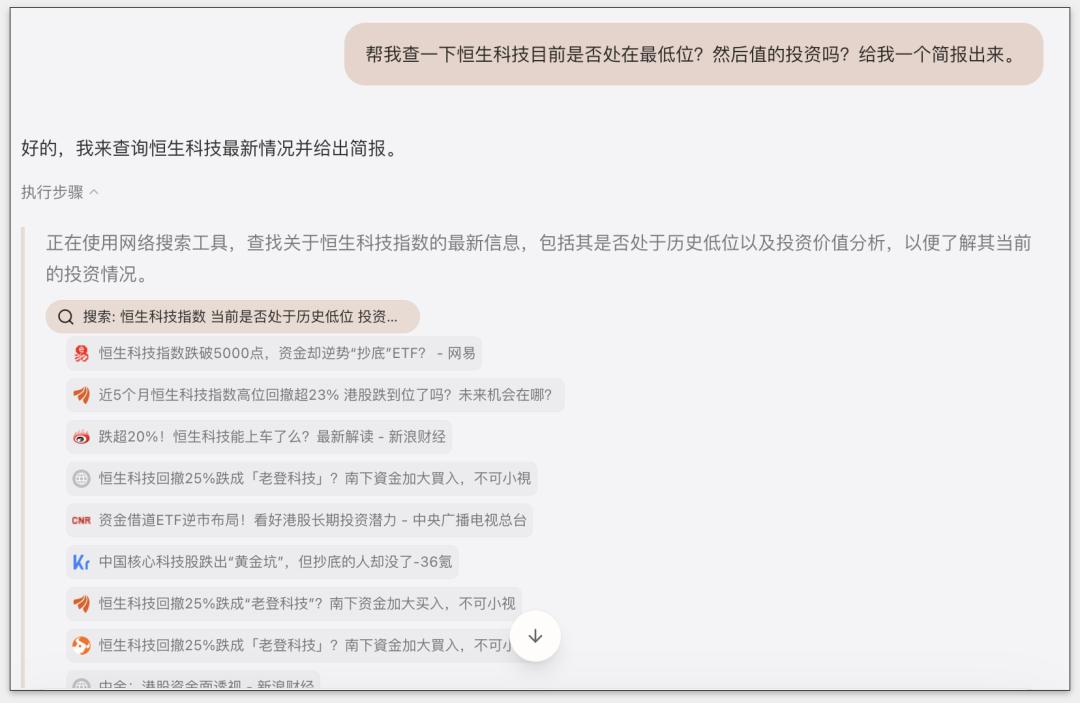
Group 1 - The article discusses the recent public testing of Tabbit, an AI browser developed by Meituan, and its implications for investment in the Hang Seng Technology Index [3][4][7] - Tabbit's design is compared to other AI agents, highlighting its limitations in task execution and user interaction, which may affect its competitiveness in the market [13][14][20] - The article raises concerns about the potential bias in information sources used by AI agents like Tabbit, which could lead to cognitive biases for users [20] Group 2 - The competitive landscape for AI browsers is intensifying, with companies like OpenAI and Alibaba also launching similar products, indicating a race for market share [28][29] - Meituan's strategic decision to invest in an AI browser team, despite it being unrelated to its core business, is seen as a way to explore new opportunities and mitigate risks [30][32] - The article emphasizes the importance of establishing a foothold in the rapidly evolving AI landscape, suggesting that frequent innovation can positively impact Meituan's stock performance [33]
浏览器已死?“美团 Tabbit”们能否为它续命
Cai Jing Wang· 2026-03-04 03:56
Core Viewpoint - The launch of the Tabbit AI browser by Meituan represents a significant shift in the browser industry, responding to the competition for AI-driven user interfaces and redefining how users interact with the web [1][2][3]. Group 1: Product Features and Innovations - Tabbit AI browser integrates web browsing, comprehensive search, AI dialogue, and complex task execution into a single platform, targeting office workers, students, and content creators [3][4]. - The browser utilizes intelligent agents that allow users to describe their needs in natural language, enabling automated completion of complex tasks such as data analysis and report generation [4]. - Tabbit's interface includes a "universal input box" for direct AI queries, web searches, and complex commands, enhancing user interaction and efficiency [4][5]. Group 2: Market Position and Competitive Landscape - The AI browser market is currently characterized by a mix of traditional and emerging players, with existing browsers facing challenges such as feature homogeneity and limited monetization strategies [7][9]. - Meituan's entry into the AI browser space is seen as a strategic move to capture a new traffic entry point and leverage its existing ecosystem for data accumulation and model training [5][10]. - The competition is shifting from single-function capabilities to a comprehensive integration of technology and application scenarios, with a focus on creating value rather than merely competing for traffic [5][7]. Group 3: Industry Implications and Future Outlook - The introduction of AI browsers like Tabbit is expected to accelerate the integration of large models with traditional internet interfaces, expanding the application of AI across various scenarios [5][12]. - The evolution of AI from mere conversational capabilities to actionable intelligence is highlighted, with browsers becoming key platforms for this transition [5][8]. - The future of AI browsers may involve a multi-faceted approach, combining various forms of interaction, including AI dialogue models and browser functionalities, to create a seamless user experience [12].
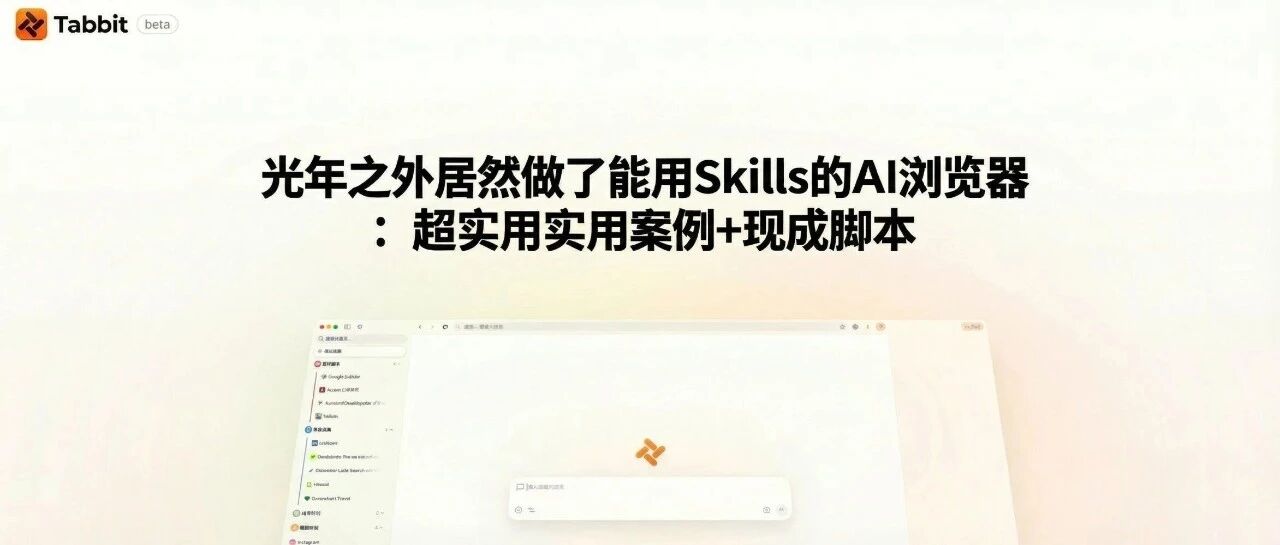
光年之外居然做了能用Skills的AI浏览器:超实用实用案例+现成脚本
歸藏的AI工具箱· 2026-03-03 09:43
Core Viewpoint - The article discusses the introduction of Tabbit, a new AI browser developed by the Lightyear team, which aims to enhance browsing efficiency and context collection through various innovative features [1][2]. Summary by Sections Introduction to Tabbit Browser - Tabbit is described as the first native AI browser in China, designed from the ground up, unlike previous attempts that merely added plugins to existing browsers [1]. Core Features - Tabbit includes five core functionalities: 1. **Chat**: Allows users to interact with AI while browsing, supporting context from web pages, tab groups, and bookmarks [4]. 2. **Skills**: Automates repetitive tasks into one-click operations, allowing for variable inputs and webpage content modification [4]. 3. **Agent**: AI can automatically complete complex tasks transparently [4]. 4. **Favorites**: Offers semantic search for fragmented bookmarks [4]. 5. **Tab Management**: Automatically groups tabs and syncs them in the cloud [4]. Use Cases - The article provides several use cases demonstrating Tabbit's capabilities: - **Information Organization**: Users can manage multiple tabs related to a specific topic, such as the Anthropic and U.S. Department of Defense controversy, with automatic grouping based on content [12][17]. - **Travel Planning**: The intelligent agent can assist in finding flights and hotels based on user preferences, streamlining the booking process [23][27]. - **Template Creation**: Users can create reusable templates for tasks like travel planning, allowing for quick adjustments without re-entering all details [32][40]. - **Bookmark Management**: Tabbit enhances the usability of bookmarks by allowing users to search and retrieve saved content easily, including images [41][46]. Advanced Functionalities - Tabbit offers advanced features such as saving entire webpage content, generating summaries, and semantic search capabilities [57]. - Users can create scripts to modify webpage content or enhance browsing experiences without needing programming skills [60][71]. Conclusion - The article emphasizes the need for users to adapt to using AI tools like Tabbit to improve efficiency in their workflows, particularly in the context of browsing and information management [76].
神隐许久的光年之外,造了款AI浏览器Tabbit,能打吗?
机器之心· 2026-03-03 09:08
Core Viewpoint - The article emphasizes that browsers are becoming a crucial battleground for AI implementation, with major tech companies integrating AI capabilities into their browsers to enhance user experience and information processing [1][4][56]. Group 1: AI Browser Development - OpenAI launched the AI browser Atlas, claiming it could change how 3 billion people use the internet [2]. - Google DeepMind introduced "Project Mariner," focusing on the future of human-computer interaction starting from the browser [3]. - Major tech giants like Microsoft, Google, and Apple are embedding AI features into their browsers, recognizing that browsers are among the most used applications for information consumption [4]. Group 2: Tabbit AI Browser Features - The Tabbit AI browser integrates browsing, searching, dialogue, and execution, aiming to reshape how users handle online information [6]. - Tabbit is currently in public beta, available for free download without an invitation [8]. - The browser offers extensive customization options, including theme colors and light/dark mode [12][13]. Group 3: User Interaction and AI Integration - Tabbit addresses the common issue of fragmented AI usage by allowing users to interact with AI directly within the browser, enabling seamless questioning and summarization of web content [15][16]. - The dialogue feature supports referencing open tabs and local file uploads, enhancing the user's ability to gather and analyze information [20]. - Tabbit's "Miao Zhuang" feature allows users to save frequently used AI commands as shortcuts, streamlining repetitive tasks [22][23]. Group 4: Intelligent Data Management - Tabbit's intelligent agent can automate tasks like market research by planning search strategies and compiling data into comprehensive reports [32][34]. - The browser's collection feature saves not just URLs but also webpage content, generating summaries for quick reference [38][39]. - Tabbit's vertical tab management organizes multiple tabs clearly, allowing for easy navigation and retrieval of information [49][51]. Group 5: The Importance of AI Browsers - AI browsers are essential as they provide a rich data environment for AI to operate, addressing the need for efficient information processing in an era of information overload [57][66]. - The evolution of browsers from mere information display tools to intelligent agents signifies a shift in how users interact with information [65][66]. - The development of AI browsers like Tabbit represents a significant step in redefining the relationship between users and information [70].
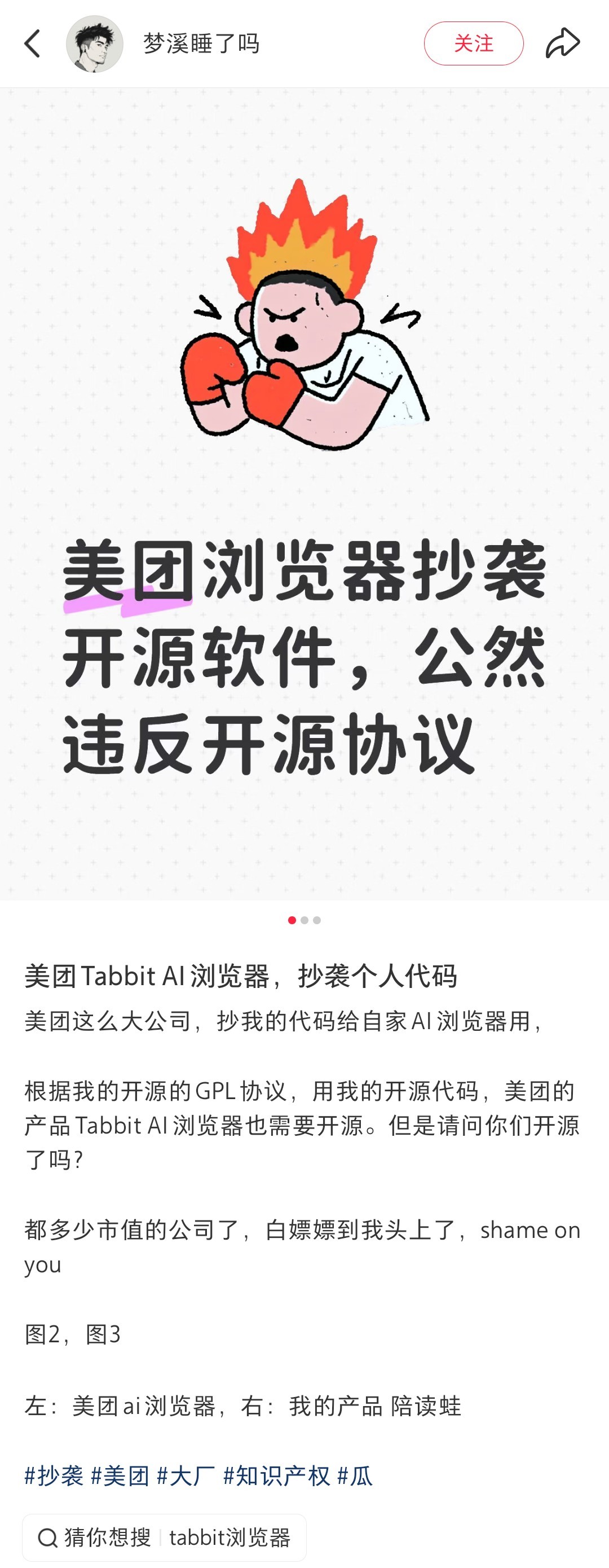
曝美团AI浏览器Tabbit涉嫌代码抄袭 官方回应
Feng Huang Wang· 2026-03-03 06:53
Core Viewpoint - A user accused Meituan's AI browser Tabbit of copying code from their personal product, Peiduwa, and provided evidence of the alleged plagiarism [1][3] Group 1: Allegations and Responses - The user "Mengxi Shuilema" posted on social media, claiming that Tabbit's code was taken from Peiduwa, including a comparison of the two product interfaces [1] - The user released a video showing that Tabbit's icon file was named "read-frog," which is associated with Peiduwa [3] - According to the user, under the GPL agreement, any product using their code must be open-sourced, which Meituan failed to do with Tabbit [3] - Tabbit's official response stated that the original project did not have an open-source license at the time of forking, and they have since decided to open-source the project [3] Group 2: Product Information - Tabbit is an AI-native browser launched by Meituan's Lightyear team, which began free public testing on March 2 [3] - The browser is designed to automate web operations, information extraction, and report generation, supporting custom scripts and workflow reuse [3] - Tabbit features the LongCat large model from Meituan and allows users to switch between multiple AI options, focusing on efficient office work [3]
美团悄悄上线的AI浏览器Tabbit,我觉得它更适合普通人。
数字生命卡兹克· 2026-03-03 02:30
Core Viewpoint - The article discusses the launch of Tabbit, an AI browser developed by Meituan, which has been adopted as a preferred tool due to its superior agent capabilities and user-friendly design compared to existing options like Comet [1][5]. Group 1: AI Browser Features - Tabbit's agent capabilities are highlighted as being stronger than those of Comet, making it a more complete product with attention to detail [5]. - The AI browser is designed to handle real-time, scenario-based tasks, complementing other AI agents rather than replacing them [10][11]. - Tabbit allows users to leverage their existing browser data, such as cookies, to perform tasks seamlessly without additional configuration [15]. Group 2: Use Cases and Applications - The article provides examples of how Tabbit can automate data collection tasks, such as gathering article metrics from a public account and filling them into a spreadsheet [29][30]. - Another use case involves using Tabbit to find rental listings on platforms like Xiaohongshu, demonstrating its ability to scrape and organize information efficiently [38][39]. - A practical scenario is presented where HR uses Tabbit to fill out forms on multiple university websites, significantly reducing the time and effort required for the task [60][70]. Group 3: Unique Functionalities - Tabbit includes features like intelligent agent tricks that allow users to automate repetitive tasks by recording and reusing workflows [43][46]. - The browser can generate scripts to modify web pages, such as removing ads, enhancing user experience [53][55]. - Additional functionalities include automatic grouping of bookmarks and tabs, which further streamline the browsing experience [59].

美团杀入AI浏览器!
Xin Lang Cai Jing· 2026-03-02 12:06
Core Insights - Meituan's Tabbit, an AI browser, has officially launched its free public beta, featuring a unique "smart agent mode" that automates complex web tasks, simulating human actions to extract information and fill forms [2][26] - Tabbit aims to streamline repetitive tasks by allowing users to create shortcut commands and automate data extraction and other functions with simple prompts [2][28] - The launch signifies Meituan's expansion from its core business in lifestyle services into the broader internet tools market, targeting office workers, students, and creators [3][28] Group 1: Features and Functionality - Tabbit includes five core functionalities: smart search, browser control, content management, real-time information, and multilingual support, integrating various AI models from Meituan [27] - The smart agent mode allows users to automate various web tasks, such as generating reports and shopping for discounts, by simply inputting commands [30][36] - Users can create custom scripts and shortcuts without coding, enabling them to automate tasks like data extraction and page modifications [43][47] Group 2: Market Position and Strategy - The introduction of Tabbit reflects a trend where AI browsers are becoming standard, with features like AI assistants and task automation being common across platforms [28][25] - Meituan's acquisition of the Tabbit team for approximately 2.065 billion yuan indicates a strategic move to enhance its AI capabilities and broaden its service offerings [3][28] - The competitive landscape for AI browsers is intensifying, and differentiating Tabbit's features will be crucial for its success in the market [25][28]

美团杀入AI浏览器
3 6 Ke· 2026-03-02 11:24
Core Viewpoint - Meituan's Tabbit AI browser has officially launched its free public beta, featuring an "intelligent proxy mode" that automates complex web tasks, aiming to enhance user productivity and streamline repetitive tasks [1][4]. Group 1: Product Features - Tabbit's intelligent proxy mode allows users to execute complex web operations, such as automatically opening web pages, extracting information, and filling out forms [1]. - The browser supports intelligent grouping, which automatically organizes related tabs for a cleaner interface [3]. - Tabbit includes five core functionalities: intelligent search, browser control, content management, real-time information, and multilingual support [4]. Group 2: User Experience - Users can create quick commands for frequently performed tasks using the "tricks" and "scripts" features, enabling automation without coding knowledge [5][22]. - Tabbit can generate reports and perform tasks like online shopping by automatically adding items to the cart and identifying current discounts [13][28]. - The browser's ability to execute tasks based on user-defined scripts allows for personalized automation, such as extracting product information from shopping pages [28]. Group 3: Market Positioning - Meituan's launch of Tabbit signifies its expansion from a focus on local life services into the broader internet tools market, targeting office workers, students, and creators [5][33]. - The AI browser market is becoming increasingly competitive, with many products offering similar functionalities, making differentiation crucial for success [33]. - Meituan is building a comprehensive AI application matrix that includes both B2B and B2C solutions, indicating a strategic shift towards more open AI applications [33].

速递 | 炸了!40亿Chrome用户连夜升级,AI浏览器的生死战已打响
未可知人工智能研究院· 2026-02-01 04:07
Core Viewpoint - Google has integrated its latest AI model, Gemini 3, into the Chrome browser, marking a significant shift towards AI-driven browsing experiences for nearly 4 billion users, which is the fastest and largest scale of AI technology adoption in history [4][8]. Group 1: Product Integration and Features - Gemini 3 is not just a chatbot but is embedded directly into Chrome, allowing users to access it via a sidebar for real-time assistance on any webpage [4]. - The "Auto Browse" feature enables AI to autonomously navigate websites, fill out forms, and complete tasks without user intervention, representing a shift to an "Agent era" where AI acts as a proactive assistant [4][10]. Group 2: Competitive Landscape - The urgency for Google to integrate AI into Chrome stems from competition with emerging AI-native browsers like OpenAI's Atlas and Perplexity's Comet, which provide direct answers without the need for traditional searches [8][10]. - Google's market share in the browser space is approximately 70%, and failure to adapt could result in losing this critical entry point to competitors [8]. Group 3: Business Model Transformation - Google's primary revenue model relies on advertising, projected to generate over $200 billion in 2025. However, the rise of AI may reduce the need for traditional search ads, prompting Google to explore new revenue streams through AI service subscriptions and enhancements [9][10]. Group 4: Market Impact - The integration of Gemini 3 is expected to benefit Google significantly, with stock prices rising nearly 20% in the past two months. Additionally, AI Agent startups and cloud service providers like AWS and Azure are likely to gain from increased demand for computational resources [12][13]. - Conversely, emerging AI browser startups and traditional search engines may face severe challenges as user behavior shifts towards AI-driven solutions that provide immediate answers [13]. Group 5: Domestic Market Response - Major Chinese tech companies, including Baidu, Tencent, and Alibaba, are reportedly testing AI integration in their browsers, although their strategies may differ from Google's approach [16][18]. - The concept of "AI group chat" is being explored by these companies, allowing multiple AI agents to collaborate within a single interface, which could serve as an alternative to traditional browser AI [17][18]. Group 6: Opportunities for Entrepreneurs and Individuals - Entrepreneurs are advised to focus on niche markets such as vertical industry AI agents, enterprise-level multi-agent collaboration platforms, and tools for managing AI applications, as these areas present significant opportunities [20][21]. - For individuals, enhancing productivity through AI tools and learning to manage AI effectively will be crucial for staying competitive in the evolving job market [22][23]. Group 7: Time Sensitivity - The window for capitalizing on these changes is estimated to be limited to the next two years, emphasizing the urgency for stakeholders to adapt and innovate [26].