索洛生产率悖论

Search documents
刘俏:当你凝视自己,也望见了宇宙的轮廓丨光华@破五
Xin Lang Cai Jing· 2026-02-21 02:00
Core Insights - The article discusses the emergence of a "K-shaped" economic divergence, where high-income groups benefit from technological advancements while low-income groups face stagnation and increased competition [5][24] - It emphasizes the need for a new growth paradigm centered on human investment, highlighting that traditional growth metrics may not adequately reflect the realities of economic disparities [6][26] - The article calls for a shift in policy focus from mere physical investment to investing in human capital, which is essential for sustainable economic growth [7][30] Group 1: Economic Divergence - The "K-shaped" divergence indicates that high-income groups and tech giants thrive, while low-income groups and traditional sectors struggle [5][24] - This divergence is exacerbated by a focus on efficiency and technological worship, leading to a disconnect between macroeconomic growth and individual welfare [5][24] - The article raises concerns about the implications of technological advancements not translating into improved living conditions for the broader population [5][24] Group 2: Human-Centric Growth - A new growth model is proposed that prioritizes human investment, recognizing that people are the most active factor in enhancing productivity [6][26] - The article highlights the importance of addressing structural issues, such as the 2.55 billion urban residents without household registration who lack access to equal public services [7][26] - It argues that investments in education, healthcare, and social services should be viewed as high-return investments rather than mere expenditures [7][26] Group 3: Consumption and Economic Structure - The article points out that China's low consumption rate is a direct result of insufficient investment in human capital, leading to a cycle of low prices, low profits, and low incomes [8][27] - Despite high physical consumption levels, the monetary value of consumption remains below the global average, indicating a disconnect between production and actual economic welfare [8][27] - The need for a shift in growth measurement metrics is emphasized, advocating for a focus on income and quality of life rather than solely on GDP growth [8][28] Group 4: Policy Recommendations - The article calls for innovative policy tools to support human investment, including fiscal measures for social welfare and structural monetary policies to aid small and medium enterprises [11][30] - It suggests that local governments should adjust GDP accounting methods to prioritize labor income and corporate profitability, thereby enhancing the focus on quality growth [11][28] - The need for anti-involution policies and encouraging companies to expand internationally is highlighted as a means to alleviate domestic competition pressures [12][31]


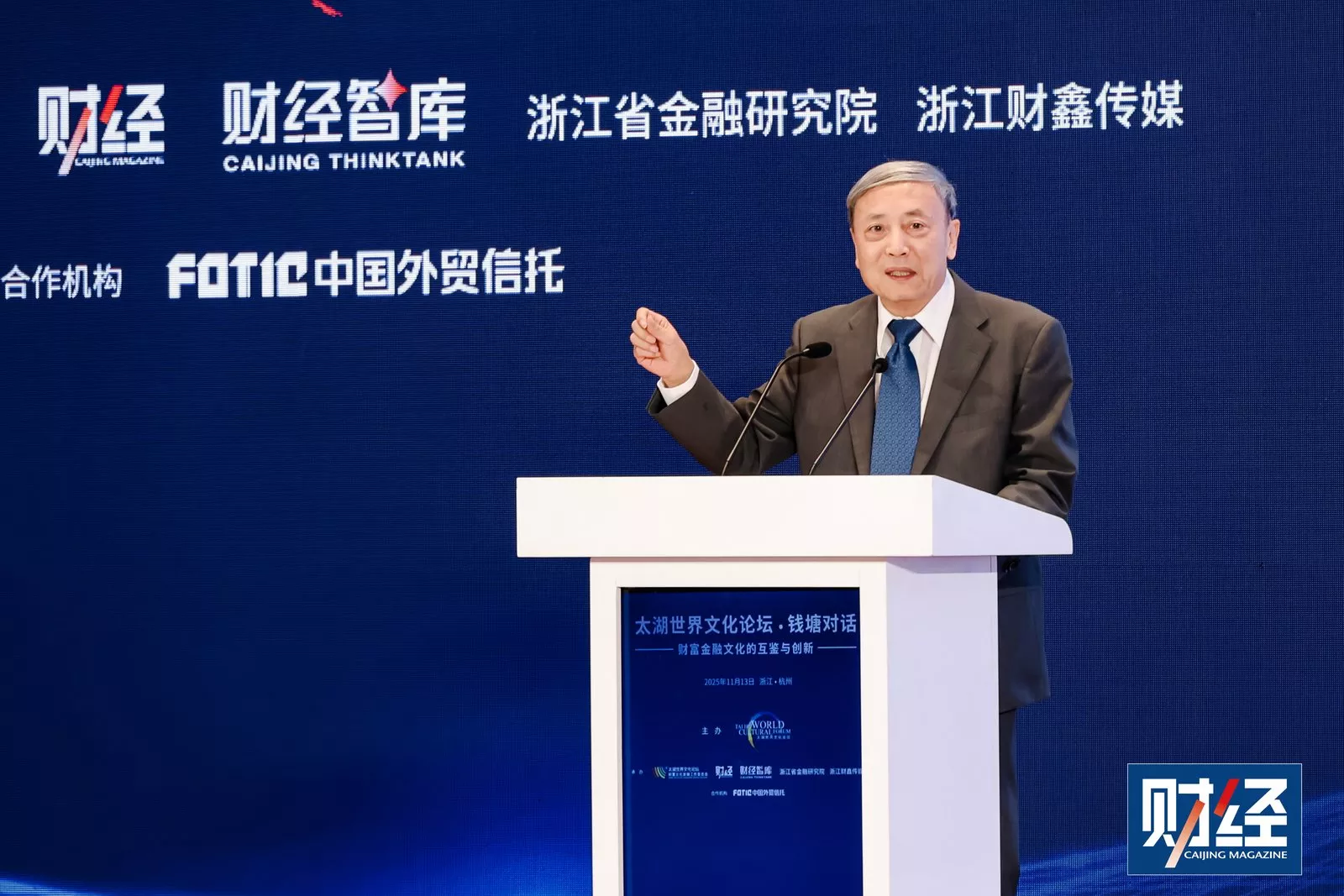
蔡昉:以制度建设平衡新技术的创造性和破坏性
Cai Jing Wang· 2025-11-14 01:45
Core Viewpoint - The investment in artificial intelligence (AI) must align with China's high-quality development goals to ensure its health and sustainability [3][7][11] Group 1: Investment Trends - There is a global surge in AI investment, driven by low birth rates and high aging populations in East Asian countries, necessitating AI to enhance labor productivity [3][8] - Geopolitical tensions have made key technologies like AI a symbol of national strength, leading countries to aggressively pursue AI advancements [3][8] - Major tech companies view AI as a marker of technological leadership and market share, creating competitive pressure to adopt AI [3][8] Group 2: Nature of AI Investment - Disruptive technological breakthroughs often come with investment booms and potential bubbles, which are acknowledged by economists and investors as unavoidable [3][9] - Jeff Bezos categorizes bubbles into "good" (industry bubbles that enhance productivity) and "bad" (financial bubbles that inevitably burst), highlighting the dual nature of AI investment [3][9][10] Group 3: AI's Dual Nature - AI possesses a dual-edged nature, being both creative and destructive, necessitating careful alignment with human values throughout its development and application [4][11] - The alignment problem in AI development emphasizes the need for ethical considerations and safeguards to prevent potential harm [10][11] Group 4: Supply-Side and Demand-Side Considerations - On the supply side, AI should focus on breaking constraints to productivity and addressing the "Solow productivity paradox" by ensuring that AI enhances productivity rather than displacing labor [4][12] - On the demand side, addressing the challenges posed by an aging population and declining birth rates is crucial, with AI playing a role in enhancing consumer capacity and willingness [5][15] Group 5: Institutional Environment - The successful integration of AI into the economy requires a supportive institutional environment, which can be achieved through reforms that balance the creative and destructive aspects of new technologies [17][18] - Reforms in the household registration system could unlock significant labor supply and resource reallocation, enhancing productivity and consumer markets [19]