中国居民消费率之谜

Search documents
刘俏:当你凝视自己,也望见了宇宙的轮廓丨光华@破五
Xin Lang Cai Jing· 2026-02-21 02:00
Core Insights - The article discusses the emergence of a "K-shaped" economic divergence, where high-income groups benefit from technological advancements while low-income groups face stagnation and increased competition [5][24] - It emphasizes the need for a new growth paradigm centered on human investment, highlighting that traditional growth metrics may not adequately reflect the realities of economic disparities [6][26] - The article calls for a shift in policy focus from mere physical investment to investing in human capital, which is essential for sustainable economic growth [7][30] Group 1: Economic Divergence - The "K-shaped" divergence indicates that high-income groups and tech giants thrive, while low-income groups and traditional sectors struggle [5][24] - This divergence is exacerbated by a focus on efficiency and technological worship, leading to a disconnect between macroeconomic growth and individual welfare [5][24] - The article raises concerns about the implications of technological advancements not translating into improved living conditions for the broader population [5][24] Group 2: Human-Centric Growth - A new growth model is proposed that prioritizes human investment, recognizing that people are the most active factor in enhancing productivity [6][26] - The article highlights the importance of addressing structural issues, such as the 2.55 billion urban residents without household registration who lack access to equal public services [7][26] - It argues that investments in education, healthcare, and social services should be viewed as high-return investments rather than mere expenditures [7][26] Group 3: Consumption and Economic Structure - The article points out that China's low consumption rate is a direct result of insufficient investment in human capital, leading to a cycle of low prices, low profits, and low incomes [8][27] - Despite high physical consumption levels, the monetary value of consumption remains below the global average, indicating a disconnect between production and actual economic welfare [8][27] - The need for a shift in growth measurement metrics is emphasized, advocating for a focus on income and quality of life rather than solely on GDP growth [8][28] Group 4: Policy Recommendations - The article calls for innovative policy tools to support human investment, including fiscal measures for social welfare and structural monetary policies to aid small and medium enterprises [11][30] - It suggests that local governments should adjust GDP accounting methods to prioritize labor income and corporate profitability, thereby enhancing the focus on quality growth [11][28] - The need for anti-involution policies and encouraging companies to expand internationally is highlighted as a means to alleviate domestic competition pressures [12][31]


刘俏:破解“低价格-低利润-低收入”循环,提升居民消费丨北大光华新年论坛
Sou Hu Cai Jing· 2026-01-19 12:42
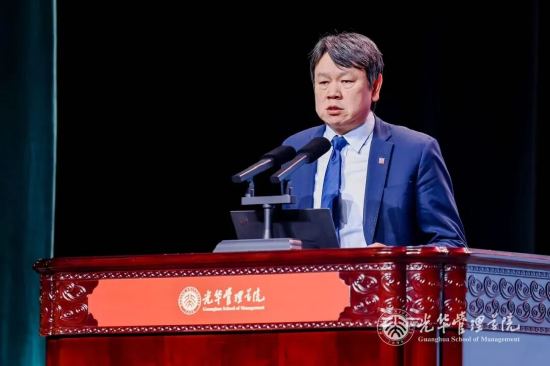
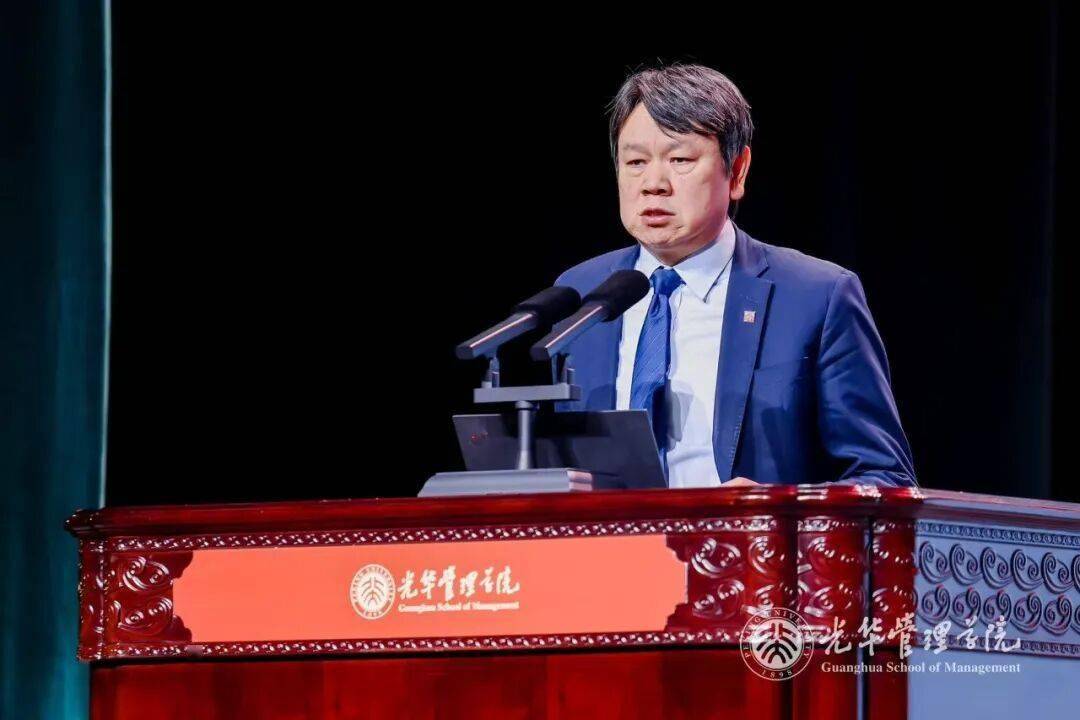
2026年1月17日,第二十七届北大光华新年论坛在北京大学百周年纪念讲堂举行,本届论坛主题为"内需主导,聚力增长,开启'十五五'新征程"。 北京大 学光华管理学院院长、金融学系教授刘俏以《如何提升居民消费》为题发表主旨演讲。 刘俏深入解析了"中国居民消费率之谜":我国居民消费的GDP占比远低于发达国家平均水平,但人均实物消费量却远超全球平均,部分商品甚至超过美 日。这一矛盾的核心在于低价格与消费结构失衡,强大产能引发的激烈竞争导致产品低价低利润,进而限制居民收入增长,形成结构性循环。他强调,提 振消费的政策应真正作用于居民内生消费决策,将"投资于人"与"投资于物"紧密结合。他建议,政策应优化GDP核算导向,增加居民收入与消费率考核指 标;通过分配制度改革、财产性收入提升、新型城镇化等举措增加居民可支配收入;以更加积极的财政政策提升消费支持力度;推动企业从"规模扩张"转 向"创新驱动",结合出海战略改善盈利与分配。同时,他以电子消费券为例,强调应包容消费领域创新实践,以系统性改革激活居民消费内生动力,为经 济增长注入持久动能。 中国居民消费率之谜 评估中国消费的现状,一个直观矛盾在于数据与实物消费存在的"温差" ...
刘俏:提振消费的政策应将“投资于人”与“投资于物”紧密结合
Xin Lang Cai Jing· 2026-01-17 17:09
Core Insights - The forum focused on the theme "Domestic Demand as the Main Driver, Strengthening Growth: Starting a New Journey in the 14th Five-Year Plan" [1] - Liu Qiao analyzed the "mystery of China's consumption rate," highlighting that the GDP share of household consumption is only about 40%, significantly lower than the average of developed countries, despite per capita physical consumption being much higher than the global average [3][5] Group 1 - The contradiction in China's consumption is attributed to low prices and an imbalanced consumption structure, where intense competition from strong production capacity leads to low prices and profits, thereby limiting income growth and creating a vicious cycle [3][5] - Policies to boost consumption should effectively target residents' endogenous consumption decisions, integrating "investment in people" with "investment in goods" [3][5] Group 2 - Recommendations include optimizing GDP accounting to increase indicators for household income and consumption rates, implementing reforms in the distribution system, enhancing property income, and promoting new urbanization to raise disposable income [3][5] - A more proactive fiscal policy is suggested to enhance support for consumption, alongside encouraging enterprises to shift from "scale expansion" to "innovation-driven" strategies, improving profitability and distribution through overseas expansion [3][5] - Liu Qiao emphasized the need for innovative practices in the consumption sector, using electronic consumption vouchers as an example, to activate residents' endogenous consumption power and inject sustainable momentum into economic growth [3][5]