纵向一体化战略

Search documents
不再跟着西方屁股定义“卡脖子”,这样只会被动挨打
Guan Cha Zhe Wang· 2025-10-28 12:06
Core Viewpoint - The report emphasizes that China's modernization relies on technological advancement, highlighting the importance of original innovation and the integration of technology and industry to achieve high-level self-reliance in technology [1] Group 1: Technological Innovation and Industry Integration - The "14th Five-Year Plan" outlines the need for deep integration of technological innovation and industrial innovation, with a focus on addressing "bottleneck" issues in high-end chips and industrial software [1][2] - The government is encouraged to transform specific industry challenges into national technology tasks, thereby supporting enterprises in overcoming technological barriers [2][3] Group 2: Role of Enterprises in Innovation - Enterprises are identified as the main body of technological innovation, with a call for vertical integration strategies to address complex interdisciplinary challenges [3][11] - The importance of fostering a collaborative environment between enterprises and research institutions is highlighted, allowing for timely solutions to innovation challenges [5][10] Group 3: Government's Role in Supporting Innovation - The government should act as a market rule designer and key buyer, creating a long-term vision for industry participants and breaking down information barriers [5][12] - A shift from reactive support to proactive engagement with leading enterprises and scientists is recommended to better understand future industrial development directions [4][15] Group 4: AI and Industrial Applications - The report discusses the significance of artificial intelligence (AI) in driving industrial innovation, with examples of successful applications in companies like Zhejiang University Control [13][14] - The relationship between traditional industrial enterprises and AI companies is crucial, as traditional firms provide the operational context and data necessary for AI development [15][19] Group 5: Challenges in Basic Research and Industry Needs - The need for a strategic, forward-looking, and systematic approach to basic research is emphasized, ensuring alignment with industrial demands [16][20] - The report suggests that universities and research institutions must equally value both vertical and horizontal projects to effectively serve industry innovation needs [20][21] Group 6: Non-linear Relationship Between Science, Technology, and Industry - Innovation is characterized as a practical process, where the development of technology is driven by industrial needs and experiences [25][27] - The report provides examples from the dairy and agricultural sectors to illustrate how industry-driven research can lead to significant technological advancements [22][24]



孙喜:不再跟着西方屁股定义“卡脖子”,这样只会被动挨打
Guan Cha Zhe Wang· 2025-10-27 06:26
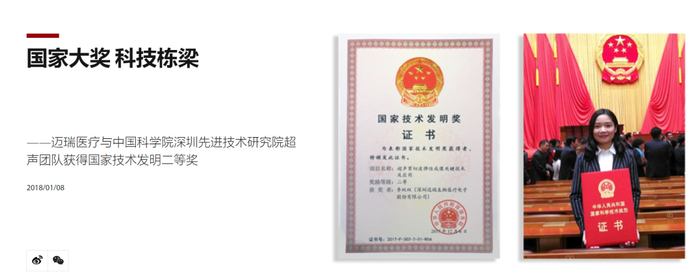
Core Viewpoint - The report emphasizes that China's modernization relies on technological advancement, highlighting the importance of original innovation and the integration of technology and industry [1] Group 1: Technological Innovation and Industry Integration - The "14th Five-Year Plan" stresses the need for high-level technological self-reliance, with a focus on original innovation and key core technology breakthroughs [1] - The integration of technology innovation and industrial innovation is crucial for enhancing productivity and addressing "bottleneck" issues in high-end chips and industrial software [2][9] - The government is encouraged to transform specific technological challenges faced by enterprises into national technology tasks and projects, facilitating innovation [2][3] Group 2: Role of Enterprises in Innovation - Enterprises are identified as the main body of technological innovation, with a need for vertical integration strategies to tackle complex interdisciplinary challenges [2][4] - The historical example of domestic innovation trust issues illustrates the importance of addressing non-technical factors that hinder the utilization of technological advancements [3][4] - The government should engage with leading enterprises and experts to collaboratively explore future industrial development directions, enhancing understanding of the industrial system [4][5] Group 3: Market Dynamics and Government Role - The government should act as a market rule designer and key buyer, creating a long-term vision for industry participants and breaking down information barriers [5] - The relationship between traditional industrial enterprises and AI companies is crucial, as traditional firms provide operational scenarios and experience data necessary for AI development [14] - Establishing demonstration projects in industrial AI can facilitate collaborative innovation and address trust issues between supply and demand sides [14] Group 4: Case Studies and Practical Applications - The collaboration between Mindray Medical and the Shenzhen Institute of Advanced Technology led to significant breakthroughs in high-end medical imaging equipment, showcasing the effectiveness of industry-academia partnerships [6][8] - The success of companies like Hisense and Gree in developing their own chips reflects the necessity of vertical integration in addressing local supply chain gaps [9] - The application of AI in industrial settings, particularly by companies with rich industry experience, is highlighted as a key factor for success in the evolving technological landscape [11][13]

电解液龙头股权激励计划出炉 要求今年净利润不低于38亿元
Xin Hua Wang· 2025-08-12 05:55
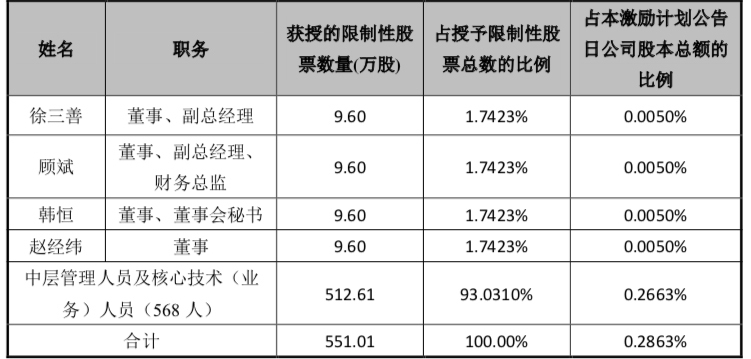
Core Points - The company announced a stock incentive plan on August 8, 2022, proposing to grant 5.5101 million restricted shares to 572 recipients at a price of 6 yuan per share, which is only 11.45% of the closing price of 52.33 yuan per share on the same day [1][2] - The total number of shares to be granted represents approximately 0.2863% of the company's total share capital of 192,474.59 million shares [2][3] - The incentive plan includes performance targets for the release of restrictions on the shares, with net profit requirements of no less than 3.8 billion yuan in 2022, 4.8 billion yuan in 2023, and 5.8 billion yuan in 2024 [5][6] Incentive Plan Details - The incentive plan is a one-time grant with no reserved rights, and the recipients include directors, senior management, middle management, and core technical personnel [2][4] - Four directors, including Xu Sanshan and Gu Bin, will each receive 96,000 shares, while 568 middle management and core technical personnel will collectively receive 5.1261 million shares [3][4] - The performance assessment period for the release of restrictions spans three fiscal years from 2022 to 2024, with the release ratios set at 40%, 30%, and 30% respectively [5][6] Company Performance and Industry Outlook - The company expects to achieve a net profit of 2.8 billion to 3 billion yuan in the first half of 2022, which would account for nearly 80% of the annual performance target [8] - The company has been expanding its production capacity in response to the increasing demand for lithium-ion battery materials, particularly due to the growth in the electric vehicle sector [9][10] - Recent expansion projects include a 7.5 million-ton lithium battery material project with a total investment of 322 million yuan and a 20 million-ton lithium battery electrolyte project with an investment of 1.2 billion yuan [9][10] Future Projections - Analysts project the company's net profits to be 5.792 billion yuan in 2022, 6.576 billion yuan in 2023, and 8.179 billion yuan in 2024, indicating a positive growth trajectory [11]