
经济对等法案

Search documents
巴西启动反制相关程序,卢拉说仍愿与美国谈判
Sou Hu Cai Jing· 2025-09-01 09:36
Group 1 - The Brazilian government has officially initiated procedures related to the Economic Equivalence Law to respond to high tariffs imposed by the U.S. on Brazilian exports [1] - President Lula expressed that while Brazil is preparing countermeasures, there is no rush to retaliate against the U.S., emphasizing a preference for negotiation to resolve differences [1][3] - The Brazilian government has authorized an investigation into the U.S. unilateral tariff actions, with a technical analysis report expected within 30 days to determine the appropriateness of countermeasures [1][3] Group 2 - The Economic Equivalence Law, passed by the Brazilian Congress in April, allows Brazil to impose countermeasures such as tariffs on imports from countries that negatively impact Brazil's international competitiveness [3] - The U.S. has imposed tariffs of up to 40% on various Brazilian exports, with some products facing tariffs as high as 50%, while certain items like aircraft and nuts are exempt [3] - Brazil's Finance Minister indicated the possibility of legal action in U.S. courts to protect Brazilian interests and seek fair treatment in light of the high tariffs [3] Group 3 - The U.S. Federal Circuit Court ruled that the Trump administration lacked congressional authority to impose certain tariffs, marking a setback for the administration's trade policies [5] - Following the ruling, Trump asserted that all tariffs remain in effect and plans to appeal to the Supreme Court [5]

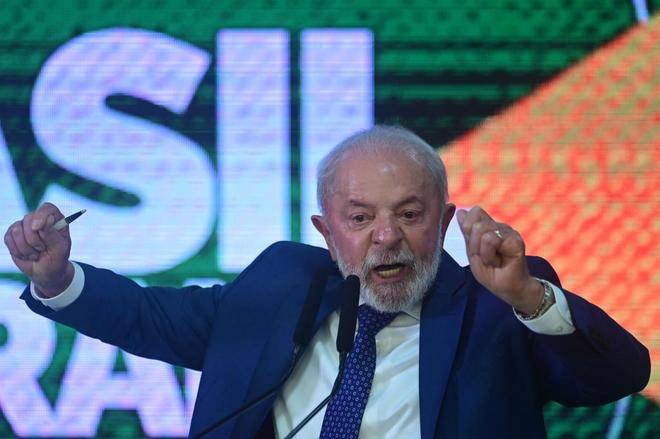
应对美国关税!巴西启动反制相关程序
Zheng Quan Shi Bao Wang· 2025-08-30 09:50
Group 1 - Brazil has initiated procedures under the Economic Equivalence Law in response to the 50% tariffs imposed by the U.S. on Brazilian exports, with President Lula stating that while Brazil is preparing countermeasures, it is not in a hurry to retaliate and prefers negotiation to resolve the dispute [1][2] - The U.S. currently imposes a 40% tariff on Brazilian products, with many facing rates as high as 50%, including meat, coffee, and fruits, while certain products like aircraft, nuts, orange juice, and some metals are exempt [2] - Brazil's Foreign Trade Council can impose countermeasures such as taxing imports from countries that negatively impact Brazil's international competitiveness due to unilateral actions [2] Group 2 - President Lula criticized the U.S. for a lack of seriousness in bilateral relations, noting that Brazil has not been able to engage in dialogue with U.S. officials, and expressed willingness to negotiate but will not beg for a meeting [3] - Mexico is pushing for a complementary trade agreement with Brazil, with plans to sign a supplementary trade agreement by August next year, indicating a strengthening of trade relations between the two countries [4] - Bilateral trade between Brazil and Mexico is projected to grow from $10 billion in 2019 to over $13.5 billion by 2024, marking a 35% increase, particularly in the automotive and agricultural sectors [5]

【环球财经】巴西启动经济对等法案程序应对美国关税
Xin Hua She· 2025-08-30 06:52
Core Points - The Brazilian government has initiated procedures related to the Economic Equivalence Law in response to the United States imposing a 50% tariff on Brazilian exports [1] - Brazilian President Lula expressed a desire to resolve the dispute through negotiations, despite preparing countermeasures [1] - Brazil's embassy in the U.S. has formally notified the U.S. Trade Representative's Office about the initiation of procedures under the Economic Equivalence Law [1] Summary by Sections Government Actions - Brazil has begun the process to implement countermeasures against the U.S. tariffs, indicating that it has its own measures to respond [1] - President Lula has authorized an investigation to assess whether the U.S. unilateral tariff actions meet the conditions for invoking the Economic Equivalence Law, with a technical analysis report due in 30 days [1] Legislative Context - The Economic Equivalence Law was passed by the Brazilian Congress in April, allowing the Brazilian Foreign Trade Council to impose countermeasures such as tariffs on imports from countries that negatively impact Brazil's international competitiveness [1]
【环球财经】巴西启动对美关税报复程序
Xin Hua Cai Jing· 2025-08-30 03:14
Core Points - The Brazilian government has officially initiated the Economic Equivalence Law process in response to the United States imposing a 50% tariff on Brazilian exports [1] - President Lula expressed a desire to resolve the dispute through negotiations, despite preparing countermeasures [1] - Brazil's Foreign Ministry has been authorized to investigate whether the U.S. unilateral tariff actions meet the conditions for the Economic Equivalence Law, with a technical analysis report due within 30 days [1] Summary by Sections Economic Measures - Brazil is set to implement countermeasures against the U.S. tariffs, which have increased from 10% to an additional 40%, affecting 35.6% of Brazilian goods exported to the U.S. [1] - The total potential tariff on these goods could reach 50% [1] Diplomatic Efforts - President Lula emphasized the importance of dialogue, stating that Brazil is willing to engage in discussions with the U.S. at any time [1] - The Brazilian government has already approached the World Trade Organization regarding the tariffs, but is also pursuing domestic legal mechanisms due to the lengthy international processes [1] Regional Relations - The Brazilian Vice President, Alckmin, indicated that the activation of the Economic Equivalence Law could encourage the U.S. to expedite dialogue [2]