
经贸脱钩

Search documents
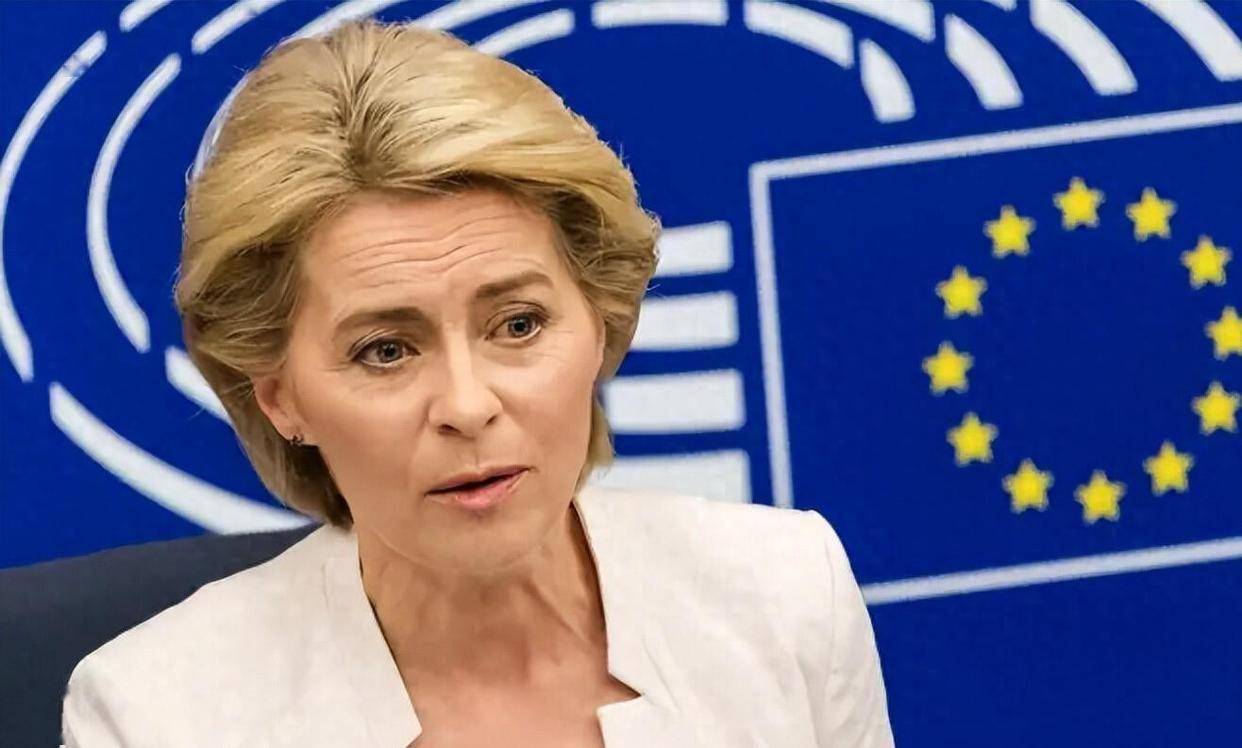
欧洲刚宣布稀土喜讯,冯德莱恩转身对中国发难,中国早已留好后手,反制已到位
Sou Hu Cai Jing· 2025-12-18 16:44
Group 1 - The EU has become increasingly reliant on China for rare earth materials, with a dependency rate of 98%, which directly impacts key industries such as renewable energy, military, and aerospace [4] - In September 2025, China exported 2,582 tons of rare earth magnets to the EU, marking a 21% month-on-month increase and reaching a recent high [1] - The EU is planning to impose a 50% tariff on Chinese steel and has initiated 20 anti-dumping investigations, indicating a shift towards protectionist measures against Chinese imports [1] Group 2 - The EU's recent sanctions against 12 Chinese companies, accused of helping Russia evade sanctions, have raised concerns among European businesses about the potential disruption of supply chains [1][9] - China's recent export controls on rare earth materials include a compliance review system, which could impact global supply chains and create a "valve" controlled by China [7] - The EU's Critical Raw Materials Act aims to reduce reliance on single third-country suppliers to below 65% by 2030, but challenges remain due to slow progress in domestic rare earth projects [6] Group 3 - European companies are facing production disruptions due to China's tightened rare earth export controls, with some firms experiencing a 40% drop in imports and a 15% increase in production costs [9] - The political tensions between the EU and China are creating a complex environment for businesses, as companies like those in Bavaria are successfully navigating through established "green channels" for importing rare earth materials [10] - The EU's internal contradictions regarding its approach to China are evident, as it seeks to balance geopolitical alignment with the U.S. while also recognizing the necessity of maintaining stable supply chains from China [6]

商务部谈中美经贸关系:人为“脱钩”是脱不掉的
天天基金网· 2025-07-18 06:22
Core Viewpoint - The article emphasizes that despite challenges, China and the U.S. remain important economic partners, and their trade relations are fundamentally based on mutual benefit and cooperation [1][2][3][4]. Summary by Sections - **Trade Stability**: Since 2018, despite rising unilateralism and protectionism from the U.S., bilateral trade has remained stable, with projected trade volumes for 2024 reaching $688.3 billion in goods and $155.8 billion in services, representing growth of 18% and 34.7% respectively since 2017 [1]. - **Mutual Benefit**: The essence of China-U.S. economic relations is mutual benefit, and cooperation is deemed the only correct path forward [2]. - **Disputes and Dialogue**: The article acknowledges that disagreements and friction are inevitable in economic cooperation, but dialogue and negotiation are the best ways to resolve issues [3]. - **China's Stance**: China maintains a consistent position of firmly defending its national interests and upholding international fairness and justice [4].

中国驻美大使谢锋:不管是经贸脱钩还是人文脱钩,都不得人心也不会成功
news flash· 2025-06-07 03:37
Core Viewpoint - The event "Tea and Harmony: A Gathering of East and West" hosted by the Chinese Embassy in the U.S. emphasizes tea as a cultural bridge between China and the West, highlighting the importance of mutual respect and cooperation for global peace and development [1] Group 1 - Tea is presented as a solution for harmony and a connection between Eastern and Western civilizations [1] - The historical context of U.S.-China relations is underscored, indicating that cooperation and mutual respect benefit both nations and the world [1] - The speaker argues against conflicts such as the Cold War and trade wars, asserting that economic and cultural decoupling is not viable or supported by the people [1]