
结构化融资

Search documents
手握大量黄金用于出租,“金主”可能已赚翻
Di Yi Cai Jing Zi Xun· 2026-01-29 08:57
Core Viewpoint - The recent surge in gold prices has led to a significant increase in gold leasing demand from downstream gold-using enterprises, creating lucrative opportunities for banks and companies involved in gold leasing [2][6]. Group 1: Gold Leasing Demand and Market Dynamics - Gold prices have reached a new high, surpassing $5,500 per ounce, with a year-to-date increase of nearly 30% [2]. - The demand for gold leasing has surged, with companies like Zhou Dazheng and Hunan Gold planning to lease significant amounts of gold, indicating a shift in the industry [6][7]. - The gold leasing market involves various players, including mining companies, banks, leasing firms, and downstream gold-using enterprises, creating a complex supply chain [4][9]. Group 2: Key Players and Their Strategies - Banks are the primary "gold owners," leasing gold to enterprises and earning stable rental fees, while also offering derivative products to hedge against price fluctuations [9]. - Companies like Xiamen Xinda and Zhou Dazheng have announced substantial gold leasing plans, with Zhou Dazheng planning to lease up to 5,000 kg of gold in 2025, a significant increase from previous years [6][8]. - The total gold leasing plans disclosed by listed companies for 2025 amount to approximately 9,060 kg, indicating a robust market demand [7]. Group 3: Cost Management and Financing Strategies - Gold leasing allows companies to reduce initial capital expenditures on gold purchases, alleviating cash flow pressures and enabling them to lock in costs [10][12]. - Companies are utilizing gold leasing as a financing method, selling leased gold immediately and using the proceeds to meet operational funding needs, effectively creating a low-cost financing structure [14][15]. - The combination of gold leasing and forward contracts allows companies to hedge against price volatility, minimizing financial risks associated with gold price fluctuations [11][15]. Group 4: Risks and Regulatory Environment - The rapid increase in gold prices poses risks for companies engaged in gold leasing, as they may face high repayment costs and accounting discrepancies [16][17]. - Regulatory scrutiny has intensified, with recent penalties imposed on banks for mismanagement of gold leasing operations, highlighting the need for compliance and risk management in the industry [19].


企业按吨租、银行是“金主”,金价猛涨需求大增,黄金租赁还可以这样玩!
Di Yi Cai Jing· 2026-01-29 07:04
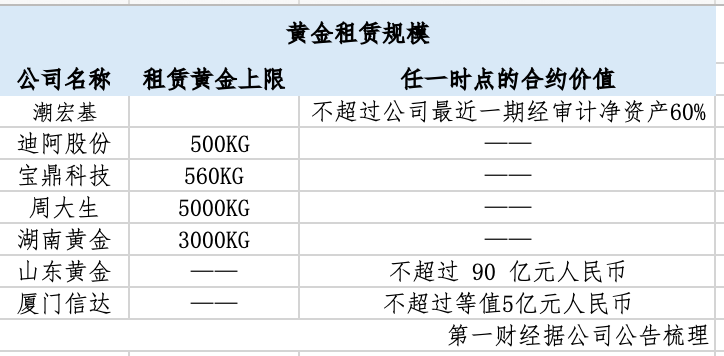
Core Viewpoint - The rising gold prices have significantly increased the demand for gold leasing among gold-using enterprises, leading to substantial growth in their leasing activities, which are now measured in tons [1][6]. Group 1: Gold Leasing Demand and Participants - The international gold price has recently surpassed $5,500 per ounce, with a year-to-date increase of nearly 30% [1]. - Gold leasing involves institutions and enterprises applying to banks or leasing companies to rent gold, which is a mature industry with participants including mining companies, banks, and gold-using enterprises [1][2]. - Companies like Xiamen Xinda and others have been involved in gold leasing since 2017, with financing amounts typically between 500 million to 1 billion yuan [2][12]. Group 2: Scale of Gold Leasing - The total gold leasing plans disclosed by several listed companies for 2025 amount to approximately 9,060 kilograms, close to 10 tons [6]. - Companies such as Zhou Dazheng and Hunan Gold have announced significant increases in their gold leasing limits, with Zhou Dazheng planning to lease up to 5,000 kilograms in 2025, up from 2,200 kilograms in 2021 [4][5]. Group 3: Role of Banks - Banks are the primary players in the gold leasing market, renting out gold to enterprises and earning stable leasing fees [6][8]. - The People's Bank of China regulates gold leasing, allowing only banks to lend gold to non-financial institutions, making banks the key players in this market [7]. Group 4: Cost Management and Financing - Gold leasing allows enterprises to avoid large upfront investments in gold, significantly alleviating cash flow pressures [9]. - Companies can use a combination of leasing and forward contracts to lock in gold costs and mitigate price volatility risks [9][10]. - Some companies, like Xiamen Xinda, utilize gold leasing as a financing method by selling the leased gold immediately and using the proceeds to meet liquidity needs [12][13]. Group 5: Risks and Challenges - The rapid increase in gold prices poses risks for companies engaged in gold leasing, as they may face high repayment costs and accounting discrepancies [15][16]. - Companies like China Gold have reported significant losses due to the mismatch between historical costs and market values during periods of rising gold prices [16]. - Regulatory scrutiny has increased, limiting the potential for arbitrage and exposing companies to compliance risks [17].
北京电子城高科技集团股份有限公司第十三届董事会第六次会议决议公告
Shang Hai Zheng Quan Bao· 2026-01-28 18:01
Core Viewpoint - The company’s board of directors approved a proposal for its subsidiary, Beijing Beiguang Communication Technology Co., Ltd., to apply for a bank loan to support its business development and project financing needs [1][2]. Group 1: Meeting Details - The 6th meeting of the 13th board of directors was held on January 28, 2026, with all 7 directors present [1]. - The meeting was chaired by the company's chairman, Mr. Qi Zhanyong, and complied with the relevant provisions of the Company Law and the Articles of Association [1]. Group 2: Loan Proposal - Beiguang Communication plans to apply for a bank loan not exceeding 93 million yuan (approximately 9.3 million) for the customization and renovation of its retained factory [2]. - The loan will have a term of up to 10 years and will be secured by the project’s land and property [2]. - The company will open a revenue supervision account for the loan, ensuring that all project income is monitored and used for operational expenses and loan repayment [2]. Group 3: Financial Implications - The loan application is aligned with the company’s structured financing arrangements and long-term strategic planning [2]. - The board believes that this loan will not pose significant financial risks to the company or its shareholders [2].
