结构性破位

Search documents
怎么救日债?日本财长“嘴炮”无用,只有央行“印钞”
Hua Er Jie Jian Wen· 2026-01-21 02:05
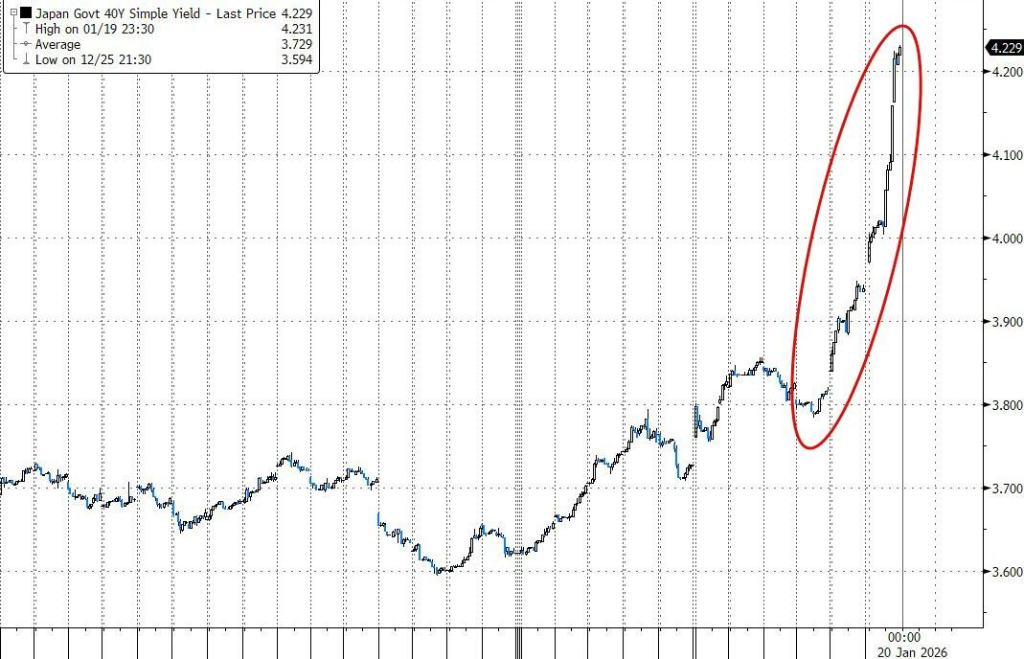
Core Viewpoint - The Japanese government bond market is experiencing a significant crisis, characterized by a historic surge in long-term bond yields, leading to a loss of confidence in Japan's fiscal discipline and prompting concerns about potential intervention by the Bank of Japan [1][3][5]. Group 1: Market Dynamics - The market is witnessing a "collapse" with traders describing a scenario where "everyone is selling at all maturities simultaneously," resulting in a daily increase of over 25 basis points in 30-year and 40-year yields, with the latter briefly surpassing 4% [3][5]. - Analysts indicate that the current turmoil is not merely a reaction to external shocks but rather a manifestation of a long-standing structural issue of "lack of natural demand" in the Japanese bond market [3][10]. - The recent volatility has been exacerbated by political uncertainties, particularly Prime Minister Kishi's campaign promise to lower the food consumption tax without a clear funding source [3][5]. Group 2: Policy Implications - Japan faces a dilemma: either significantly cut spending, which is politically unpalatable, or have the central bank intervene, likely through unlimited bond purchases, which could have adverse effects on the yen [5][7]. - The potential for the Bank of Japan to return to yield curve control (YCC) is seen as a "logical endgame," but it poses risks to the currency, especially if aggressive interventions lead to a depreciation of the yen beyond the critical 160 level [5][7]. Group 3: Investor Sentiment - The market's reaction to the finance minister's calls for calm has been limited, as investors are increasingly unwilling to buy long-term Japanese bonds unconditionally, reflecting a broader loss of confidence in fiscal policy [10][11]. - Concerns are growing that Japan may face a situation similar to the "Truss moment" in the UK, where fiscal expansion could lead to a crisis of credibility in policy [10][11]. - The lack of natural demand for ultra-long Japanese bonds raises fears that without official intervention, selling pressure may not subside on its own, necessitating some form of policy "circuit breaker" [13].