
绿色有机农业

Search documents
湟水河畔“蔬”香远 高原沃土育“金”牌
Xin Lang Cai Jing· 2026-02-12 19:35
Core Insights - The goal of creating the largest high-quality vegetable production base in the province is being pursued by Haidong City's Ledou District, aiming for ecological beauty, industrial prosperity, and increased wealth for the people by 2025 [1] - The area has surpassed 120,000 acres of vegetable planting, accounting for nearly 40% of Qinghai's total production, with products reaching major cities and international markets [1] Group 1: Technological Empowerment - The Jiangwan Village green vegetable seedling base, covering over 100 acres, has an annual production capacity of 25 million seedlings, meeting local demand and supplying 7 million high-quality seedlings to neighboring areas, creating over 11,000 jobs with an average income increase of over 20% [1] - The district promotes integrated water and fertilizer technology across 10,500 acres of demonstration fields, achieving 65% water savings, 50% fertilizer savings, and over 20% increase in yield [1] Group 2: Brand Leadership - In 2025, Ledou District will sign direct contracts for potato exports to Russia and cabbage exports to Vietnam, establishing a closed-loop foreign trade system with a 30% reduction in logistics costs [2] - The district has certified 9 green food products, 9 organic products, and 19 geographical indication products, enhancing the marketability of "Ledou" agricultural products [2] Group 3: Agricultural Cooperation and Economic Growth - The cooperative model in Hongshui Town's Doumiao base has created jobs for over 20 villagers and attracted additional workers, with daily harvests of 2,000 pounds of fresh bean sprouts supplied directly to first-tier cities [3] - The district's new business entities have a radiation and driving rate of 36%, with an average income increase of 2,500 yuan per farmer, and collective economic benefits exceeding 55 million yuan [3]
北京“新发地”携手山乡草莓园
Zhong Guo Jing Ji Wang· 2026-02-11 14:31
Core Insights - The establishment of a centralized sorting and purchasing center for strawberries in Dawangdian Town, Hebei Province, has streamlined the supply chain for local farmers, reducing wait times and improving efficiency in the sales process [1][2][3] Group 1: Operational Improvements - The new sorting center allows for immediate sorting and packaging of strawberries, with a capacity to handle 8,000 pounds of strawberries in a day, significantly reducing the time farmers spend waiting for buyers [1] - The collaboration with Beijing's Xinfadi market has enabled farmers to receive payment the same day, enhancing cash flow and reducing financial stress [2][3] Group 2: Technological Advancements - The use of modern agricultural techniques such as bee pollination, biological pest control, and automated temperature control in greenhouses has improved strawberry quality and reduced labor requirements [2] - The sorting center employs skilled workers to ensure accurate and efficient sorting, which has led to satisfaction among farmers and merchants alike [3] Group 3: Future Opportunities - There are plans to unify seedling production and technology, expand online sales, and establish a brand for the local strawberries, indicating a strategic move towards greater market presence and competitiveness [3]
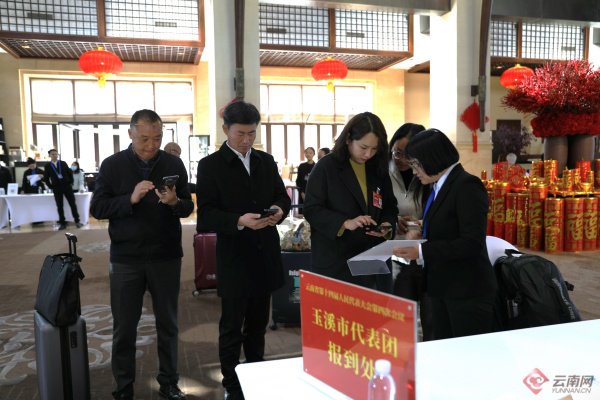
报到现场,代表们迅速进入“上会”状态
Xin Lang Cai Jing· 2026-01-26 16:55
Group 1 - The core focus of the meeting is on the "14th Five-Year Plan" and its implications for modern infrastructure and agricultural modernization in Yunnan province [1][3] - Representatives are actively engaging in discussions about youth development, mental health, and support for vulnerable children, indicating a strong emphasis on social issues [3] - There is a collective commitment among representatives to enhance the quality of their duties and contribute to high-quality development in Yunnan during the "14th Five-Year" period [5] Group 2 - Specific attention is being given to the integration of rural特色产业 (characteristic industries) and the development of green organic agriculture and ecological circular agriculture [3] - The need for improvements in rural infrastructure, particularly in cold chain logistics and digital networks, is highlighted as a critical area for development [3] - The meeting serves as a new starting point for representatives to gather public wisdom and contribute to the province's development goals [5]

青海西宁:探寻高原草莓走红“密码”
Xin Hua She· 2026-01-20 03:30
Core Insights - The strawberry cultivation in Huangzhong District, Xining City, has transformed from traditional methods to modern techniques, significantly increasing production and income for local farmers [1][2][3] - The establishment of a cooperative and support from Jiangsu Province has facilitated the development of a specialized agricultural industry, enhancing the region's economic prospects [1][2] Group 1: Industry Development - Huangzhong District has become a key strawberry production area due to its favorable climate, with significant temperature variations and ample sunlight contributing to high-quality strawberries [1] - The area has expanded its strawberry cultivation through the establishment of a 2,000-acre agricultural demonstration zone and over 1,000 greenhouses, promoting the growth of the industry [1][2] - The total planting area for strawberries has reached approximately 1,170 acres, with an annual production of about 1,857 tons, and the entire industry chain's output value has exceeded 100 million yuan [3] Group 2: Technological Advancements - The introduction of expert guidance and modern agricultural techniques has improved the cultivation process, leading to higher yields and sales for local farmers [2] - A specialized virus-free seedling base has been established, producing over 5 million quality seedlings annually, ensuring a stable supply for year-round strawberry production [2] - The integration of technology in agriculture has been identified as a core support for enhancing the quality and efficiency of the strawberry industry in Xining [2]
乐都冷凉蔬菜形成稳定国际供应链
Xin Lang Cai Jing· 2026-01-12 19:03
Core Insights - The article highlights the development of the cold-cool vegetable industry in Ledou District as a key driver for rural revitalization, aiming for a vegetable planting area of over 8,000 hectares and a production volume of 360,000 tons by 2025, accounting for nearly 40% of the province's total [1][2] Group 1: Agricultural Development - Ledou District has established a three-dimensional layout and a dual-driven model of "facilities + open field," resulting in the construction of 10,836 greenhouses and 4,980 hectares of high-standard farmland, leading to steady annual growth in the value of cold-cool vegetables over the past three years [1] - By 2025, the seedling production is expected to exceed 25 million plants with a survival rate of over 95%, meeting local demand and supplying nearly 7 million high-quality seedlings to 18 surrounding administrative villages, creating 11,000 job opportunities annually [1] Group 2: Technological Innovation - The introduction of the Beidou navigation unmanned driving system in 700 hectares by 2025 will achieve centimeter-level precision in fertilization, saving 80% of labor, with potato yields reaching 3,500 kg per acre [2] - The application of IoT water and fertilizer control technology is projected to save 65% of water and 50% of fertilizer, with a yield increase of over 20%, while maintaining zero growth in chemical fertilizers and pesticides for four consecutive years [2] Group 3: Market Expansion and Branding - The market development strategy includes direct supply to the Guangdong-Hong Kong-Macao Greater Bay Area, generating 110 million yuan from 30,000 tons of vegetables, and opening international markets in Russia and Vietnam, reducing logistics costs by 30% through overseas warehouse construction [2] - The establishment of the "Qinghai-Tibet Gateway Ledou Fruits and Vegetables" regional public brand in 2025, along with the certification of 33 green organic and geographical indication products and the registration of 26 "Le" trademarks, marks a shift from product output to brand output [2] - The promotion of the "enterprise + cooperative + farmer" model has led to the cultivation of 23 leading enterprises and 1,096 professional cooperatives, increasing the average income of 39,000 farmers by 2,500 yuan [2]
西藏绿之源:沙荒地上探索设施农业
Xin Lang Cai Jing· 2026-01-03 10:58
Core Insights - The company, Tibet Green Source Modern Agricultural Technology Co., Ltd., is developing a modern agricultural base in Tibet, focusing on organic fruits and vegetables, with a significant annual sales volume of approximately 750 tons during winter [1][2]. Group 1: Company Development - The company was established in 2019 and has transformed 3,500 acres of sandy wasteland in Zhanang County into an organic fruit and vegetable industrial park [1]. - The company employs a comprehensive technology system that includes soil improvement, water conservation, pest control, and recycling to enhance agricultural productivity in high-altitude conditions [1][2]. - An investment of 200 million yuan has been made to improve over 1,200 acres of sandy wasteland, resulting in the construction of 18 intelligent glass greenhouses and a cold chain logistics sorting complex [2]. Group 2: Product Focus - Asparagus has been identified as a key product due to its deep root system and high value, with plans to cultivate 10,000 acres to create a high-altitude asparagus industry cluster [2][3]. - The company has developed standardized cultivation techniques for various crops, including chocolate tomatoes and sweet corn, while ensuring ecological safety by avoiding chemical pesticides [2][3]. - The first batch of fresh asparagus was successfully sold in major cities such as Shanghai and Chengdu, with projected revenue exceeding 4 million yuan in 2024 [2]. Group 3: Future Goals - The company aims to become a leading global provider of modern green organic agricultural products by leveraging Tibet's unique geographical and ecological advantages [3]. - Plans include establishing a comprehensive agricultural industrial park that integrates research, breeding, cultivation, processing, product testing, transportation, sales, and tourism [3].
沙荒地上探索设施农业
Xin Lang Cai Jing· 2026-01-02 22:39
Core Viewpoint - The company, Tibet Green Source Modern Agricultural Technology Co., Ltd., is leveraging advanced agricultural techniques to develop organic fruit and vegetable production in the challenging high-altitude environment of Tibet, aiming to become a leading player in the global organic agricultural market [1][3]. Group 1: Company Overview - Tibet Green Source was established in 2019 and has transformed 3,500 acres of sandy wasteland in Zhanang County into an organic fruit and vegetable production base [1]. - The company has invested 200 million yuan in its Zhanang base, improving over 1,200 acres of sandy land and constructing 18 intelligent glass greenhouses and high-standard connected greenhouses [2]. Group 2: Agricultural Techniques and Products - The company employs a comprehensive "soil improvement, water conservation, pest control, and recycling" technology system to enhance soil fertility and production efficiency [1]. - Asparagus has been identified as a key product due to its deep root system and high value, with plans to cultivate 10,000 acres to create a high-altitude asparagus industry cluster [2]. Group 3: Market and Sales - The company sold approximately 750 tons of organic fruits and vegetables annually during winter, addressing the low self-sufficiency rate of fresh produce in the high-altitude region [1]. - In 2024, the organic asparagus is projected to generate over 4 million yuan in revenue, with products already reaching markets in Shanghai, Chengdu, and Changsha [2]. Group 4: Future Plans and Sustainability - The company aims to establish a modern organic agricultural industry park that integrates research, breeding, planting, processing, product testing, transportation, sales, and educational tourism [3]. - The company is committed to sustainable development and ecological safety by implementing standardized cultivation techniques and avoiding chemical pesticides [2].
海西茫崖尕斯羊肉获香港STC“正”印认证
Xin Lang Cai Jing· 2025-12-22 19:20
Core Viewpoint - The successful certification of Gasi lamb by the Hong Kong Standards and Testing Centre (STC) marks a significant milestone for the agricultural products of Mangya City, opening up global market opportunities for this unique product [1][2] Group 1: Certification and Market Access - Gasi lamb is the first agricultural product from Mangya City to receive the prestigious "正" certification from STC, which is recognized in 53 countries including the UK, Canada, and Australia [1] - This certification not only meets the stringent entry requirements of the Hong Kong market but also facilitates access to international markets [1] Group 2: Unique Product Characteristics - Gasi lamb is raised in the Kunlun Mountains at an average altitude of over 3000 meters, benefiting from pure snowmelt and natural highland grasses, which contribute to its unique flavor profile [1] - The lamb's meat has a very light gamey taste and a pure flavor, reflecting the pristine environment of the highlands [1] Group 3: Local Development Goals - Mangya City aims to integrate ecological protection with industrial development, focusing on high-quality and efficient agriculture, livable rural areas, and prosperous farmers [1] - The city has achieved organic certification for 2.73 million acres of grassland and has developed notable brands such as "Gasi Mongolian Sheep" and "Gasi Yellow Cattle" [1] Group 4: Future Plans - Local authorities view this certification as a new starting point, planning to deepen the integration with the "Magical Chaidamu" regional public brand and enhance quality control systems [2] - The goal is to promote more organic agricultural products from Qinghai to the world, establishing green organic products as a prominent industry hallmark for Mangya [2]
机械化、绿色有机、稳供应……金秋“丰”景筑牢民生根基 守护“烟火气”
Yang Shi Wang· 2025-10-05 05:50
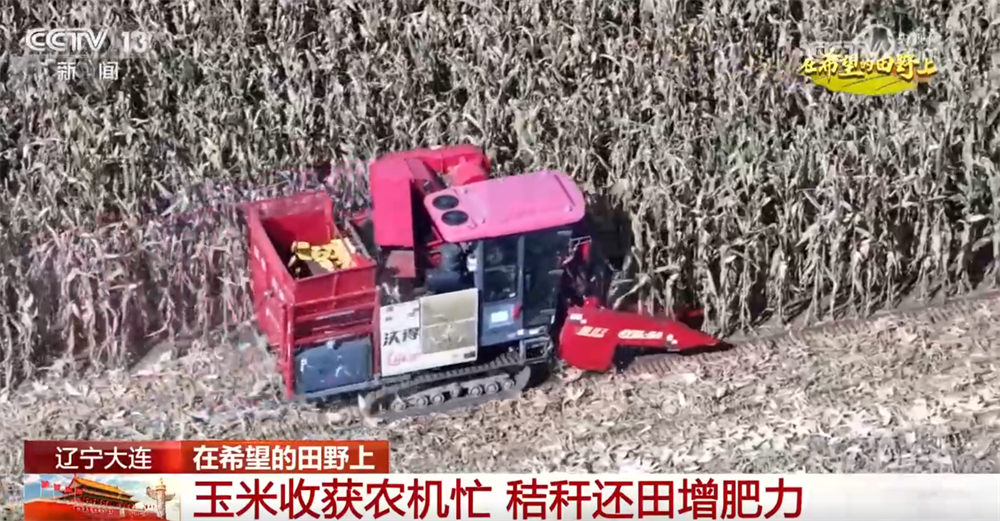
Group 1: Agricultural Mechanization in Dalian - Dalian Jinpu New District is experiencing a corn harvest period with large agricultural machinery efficiently conducting the harvesting operations [1] - The mechanization rate for crop farming in Jinpu New District exceeds 90%, showcasing the effectiveness of modern agricultural equipment [3] - The district has developed a cooperative model for agricultural machinery, enabling efficient deployment of resources during peak farming seasons through an information monitoring platform [5] Group 2: Organic Rice Production in Shaanxi - In Shaanxi, the protection of the endangered crested ibis has led to the development of organic rice farming, with 180,000 acres of organic rice expected to yield a good harvest [6] - The local agricultural practices have shifted to organic methods, prohibiting the use of pesticides and fertilizers in areas where the crested ibis resides, thus fostering organic agriculture [10] - The organic rice fields not only serve as a habitat for the crested ibis but also provide a source of income for local farmers, contributing to their economic prosperity [8] Group 3: Vegetable Supply in Sichuan - During the National Day holiday, Sichuan Nanchong ensured a stable supply of vegetables by reinforcing production bases and market regulation [11] - Various seasonal vegetables were abundant in the market, with clear pricing displayed to maintain transparency for consumers [13] - The local government collaborated with multiple planting cooperatives to ensure continuous supply and stable prices, enhancing the festive experience for citizens [15]
新疆拌面为啥“权威”?
Jin Rong Shi Bao· 2025-09-28 11:26
Core Insights - The article emphasizes the significance of "banmian" (mixed noodles) in Xinjiang cuisine, highlighting its status as a staple food for locals, contrasting with the more commonly recognized dishes like lamb skewers and big plate chicken [2][5] - The quality of local ingredients, particularly the wheat from the region, is crucial for the success of banmian, showcasing the unique agricultural practices in Xinjiang [2][3] Group 1: Local Cuisine and Ingredients - Banmian is considered a daily fast food for locals, characterized by its chewy noodles that are rich in meat and vegetable flavors [2] - The success of banmian relies heavily on local ingredients, including high-quality meat, vegetables, and especially wheat, which is essential for the noodle's texture [2][3] - The region of Qitai County in Xinjiang is noted for its unique agricultural system that combines animal husbandry and dry farming, contributing to the distinct taste of local flour [2] Group 2: Agricultural Development and Financial Support - The "Yaozhanzai" brand from Yaozhanzai Village is recognized for its high-quality wheat and has developed a range of organic products, gaining certifications from China, the EU, the US, and Japan [3][4] - Financial institutions are actively supporting the agricultural sector in Xinjiang, providing loans and services to enhance the wheat production and processing industry [4] - The integration of financial support throughout the wheat industry chain, from cultivation to processing, is crucial for ensuring the stability and quality of wheat production [4][5]