
拌面

Search documents
巴比食品(605338):深度研究:新店型打开天花板,内生外延助力发展
East Money Securities· 2026-03-26 05:32
Investment Rating - The report maintains a "Buy" rating for the company [5] Core Views - The company operates in a rapidly expanding steamed bun industry, with both organic growth and external expansion strategies. The new dining model for soup dumplings presents significant growth potential, and the group meal business is expected to maintain a fast growth rate [5][15] Summary by Relevant Sections Company Overview - The company is recognized as the first publicly listed steamed bun company in China, with a focus on modernizing traditional breakfast food manufacturing [15] - As of September 2025, the company had 5,934 franchise stores, with projected revenue of 1.859 billion yuan for 2025, reflecting an 11.22% year-on-year increase [15][17] Financial Performance - The company expects to achieve revenues of 1.859 billion yuan in 2025, 2.245 billion yuan in 2026, and 2.664 billion yuan in 2027, with corresponding net profits of 273 million yuan, 325 million yuan, and 384 million yuan respectively [5][6] - The company's revenue growth rates are projected at 11.22% for 2025, 20.78% for 2026, and 18.66% for 2027 [6] Market Position and Industry Dynamics - The steamed bun market in China is projected to grow from 704 billion yuan in 2024 to 742 billion yuan in 2025, indicating a 5.4% increase [47] - The company benefits from a strong consumer base in East China, with a well-established franchise management system and a robust supply chain network [15][19] Business Model and Growth Strategy - The company primarily generates revenue through franchise sales, with over 70% of its income derived from this channel. The group meal segment has seen a significant increase in its revenue share from 6% to 22.6% from 2017 to 2025 [31][38] - The company has successfully implemented a dual business model combining franchise operations and group meal services, enhancing its market presence [15][31] Product and Innovation - The company offers a diverse product matrix, including steamed buns, dumplings, and various side dishes, with continuous innovation in product offerings to cater to consumer preferences [25][28] - The introduction of a new dining model for soup dumplings aims to extend customer engagement beyond breakfast to lunch and dinner, enhancing overall sales potential [17]

从街边小吃店到全国先进 新疆乌苏个体工商户马占虎用匠心酿就新疆“好味道”
Zhong Guo Shi Pin Wang· 2026-02-27 09:27
Core Insights - A small eatery named "Da Zui Zi Wei Snack Bar" in Urumqi, Xinjiang, has been awarded the title of "National Advanced Individual Business," recognizing its 17 years of dedicated service and integrity in business [1] - The owner, Ma Zhanhu, emphasizes that the honor belongs not only to him but also to his family, employees, and supportive customers, highlighting the importance of community and local policies in his success [1] Group 1: Business Growth and Development - Ma Zhanhu started the snack bar in 2008, initially offering a limited menu of grilled meat, mixed noodles, and pilaf, but has since expanded to over 2,000 varieties of exquisite snacks due to his passion for culinary arts [1] - The business faced significant challenges in its early days, including a lack of customers and insufficient skills, which led Ma to seek training from various chefs across cities like Urumqi, Beijing, and Shandong [1][2] - The snack bar has grown to generate an annual gross income of over 3 million yuan, reflecting the broader trend of thriving individual businesses in Urumqi [2] Group 2: Community and Employee Relations - The support from Ma's family has been crucial, with each member taking on specific roles in the business, contributing to its success [2] - The establishment has built a strong reputation locally, attracting many repeat customers who appreciate the quality and affordability of the food [2] - Ma Zhanhu treats his employees like family, ensuring quality control in food production and providing free training in culinary skills, which fosters a supportive work environment [2] Group 3: Local Economic Environment - Urumqi has implemented reforms to simplify business registration processes, reduce taxes, and provide skills training, which has significantly boosted the growth of individual businesses [3] - The number of individual businesses in Urumqi has surpassed 18,000, playing a vital role in job creation and consumer spending [3] - Local authorities are committed to supporting individual business development, aiming to help more small enterprises achieve their aspirations [3]
巴比食品20260125
2026-01-26 02:49
Summary of Baba Foods Conference Call Company Overview - Baba Foods primarily operates through franchise stores, supplemented by direct sales, group meals, and new retail channels. By the end of 2024, the number of franchise stores is expected to approach 6,000, with a compound annual growth rate (CAGR) of approximately 11%-12% in revenue from 2016 to 2024, and a 12% CAGR in net profit excluding non-recurring items [2][3]. Key Insights - **Business Model and Growth**: Baba Foods was established in 2003, focusing on the research, production, and sales of Chinese buns and related foods. The company has expanded its franchise stores from about 2,000 in 2016 to nearly 6,000 by 2024, maintaining a revenue CAGR of 11%-12% and a net profit CAGR of 12% [3]. - **Pandemic Response**: During the pandemic, Baba Foods recognized challenges in its traditional franchise model and developed a group meal business as a secondary growth avenue. The company also pursued acquisitions to expand, with plans to continue this strategy into 2024 and 2025 [4][20]. - **New Store Model**: The introduction of a new dining model for small buns has significantly increased daily sales per store, with sales rising from over 3,000 yuan to 7,000-9,000 yuan, and average transaction values increasing from 5-10 yuan to 10-15 yuan. This model is expected to enhance profitability and reduce operational risks for franchisees [4][6][14]. - **Market Potential**: The Chinese breakfast market is substantial, with a market size of 1.8 trillion yuan in 2019 and a CAGR of 7%. The takeaway breakfast market is estimated to be around 700-800 billion yuan, while the national bun market is projected to exceed 700 billion yuan, reaching over 740 billion yuan by 2025 [2][8][9]. Competitive Landscape - **Industry Characteristics**: The breakfast industry is highly competitive and fragmented, with over 15.1 million on-site dining establishments nationwide. The trend favors chain brands, although regional taste differences pose challenges for national brand standardization [10]. - **Baba's Competitive Advantages**: Baba Foods possesses significant brand advantages and an initial national supply chain layout, which enhances product quality and safety, aligning with consumer demands for hygienic brands. This positioning offers franchisees greater sales stability and profit assurance compared to smaller brands [11][12]. Future Plans and Projections - **Expansion Plans**: Baba Foods plans to open approximately 2,000 new dining model stores in East and Central China by 2026. If daily sales average 7,500 yuan, these new stores could contribute 1.29 billion yuan in revenue and over 180 million yuan in profit [16]. - **Production Capacity**: The company has substantial potential for capacity release, with expectations of generating 900 million to 1.8 billion yuan in revenue from new and remodeled stores, with conservative profit estimates in the hundreds of millions [17]. - **Acquisition Impact**: Recent acquisitions have integrated supply chains and improved factory utilization rates, accelerating expansion outside the province and contributing significantly to the company's growth [20]. - **Group Meal Business**: The group meal segment has grown to account for 25% of total revenue, serving as both a revenue supplement and a means to enhance production efficiency [21]. - **Profitability Outlook**: The new dining model for small buns is positioned in the value dining segment, with expectations of opening over 2,000 locations. This could yield a net profit of 180 million yuan, with a projected profit of 320 million yuan in 2027, indicating a potential 60% growth relative to the current market capitalization of 7.7 billion yuan [22].
沙县小吃的万里路
Xin Lang Cai Jing· 2025-12-23 19:08
Core Insights - The article highlights the cultural and economic significance of Shaxian snacks, originating from Yubang Village in Fujian, which have become a beloved culinary staple across China and beyond [1][2]. Group 1: Economic Impact - As of the end of 2024, there are over 90,000 Shaxian snack outlets nationwide, generating an annual revenue exceeding 55 billion yuan and creating employment for over 300,000 people [1]. - The opening of railways, starting with the Yingxia Railway in the 1990s, has been pivotal in connecting Shaxian residents to broader markets, facilitating the growth of the snack industry [2]. Group 2: Tourism Development - The 29th Shaxian Snack Tourism Culture Festival recently took place in Sanming City, attracting food enthusiasts from across the country [1]. - In 2024, the total number of tourists visiting Shaxian is expected to reach nearly 9 million, with total tourism revenue around 6.2 billion yuan [3]. Group 3: Infrastructure and Accessibility - The introduction of high-speed rail has significantly increased passenger traffic at Sanming North Station, with annual passenger numbers growing from approximately 5.58 million in 2014 to nearly 11 million by 2024 [2]. - The development of high-speed rail has transformed Yubang Village from a remote area into a national cultural and tourism destination [2]. Group 4: Cultural Promotion - The village is actively promoting its snack culture through short video marketing and the establishment of cultural exhibition centers, educational bases, and boutique accommodations [2]. - Plans for 2025 include integrating Shaxian snack heritage skills into high-speed rail waiting areas, allowing travelers to engage with the local culinary traditions [3].
中国餐饮四大“神秘组织”,沙县小吃凭啥独树一帜?
3 6 Ke· 2025-11-24 07:56
Core Viewpoint - The article discusses the rise of Shaxian Snacks, a popular Chinese fast-food brand, highlighting its origins, growth, and the factors contributing to its widespread success across China and beyond [1][5][25]. Group 1: Origins and Development - Shaxian Snacks was founded by Deng Shiqi, who opened a small eatery in 1985 after facing financial difficulties [2][4]. - The brand gained momentum in 1997 when Deng was encouraged to return to Shaxian to lead the establishment of a snack street, which led to the creation of over 40 different snack varieties [4][11]. - As of now, there are approximately 88,000 Shaxian Snack outlets worldwide, generating nearly 50 billion yuan in annual revenue [4][12]. Group 2: Unique Selling Points - Shaxian Snacks are characterized by their healthiness and affordability, with dishes like noodles priced around 5 yuan and dumplings around 8 yuan, making them accessible to a wide audience [12][14]. - The brand's appeal lies in its simple yet delicious offerings, which are perceived as healthier alternatives to heavier fast food options [12][14]. Group 3: Government Support and Branding - The local government has played a crucial role in promoting Shaxian Snacks, establishing a dedicated office in 1997 to support the brand's development and setting up liaison offices in 29 cities [16][18]. - The government also provided financial incentives, such as subsidies for new store openings, and invested in a cultural industry park to standardize food processing [20][22]. - In 2015, Shaxian Snacks received official trademark approval, further solidifying its brand identity and operational standards [21][22]. Group 4: Business Model and Expansion - The business model of Shaxian Snacks is flexible, with many outlets being small, low-cost operations that can easily adapt to high-traffic locations [23][25]. - The brand has successfully expanded into various markets, including international locations, by leveraging its unique offerings and operational efficiency [25].


200块一碗的天价麻辣烫,让老外重新认识中餐
36氪· 2025-11-10 10:23
Core Viewpoint - The article discusses the successful international expansion of Chinese fast-food brands, particularly Yang Guofu and Zhang Liang, highlighting their strategies and market positioning in foreign countries, which contrasts with traditional Chinese cuisine's challenges in overseas markets [5][66]. Group 1: Market Positioning and Pricing - Yang Guofu's pricing strategy in Germany is significantly higher than that of McDonald's, with a customer spending approximately 150 to 200 RMB per meal, compared to McDonald's meal prices around 48 RMB [10][12]. - The average customer spending at Yang Guofu in Japan is about 140 RMB, while local McDonald's meal prices range from 30 to 40 RMB [10][12]. - Yang Guofu has entered 25 countries with over 200 stores, maintaining a pricing strategy that positions it above traditional fast-food chains [12][25]. Group 2: Consumer Reception and Cultural Adaptation - Yang Guofu has become a popular dining choice in Japan, often requiring customers to wait 1 to 2 hours for a table, indicating strong demand and acceptance [14][19]. - The unique flavors and variety of ingredients offered by Yang Guofu appeal to local consumers, who appreciate the novelty and richness of the dish [19][21]. - The article notes that foreign consumers enjoy the experience of eating Yang Guofu, often treating it as a social event rather than a quick meal, which contrasts with the fast-food culture in China [30][45]. Group 3: Competitive Landscape - Yang Guofu faces competition from Zhang Liang, which has also expanded internationally, with similar pricing strategies and market presence [33][34]. - Both brands have adopted a franchise model for international expansion, allowing them to leverage local knowledge while maintaining standardized operations [47][48]. Group 4: Challenges of Traditional Chinese Cuisine - The article highlights the difficulties faced by traditional Chinese restaurants in international markets, citing examples like Quanjude, which struggled due to ingredient sourcing issues and high operational costs [56][58]. - It suggests that the success of brands like Yang Guofu and Zhang Liang stems from their ability to adapt and simplify their offerings, making them more appealing to foreign consumers [58][63].
双汇发展(000895):2025年三季报点评:Q3归母净利同比增长,受益猪肉成本下降
Guoxin Securities· 2025-10-28 15:23
Investment Rating - The investment rating for the company is "Outperform the Market" [7][24]. Core Views - The company has shown a year-on-year increase in net profit for Q3, benefiting from a decrease in pork costs. The total revenue for Q1-Q3 2025 increased by 1.23% to 446.53 billion yuan, with net profit rising by 4.05% to 39.59 billion yuan. The total external sales volume of meat products reached 2.4885 million tons, a year-on-year increase of 5.92% [2][10]. - The company is implementing a professional sales team reform to enhance market operations and plans to increase market support in the second half of the year, focusing on promoting high-cost performance products [2][4]. - The company is expanding into the prepared food sector, having established a dedicated team for product development, which is expected to contribute positively to performance [4][24]. Summary by Sections Financial Performance - For Q1-Q3 2025, the gross margin decreased by 0.05 percentage points to 18.18%, while the net margin increased by 0.22 percentage points to 8.99%. The sales expense ratio rose by 0.24 percentage points to 3.51%, while management and R&D expense ratios decreased by 0.11 percentage points to 2.42% [3][21]. - The operating cash flow for Q1-Q3 2025 decreased by 13.3% to 5.995 billion yuan, accounting for 13.47% of total revenue [23]. Revenue and Profit Forecast - The company forecasts net profits of 5.305 billion yuan, 5.606 billion yuan, and 5.878 billion yuan for 2025, 2026, and 2027 respectively, with corresponding P/E ratios of 16.4, 15.5, and 14.8 [5][24]. - Revenue is expected to grow slightly, with projections of 60.304 billion yuan for 2025, 61.409 billion yuan for 2026, and 62.264 billion yuan for 2027 [5][27]. Market Position and Strategy - The company is recognized as a leader in the domestic slaughtering industry and maintains a high cash dividend policy. The focus on high-cost performance products and the expansion into new business areas like prepared foods are expected to enhance profitability [4][24].

年入550亿靠减肥法翻红!沙县小吃凭啥抓牢年轻人钱包
2 1 Shi Ji Jing Ji Bao Dao· 2025-10-19 02:09
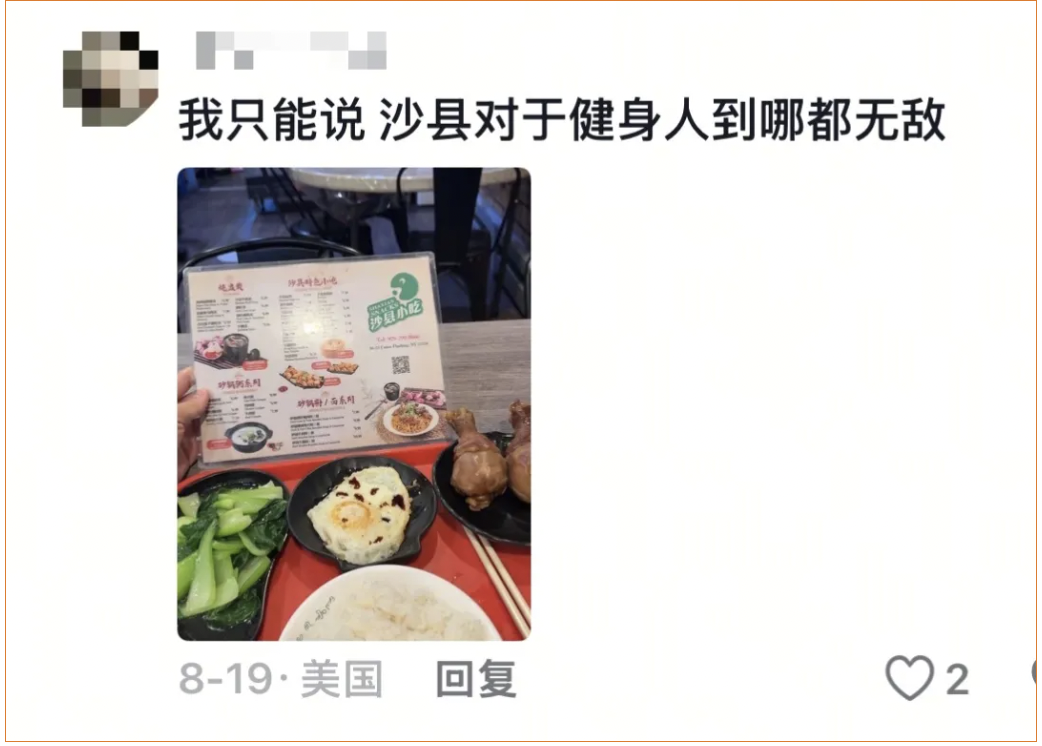
Core Insights - The article discusses the transformation of Sha County snacks from a budget meal option to a trendy "weight loss" choice among young consumers, particularly on social media platforms [1][5]. Group 1: Market Trends - Sha County snacks have gained popularity as a "fitness meal," with social media topics like CanEatingShaCountyHelpLoseWeight reaching over 32.53 million views on Douyin and ShaCountyWeightLossMethod nearly 600,000 views on Xiaohongshu as of October 15 [1]. - The brand has successfully repositioned itself, attracting fitness enthusiasts who create personalized low-calorie meal plans using affordable items like "1 yuan tofu" and "5 yuan chicken leg" [1][5]. Group 2: Brand Development - Since initiating brand upgrades in 2017, Sha County snacks have opened flagship stores in major cities like Beijing and Shanghai, featuring modern decor and extended hours to attract younger customers [2]. - The introduction of "late-night dining" options and combo meals like "beer + snacks" has further enhanced store popularity [2]. Group 3: Business Scale - Sha County snacks operate nearly 100,000 stores across 62 cities, significantly outpacing international fast-food brands, with a store count approximately 13 times that of McDonald's in China [4]. - The brand's annual revenue exceeds 55 billion yuan, and it has expanded internationally, with 229 overseas locations in 79 countries and regions by the end of 2024 [4][6]. Group 4: Challenges - Despite its success, the brand faces challenges, with only about 4,000 of its nearly 100,000 stores being standardized chain outlets, indicating a prevalence of counterfeit shops and inconsistent quality [8]. - The ability to maintain brand integrity while expanding rapidly is crucial for Sha County snacks to convert social media buzz into lasting brand strength [8].
“沙县大酒店”,收留了多少自律的中年男人
Hu Xiu· 2025-09-30 06:10
Core Insights - The article discusses the transformation of Sha County snacks from a humble, budget-friendly option to a trendy dining choice for fitness enthusiasts and young people, highlighting its appeal as both a comfort food and a healthy meal option [3][10][15] Group 1: Evolution of Sha County Snacks - Sha County snacks have evolved from being perceived as simple, affordable meals for workers to becoming a popular choice among young fitness enthusiasts who seek healthy, customized meal options [3][4] - The emergence of "Sha County Master" as a figure who provides personalized meal plans based on individual fitness goals has contributed to this transformation [4][8] - The atmosphere in Sha County snack outlets has shifted, now attracting a clientele of health-conscious individuals rather than just students and workers [4][10] Group 2: Menu and Dining Experience - The menu of Sha County snacks includes a variety of dishes, but it is characterized by a lack of standout signature items, making it a versatile option for diners [5][6] - The flagship stores of Sha County snacks offer a more upscale dining experience while maintaining affordable prices, appealing to a broader audience [9][13] - The dining experience emphasizes in-store consumption, as takeout options do not replicate the fresh, cooked-to-order quality of the meals [9][10] Group 3: Cultural Significance - Sha County snacks have become a nostalgic choice for many, representing a connection to childhood and simpler times, while also serving as a social dining option for friends [14][15] - The brand has developed a unique identity that resonates with different age groups, from young adults to middle-aged patrons, reflecting a journey of culinary appreciation [15][17] - The casual and unpretentious nature of Sha County snacks allows for a relaxed dining experience, contrasting with more formal dining options [17]
新疆拌面为啥“权威”?
Jin Rong Shi Bao· 2025-09-28 11:26
Core Insights - The article emphasizes the significance of "banmian" (mixed noodles) in Xinjiang cuisine, highlighting its status as a staple food for locals, contrasting with the more commonly recognized dishes like lamb skewers and big plate chicken [2][5] - The quality of local ingredients, particularly the wheat from the region, is crucial for the success of banmian, showcasing the unique agricultural practices in Xinjiang [2][3] Group 1: Local Cuisine and Ingredients - Banmian is considered a daily fast food for locals, characterized by its chewy noodles that are rich in meat and vegetable flavors [2] - The success of banmian relies heavily on local ingredients, including high-quality meat, vegetables, and especially wheat, which is essential for the noodle's texture [2][3] - The region of Qitai County in Xinjiang is noted for its unique agricultural system that combines animal husbandry and dry farming, contributing to the distinct taste of local flour [2] Group 2: Agricultural Development and Financial Support - The "Yaozhanzai" brand from Yaozhanzai Village is recognized for its high-quality wheat and has developed a range of organic products, gaining certifications from China, the EU, the US, and Japan [3][4] - Financial institutions are actively supporting the agricultural sector in Xinjiang, providing loans and services to enhance the wheat production and processing industry [4] - The integration of financial support throughout the wheat industry chain, from cultivation to processing, is crucial for ensuring the stability and quality of wheat production [4][5]