
有机水稻

Search documents
奋进“十五五”阔步向未来|佳新合作社 从“种好稻”到“玩出圈”
Xin Lang Cai Jing· 2026-02-16 22:32
Core Insights - The article highlights the innovative agricultural and tourism integration model adopted by the Jiaxin Youdao Rice Planting Farmers' Cooperative in Tieli City, which has successfully attracted tourists and generated significant income through unique rural experiences [1][2]. Group 1: Agricultural Innovations - The cooperative has implemented an ecological farming model that includes "shrimp-rice, crab-rice, fish-rice, and duck-rice" co-cultivation, allowing visitors to engage in traditional farming activities and observe the symbiotic relationships in the fields [1][2]. - The "One Mu Field Cloud Planting" project enables consumers to monitor rice growth through live streaming, enhancing transparency and expanding income channels for farmers [2]. Group 2: Economic Impact - Since 2025, the cooperative has hosted over 30,000 customized experience visitors, cultivated over 2,000 acres of customized shrimp-rice fields, generated an agricultural output value of 6.7 million yuan, and achieved sales of 10 million yuan, benefiting over 200 local households with an average income increase of over 5,000 yuan [2]. - The cooperative aims to strengthen its role as a model for rural revitalization by focusing on the entire supply chain, including breeding, production, brand building, and logistics for cold-water shrimp [2][3]. Group 3: Future Development Plans - The cooperative plans to deepen its ecological farming practices, enhance partnerships with research institutions to improve the quality and yield of rice and aquatic products, and promote its own brand more effectively [3]. - Future initiatives include expanding tourism offerings, developing more unique agricultural experience projects, and creating premium rural tourism routes to attract more visitors and stimulate local economic growth [3].
陕西横山区农特产品推荐暨震远集团招商合作洽谈会成功举办 以产招商促共赢 赋能乡村振兴新发展
Xin Lang Cai Jing· 2026-02-10 04:37
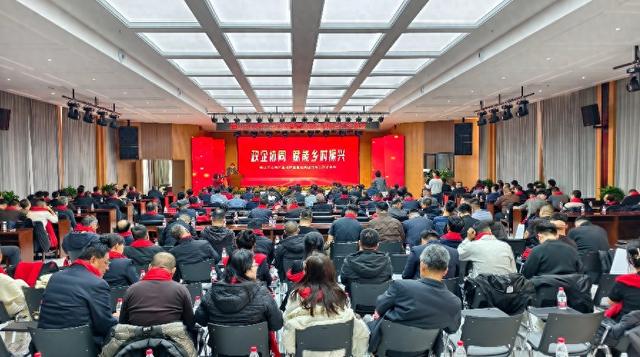
Core Viewpoint - The recent agricultural product promotion and investment cooperation conference in Hengshan District, Yulin City aims to enhance the market presence of local agricultural products and foster high-quality agricultural development through collaboration and resource integration [1][3]. Group 1: Conference Objectives and Outcomes - The conference focused on promoting Hengshan's specialty products, building cooperation bridges, facilitating industrial upgrades, and supporting rural revitalization [3]. - Multiple cooperation intentions were reached during the conference, leading to the signing of agreements related to the purchase and sale of agricultural products and industrial cooperation [3]. Group 2: Agricultural Product Advantages - Hengshan District boasts rich agricultural resources and unique geographical and climatic conditions that yield high-quality agricultural products, including renowned Hengshan lamb, Daming mung beans, organic rice, and specialty grains [3]. - The district has developed a diversified and high-quality agricultural product matrix, creating numerous business opportunities for collaboration with enterprises [3]. Group 3: Development Model and Strategy - In its pursuit of high-quality development, Hengshan District adheres to a development model that integrates government, farmers, research, enterprises, and markets [3]. - The district actively builds online and offline platforms for government-enterprise and production-sales connections, promoting local agricultural products to broader markets [3].

“沪派江南”从规划转向全面实施 过去一年里 15个试点里有300多个细分项目陆续启动
Jie Fang Ri Bao· 2026-01-27 01:41
Core Insights - The "Hupai Jiangnan" pilot project has transitioned from planning to full implementation, with five typical pilot areas completing land remediation project designs and construction tenders, aiming for completion in the first half of this year [1] - Over the past year, more than 300 sub-projects have been initiated within the 15 pilot areas, with total investments reaching the billion-level [1] - The project focuses on restoring rural production, living, and ecological scenes, emphasizing the unique characteristics of Shanghai's rural landscape [2] Group 1: Project Implementation - The five pilot areas include Jinshan Xinyuan, Songjiang Tianmashan, Chongming Fuxu, Qingpu Xicen, and Minhang Pujiang, which are set to lead the construction efforts [1] - The remaining ten pilot areas are expected to complete their construction by 2027, following the initial five [1] Group 2: Cultural and Ecological Focus - The project aims to excavate and restore the original rural characteristics rather than merely constructing new projects, focusing on "fields, water, and forests" [2] - The pilot areas are categorized into six spatial regions, reflecting the diverse topographical features of Shanghai's countryside [2] Group 3: Specific Pilot Area Developments - The Qingpu Jinze Xicen pilot area features a unique圩田 restoration project that aims to recreate historical agricultural practices [3] - The Songjiang Tianmashan pilot area emphasizes cultural elements, planning to establish a "Tianma Book Society" to engage the public with local history [4] - The Datuan Zhaoqiao pilot area aims to enhance urban functions within traditional agricultural landscapes, creating thematic scenes and improving local water systems [5] Group 4: Cultural Heritage and Community Engagement - The project has led to the discovery and documentation of ancient bridges, highlighting the cultural significance and historical narratives associated with them [6] - The integration of cultural elements into the rural revitalization efforts is seen as essential for connecting past and present [6] Group 5: Economic and Ecological Synergies - The "Hupai Jiangnan" initiative is attracting investments from enterprises, particularly in areas like Chongming Fuxu, which is positioned as a key ecological node [7] - The focus on organic agriculture and bird-watching culture is creating a closed-loop system where ecological, cultural, and economic values enhance each other [8]
南京溧水晶桥镇枫香岭社区:党建引领促振兴 暖心大米送老人
Xin Lang Cai Jing· 2026-01-08 06:35
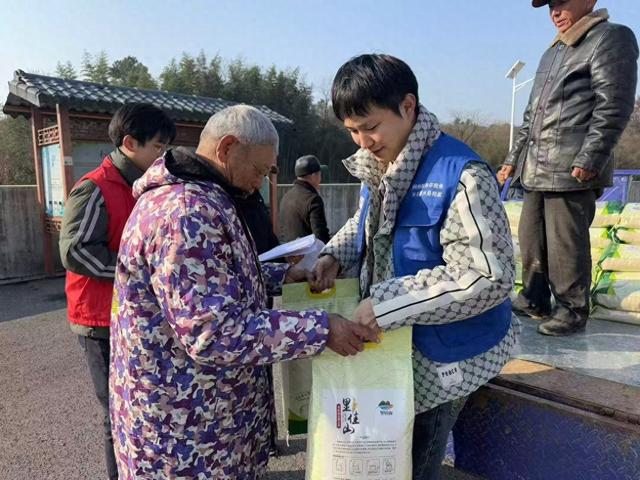
Core Viewpoint - The article highlights the community's efforts in providing support to elderly residents through the distribution of rice, showcasing the positive impact of rural revitalization initiatives on their well-being and happiness [1][3][7]. Group 1: Community Support Initiatives - The community has distributed 20 pounds of rice to each of the 1,410 elderly residents aged 60 and above, totaling 28,200 pounds of rice [7]. - This initiative is part of a continuous effort by the community party branch, which has been providing this welfare for three consecutive years [7]. - The community has arranged for vehicles to deliver rice directly to various natural villages, ensuring that no elderly person is overlooked [5]. Group 2: Economic Development and Agricultural Innovation - The community party branch has implemented a "branch + cooperative + farmer" operational model, allowing all villagers to become "shareholders" and benefit from profit-sharing [8]. - The cooperative has managed to cultivate 2,600 acres of low-efficiency farmland, focusing on modern agriculture with organic rice and high-quality rapeseed [8]. - The community has been recognized as one of Jiangsu Province's first ecological and livable beautiful villages, with its sub-village receiving accolades for its distinctive rural characteristics [8]. Group 3: Future Development Plans - The community aims to deepen the "Million Project" practice to enhance the living and working environment, integrating special agriculture, red culture, and rural tourism [10]. - Plans include expanding diverse activities such as red study tours, outdoor leisure, and family-friendly picking experiences to ensure that elderly residents share in the development benefits [10].
机械化、绿色有机、稳供应……金秋“丰”景筑牢民生根基 守护“烟火气”
Yang Shi Wang· 2025-10-05 05:50
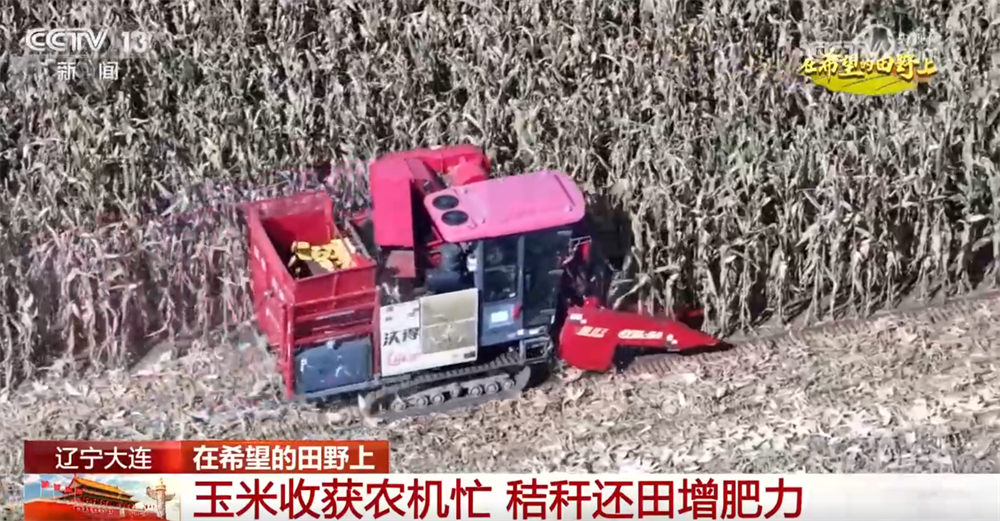
Group 1: Agricultural Mechanization in Dalian - Dalian Jinpu New District is experiencing a corn harvest period with large agricultural machinery efficiently conducting the harvesting operations [1] - The mechanization rate for crop farming in Jinpu New District exceeds 90%, showcasing the effectiveness of modern agricultural equipment [3] - The district has developed a cooperative model for agricultural machinery, enabling efficient deployment of resources during peak farming seasons through an information monitoring platform [5] Group 2: Organic Rice Production in Shaanxi - In Shaanxi, the protection of the endangered crested ibis has led to the development of organic rice farming, with 180,000 acres of organic rice expected to yield a good harvest [6] - The local agricultural practices have shifted to organic methods, prohibiting the use of pesticides and fertilizers in areas where the crested ibis resides, thus fostering organic agriculture [10] - The organic rice fields not only serve as a habitat for the crested ibis but also provide a source of income for local farmers, contributing to their economic prosperity [8] Group 3: Vegetable Supply in Sichuan - During the National Day holiday, Sichuan Nanchong ensured a stable supply of vegetables by reinforcing production bases and market regulation [11] - Various seasonal vegetables were abundant in the market, with clear pricing displayed to maintain transparency for consumers [13] - The local government collaborated with multiple planting cooperatives to ensure continuous supply and stable prices, enhancing the festive experience for citizens [15]
种田更智慧 产业更融合 增收更多元
Nan Jing Ri Bao· 2025-09-23 02:03
Core Viewpoint - The transformation of agriculture in Nanjing is marked by the shift from traditional farming methods to modern, technology-driven practices, enhancing efficiency and productivity in urban agriculture [1][2][3]. Group 1: Technological Transformation - The introduction of smart greenhouses has revolutionized vegetable production, with a single greenhouse producing over 150 tons of vegetables annually and generating sales exceeding 4 million yuan, demonstrating a per-acre output value of over 200,000 yuan [2]. - Smart irrigation systems in rice cultivation allow for real-time monitoring and automated control of water usage, significantly improving water management and crop yield [3]. - Nanjing has established five smart agriculture parks and eleven digital farms, with agricultural technology contributing over 74% to productivity, surpassing the national average by more than 10 percentage points [3]. Group 2: Market Demand and Agricultural Diversification - The shift in consumer preferences towards a diversified diet necessitates a change in traditional agricultural practices, as the demand for various food products increases [4]. - Agricultural cooperatives are expanding their operations beyond primary production to include processing and distribution, with one cooperative achieving a total output value of over 40 million yuan by diversifying into multiple sectors [5]. - The integration of agriculture with secondary and tertiary industries has led to a significant increase in the total output value of agricultural specialty industries, exceeding 47 billion yuan with a year-on-year growth of over 17% [5]. Group 3: Economic Benefits and Rural Development - The development of courtyard economies has enabled farmers to utilize idle spaces for additional income, with some households reporting annual income increases of around 5,000 yuan through participation in local economic initiatives [9]. - The establishment of rural tourism platforms has generated significant sales, with nearly 3 million yuan in direct revenue and an additional 14 million yuan in sales for various stakeholders [9]. - The focus on increasing farmers' income through diverse economic activities is central to Nanjing's agricultural strategy, with ongoing efforts to create sustainable income mechanisms for rural communities [9].