网络反不正当竞争

Search documents
去年我国查办网络不正当竞争案件1932件,典型案例公布→
Xin Lang Cai Jing· 2026-01-31 04:02
Group 1 - New Xiang City Jia You Network Technology Co., Ltd. was penalized for using software to bypass platform review mechanisms, resulting in a fine of 100,500 yuan [1] - Xiamen Tian Ding Xing Network Technology Co., Ltd. was fined 200,000 yuan for organizing fake transactions to enhance search rankings and store competitiveness [1] - Jiujiang Yinmei Technology Co., Ltd. was fined 120,000 yuan for illegally scraping data from e-commerce platforms, harming the rights of platform operators [1] Group 2 - Chengdu Zuo Qi Culture Media Co., Ltd. was fined 150,000 yuan for commercial defamation by spreading false information about competitors [2] - Lianyungang Chuangyan Biotechnology Co., Ltd. was fined 200,000 yuan for malicious complaints against competitors, disrupting fair competition [2] - Shanghai Zao Yi Enterprise Management Center was fined 30,000 yuan for commercial confusion by misrepresenting shared broadband as independent broadband [2] Group 3 - Space Wisdom Decoration (Beijing) Co., Ltd. was fined 10,000 yuan for false advertising through misleading promotional activities during store renovations [4]
警惕“五星好评”沦为“坑人陷阱”
Xin Hua Wang· 2025-12-12 01:36
Group 1 - The core issue highlighted is the manipulation of online reviews, where consumers are pressured to leave positive feedback in exchange for refunds or incentives, undermining the integrity of e-commerce platforms [1][2] - The phenomenon of "review manipulation" has evolved into an industry, with organized networks engaging in fake transactions and fabricated reviews to inflate product ratings and mislead consumers [2] - The Chinese e-commerce market is projected to reach 15.5 trillion yuan in retail sales by 2024, maintaining its position as the largest online retail market globally, which raises concerns about the prevalence of review manipulation affecting market trust [2] Group 2 - Regulatory measures have been implemented to combat unfair competition in the online market, including the prohibition of incentivizing users for positive reviews, as outlined in the "Interim Regulations on Prohibition of Unfair Competition" [2] - In 2024, a total of 3,547 cases of online unfair competition were investigated, demonstrating the enforcement of regulations against practices like fake reviews and review manipulation [2] - The commentary emphasizes that while "inflated reviews" may yield short-term gains, they ultimately do not sustain long-term business success, urging consumers to be vigilant and contribute to a fair and transparent e-commerce environment [3]
警惕“好评”陷阱
Xin Lang Cai Jing· 2025-09-25 17:16
Core Viewpoint - The prevalence of fake reviews in online shopping, driven by practices like "brushing," undermines consumer trust and market integrity [1][2][3] Group 1: Case Study and Legal Framework - A recent case in Henan province resulted in a five-and-a-half-year prison sentence and a fine of 6.25 million yuan for an individual involved in organizing fake reviews [1] - The practice of "brushing" involves creating false sales and positive reviews to artificially inflate a store's reputation without actual transactions [1][2] - Legal regulations, such as the Anti-Unfair Competition Law and the Interim Provisions on Online Anti-Unfair Competition, prohibit businesses from engaging in false transactions and misleading promotions [2] Group 2: Market Impact and Consumer Experience - The phenomenon of "brushing" leads to a cycle where genuine businesses struggle to compete against those that manipulate reviews, ultimately harming the overall consumer ecosystem [2] - Consumers often encounter incentives for leaving positive reviews, such as cash back or rewards, which can blur the lines of ethical behavior in online shopping [2] Group 3: Solutions and Recommendations - Addressing the issue of fake reviews requires a collaborative effort from merchants, consumers, platforms, and regulatory bodies [3][4] - Merchants should focus on genuine customer experiences to build real reputations, while consumers need to be vigilant about identifying fake reviews [3] - Platforms must invest in technology to detect and penalize fraudulent review practices, and regulatory authorities should enforce strict penalties across the supply chain [3][4] - Establishing a mechanism that rewards integrity and punishes dishonesty can shift the focus from "brushing" to genuine business practices [4]
新疆乌苏市市场监管局开展网络安全宣传周活动
Zhong Guo Shi Pin Wang· 2025-09-15 05:01
Core Viewpoint - The article emphasizes the importance of regulating online market competition to protect the legal rights of operators and consumers, highlighting a recent initiative in Urumqi City to promote network security awareness and compliance among businesses [1] Group 1: Regulatory Actions - On September 15, the Urumqi City Market Supervision Administration launched a campaign to enhance network security and combat unfair competition, collaborating with various local government departments and organizations [1] - The campaign included public outreach activities at Harmony Square, where officials educated citizens on network security, legal regulations regarding food and drug safety, and industrial products [1] Group 2: Business Engagement - Market supervision officials engaged directly with local online businesses and individual operators to understand their operational challenges and compliance needs [1] - The focus was on addressing common illegal practices such as "fake reviews," "cashback for positive reviews," and "data traffic fraud," with officials providing detailed policy interpretations [1] Group 3: Compliance Guidance - Officials offered on-site answers to businesses regarding "boundaries of online marketing" and "standards for compliant advertising," guiding them to improve internal compliance management systems [1] - The initiative aims to help businesses avoid risks associated with unfair competition from the outset [1]
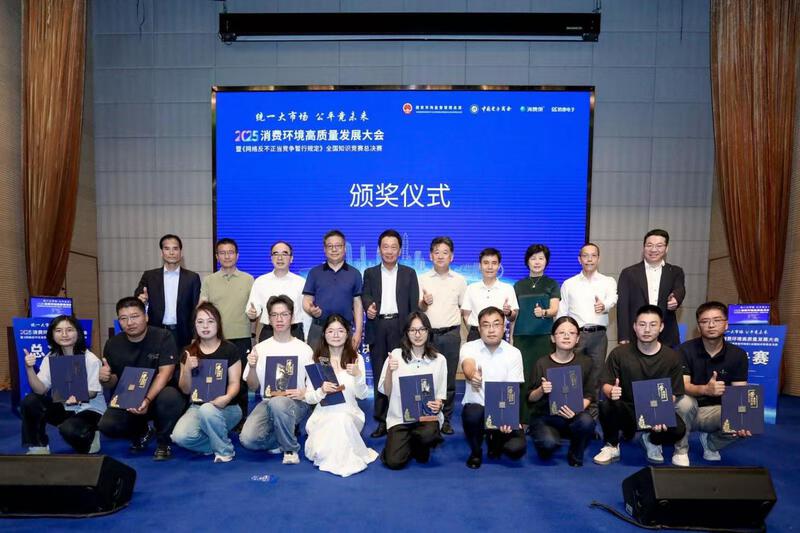
《网络反不正当竞争暂行规定》全国知识竞赛总决赛圆满落幕
Xin Hua Wang· 2025-09-13 09:27
Core Points - The event aimed to promote the implementation of the "Interim Provisions on Anti-Unfair Competition in the Online Environment" and foster a fair competition environment for consumers and businesses [4][12] - The competition attracted over 1.2 million participants and received more than 30 million exposures online since its launch in June 2025 [4] - The event highlighted the importance of understanding and implementing laws to address the complexities of market competition in the digital economy [6][11] Group 1: Event Overview - The 2025 Consumer Environment High-Quality Development Conference and the National Knowledge Competition Finals on Anti-Unfair Competition were held on September 12, 2025 [1] - The event was guided by the State Administration for Market Regulation and organized by the China Electronics Chamber of Commerce and other partners [1][3] - The theme of the event was "Unified Market, Fair Competition Future," focusing on building a solid foundation for the implementation of the new regulations [4] Group 2: Key Participants and Contributions - Notable attendees included officials from the State Administration for Market Regulation and leaders from various sectors, emphasizing the collaborative effort in promoting fair competition [3][6] - The event featured a roundtable discussion on applying the new regulations to regulate self-preferential behaviors of platform enterprises [8][11] - The competition's champion, Tong Lishu from Shenzhen University, showcased the engagement and knowledge of participants [4] Group 3: Regulatory Context and Implications - The "Interim Provisions on Anti-Unfair Competition in the Online Environment" came into effect on September 1, 2024, to combat emerging unfair competition behaviors in the digital economy [4][12] - The regulations are seen as essential for ensuring fair competition and protecting consumer rights, with strong support from industry leaders [6][11] - The event served as a platform for discussing the challenges and innovations needed in law enforcement to address online unfair competition effectively [11]

“已抢10.5万+件”?假的!618小心踩中这个坑
Sou Hu Cai Jing· 2025-06-13 01:58
Core Viewpoint - A recent case revealed that an online seller fabricated transaction volumes to create a false impression of product popularity, highlighting the need for stricter regulation in e-commerce to protect consumer rights [1][3][5]. Group 1: Case Details - The seller claimed over 105,000 transactions for a lapel microphone, while actual sales were found to be less than 1,000 [3]. - The seller exploited a loophole by splitting a main product into accessory links, setting a low price to encourage bulk purchases, resulting in 104,764 inflated transactions through repeated fake orders [3][4]. Group 2: Regulatory Framework - The case falls under the provisions of the E-commerce Law and the Interim Regulations on Anti-Unfair Competition, which prohibit false transactions and misleading commercial practices [4][5]. - The successful investigation marked the first case handled by the Haidian District Market Supervision Bureau under the new regulations, demonstrating a commitment to purifying the digital economy and safeguarding consumer rights [5][6]. Group 3: Market Context - As of December 2024, China's online shopping user base is expected to exceed 900 million, making sales data a critical factor for consumer purchasing decisions [5]. - The rise of e-commerce has led to increased scrutiny of sales practices, with the implementation of new regulations aimed at curbing unfair competition in the digital marketplace [5].