网络谣言

Search documents
上海警方:雷某某、刘某某被行拘,梁某、郭某被采取刑事强制措施
券商中国· 2026-03-25 08:06
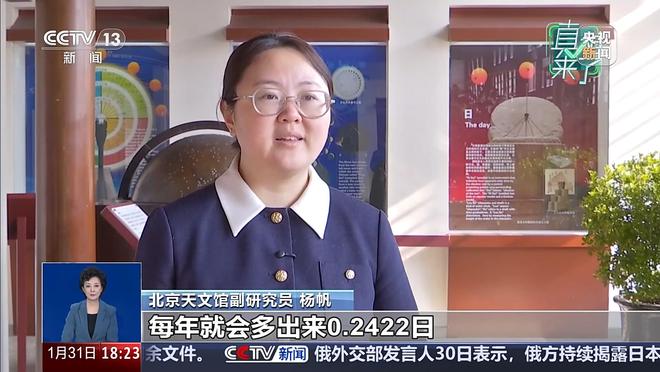
Core Viewpoint - The article highlights the increasing issue of online rumors and misinformation affecting various industries, particularly focusing on the actions taken by law enforcement to combat these false narratives and their impact on businesses [1][2]. Group 1: Online Rumors and Law Enforcement Actions - In 2023, law enforcement has handled 50 cases related to online rumors affecting enterprises, resulting in the administrative detention of 69 individuals and the removal of over 4,600 pieces of misinformation [1]. - A specific case involved a video claiming that a delivery worker repackaged fallen noodles, which was later revealed to be manipulated content by an individual seeking attention [7][8]. - Another case involved a rumor about a high return rate for women's clothing on an e-commerce platform, which negatively impacted the platform's business [4][5]. Group 2: Use of AI in Spreading Misinformation - A case was reported where individuals used AI to create false narratives about multiple automotive companies, leading to the publication of over 700,000 misleading articles and illegal profits exceeding 80,000 yuan [12][13]. - Additionally, there was an incident where AI-generated false medical articles were used to mislead patients and damage the reputation of a hospital [16][17].

任某造谣某知名茶饮“涉毒”,网警通报
财联社· 2026-03-07 03:39
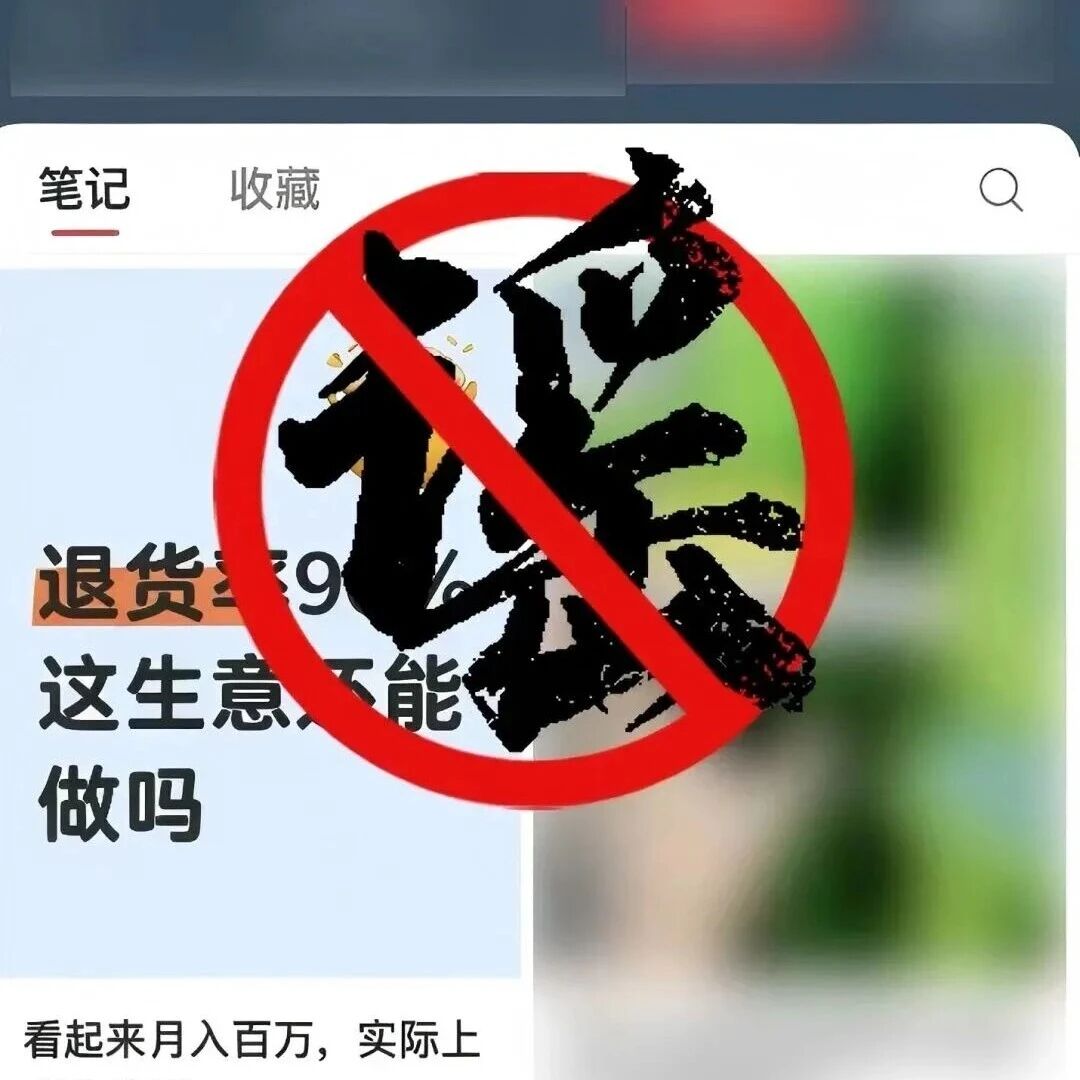
Core Viewpoint - The article emphasizes the serious disruption caused by corporate-related online rumors to public order and the business environment, highlighting the law enforcement's commitment to combating such misinformation through a new policing model that integrates professionalism, mechanisms, and big data [1]. Group 1: Case Summaries - Case 1: A netizen falsely claimed that a well-known tea drink brand's caffeine content was a "quasi-drug," leading to consumer panic and misinformation. The individual has been taken into criminal custody by local police [2]. - Case 2: False posts about a prominent online service platform suggested a significant increase in user uninstalls and leaked information regarding an antitrust investigation, resulting in customer loss and damage to the company's interests. The individuals responsible have also been taken into criminal custody [3]. - Case 3: A netizen spread false information claiming that starting March 1, 2026, all videos on a popular online platform would require a membership purchase, misleading users and disrupting public order. The individual has been subjected to administrative detention by local police [4]. Group 2: Law Enforcement Actions - The police will continue to rigorously combat the fabrication and dissemination of corporate-related false information, ensuring that each case is identified and addressed to purify the online environment and support business development [4].

造谣霸王茶姬“涉毒”,上海警方:任某被采取刑事强制措施
Xin Lang Cai Jing· 2026-03-02 08:23
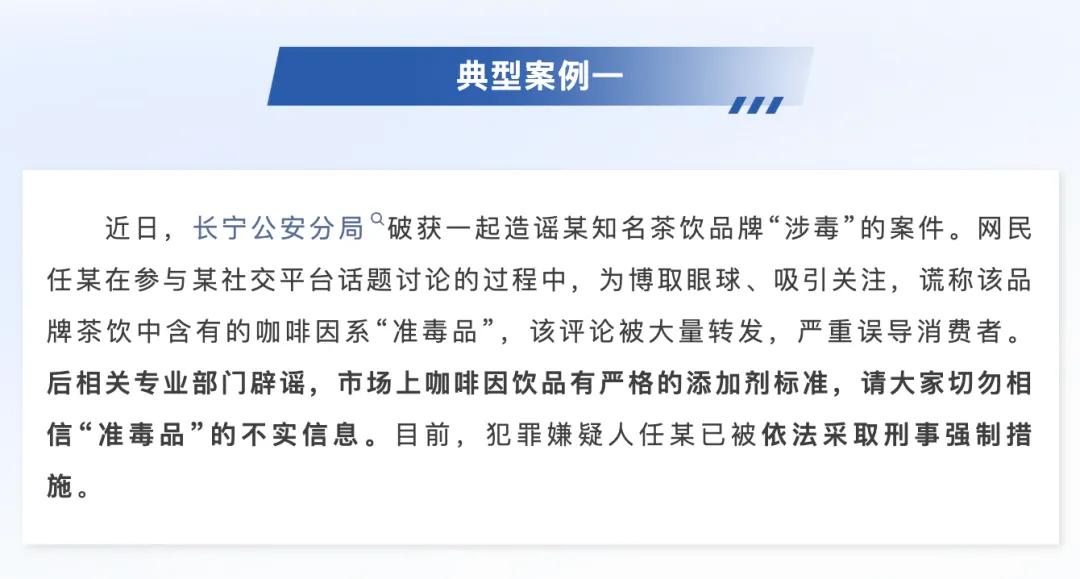
Core Viewpoint - A case of misinformation regarding a well-known tea beverage brand claiming its caffeine content is akin to "quasi-drugs" has been resolved by law enforcement, emphasizing the importance of accurate information in consumer products [1][2] Group 1: Incident Overview - The Shanghai Changning Public Security Bureau has cracked a case involving a netizen named Ren, who falsely claimed that a popular tea brand's caffeine content was "quasi-drugs" to gain attention on social media [1] - The misleading comment was widely shared, causing significant consumer confusion, prompting a response from relevant authorities to clarify the safety standards of caffeine in beverages [1][2] Group 2: Official Responses - The Shanghai Anti-Drug Office issued a statement refuting the claims, asserting that caffeine in market beverages is derived from natural sources or compliant additives, with strict safety standards in place [2] - The tea brand, Bawang Chajiji, responded by comparing the caffeine content of its tea to that of a latte, indicating that it is significantly lower than that of an Americano, and has initiated legal proceedings to protect its rights [2]

霸王茶姬“涉毒”?造谣者已被采取刑事强制措施
2 1 Shi Ji Jing Ji Bao Dao· 2026-02-28 11:12
Group 1 - The Shanghai Public Security Bureau has launched a campaign to combat "online rumors related to enterprises," with a notable case involving a false claim about a well-known tea beverage brand being linked to drugs [2] - The rumor originated from a social media user who falsely stated that the caffeine in the beverage was a "quasi-drug," which misled consumers and was widely shared [2] - Authorities clarified that caffeine beverages are subject to strict additive standards, urging the public not to believe in the false information regarding "quasi-drugs" [2] Group 2 - The suspect, identified as Ren, has been subjected to criminal coercive measures by law enforcement [3] - To date, the police have handled 23 cases related to online rumors about enterprises, resulting in the legal processing of 38 individuals and the removal of over 3,000 pieces of rumor-related information [3] - More than 210 accounts that violated regulations have faced measures such as being muted or banned [3]

霸王茶姬“涉毒”?上海警方:造谣,嫌疑人已被采取刑事强制措施
Bei Ke Cai Jing· 2026-02-28 05:33
Group 1 - Shanghai police recently cracked a case involving rumors about a well-known tea brand being "involved with drugs," which misled consumers and damaged the brand's reputation [1] - The brand, "霸王茶姬," responded to the rumors by stating that they are taking legal action against the malicious misinformation that harms their reputation [1] - The individual responsible for spreading the false information has been taken into criminal custody by the police [1] Group 2 - Other companies have also faced similar issues, with false claims about a well-known online service platform leading to significant customer loss and damage to the company's interests [2] - Two individuals were found to have fabricated information regarding the platform's user uninstallation rates and responses to antitrust investigations, resulting in high engagement on their posts [2] - The Shanghai police have initiated a special action against corporate-related rumors, having dealt with 23 cases and processed 38 individuals, while also cleaning up over 3,000 pieces of false information [2] Group 3 - The police emphasized their commitment to combating the fabrication and dissemination of false corporate information through various special actions, aiming to create a safer online environment for businesses [3] - Companies facing online rumors are encouraged to report to law enforcement for assistance [3]
编造传播“2026年春运绿皮车严重超员、人满为患”谣言,多人被行政处罚
Ren Min Ri Bao· 2026-02-17 04:32
Group 1 - The core issue revolves around the spread of false information regarding the 2026 Spring Festival transportation, specifically claims of overcrowding on green trains, which have been identified as largely fabricated or manipulated content [1][2]. - The Chinese National Railway Group conducted a technical analysis and expert evaluation, concluding that most of the circulated videos and images were either historical footage or AI-generated misinformation [1]. - Authorities have identified several individuals who created and disseminated these misleading videos to attract online traffic and followers, leading to administrative penalties and account closures [2]. Group 2 - The police have emphasized that the internet is not an unregulated space, and any dissemination of false information that disrupts social order will be dealt with firmly under the law [3]. - The public is urged to refrain from creating, believing, or spreading rumors, with law enforcement expressing a commitment to maintaining a clear and safe online environment [4].

造谣“提高边民补贴”,警方依法对赛某进行批评教育!
Xin Lang Cai Jing· 2026-02-12 11:17
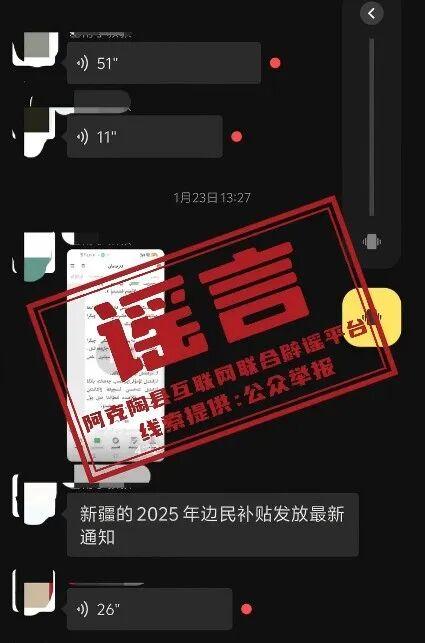
Group 1 - The core message of the news is that a false claim regarding an increase in border village subsidies to 15,000 yuan per year starting in 2025 was circulated by an individual using AI software to generate misleading information [1] - The local authorities in Akto County have confirmed that the information is untrue and have taken action against the individual responsible for spreading the rumor [1] - The Akto Cybersecurity Office, in collaboration with the police, has conducted a criticism and education session for the individual involved in disseminating the false information [1]
聚焦4方面,中央网信办启动春节网络环境专项整治行动
第一财经· 2026-02-12 06:27
Group 1 - The central government has initiated a one-month campaign titled "Clear and Bright: Creating a Joyful and Harmonious Online Environment for the Spring Festival 2026" to promote a positive online atmosphere during the Spring Festival [1] - The campaign focuses on addressing four major issues: inciting negative emotions, generating and spreading low-quality content, fabricating false information, and directing traffic to illegal activities [1][2] Group 2 - The campaign aims to combat the promotion of negative values such as anti-marriage and anti-childbearing sentiments, as well as the incitement of gender conflict and social comparison during the festive season [1] - It seeks to eliminate the generation of low-quality content using AI technologies, which includes the distortion of classic literature and cultural references, as well as the creation of sensationalized narratives around family conflicts [1] - The initiative also targets the spread of false information related to public safety and social events during the Spring Festival, including fabricated announcements and misleading headlines [2] - Additionally, the campaign addresses the issue of illegal activities being promoted online, such as gambling and superstitious services disguised as festive offerings [2]

“今年2月823年一遇”背后的真相
Xin Lang Cai Jing· 2026-02-01 05:53
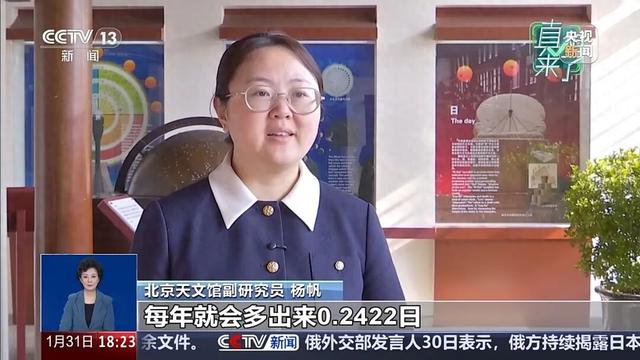
Core Viewpoint - The news discusses the viral claim that February 2026 is a rare month with four complete weeks, suggesting it occurs once every 823 years, which is debunked by experts as a common occurrence in leap years [1][10]. Group 1: Calendar Phenomenon - The claim about February 2026 being special arises from its structure of having four complete weeks, with each day of the week appearing four times [1][5]. - February typically has 28 days in a common year, which divides evenly into four weeks, making this occurrence standard in every common year [7][5]. - The assertion that February 2026 is unique is based on a misunderstanding of basic arithmetic and calendar structure [7][10]. Group 2: Expert Analysis - Experts from Beijing Planetarium explain that the Gregorian calendar includes leap years to align the calendar year with the astronomical year, which is approximately 365.2422 days [3][10]. - The specific arrangement of February 2026, where February 1st falls on a Sunday, is not rare; over 100 years from 1526 to 2526 will meet the same criteria [8][10]. - The notion of "823 years" is likely a fabricated narrative to create a sense of rarity and urgency, lacking any astronomical basis [10][11]. Group 3: Viral Marketing and Misinformation - The spread of the "special month" narrative is linked to viral marketing strategies, exploiting people's unfamiliarity with calendar facts and numerology [10][11]. - The phenomenon resembles a chain letter, where individuals are encouraged to share the information under the pretense of gaining good fortune, which ultimately benefits the creators of the misinformation [15][10]. - Experts caution against blindly following such trends, advocating for a rational appreciation of natural phenomena rather than succumbing to sensational claims [17][10].
网传“2026年2月是特殊月份,823年一遇”?专家辟谣
Huan Qiu Wang Zi Xun· 2026-01-31 13:36
Core Viewpoint - The news discusses the viral claim that February 2026 is a rare month with four complete weeks, suggesting it occurs once every 823 years, which is debunked as a common occurrence in leap years [1][12]. Group 1: Calendar Phenomenon - February 2026 is said to have four complete weeks, with each day of the week appearing four times, leading to claims of its rarity [1][2]. - The concept of a month having four complete weeks is explained as a basic mathematical fact, as every February in a common year has 28 days, which divides evenly into four weeks [8][6]. Group 2: Misconceptions and Marketing - The claim of February 2026 being special is labeled as a digital rumor, with experts stating that such occurrences are typical in every common year [8][12]. - The notion of "823 years" is suggested to be a fabricated figure to create a sense of rarity and urgency, with similar rumors having circulated since around 2011 [12][13]. - The spread of this rumor is linked to viral marketing strategies, where individuals are encouraged to share posts for perceived good fortune, exploiting people's unfamiliarity with calendar systems [13][18].