
美丽河湖建设

Search documents
杭州临安打造“昌小环”品牌,深耕“五水共治”
Zhong Guo Huan Jing Bao· 2026-01-08 09:25
Core Viewpoint - The recognition of Changhua Creek as a provincial-level "Beautiful River and Lake" case exemplifies the successful ecological transformation and effective environmental protection efforts led by the Changhua team under the Hangzhou Lin'an Ecological Environment Bureau [1] Group 1: Ecological Protection Efforts - The "Changxiaohuan" brand integrates regulatory enforcement and public service, utilizing technology and legal frameworks to enhance ecological protection in the Changhua Creek watershed [1][2] - High-spectral drones are employed for real-time monitoring, allowing for precise identification of pollution sources and water quality indicators, thus improving the efficiency of environmental oversight [2] - A "one enterprise, one file" regulatory mechanism is established to ensure compliance with environmental standards, encouraging enterprises to actively participate in pollution reduction [3] Group 2: Enforcement and Compliance - The "Changxiaohuan" brand maintains a zero-tolerance policy towards environmental violations, employing a combination of regular inspections and surprise checks to combat illegal discharges and waste dumping [3] - Enforcement teams are equipped with advanced tools for monitoring and documenting violations, ensuring strict penalties for offenders and promoting a culture of compliance [3] Group 3: Community Engagement and Education - The initiative emphasizes the importance of community involvement in ecological protection, particularly through educational programs targeting children to instill environmental awareness from a young age [4] - Activities such as interactive workshops and field trips are organized to teach children about water conservation and the ecological significance of Changhua Creek, fostering a culture of environmental stewardship [4] Group 4: Future Directions - The recognition of Changhua Creek is seen as a new starting point for deepening ecological protection efforts, with plans to continue innovating regulatory services and enhancing community engagement [5] - The focus will remain on prioritizing ecological health and sustainable development to ensure the ongoing success of the "Beautiful River and Lake" initiative [5]
我省龙河(廊坊市段)和易水湖(安格庄水库)入选
Xin Lang Cai Jing· 2026-01-04 23:12
Core Insights - The Ministry of Ecology and Environment has announced the fourth batch of 47 exemplary cases of beautiful rivers and lakes, with Long River (Langfang section) and Yishui Lake (Angzhuang Reservoir) from Hebei Province being selected [1][2] Group 1: Long River (Langfang Section) - Long River is part of the Haihe River Basin and is recognized as the "mother river" of Langfang, flowing 35.5 kilometers with a watershed area of 322 square kilometers [1] - Langfang has implemented an ecological priority approach, focusing on comprehensive governance and ecological restoration, significantly enhancing the overall ecological carrying capacity of the river basin [1] - The city has developed a boutique tourism route around Long River and created new cultural tourism brands, integrating river management, ecological restoration, and cultural tourism [1] Group 2: Yishui Lake (Angzhuang Reservoir) - Yishui Lake is located 30 kilometers southwest of Yixian County and is an important water system upstream of Baiyangdian, with water quality stabilizing at Class III for three consecutive years from 2022 to 2024 [2] - The local government has integrated resources to develop an ecological economy, establishing the Yishui Lake Resort, which is now a national 4A-level tourist attraction and a national water conservancy scenic area [2] - The resort attracts over 500,000 visitors annually, generating nearly 100 million yuan in comprehensive income, demonstrating a successful model of ecological protection and economic development [2]
湖南怀化:江湖之美深入人心
Xin Hua She· 2025-12-28 06:09
Core Viewpoint - The article highlights the importance of river and lake ecosystems in promoting ecological and economic development, emphasizing community involvement in environmental protection efforts [1] Group 1: Environmental Protection Efforts - Volunteers in Huaihua City, Hunan Province, are actively participating in cleaning efforts along the riverbanks, collecting plastic bottles and packaging waste to maintain water clarity [1] - The initiative reflects a multi-dimensional approach to beautiful river and lake construction, integrating source control, ecological restoration, river and lake management, and public participation [1]
红枫湖入选全国第四批美丽河湖优秀案例
Xin Lang Cai Jing· 2025-12-27 22:49
Core Viewpoint - The recognition of Hongfeng Lake as one of the 47 exemplary cases in the national Beautiful Rivers and Lakes initiative highlights significant progress in water ecological environment governance and protection in Guizhou Province, marking a new phase of large-scale and high-quality development in beautiful lake construction [1] Group 1: Environmental Achievements - Hongfeng Lake is located primarily in the Qingzhen City area, with a catchment area of 1,596 square kilometers and a water storage capacity of 589.6 million cubic meters [1] - The lake supplies over 800,000 tons of water daily to the Guiyang and Guian regions, serving as a crucial drinking water source for approximately 6 million residents [1] Group 2: Investment and Initiatives - Qingzhen City has invested 865 million yuan in ecological protection and restoration efforts, including the relocation of over 500 households from the first-level protection zone and the demolition of 122,000 square meters of illegal constructions [1] - The city has shut down 15 high-pollution enterprises and eliminated 176 livestock farms to reduce pollution emissions from the industrial sector [1] Group 3: Monitoring and Water Quality - A total of 133 new sewage treatment systems have been established, achieving full coverage of rural sewage collection and treatment along the lake [1] - An integrated monitoring network has been innovatively constructed, utilizing micro water quality stations, video surveillance, satellite remote sensing, and drone aerial inspections to ensure comprehensive and real-time water quality monitoring [1] - The water quality of Hongfeng Lake has remained stable at Class III standards, with the water intake point reaching Class II standards and a 100% compliance rate for water quality [2]
再创佳绩 福建新添一批“美丽地标”
Xin Lang Cai Jing· 2025-12-27 12:31
Core Insights - The Ministry of Ecology and Environment has announced the fourth batch of excellent cases for beautiful rivers and lakes, with two rivers in Fujian Province recognized as excellent cases, highlighting the province's commitment to ecological improvement [1][2] - Fujian Province has a total of seven beautiful river cases and nine beautiful bay cases, with eight of them being excellent cases, indicating a strong performance in environmental initiatives [1][2] - The province aims for 100% of the national control sections of major river basins to achieve Class I-III water quality by 2024, with current data showing a consistent 100% for the first eleven months of the year [1][2] Group 1: Beautiful Rivers and Lakes - The Min River in Nanping City serves as an ecological barrier and a vital waterway, with efforts to transform ecological disadvantages into development advantages through systematic governance and industrial transformation [1] - The Mu Yang Creek in Ningde City has developed a mechanism for water management that includes forest cultivation, pollution control, and community involvement, resulting in over 10 million tourists and more than 10 billion yuan in tourism revenue in the past three years [2] Group 2: Beautiful Bays - Fujian's approach to beautiful bay construction emphasizes land-sea coordination and tailored strategies for each bay, aiming for high-quality economic development in coastal areas [2] - The Dazhong sea area in Xiamen has implemented a comprehensive water environment management mechanism, focusing on ecological resilience and the development of high-tech marine industries [2] - The Xihai area in Xiamen has established a marine environmental protection cooperation mechanism across administrative regions, promoting green transformation in ports and achieving full coverage of "Asia-Pacific Green Port" certification for container terminals [2] Group 3: Ecological Protection Measures - The Fuzhou section of the Xinghua Bay is advancing green park and port construction, implementing ecological restoration measures to protect endangered species [3] - The Quanzhou section of the Meizhou Bay is promoting the development of a green petrochemical industrial park and ecological restoration projects, integrating modern marine industry development with environmental sustainability [3] Group 4: Overall Environmental Improvement - The ongoing efforts in Fujian Province reflect a broader commitment to ecological improvement, with cleaner waters and enhanced environmental quality becoming a hallmark of the region [4]
我市两河入选全国美丽河湖优秀案例
Xin Lang Cai Jing· 2025-12-26 22:03
Core Viewpoint - The Ministry of Ecology and Environment has announced the inclusion of two sections of rivers in Tianjin, Daqing River and Nanyun River, in the fourth batch of 47 excellent cases of beautiful rivers and lakes, highlighting the city's ongoing efforts in water resource management and ecological restoration [1][2]. Group 1: Beautiful River and Lake Initiatives - Since the launch of the beautiful river and lake construction in 2021, Tianjin has published four batches of a total of 141 excellent cases [1]. - The Daqing River (Tianjin section) has undergone significant improvements, with water quality rising from a surface class V in 2017 to a stable class III since 2022 [2]. - The Nanyun River (Nankai District section) has improved from a surface class V during the 12th Five-Year Plan to a stable class III during the 14th Five-Year Plan, with total phosphorus concentration decreasing by 89% compared to 2014 [2]. Group 2: Ecological and Cultural Development - The Daqing River's restoration involved a three-step governance approach, including actions for cleaning, restoring, and beautifying the river [1]. - The Nanyun River aims to create a cultural, ecological, and recreational belt, enhancing the relationship between the city and water resources [2]. - The city plans to implement a new ecological governance model that promotes the beauty of rivers and lakes, enhancing the quality of life for residents [2].
这座岭南水乡因美丽河湖而生机勃勃
Zhong Guo Huan Jing Bao· 2025-11-22 03:44
Core Viewpoint - Zhongshan is transitioning from water pollution control to the construction of beautiful rivers and lakes, focusing on ecological and economic development through a comprehensive governance model [1][2][3]. Group 1: Governance and Planning - A high-level conference was held to mark the beginning of a new journey in beautiful river and lake protection and construction, emphasizing the importance of the "Hundred Million Project" [2]. - Zhongshan has established a multi-departmental coordination mechanism to ensure effective governance, transitioning from a pollution control command to a beautiful river and lake protection command [3][4]. - The city has developed a three-year action plan (2025-2027) and specific technical guidelines to outline the main tasks and implementation steps for beautiful river and lake construction [4][5]. Group 2: Implementation and Progress - The city aims to complete the "Six Pollution Control" project by 2025, targeting the construction of over 100 municipal-level beautiful rivers and lakes [4][5]. - A systematic approach is being adopted, with detailed plans for each river and lake, addressing water quality, surrounding industries, and existing challenges [4][6]. - Since the end of 2021, Zhongshan has constructed 7,000 kilometers of new sewage pipelines and increased sewage treatment capacity by 1.02 million tons per day, achieving a 100% rural sewage treatment rate [12]. Group 3: Community Engagement and Economic Development - Community involvement is crucial, with local leaders actively engaging residents to explain the benefits of environmental improvements [9][10]. - The revitalization of rivers and lakes has spurred economic development, with various projects enhancing local industries and tourism [7][12]. - The city is focused on creating a beautiful environment that fosters economic growth, aiming to integrate beautiful river and lake projects with agriculture, tourism, and other sectors [12].
津派美丽河湖“各美其美”
Zhong Guo Huan Jing Bao· 2025-10-16 01:32
Core Insights - Tianjin has achieved a 100% compliance rate for drinking water sources since the 14th Five-Year Plan, with significant improvements in water quality across various rivers and lakes [2][11] - The city has implemented a comprehensive approach to water resource management, focusing on ecological protection and sustainable development [2][12] Water Quality Improvement - The quality of drinking water sources in Tianjin has consistently met national standards, with 12 rivers showing improved water quality [2][11] - The proportion of good quality surface water and the reduction of inferior quality water bodies have met national assessment requirements [2][11] Key Initiatives - Tianjin is focusing on three main areas for the construction of beautiful rivers and lakes: developing a tailored evaluation system, establishing regulatory frameworks, and promoting successful case studies [12] - The city has launched a campaign to collect excellent case studies for beautiful rivers and lakes, with the first batch including three notable examples [3][12] Case Studies and Practices - Hebei District has transformed the Haihe River from inferior quality to stable Class III or better, recognized as an excellent case by the Ministry of Ecology and Environment [6][14] - Red Bridge District has improved the water quality of the Ziya River, achieving Class III standards, and has been recognized for its ecological initiatives [7][16] - The Cijiang District has implemented comprehensive governance of the Zhou River, focusing on pollution source control and ecological restoration [18][19] Financial Investments - Hebei District has invested 310 million yuan in rainwater network upgrades and pollution source management [6][14] - Red Bridge District has allocated nearly 1.5 billion yuan for the relocation and improvement of fishing villages along the Ziya River [16][17] Ecological Restoration - The ecological environment of the Daqing River has significantly improved through systematic governance, including the removal of pollution sources and the establishment of wastewater treatment facilities [20][21] - The Zhou River has seen a comprehensive approach to governance, including the relocation of residents and the establishment of wetland parks to enhance biodiversity [18][19]

山东系统治理推进美丽河湖建设
Xin Hua She· 2025-10-07 08:02
Core Viewpoint - Shandong province has adopted a systematic approach to address river and lake governance challenges, focusing on "pollution co-governance, resource sharing, and ecological prosperity" to improve water quality and promote sustainable development [1] Group 1: Water Quality Improvement - The Yihe River has transformed from a polluted waterway to a scenic area, with local mineral water gaining popularity among tourists [3][4] - Significant efforts have been made since 2006 to control pollution sources, including shutting down over 290 outdated enterprises and implementing various ecological restoration projects [4] - A total of 231 water ecological protection and restoration projects have been implemented during the 14th Five-Year Plan, including the construction of over 120 artificial wetlands, enhancing the health of river and lake ecosystems [4][6] Group 2: Efficient Water Resource Utilization - Despite having several major rivers, Shandong faces a water scarcity issue, with per capita water resources at only 271 cubic meters, which is 12.9% of the national average [5][6] - The province has developed a "wastewater-reclaimed water-industrial water" recycling model, which has been promoted across 12 cities, achieving an annual reclaimed water utilization of over 1 billion cubic meters [6] Group 3: Green Economic Development - The integration of ecological resources in areas like the Bailu Bay Town has led to the development of a multi-industry cultural tourism model, attracting significant visitor numbers and generating revenue [7][8] - The ecological fishery development in the Xianshan Reservoir has produced over 2,000 tons of organic fish annually, creating jobs for around 12,000 local residents [8] - The governance of rivers and lakes in Shandong is increasingly linked with industrial development, forming a conversion pattern of "good water quality - beautiful scenery - economic value" [8]
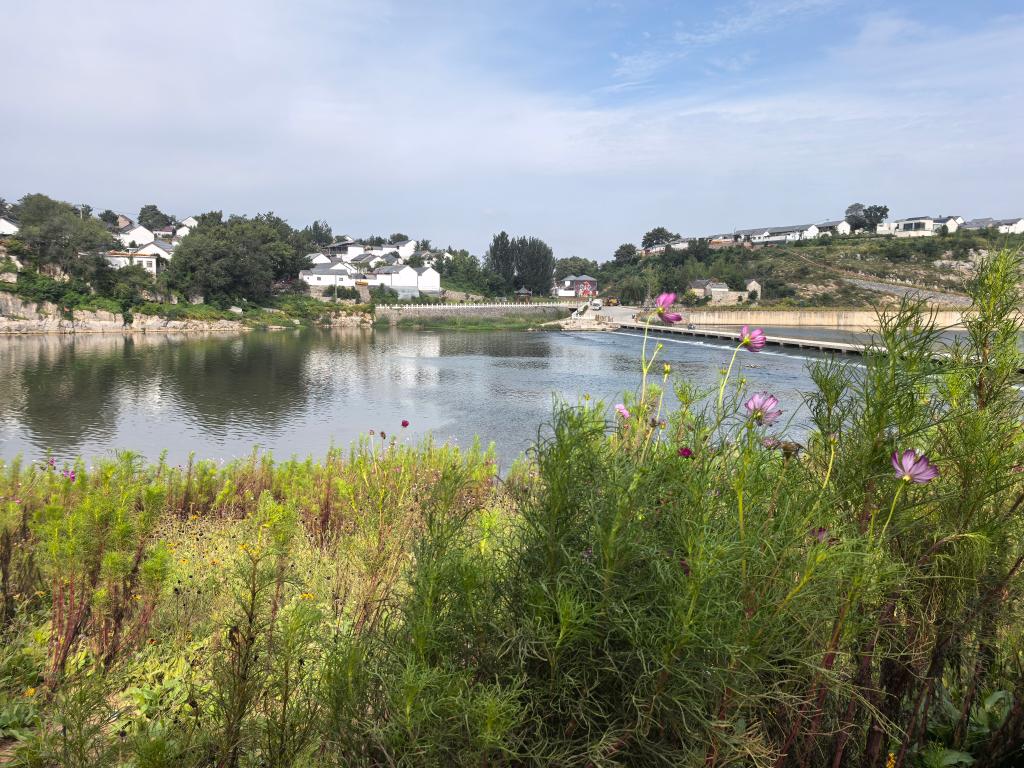
美丽河湖何以美进人心(人民时评)
Ren Min Ri Bao· 2025-06-17 21:40
Core Viewpoint - The construction of beautiful rivers and lakes is essential for enhancing the ecological environment and improving public welfare, reflecting the continuous improvement of water quality in China since the new era [1][2][3] Group 1: Water Quality Improvement - Since 2016, the comprehensive water environment management in Nanjing's Qinhuai District has transformed the Moon Lake from a "black and stinky lake" to a beautiful "underwater forest," now serving as a bird sanctuary [1] - By 2024, the proportion of national surface water quality classified as good (Class I-III) is expected to reach 90.4%, marking the first time it exceeds 90% [1] - The Yangtze River and Yellow River have maintained Class II water quality for five and three consecutive years, respectively, indicating significant ecological recovery [1] Group 2: Systematic Governance - The concept of beautiful rivers and lakes emphasizes the need for a systematic approach to integrate the protection and governance of mountains, waters, forests, fields, lakes, grass, and sand [2] - Collaborative governance is crucial for cross-regional river management, as demonstrated by the establishment of a pollution control coordination mechanism between Shenzhen and Dongguan, which improved the water quality of the Meizhou River from severe pollution to Class III [2] - The ecological compensation mechanism in the Xin'an River basin has effectively reduced pollution loads entering the lake, maintaining the water quality of Qiandao Lake at Class I [2] Group 3: Economic and Social Development - The construction of beautiful rivers and lakes is also a process of balancing high-level protection with high-quality development, as seen in Xuancheng, Anhui, where 18 eco-tourism sites and 1,072 homestays have been developed [3] - The exploration of innovative pathways for realizing the value of ecological products can facilitate the transformation from green mountains and clear waters to economic benefits, promoting a comprehensive green transition in socio-economic development [3] - The ongoing efforts to build beautiful rivers and lakes will contribute to a new landscape of green and high-quality development, benefiting the community and enhancing cultural vitality [3]