
山水林田湖草沙一体化保护和系统治理

Search documents
我国人均“拥有”100棵树
Ren Min Ri Bao· 2026-02-24 00:13
Core Insights - China has a total forest area of 36.14 billion mu, with 18.5 million mu of afforestation during the "14th Five-Year Plan" period, making it the fastest-growing country in terms of greening globally [1][2] - As of 2020, there are approximately 14.26 billion trees in China, equating to 100 trees per person, showcasing the country's "green assets" [1][2] - The "14th Five-Year Plan" emphasizes the protection of 5.0819 million ancient trees and effective conservation of 25.78 million mu of natural forest resources [2] Group 1 - The average annual increase in forest area in China from 2015 to 2025 is 1.69 million hectares, making it the country with the highest net increase [3] - The national forestry and grassland industry is projected to reach nearly 11 trillion yuan in total output value by 2025, creating employment for over 60 million people [3] - The "Three North" project has preserved a total afforestation area of 48 million mu, equivalent to half of the Loess Plateau [2] Group 2 - The "Two Mountains" concept is deeply rooted in the national green development strategy, focusing on expanding, improving, and protecting green spaces [3] - By 2030, China aims to achieve peak carbon emissions and plans to increase forest stock volume to over 24 billion cubic meters by 2035 [3] - The successful introduction of cold-resistant tree species in Tibet's Naqu region demonstrates advancements in high-altitude afforestation technology [2]
地方两会·检察视角|内蒙古:集中整治毁林毁草犯罪
Xin Lang Cai Jing· 2026-02-16 05:42
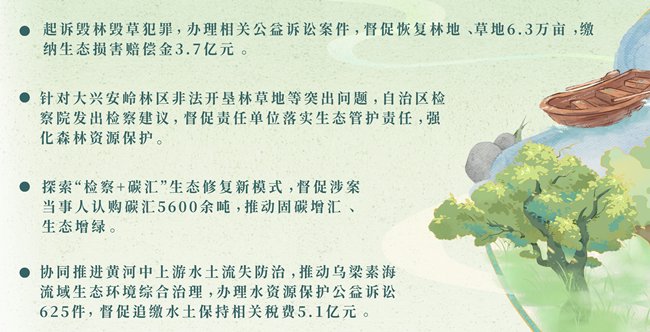
Group 1 - The core viewpoint emphasizes the commitment of the Inner Mongolia procuratorial organs to enhance ecological prosecution work and support the implementation of the "Three North" project quality year action [2] - In 2025, the Inner Mongolia procuratorial organs aim to strengthen the ecological safety barrier in northern China, focusing on integrated protection and systematic governance of mountains, rivers, forests, grasslands, lakes, and deserts [3] - The prosecution has handled 6,374 environmental resource cases, a year-on-year increase of 50.3%, and has taken measures to restore 63,000 acres of forest and grassland, collecting 370 million yuan in ecological damage compensation [3] Group 2 - The procuratorial organs are developing a collaborative ecological protection model that integrates four major prosecutorial functions and three major cooperation actions [4] - Suggestions have been made to further enhance collaborative governance from mountain tops to grasslands, optimizing law enforcement and social cooperation to strengthen ecological protection efforts [4]

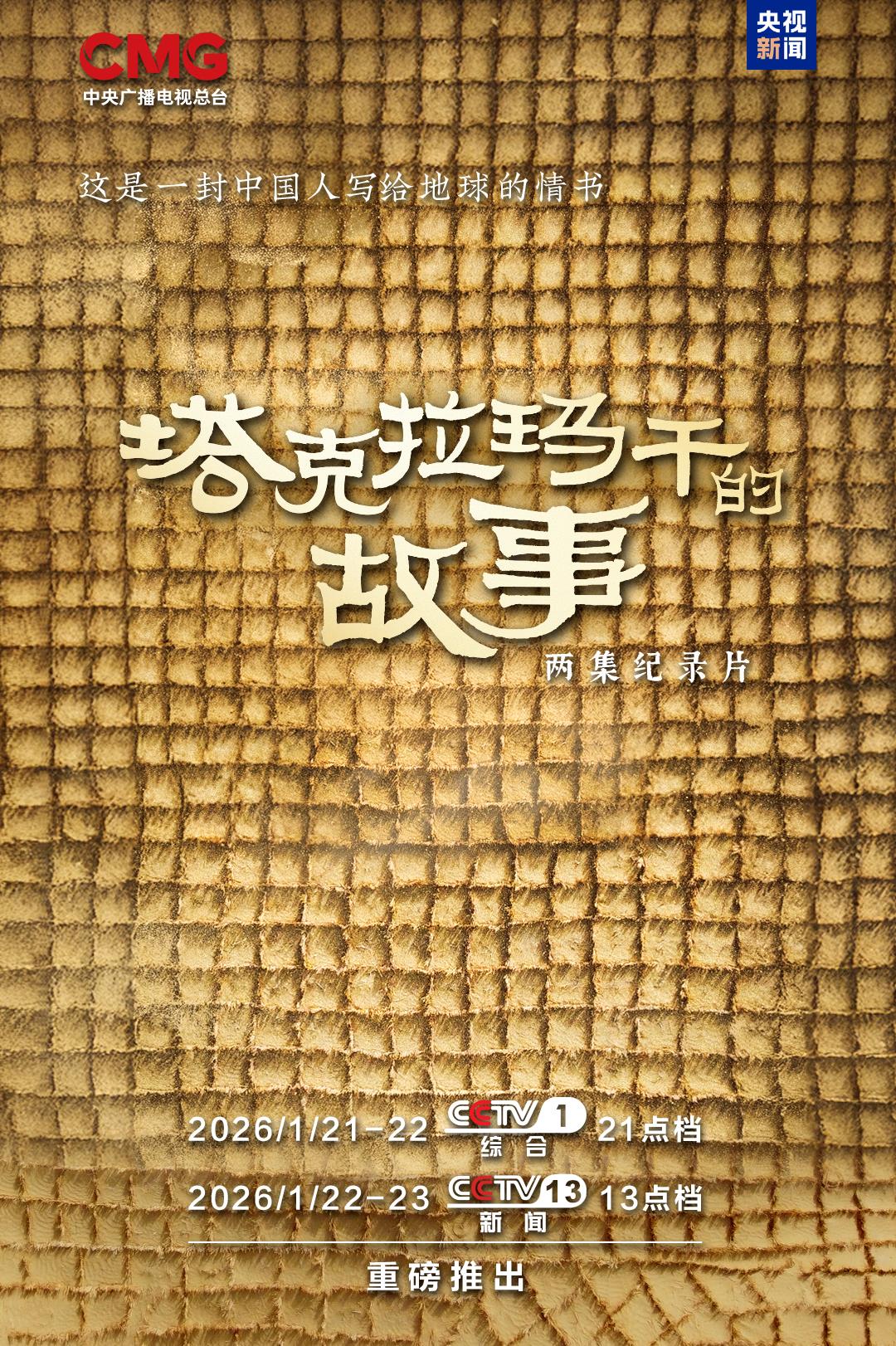
纪录片《塔克拉玛干的故事》将在总台播出
Yang Shi Xin Wen· 2026-01-21 10:52
Group 1 - The documentary "Stories of the Taklamakan" will be broadcasted on January 21-22, showcasing the efforts in combating desertification in the Taklamakan Desert [1] - Desertification is a global issue that severely impacts biodiversity, ecological security, and socio-economic stability [1] - The documentary highlights the integrated approach to environmental protection and high-quality development led by the Chinese government since the 18th National Congress [1] Group 2 - The documentary consists of two episodes titled "Miracle" and "Rebirth," focusing on the challenges faced in the battle against desertification and the transformative impact of the "locking edge project" on local economies and communities [1] - It features diverse perspectives from researchers, local officials, ordinary citizens, and international friends, illustrating the collective efforts in desert management [1] - The documentary aims to present the achievements in desertification control and how these results contribute to economic prosperity and social progress in desert regions [1]
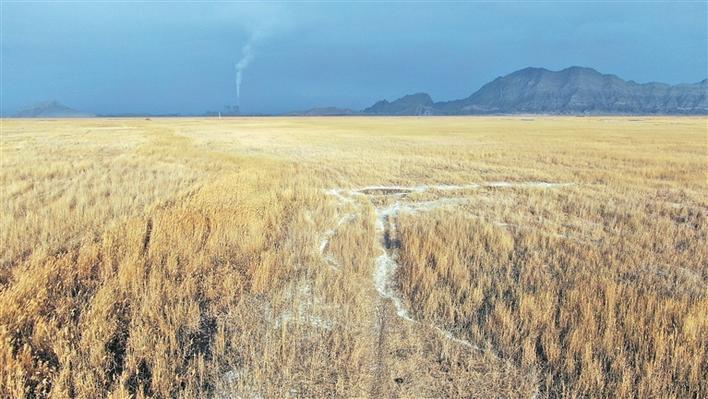
沙海嵌明珠 候鸟舞翩跹
Xin Lang Cai Jing· 2026-01-14 18:39
Core Viewpoint - The ecological restoration of the Yong'an Lake Wetland Nature Reserve in Shihezi City has significantly improved the area's biodiversity and environmental quality, showcasing the successful implementation of the "Green Mountains and Clear Water are Gold and Silver Mountains" development philosophy [3][4]. Group 1: Ecological Restoration Efforts - The Shihezi City has implemented an integrated protection and governance approach focusing on "mountains, rivers, forests, fields, lakes, grass, and sand" to enhance the ecological environment of Yong'an Lake Wetland [3]. - The management team has expanded from 3 initial patrollers to a professional team of 28, establishing a regular patrol system to ensure effective monitoring and protection [3][4]. - A comprehensive monitoring system has been developed, including drone surveillance, ground patrols, and a 24-hour video monitoring system with 38 high-definition cameras [3]. Group 2: Biodiversity Improvement - The number of recorded wildlife species in the wetland has increased from 219 in 2018 to 257, indicating a positive trend in biodiversity [3]. - The wetland now attracts various migratory birds, including geese and cranes, creating a vibrant ecosystem that draws tourists and photography enthusiasts [3][4]. Group 3: Investment and Infrastructure Development - Since the beginning of the 14th Five-Year Plan, Shihezi City has invested over 30 million yuan in wetland protection, establishing various infrastructure such as boundary markers, watchtowers, and ecological fences [5]. - A total of 280 boundary stones, 650 boundary piles, and 40 various signs have been set up, along with the construction of 15 kilometers of patrol roads [5].
乌海湖库区清淤和矿区修复一体化治理提速
Xin Lang Cai Jing· 2026-01-10 18:28
Group 1 - The establishment of the Wuhai Lake Basin Ecological Environment Governance Company marks a new phase in the systematic and professional management of ecological restoration and sediment removal in the Wuhai Lake area [1] - The Wuhai Lake, with a water area of 118 square kilometers, has seen increasing importance in flood prevention, power generation, and ecological regulation since the completion of the Yellow River Heibowan Water Conservancy Hub in 2014 [1] - The new company aims to integrate resources efficiently and focus on technical breakthroughs in sediment removal and ecological restoration, positioning itself as a comprehensive service provider for ecological governance in Wuhai [1] Group 2 - China Communications Construction Group Co., Ltd. is a leading enterprise in the global infrastructure sector, with its subsidiary, CCCC Dredging (Group) Co., Ltd., being the largest dredging company worldwide [2] - The company has implemented various sediment removal projects in key water bodies, including Taihu Lake and Tianjin Yubridge Reservoir, focusing on the development of critical technologies and core equipment in the dredging field [2] - CCCC has pioneered a model of "comprehensive planning, integrated implementation, and market-oriented operation" in river and lake governance, achieving a balance of ecological, social, and economic benefits [2]
国土整治和生态修复 |“十四五”的“答卷”“十五五”的“开卷”
Zhong Guo Zi Ran Zi Yuan Bao· 2025-12-31 03:13
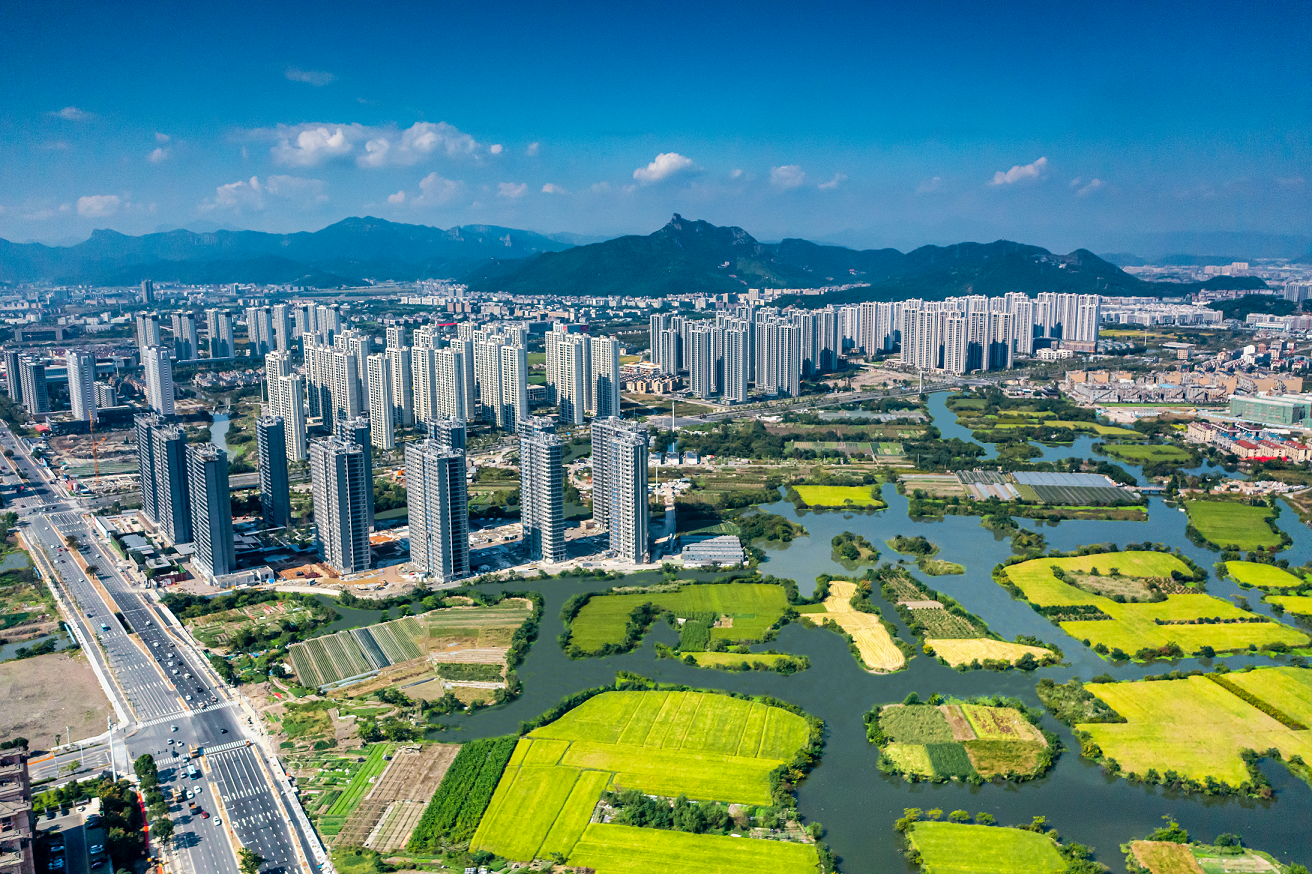
Core Viewpoint - The article emphasizes the importance of ecological protection and land consolidation as key measures for advancing ecological civilization in China, particularly during the "14th Five-Year Plan" and looking forward to the "15th Five-Year Plan" [3][4]. Group 1: Achievements and Future Directions - During the "14th Five-Year Plan," significant progress was made in ecological restoration and land consolidation, with over 1,700 projects implemented across 24 provinces, covering more than 1 million acres [7][8]. - The upcoming "15th Five-Year Plan" aims to enhance integrated protection and systematic governance of important ecosystems, with a focus on evaluating the effectiveness of ecological restoration and improving diverse ecological compensation mechanisms [4][19]. - A national meeting held on December 19-20, 2022, reviewed achievements from the "14th Five-Year Plan" and outlined new strategies for the "15th Five-Year Plan," aiming to translate the roadmap into actionable plans [4][19]. Group 2: Institutional Support and Innovations - The establishment of nearly 20,000 professionals in land consolidation and ecological restoration has been crucial for supporting the Ministry of Natural Resources in fulfilling its responsibilities [6]. - The Ministry has supported the implementation of 27 major ecological restoration projects with over 60 billion yuan in central financial investment, leading to the restoration of over 5.5 million hectares [7]. - The development of a comprehensive standard system for ecological restoration has been initiated, including 4 national standards and 18 industry standards, to guide scientific practices in ecological restoration [7]. Group 3: Technological Advancements - Land technology innovation has been identified as a key driver for ecological restoration and land consolidation, with over 600 projects undertaken in the field of ecological protection and restoration [9]. - The Ministry has established a network of over 40 scientific observation stations and engineering technology innovation centers to support research and development in ecological restoration technologies [9]. - The focus on nature-based solutions (NbS) and innovative techniques for soil and land management has been highlighted as essential for addressing complex ecological challenges [9]. Group 4: Regional Initiatives and Best Practices - Various provinces have introduced unique models for land consolidation and ecological restoration, such as Zhejiang's "multi-field integration" approach and Hubei's "government-bank-enterprise" cooperation mechanism [19][20]. - The article showcases successful case studies from regions like Xinjiang and Shandong, where land consolidation has been linked to high-quality development and ecological safety [20][21]. - The integration of cultural heritage and ecological restoration efforts in places like Hunan and Sichuan demonstrates the potential for sustainable development through innovative practices [21][22]. Group 5: Future Focus and Strategic Goals - The "15th Five-Year Plan" will prioritize high-level protection and quality development, aiming to create a comprehensive framework for ecological protection and land consolidation [23][24]. - The Ministry plans to enhance collaboration across various sectors, focusing on policy innovation, legal frameworks, and international cooperation to support ecological restoration efforts [24][26]. - Emphasis will be placed on developing a multi-faceted funding mechanism to support ecological restoration and land consolidation projects, ensuring sustainable investment in these initiatives [25].
湖南自然资源全要素市场平台成交额突破430亿元
Zhong Guo Xin Wen Wang· 2025-11-21 13:29
Core Insights - Hunan has established the first provincial-level natural resource all-factor market platform in China, significantly enhancing resource allocation efficiency with a total transaction amount exceeding 43 billion yuan [1][2] Group 1: Market Platform Achievements - The platform has facilitated over 1,500 transactions across various resource types, with a total transaction value surpassing 43 billion yuan [1] - The platform integrates six categories of resource elements, allowing for comprehensive display, interactive promotion, and multi-scenario applications [1] Group 2: Agricultural and Ecological Protection - Hunan has implemented a comprehensive protection strategy for agricultural land, maintaining 55.03 million acres of arable land, exceeding the national protection target by 1.3 million acres [1] - The area of cultivated land occupied for construction has decreased by 61.5% compared to 2020 [1] Group 3: Mineral Resource Development - Hunan has identified 122 types of mineral resources, with tungsten and bismuth among the top three in national reserves [1] - During the "14th Five-Year Plan" period, new manganese and lithium resources have been added, with 5.57 million tons of manganese and 225,300 tons of lithium discovered [1] - The lithium resource amount in the Jijiao Mountain mining area of Linwu County has reached 1.31 million tons, setting a record for similar deposits [1] Group 4: Ecological Restoration and Disaster Prevention - A total of 9.171 billion yuan has been invested in ecological restoration over the past five years, with 1.32 million acres of land restored [2] - Hunan has built 382 green mines, ranking fourth nationally and first in Central China, with the proportion of large and medium-sized mines increasing from 15.59% to 45.70% [2] - The province has invested 1.386 billion yuan in geological disaster prevention, successfully avoiding potential casualties in 414 incidents through precise early warning systems [2]
新疆:开放自信气象新
Ren Min Ri Bao· 2025-11-20 02:10
Group 1: Tourism Development - Xinjiang's border inspection authorities processed 3.654 million entry and exit personnel in the first ten months of the year, a year-on-year increase of 36.4%, with foreign nationals accounting for 1.665 million, up 22.3% [1] - The Xinjiang government is focusing on enhancing tourism by developing unique tourism products, improving infrastructure, and elevating service quality to attract both domestic and international tourists [1] - In the first nine months of this year, Xinjiang received over 260 million domestic and international tourists, reflecting a year-on-year growth of 8.36% [4] Group 2: Environmental and Cultural Initiatives - Xinjiang is committed to green development, implementing integrated protection and systematic governance of its natural resources, including afforestation and land improvement efforts during the 14th Five-Year Plan period [2] - The region is actively preserving and promoting its cultural heritage, utilizing advanced technologies like 3D scanning and AI restoration to enhance the visibility of historical sites [2] - The local government emphasizes the importance of cultural integration and the promotion of traditional cultures among various ethnic groups in Xinjiang [2] Group 3: Infrastructure and Connectivity - By the end of 2024, Xinjiang's total road mileage is expected to exceed 230,000 kilometers, ensuring that all eligible villages are accessible by hardened roads and public transport [3] - Xinjiang has 28 civil airports, the highest number in the country, and has operated 693 domestic and international flight routes in the first ten months of this year, enhancing regional connectivity [3]
绘就绿色发展画卷 守护北疆绿水青山
Nei Meng Gu Ri Bao· 2025-11-18 01:37
Core Insights - Inner Mongolia has made significant progress in ecological restoration and desertification control, implementing a series of projects that have resulted in a "green wall" of 1,856 kilometers to effectively halt desert expansion [1][2][3] - The region is entering a "fast track" mode for sand prevention and control, with a target of treating an average of 60,000 acres per day in 2024 [2][3] - The implementation of a "paid vacation" system for grasslands has led to improved ecological conditions and financial benefits for local herders [4][5] Ecological Restoration Efforts - Inner Mongolia has invested over 100 billion yuan in ecological protection and restoration since the 14th Five-Year Plan, completing ecological construction tasks covering 11 million acres, with over 6.5 million acres focused on desertification control [3][6] - The establishment of a million-acre saxaul and Cistanche industry base has transformed previously barren land into a green protective barrier, producing approximately 300 tons of fresh Cistanche annually [3] Grassland Management - The region has implemented a multi-faceted compensation mechanism for grassland ecological protection, linking ecological outcomes to subsidy distribution [4][5] - By 2025, 970 million acres of grassland will be under a "paid vacation" system, with 380 million acres designated as no-grazing areas for five years [5] Water Resource Management - Inner Mongolia has enhanced its water security capabilities, with significant improvements in water-saving irrigation techniques, reducing water usage by 30-35% compared to traditional methods [6][7] - The total water supply capacity in the region has reached 23.86 billion cubic meters, effectively meeting the water needs for urban, industrial, and agricultural development [7] - Water and soil loss has decreased significantly, with a reduction of 16,200 square kilometers in erosion areas, indicating a positive trend in ecological restoration [7]
生态文明建设实现新进步 “扎实推进山水林田湖草沙一体化保护和系统治理”
Ren Min Ri Bao· 2025-10-19 22:16
Core Viewpoint - The article emphasizes the importance of integrated ecological governance in addressing desertification and improving river ecosystems, particularly focusing on the Kuyang River in Inner Mongolia [1][2][3]. Group 1: Ecological Governance - The Kuyang River, a tributary of the Yellow River, has undergone significant ecological changes due to systematic governance efforts aimed at addressing desertification and improving water quality [1][2]. - The governance approach has shifted from isolated water management to a comprehensive strategy that includes land reclamation and afforestation, involving multiple departments such as water resources, agriculture, and natural resources [2][3]. Group 2: Systematic Approach - The systematic governance model is highlighted as essential for effective river management, addressing issues like soil erosion and vegetation loss, which contribute to high sediment levels in the river [2][3]. - The integration of various ecological elements—mountains, water, forests, fields, lakes, grasslands, and deserts—is crucial for achieving sustainable environmental improvements [4]. Group 3: Progress in Ecological Civilization - The transformation of the Kuyang River reflects broader advancements in ecological civilization during the 14th Five-Year Plan period, showcasing a nationwide commitment to integrated ecological protection and restoration [3][4]. - The article underscores the need for top-level design and a holistic view of ecosystems to drive green development and promote harmony between humans and nature [4].