水环境治理

Search documents
钱塘绘就“青绿”新画卷
Hang Zhou Ri Bao· 2026-02-02 03:27
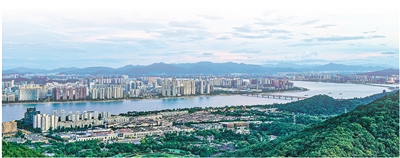
Core Viewpoint - The article highlights the integration of ecological preservation and industrial development in Qiantang District, showcasing its commitment to green energy and sustainable practices as part of its high-quality development strategy [5][12]. Group 1: Green Energy Initiatives - The Lingneng 550 MW photovoltaic power generation project is in the debugging phase before grid connection, expected to generate approximately 1.2 billion kWh annually, making it the largest solar project in the city [6]. - Qiantang has achieved a cumulative installed capacity of 1.5 million kW for photovoltaic power, becoming the first district in the province to exceed one million kW in centralized solar installations [6]. - The district's low-carbon transformation efforts were showcased at the Fourth Low-Carbon City Development Exchange, enhancing its visibility and confidence in regional green development [7]. Group 2: Ecological and Environmental Achievements - Qiantang has established a green development expert database to support enterprises in environmental planning and management, promoting a comprehensive approach to ecological transition [8]. - The district has successfully built three "beautiful water cells" and initiated the EOD project to enhance water ecological value, aiming for 100% of key water quality indicators to meet Class III standards by 2025 [10]. - Qiantang's air quality improvement targets include reducing PM2.5 levels to 29.7 μg/m³ and PM10 levels to 49.7 μg/m³ by 2025, with significant improvements already noted [10]. Group 3: Digital Transformation and Governance - The district is leveraging digital reforms to enhance environmental governance, implementing a monitoring network using satellite and drone technology to identify and rectify over 2,100 environmental issues [11]. - The establishment of a "环检码" system has enabled comprehensive coverage of 246 licensed enterprises and four third-party testing organizations, streamlining regulatory processes [11]. Group 4: Vision for Sustainable Development - Qiantang aims to embed ecological quality into urban development, pursuing a path of high-quality growth that prioritizes ecological and green development [12]. - The district's efforts contribute to Zhejiang's broader goal of building a higher-level ecological province, showcasing Qiantang's role in sustainable development [12].

科净源:预计2025年亏损3200万元-4600万元
Sou Hu Cai Jing· 2026-01-30 13:43
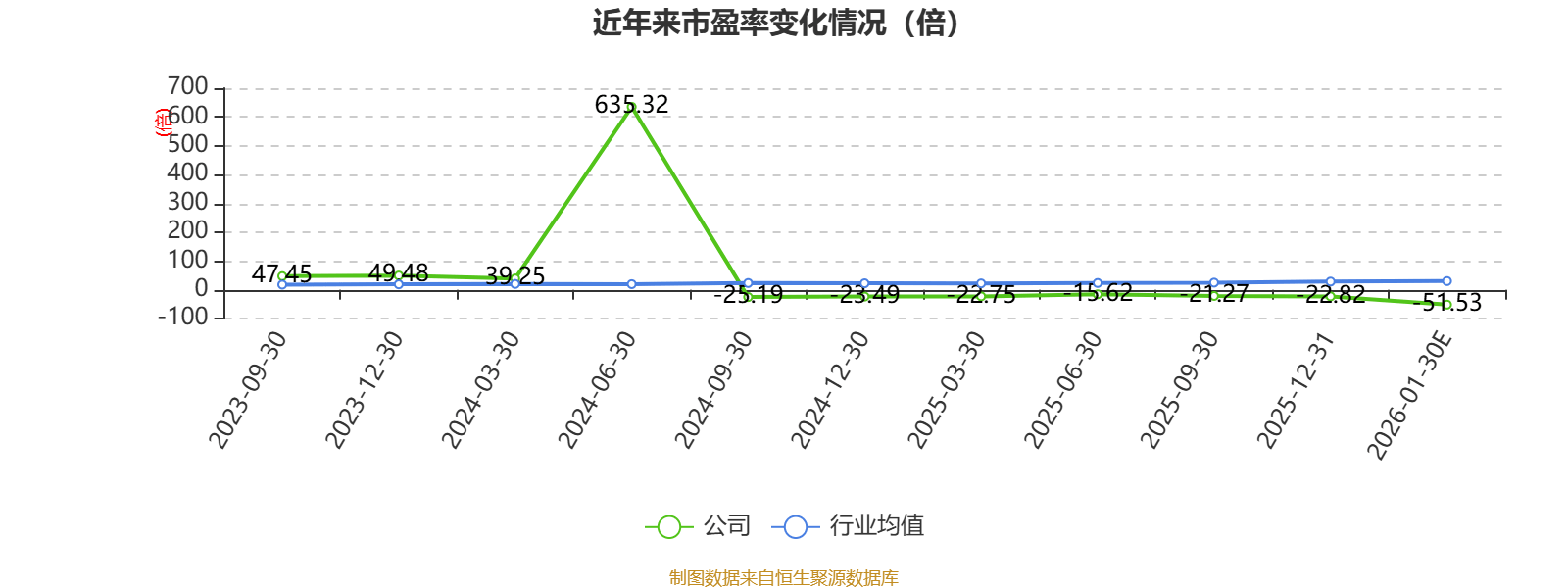
Group 1 - The company specializes in providing comprehensive solutions for water environment management and has achieved steady revenue growth and improved gross margins through the optimization of its customer structure and successful project implementation in 2025 [9] - In 2025, the company strengthened risk management and significantly improved cash flow from operating activities, achieving a positive net cash flow for the year, which supports its sustainable development [9] Group 2 - Historical net profit and non-recurring profit growth rates show significant fluctuations, with a notable increase in net profit growth expected in 2025 [12] - The company’s financial metrics, including price-to-earnings ratio, price-to-book ratio, and price-to-sales ratio, are calculated based on the latest financial data, providing insights into its valuation [16]
中建环能(300425) - 300425中建环能投资者关系管理信息20260123
2026-01-23 00:34
Group 1: Company Strengths and Market Position - The company's core advantage lies in understanding customer needs and providing scenario-based services with advanced technology, supported by 35 years of technical accumulation and innovation [2] - The company focuses on four key scenarios: integrated management of factories, networks, rivers, and lakes; efficient urban sewage treatment; low-carbon drying and incineration of sludge; and wastewater reuse in steel and coal industries, along with a centrifuge business [2] - The company has established a differentiated competitive advantage in low-carbon, smart, and intensive solutions, particularly in municipal emergency expansion, with industry-leading construction cycles, land use, and overall costs [3] Group 2: Financial Performance and Challenges - Revenue for the first three quarters of 2025 increased compared to the previous year, but net profit declined due to rising R&D expenses, pressure on receivables from government and platform clients, and increased credit impairment losses [4] - The company maintains a low proportion of long-aged receivables, primarily from state-owned enterprises and government platforms, indicating manageable risk but still exerting pressure on performance [5] Group 3: Future Plans and Strategic Focus - The company has minimal overseas business impact on overall performance but plans to focus on magnetic separation and centrifuge products for international markets [6] - Future development will emphasize a strategic focus on the "4+1" advantage areas, enhancing service capabilities, and deepening market penetration in key cities while improving management precision [8] - The company aims to continuously optimize service capabilities based on customer needs and enhance contract performance and profitability throughout the product and project lifecycle [8]

智慧监测+精准治污,威海持续推进水环境治理
Qi Lu Wan Bao· 2026-01-19 11:53
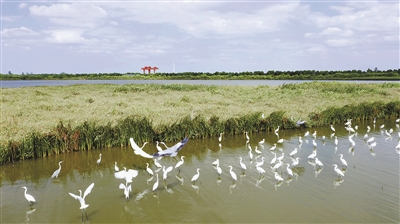
Core Viewpoint - Weihai City has focused on improving water ecological environment quality, achieving a 100% compliance rate for water quality in 13 key rivers and 12 urban drinking water sources since the start of the 14th Five-Year Plan, with no water bodies rated below Class V [1][2] Group 1: Monitoring and Management - The city has enhanced monitoring and early warning capabilities by establishing 19 automatic water quality monitoring micro-stations and 61 video surveillance cameras in the Mu Zhu River and Gu River basins [1] - A comprehensive big data analysis platform has been developed to improve pollution regulation, analysis, and early warning capabilities in key river basins [1] - A total of 2,100 inspections have been conducted to monitor river conditions, identifying and addressing 808 instances of water quality exceedances [2] Group 2: Pollution Control and Engineering Measures - Customized action plans have been implemented for three national-controlled rivers, focusing on targeted pollution reduction strategies [2] - The city has secured approximately 210 million yuan in funding for water pollution prevention and has initiated eight ecological restoration projects, including the Qinglongkuan artificial wetland [2] - Continuous management of 502 river discharge outlets has been established, with both online and offline monitoring to ensure compliance [2] Group 3: Future Directions - Weihai City will continue to focus on problem-oriented approaches, addressing weaknesses to enhance the protection and construction of beautiful rivers and lakes, thereby improving water ecological environment quality [2]
3个100%!大连“三水”共治,绘就碧水清流新画卷
Yang Guang Wang· 2026-01-18 00:12
Core Insights - Dalian City has achieved a 100% excellent rate for 13 national monitoring river sections and maintained a 100% excellent water quality rate for 14 drinking water sources since the "14th Five-Year Plan" [1][2] - The city has implemented a comprehensive approach to water management, focusing on pollution control, ecological restoration, and sustainable water resource utilization [2][4] Group 1: Water Quality Management - Dalian has established a management mechanism for water ecological environment protection, achieving expected goals in water protection, ecological restoration, and resource utilization [2] - The city has implemented precise pollution tracing and established a pollution source ledger for national monitoring rivers, leading to the development of targeted management plans [2][3] - A compensation mechanism for river water quality pollution has been introduced, promoting collaborative pollution control between upstream and downstream areas [2] Group 2: Pollution Control Initiatives - Dalian has completed the comprehensive remediation of 1,983 river discharge outlets, enhancing the management of pollutant discharges [3] - All 14 industrial parks in the city have established wastewater treatment facilities, ensuring proper treatment of industrial wastewater [3] - The city's sewage treatment capacity has doubled from 124.3 million tons per day in 2016 to 248.7 million tons per day, with a centralized treatment rate exceeding 98% [3] Group 3: Water Resource Optimization - Dalian has developed a modern water network plan focusing on maintaining ecological flow in key rivers, achieving a 100% compliance rate for ecological flow discharge in the Qiliu River reservoir [4] - The city has established facilities for reclaimed water reuse, achieving a utilization rate of over 35% [6] Group 4: Ecological Restoration Efforts - Dalian is advancing ecological restoration projects in rivers, enhancing self-purification capabilities and improving the ecological environment [7] - The city has implemented a monitoring and early warning plan for algal blooms in key lakes and reservoirs, ensuring proactive management [7] Group 5: Future Goals - Dalian aims to continue its efforts in beautiful river and lake protection, emphasizing precise, scientific, and legal pollution control to achieve higher standards in water management [8]
水利专家学者聚首广州 共探水生态环境提升之路
Xin Lang Cai Jing· 2026-01-11 01:43
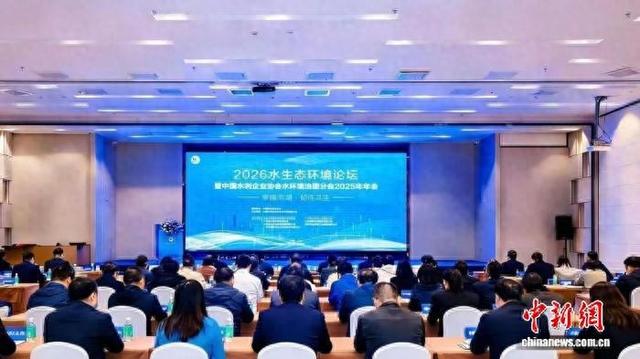
Core Insights - The forum focused on the collaborative development of water ecological environment enhancement and water security assurance, aligning with the high-quality development goals of the water sector during the 14th Five-Year Plan period [1][2] Group 1: Forum Objectives and Themes - The forum emphasized the theme "Happy Rivers and Lakes: Resilient Coexistence," which aligns with new requirements for water ecological civilization construction [2] - Guangdong aims to create a healthy water ecology and environment, solidifying the foundation for happy rivers and lakes, while promoting the integration of river and lake construction with a green water economy [2] - The forum encouraged broad participation from various sectors to share the prospects of river and lake construction and green development [2] Group 2: Expert Contributions and Discussions - Eleven experts presented reports focusing on key multidimensional issues in water governance, leading to systematic solutions [2] - Topics included collaborative protection of Pearl River water resources, reconstruction of downstream water networks, and flood management from a global perspective [2] - Urban water safety discussions centered on responses to extreme rainfall and resilience enhancement, exploring technical paths for water body remediation and non-point source pollution prevention [2][3] Group 3: Future Directions and Initiatives - The China Water Resources Enterprise Association's Water Environment Governance Branch plans to continue leveraging its platform and think tank role to promote technological innovation and result transformation [3] - The focus will remain on "three water coordination" and the construction of happy rivers and lakes, gathering industry strength to support high-quality development in the water environment governance sector [3]
陕西印发方案推进美丽河湖保护与建设
Shan Xi Ri Bao· 2026-01-07 23:22
Group 1 - The core viewpoint of the news is the implementation of the "Implementation Plan for the Protection and Construction of Beautiful Rivers and Lakes in Shaanxi Province (2025-2027)", which aims to improve the ecological environment of rivers and lakes through various measures [1][2] - The plan includes specific actions for water environment governance, such as increasing urban sewage treatment facility coverage to 73% by 2027 and enhancing the supervision of river discharge outlets [1] - It emphasizes the need for industrial park water pollution prevention and control, with a focus on improving sewage collection and treatment efficiency in provincial and above industrial parks by 2027 [1] Group 2 - The plan also addresses agricultural non-point source pollution prevention and aims to improve the cleanliness of water bodies and shorelines, particularly in major rivers and lakes by 2027 [1] - It outlines measures for water resource security, including enhancing ecological flow guarantees for rivers and implementing flow control in river basins [2] - The plan promotes water ecological protection and restoration, including the restoration of ecological buffer zones and the protection of aquatic life, while also establishing a foundation for water ecological monitoring and regulation [2]
中山公用水环境公司:攻坚厂网一体化 双区域树治水新标杆
Nan Fang Du Shi Bao· 2025-12-30 06:13
Core Viewpoint - The company is implementing a comprehensive water pollution control strategy in Zhongshan, focusing on integrated water management in non-central urban areas, particularly through the Torch Development Zone and Sanjiao Town projects, aiming to create replicable models for water governance [1][2][4]. Group 1: Torch Development Zone Project - The Torch Development Zone project represents a significant practice in expanding the company's water governance efforts, with a goal to enhance water quality and operational efficiency by 2025 [2]. - The project has achieved a 35.52 percentage point increase in sewage collection rates, exceeding municipal targets, and has improved the average BOD concentration entering the Yangguan sewage treatment plant by 34.17% year-on-year [2]. - A three-pronged governance mechanism has been established to improve river water quality, resulting in a reduction of Class V rivers from 16 to 6, with quarterly assessments showing a stable 31.25% of rivers in this category, outperforming the municipal standard of 46% [2]. Group 2: Flood Prevention and Smart Water Management - The company has implemented a comprehensive flood prevention system, reducing the number of flood-prone areas in Zhongshan Port from 30 to 14, a decrease of 53.3% [3]. - A smart drainage platform has been developed to enhance operational efficiency, transitioning from manual operations to remote control for 86 electric gates, marking a significant advancement in water management technology [3]. Group 3: Sanjiao Town Project - The Sanjiao Town project focuses on breaking down barriers between water treatment facilities and networks, establishing a joint venture to enhance local water governance [4]. - A comprehensive survey of 297.55 kilometers of pipelines has been conducted, leading to the creation of a digital management system that supports targeted governance [4]. - The Sanjiao sewage treatment plant has increased its capacity from 40,000 tons per day to 70,000 tons per day, addressing inefficiencies caused by traditional segmented management [4]. Group 4: Key Highlights of Governance Experience - The company has developed a replicable governance model that integrates resources from state-owned enterprises and local areas, enhancing overall governance efficiency [7]. - A targeted approach to problem-solving has been adopted, focusing on specific issues rather than a one-size-fits-all solution, which has led to quicker and more effective outcomes [7]. - The use of digital technologies has modernized water management practices, improving operational efficiency and responsiveness to flooding [7]. - A focus on public satisfaction has been established, ensuring that all complaints are addressed promptly, thereby enhancing community trust and engagement [8]. Group 5: Future Directions - The company plans to continue expanding its water governance initiatives, leveraging its successful projects as benchmarks, and aims to innovate in asset-light operational models tailored to local needs [8].

金坛:坚决扛起太湖上游担当
Zhong Guo Huan Jing Bao· 2025-12-29 02:38
Core Viewpoint - The article highlights the significant improvements in water quality and ecological development in Jintan District, particularly around Changdang Lake, through a comprehensive water management strategy and ecological initiatives [2] Group 1: Water Quality Improvement - Changdang Lake is an important ecological barrier in the Taihu Basin, with Jintan District focusing on a "1+3" water management model that emphasizes source control, ecological restoration, and collaborative governance [2] - By 2025, the average water quality of Changdang Lake is expected to reach Class III for the first time, marking an improvement of two categories compared to 2021, with total phosphorus levels reduced by 60.6%, achieving the best performance since the start of the 14th Five-Year Plan [2] Group 2: Ecological and Economic Development - Jintan District leverages the unique advantages of Changdang Lake, including its scenic beauty, local cuisine, and historical significance, to promote the development of a national wetland park, Huaguo Science City, and recreational parks as part of its "one city, two parks" planning [2] - The ecological benefits are continuously being realized, leading to a thriving cultural and tourism industry in the region [2] Group 3: Future Plans - The district plans to further deepen the "1+3" water management model and aims to establish itself as a national ecological civilization demonstration zone, an innovative practice base for the "Two Mountains" theory, and an experimental area for the "Ecological Island" concept around Changdang Lake [2] - The goal is to ensure that clean water and green shores become a valuable asset for the sustainable development of Jintan [2]

三个100% 杭州治水有什么门道?
Hang Zhou Ri Bao· 2025-12-25 02:21
Core Viewpoint - Hangzhou's water quality management has achieved significant success, with 100% compliance in key water quality metrics, ensuring the safety of drinking water for its citizens [1][3][6] Group 1: Water Quality Achievements - From January to October this year, Hangzhou achieved a 100% rate for surface water quality at or above Class III, as well as 100% compliance in water function area standards and drinking water source quality [1] - The city's efforts in water management have resulted in stable and excellent water quality in major rivers and lakes, providing the highest level of drinking water safety for millions of residents [1][6] Group 2: Systematic Water Management - The core of Hangzhou's water management strategy is the "Five Water Co-governance," which includes pollution control, flood prevention, drainage, water supply assurance, and water conservation, emphasizing an integrated approach [3] - Continuous monitoring and management of pollution sources have been implemented, including the completion of inspections and corrective measures for newly identified pollution outlets [3][5] Group 3: Collaborative River Basin Governance - Hangzhou has initiated cross-regional cooperation for water governance by forming the "Qiantang River Basin Water Environment Co-governance Alliance" with four other cities, marking a new phase in collaborative water management [4] - The alliance aims to enhance water quality through institutional innovation and collaborative mechanisms, contributing to the ecological protection of the Qiantang River basin [4][5] Group 4: National Leadership in Water Management - Hangzhou's water management practices have gained recognition as exemplary models across the country, with successful cases in ecological restoration and industrial water management being highlighted as replicable solutions [6] - The city’s efforts in maintaining water quality and environmental protection serve as a benchmark for other regions, showcasing a commitment to sustainable development and ecological civilization [6]