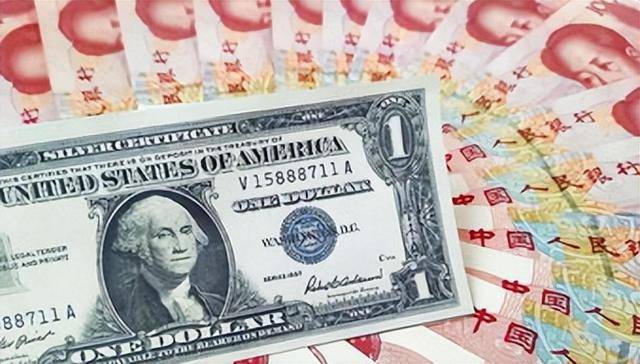
美元定价权

Search documents
特朗普灵感乍现,想让美债“瞬间清零”!美国若胡来,我们怎么办
Sou Hu Cai Jing· 2026-02-18 09:54
Group 1 - Trump's actions are aimed at addressing the U.S. debt crisis, with a focus on reducing national debt and increasing the government's ability to manage fiscal deficits [1][3] - The U.S. fiscal deficit is projected to reach $1.9 trillion by 2026 and $4.7 trillion by 2036, with net interest payments potentially doubling to $2.1 trillion [3] - The U.S. government is expected to allocate about one-third of its annual revenue to debt interest payments by 2036, indicating a severe fiscal challenge [3] Group 2 - Trump's strategy includes leveraging military actions and trade wars to support the U.S. dollar, particularly targeting China and oil-producing nations [5][7] - The initial approach of tying the dollar to Chinese manufacturing was abandoned in favor of focusing on oil markets, particularly in Iran and Venezuela, to maintain the dollar's global status [5] - China is actively working to strengthen the renminbi's role in global commodity pricing and has been increasing gold reserves and promoting transactions in renminbi [7]

中国发债成本直追美国!千亿资本抢购背后,美元定价权开始松动?
Sou Hu Cai Jing· 2025-11-11 04:31
Core Viewpoint - The market's strong demand for Chinese dollar bonds contradicts the lower credit rating assigned by international rating agencies, indicating a significant trust in China's sovereign creditworthiness despite the disparity in ratings [1][9][25]. Group 1: Bond Issuance Details - The recent issuance of Chinese dollar bonds saw a three-year interest rate of 3.646% and a five-year interest rate of 3.787%, which are nearly identical to U.S. Treasury bond rates for the same maturities [3][4]. - The subscription scale for these bonds reached 30 times the issuance amount, setting a historical record [4][25]. Group 2: Rating Agencies and Market Perception - International rating agencies, such as Moody's, S&P, and Fitch, have rated China's sovereign credit at A1, which is lower than the AA1 rating for the U.S. [6][9]. - Despite the lower rating, the market has shown that lending to China is perceived as equally safe as lending to the U.S., reflecting a significant shift in investor confidence [7][9]. Group 3: Reasons for Global Investor Interest - The current global high-interest rate environment and inflation pressures in major economies have led investors to seek stable and high-quality assets, making Chinese sovereign bonds an attractive option [13][15]. - China's substantial foreign exchange reserves, strong manufacturing base, and expanding market size contribute to international confidence in its ability to meet debt obligations [18][20]. Group 4: Broader Implications - The successful bond issuance may challenge the long-standing monopoly of the U.S. dollar in global pricing, suggesting a potential diversification of dollar-denominated credit [20][22]. - This event serves as a model for emerging market countries, demonstrating that with a solid economic foundation and good credit, they can achieve fair treatment in international capital markets [24][25].