美元波动性

Search documents
美国保险公司美元对冲规模飙升 超过所谓“解放日”峰值
Xin Lang Cai Jing· 2026-02-18 14:49
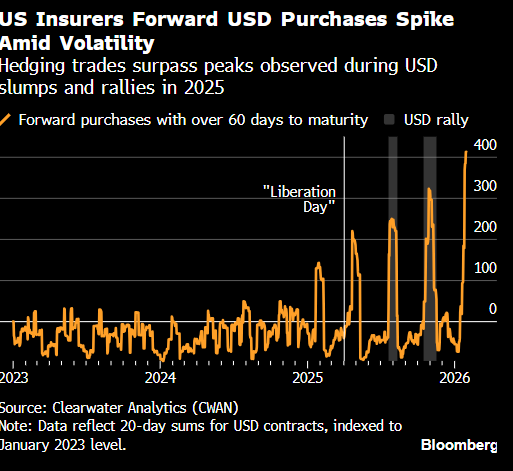
Core Insights - The article highlights a significant increase in U.S. insurance companies purchasing dollar forward contracts for hedging purposes due to heightened volatility in the dollar since the beginning of the year [1][3][5] - According to Clearwater Analytics Holdings Inc., the scale of these purchases has surpassed the peak levels seen last year when the dollar fell after Trump's "liberation day" tariffs announcement [1][3] - Matthew Vegari, the research director at Clearwater, noted that while the dollar has experienced larger declines in the past, the trading activity of U.S. insurance companies this year is particularly noteworthy, indicating a decisive move to hedge against further dollar weakness [1][3] Summary by Category Dollar Volatility and Hedging Activity - The volatility of the dollar has increased significantly in 2025, driven by Trump's trade policies and pressure on the Federal Reserve, prompting U.S. insurance companies to enhance their hedging measures beyond previous years [3][5] - Insurance companies had previously increased their forward contract purchases during periods of dollar strength in the summer and fall, but the current hedging activity is described as much more aggressive [3][5] Research Basis - Clearwater's research is based on a representative sample of U.S. insurance companies, all of which manage assets exceeding $500 million [3][5]

美银:美政府停摆结束后数据“洪流”来袭 美元波动性将上升
Zhi Tong Cai Jing· 2025-11-14 00:05
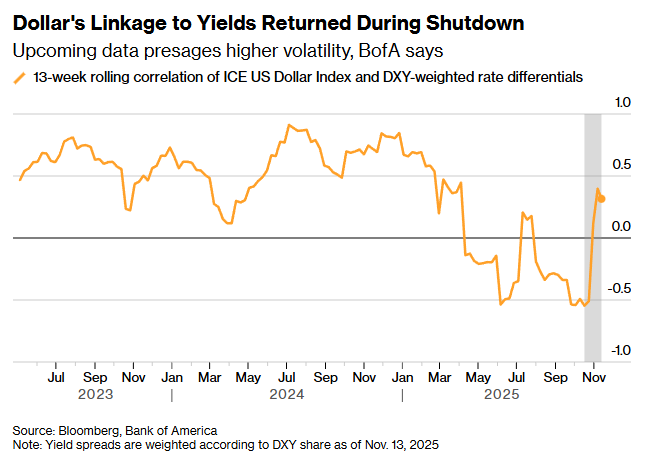
Group 1 - The core viewpoint of the articles is that the end of the U.S. government shutdown and the resumption of economic data releases are expected to increase volatility in the foreign exchange market, particularly for the U.S. dollar [1][2] - Bank of America strategists noted that the sensitivity of the dollar to global interest rates has reached its highest level since the first quarter of this year, indicating potential fluctuations in the dollar as economic data is released [1] - The resumption of data releases is deemed critical, as it may lead to increased volatility in U.S. interest rate differentials, which are significant for foreign exchange traders [1] Group 2 - Recent months have seen a significant decline in measures of currency volatility, attributed to cautious investor assessments of global tariffs and central bank monetary policies [2] - The narrowing of yield differentials, particularly as several central banks, including the European Central Bank, approach the end of their easing cycles, has contributed to a calmer foreign exchange market [2] - The dollar's performance has shifted to reflect growth rather than inflation, as there has been a lack of data to validate economic resilience, leading to a more neutral positioning among investors regarding the dollar [2]