
英镑

Search documents
如果美元印钞机停一天,我们的钱包会怎么样?
第一财经· 2026-03-13 04:10
Core Viewpoint - The article discusses Kenneth Rogoff's book "Our Dollar, Your Problem," which explores the significance of the US dollar as the world's primary currency and the potential challenges it faces in the current economic landscape [2]. Group 1: Historical Context and Economic Theories - Rogoff's perspective contrasts with mainstream economists like Joseph Stiglitz and Alan Greenspan, emphasizing the risks of excessive money printing and debt accumulation [3][5]. - He argues that the historical dominance of a currency typically lasts one to two centuries, and while the dollar has been strong post-World War II, its position is not unassailable [6][7]. Group 2: Current Economic Indicators - The share of US GDP in the global economy has declined from 40% in 1950 to about 25% in the 2020s, and under purchasing power parity, it is below 17% [7]. - The strong position of the dollar can lead to adverse effects, such as inflation in countries that rely on it for trade, as seen in the recent oil crisis linked to US dollar transactions [6]. Group 3: Global Economic Dynamics - Rogoff highlights the "middle-income trap," where rapid economic growth leads to increased inequality, potentially resulting in crises similar to those faced by smaller nations [10]. - He notes that the US is experiencing inflation and rising living costs, which could undermine its economic stability and attractiveness to international capital [10][11]. Group 4: Future Implications - The article suggests that if the dollar's status as the global currency is jeopardized, it will have widespread implications beyond the US, affecting global financial stability [11].


中东冲突扰动全球汇市
第一财经· 2026-03-05 14:11
Core Viewpoint - The article discusses the recent volatility in the global foreign exchange market driven by geopolitical risks, oil price shocks, and changes in global central bank policy expectations, with a focus on the impact on various currencies, particularly the Chinese yuan and Asian currencies [3][9]. Currency Fluctuations - As of March 5, the People's Bank of China set the yuan's midpoint against the dollar at 6.9007, an increase of 117 basis points from the previous trading day, following a period of weakness due to external uncertainties [5][6]. - Major Asian currencies, including the yen, won, and Singapore dollar, have depreciated, while currencies from resource-rich economies like the Canadian dollar and Norwegian krone have remained relatively stable [6][7]. Geopolitical and Economic Influences - The escalation of conflicts in the Middle East has heightened global risk aversion, particularly concerning the security of oil transport through the Strait of Hormuz, which accounts for about 20% of global oil transport [9][10]. - International oil prices have surged, with Brent crude rising approximately 15% within a week, exceeding $85 per barrel, which has intensified inflation concerns and bolstered the dollar's appeal as a safe-haven asset [10][11]. Differentiated Impact on Economies - Energy-exporting countries like Canada and Norway benefit from rising oil prices, which improve trade conditions and support their currencies, while energy-importing economies face inflationary pressures and increased costs due to higher oil prices [11][12]. - The article notes that if energy prices continue to rise, consumer price indices in countries like Singapore could be significantly affected, with about 7% of items in the CPI basket directly impacted [11]. Central Bank Policy Expectations - Market participants are closely monitoring upcoming interest rate meetings of major central banks, including the Federal Reserve and the European Central Bank, as changes in policy could significantly influence currency movements [12][13]. - The article highlights that the outlook for the Japanese yen remains uncertain, and expectations for the Bank of England's rate cuts may be delayed due to rising inflation from energy prices, providing some support for the pound [12][13]. Future Currency Trends - Analysts predict that the foreign exchange market will continue to be influenced by geopolitical developments in the short term, while medium to long-term trends will depend on economic fundamentals and monetary policy paths [13][14]. - The yuan is expected to maintain a dual-directional fluctuation pattern, with short-term movements influenced by external geopolitical risks, while the medium-term trend remains one of appreciation due to improving domestic economic fundamentals [14][15]. - Other Asian currencies are likely to face continued pressure in the short term, but a potential rebound could occur if geopolitical tensions ease [15].
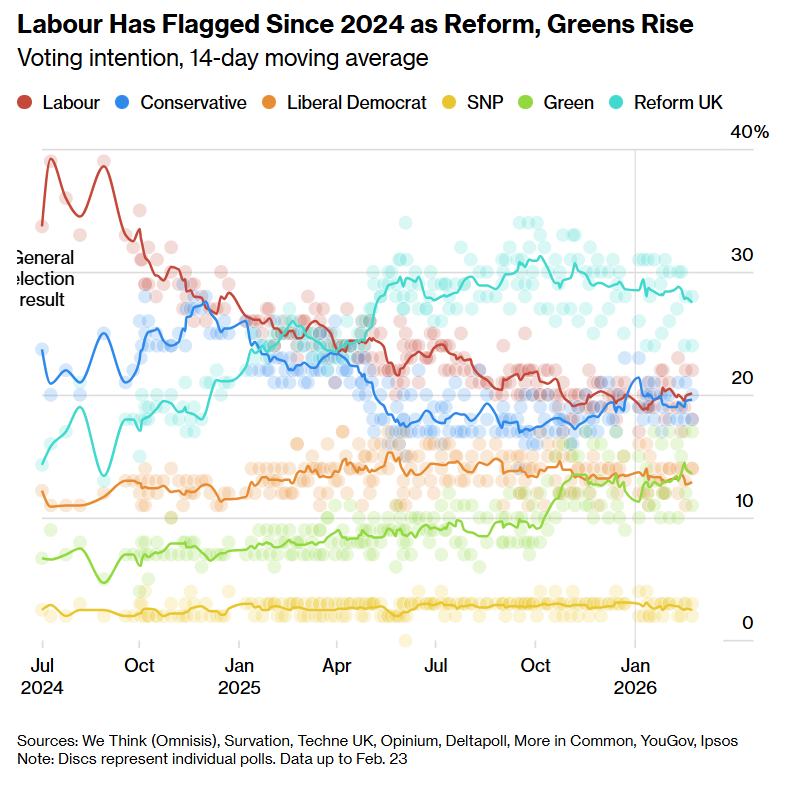
绿党意外攻陷工党铁票仓! 斯塔默左翼防线失守 英镑与金边债警报同步拉响
智通财经网· 2026-02-27 07:18
Group 1 - The Green Party's victory in the Manchester by-election highlights a significant threat to the ruling Labour Party led by Prime Minister Keir Starmer, indicating potential losses in the upcoming local elections in May [1][2][3] - Green Party candidate Hannah Spencer won 40.7% of the vote, surpassing Labour's previous stronghold, which had been held by the party for over 90 years [1][3] - The election results suggest a fragmentation of the political landscape in the UK, with the Labour Party facing challenges from both the left-wing Green Party and the right-wing Reform UK party [1][2][10] Group 2 - Labour Party Chair Anna Turley described the election outcome as "disappointing," emphasizing the party's commitment to addressing the cost of living crisis and investing in public services [2] - The Green Party's win marks its first by-election victory and its first seat in Northern England, positioning itself as a more progressive alternative to Labour on issues like economic equality and climate justice [2][3] - The results indicate a potential leadership challenge within the Labour Party, as dissatisfaction with Starmer's leadership grows, especially following the party's poor performance in previous local elections [4][10] Group 3 - The Reform UK party, led by Nigel Farage, faced a setback despite polling well before the election, indicating a competitive political environment [6] - Political analysts suggest that Labour's shift towards the right to attract traditional Conservative voters may be backfiring, leading to a decline in voter satisfaction [9] - The by-election results have limited immediate impact on the UK financial markets, but they signal increased political risk premiums that could affect domestic assets in the coming months [10]
全球货币支付排名更新:美元跌破50%、欧元22%,人民币成绩如何?
Sou Hu Cai Jing· 2026-02-26 10:47
Group 1 - The core viewpoint of the article highlights the current standings of global currency payments, with the US dollar and euro maintaining dominant positions, while the Chinese yuan's internationalization is seen as underrepresented in the SWIFT rankings [1][3][12] - The US dollar holds a 49.68% share of global payments, despite a slight decrease, reinforcing its unmatched status in the market [3][10] - The euro ranks second with a 22.36% share, showing a month-over-month increase, but its actual international payment share is estimated to be around 25% when excluding intra-eurozone transactions [5][7] Group 2 - The yuan ranks fifth with a 3.13% share, reflecting a 0.4 percentage point increase from the previous month, and is the only emerging market currency in the top five [12][13] - The SWIFT statistics are criticized for not fully capturing the yuan's international usage, as many domestic and cross-border transactions are processed outside of the SWIFT network [15][17] - The article suggests that the yuan's 3.13% figure is merely the "tip of the iceberg," indicating that its true international influence is significantly greater than reported [19][27] Group 3 - The yuan's internationalization is supported by China's strong economic fundamentals, including its large trade volume and stable growth, which are essential for enhancing the yuan's global standing [22][30] - Recent trends show an increase in the use of the yuan for cross-border trade settlements and a growing number of countries incorporating it into their foreign exchange reserves [25][26] - The article emphasizes that the yuan's gradual rise in the global payment landscape reflects its resilience and potential, with expectations for its role to expand as the world moves towards a more diversified currency payment system [26][32]

每日投行/机构观点梳理(2026-02-25)
Jin Shi Shu Ju· 2026-02-26 01:52
Group 1: Gold Price Predictions - Morgan Stanley predicts that gold prices will reach $6,300 per ounce by the end of 2026, raising its long-term forecast to $4,500 per ounce [1] - UBS expects gold prices to touch $6,200 per ounce in the coming months, driven by persistent geopolitical risks and continued support from the Federal Reserve's easing policies [1] Group 2: Copper Price Outlook - Citigroup holds a bullish outlook on copper prices, forecasting a rise to $14,000 per ton in the next three months, citing strong demand from China and limited downside risks [1] - The bank maintains a long-term average copper price forecast of $13,000 per ton for 2026, indicating a balanced global copper market [1] Group 3: AI Impact on GDP - Goldman Sachs reports that AI contributed nearly zero to the U.S. GDP last year, as investments were offset by imports of chips and hardware [2] - A survey of executives revealed that while 70% of companies are actively using AI, about 80% believe it has not impacted employment or productivity [2] Group 4: S&P 500 Index Forecast - A Reuters survey indicates that the S&P 500 index is expected to rise nearly 10% to around 7,500 points by the end of 2026, supported by strong earnings and stable economic growth [3] - Despite a resilient market, risks remain from inflation trends, Federal Reserve policies, and geopolitical tensions [3] Group 5: Bond Market Dynamics - Societe Generale highlights that geopolitical uncertainties are supporting the safe-haven demand for bonds, leading to a dovish shift in market expectations for central bank interest rate paths [4] Group 6: UK Interest Rate Expectations - ING analysts suggest that the British pound may decline if the Bank of England's Governor hints at a potential rate cut in March [5][6] Group 7: Canadian Interest Rate Outlook - Scotiabank anticipates that the Bank of Canada will keep interest rates unchanged until the outcome of the USMCA negotiations becomes clearer [7] Group 8: Domestic AI Developments - CITIC Securities reports a surge in the usage of domestic AI models, indicating a significant expansion in AI inference demand and investment opportunities in domestic computing power [8] Group 9: Electronic Fabric Demand Cycle - CITIC Securities notes that the current electronic fabric demand cycle, driven by AI, may be more intense than previous storage cycles, with a projected 100% increase in demand for specialty fabrics by 2026 [9] Group 10: AI Industry Chain Outlook - CITIC JianTou expresses optimism about the AI industry chain, highlighting strong demand for computing power and the transition of large models towards monetization [10] Group 11: AIDC Growth and Equipment Demand - CITIC JianTou indicates that the AIDC construction phase will lead to significant demand for power capacity and related equipment, with a projected CAGR of 55% from 2025 to 2028 [11] Group 12: AIDC Sector Performance - Founder Securities anticipates continued high growth in the AIDC sector, driven by increased capital expenditures from leading internet companies and a growing demand for power equipment in the U.S. [12] Group 13: New Energy Vehicle Market Recovery - Galaxy Securities predicts a recovery in the automotive market post-Spring Festival, with several flagship new energy vehicle models set to launch, potentially boosting market demand [13]
三大商品货币率先起飞,市场押注全球即将重回加息周期
Feng Huang Wang· 2026-02-25 22:23
Core Viewpoint - The Australian dollar, Norwegian krone, and New Zealand dollar have significantly outperformed other major currencies this year as traders bet on a shift from interest rate cuts to hikes in global monetary policy [1][3]. Group 1: Currency Performance - The Australian dollar has appreciated over 6% against the US dollar year-to-date, reaching its highest level in nearly three years [1]. - The New Zealand dollar has risen approximately 3.7% against the US dollar this year, with expectations of an upcoming interest rate hike [3]. - The Norwegian krone has gained over 5% due to unexpectedly high inflation, leading traders to speculate on a potential small rate hike in the first half of the year [3]. Group 2: Monetary Policy Shifts - The Reserve Bank of Australia raised its benchmark interest rate by 25 basis points to 3.85%, marking its first rate hike in over two years [1][3]. - Analysts believe this could signal the beginning of a sustained tightening cycle, with expectations of one to two more rate hikes this year, each by 25 basis points [3]. - The shift in monetary policy reflects a broader trend among major economies to end years of rate cuts and focus on controlling inflation [3]. Group 3: Economic Context - The economic structures of Australia, New Zealand, and Norway are heavily weighted towards commodities, often categorizing them as "commodity currencies" [3]. - Recent increases in oil, copper, and other export commodity prices have provided additional support for these currencies [3]. - Concerns over the U.S. government's fluctuating policies and rising debt levels have led investors to seek diversification away from dollar-denominated assets, benefiting these commodity currencies [4].
英镑走高 利率分化和市场情绪成为焦点
Xin Lang Cai Jing· 2026-02-25 11:02
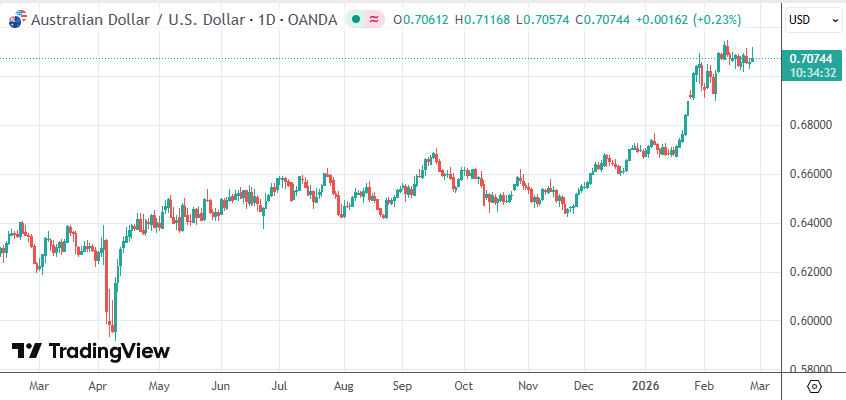
Core Viewpoint - The British pound is experiencing fluctuations against the US dollar and euro, influenced by interest rate differentiation and market sentiment, with uncertainties in UK politics and potential further rate cuts from the Bank of England impacting its near-term outlook [1][6]. Group 1: Currency Performance - The British pound has risen by 0.10% against the euro, currently at 87.17 pence, after hitting a low of 87.52 pence, the lowest since December 19 [3][8]. - The British pound has increased by 0.18% against the US dollar, now at 1.3511 dollars [4][9]. Group 2: Economic Indicators - The Bank of England's Governor Andrew Bailey indicated that a rate cut in March is possible, although recent data shows that service price inflation has not eased as hoped [2][7]. - The UK 10-year government bond yield fell to its lowest since December 2024 at 4.29% on Tuesday, before rising by two basis points on Wednesday [5][9]. - The UK Debt Management Office's upcoming bond issuance plan is under close scrutiny, which will follow the Chancellor's submission of the latest economic growth and borrowing forecasts to Parliament [4][9]. Group 3: Political Context - Political uncertainties are rising, particularly surrounding Prime Minister Keir Starmer, who faces calls for resignation due to the appointment of Peter Mandelson as the UK ambassador to the US, amid scrutiny related to Mandelson's past connections [5][9].
利率风向突变?外汇交易员开始押注:新鹰派时代将至!
Jin Shi Shu Ju· 2026-02-25 07:21
Core Viewpoint - The foreign exchange market is experiencing a significant shift as traders bet on a transition from declining global interest rates to rising rates, with the Australian dollar, Norwegian krone, and New Zealand dollar outperforming other major currencies this year [2][3]. Group 1: Currency Performance - The Australian dollar has risen nearly 6% against the US dollar this year, reaching a three-year high, driven by the Reserve Bank of Australia's anticipated new rate hike cycle to combat inflation [2][3]. - The New Zealand dollar has increased by nearly 4%, with traders expecting the country to initiate its first rate hike in the coming months [2]. - The Norwegian krone has appreciated over 5%, spurred by unexpected inflation increases that have led traders to price in potential rate hikes in the first half of the year [2][3]. Group 2: Economic Context - Analysts suggest that these currencies are indicative of a broader hawkish shift among major economies, moving away from years of rate cuts to focus on controlling inflation [3]. - The Australian economy is at the forefront of this rate hike wave, with the trimmed mean inflation rate reported at 3.4%, exceeding analysts' expectations and increasing the likelihood of further rate hikes [3][4]. - The performance of these currencies is also supported by rising prices of commodities such as oil and copper, which are significant for their economies [3]. Group 3: Investor Sentiment - Investors are diversifying away from US dollar assets due to concerns over the unpredictable policies of the Trump administration and rising government debt [4]. - The expectation of rate hikes in other regions has contributed to the weakening of the US dollar, as higher rates elsewhere erode the support for the dollar [4]. - Despite pressure from President Trump for lower borrowing costs, most traders believe the Fed's rate cut cycle is not yet over, with expectations of two to three 25 basis point cuts this year [4]. Group 4: Fiscal Health - The Australian dollar, Norwegian krone, and New Zealand dollar are favored by investors due to the relative fiscal health of their countries, contrasting with concerns over large government deficits and rising debt in currencies like the yen, dollar, and pound [4][5]. - The top-performing G10 currencies are characterized as fiscally sound and commodity-exposed, making them attractive destinations for capital as it rotates out of the US [5][6].
分析:若英国央行行长贝利暗示3月降息,英镑可能下跌
Xin Lang Cai Jing· 2026-02-24 09:48
Core Viewpoint - The report by Chris Turner from ING suggests that if Bank of England Governor Bailey raises expectations for an interest rate cut as early as March during his upcoming testimony, the British pound may decline [1]. Group 1: Interest Rate Expectations - Bailey is expected to speak to the Treasury Select Committee, and his comments may shift the voting outcome towards a rate cut in March [1]. - There is an 80% probability currently priced in by the market for a 25 basis point rate cut, which could be reinforced by Bailey's remarks [1]. - Market speculation may arise that the Bank of England's easing this year could exceed 50 basis points [1]. Group 2: Currency Movements - The euro has appreciated by 0.1% against the pound, reaching 0.8739 pounds [1]. - ING forecasts that the euro to pound exchange rate could rise to 0.88 pounds [1].
巴克莱模型显示月末再平衡触发温和美元买盘 美国科技股疲软成催化因素
Sou Hu Cai Jing· 2026-02-23 17:45
Core Insights - Recent performance of US tech stocks has been weak, prompting Barclays to advise global fund managers to buy US dollars by the end of February for portfolio rebalancing [1] Group 1: Market Signals - Barclays' month-end foreign exchange flow model indicates a mild buy signal for the dollar against all major currencies during month-end periods [1] - The catalyst for this signal stems from widespread concerns about the disruptive impact of artificial intelligence and related spending, compounded by the decline in tech stocks affecting asset performance [1] Group 2: Portfolio Rebalancing Logic - According to conventional rebalancing logic, when US assets outperform global assets, fund managers typically sell dollars to return to target allocation levels; conversely, if US assets underperform while maintaining hedged positions, they need to buy dollars to adjust portfolio structure [1] - The relative underperformance of the US stock market has dominated the month-end model calculations, ultimately triggering the mild buy signal for the dollar against major currencies [1] Group 3: Political and Economic Context - Barclays notes that global political uncertainty continues in February, keeping the market cautious, while US economic data remains robust, demonstrating strong resilience [1] - Political risks surrounding Prime Minister Starmer's position in the UK have intensified, further weakening the pound; meanwhile, the strong electoral performance of Japan's ruling party supports the yen [1]
