美加贸易争端

Search documents
没想到特朗普炮轰鲍威尔后,转头就向加拿大立威,卡尼这次不忍了
Sou Hu Cai Jing· 2026-02-13 07:10
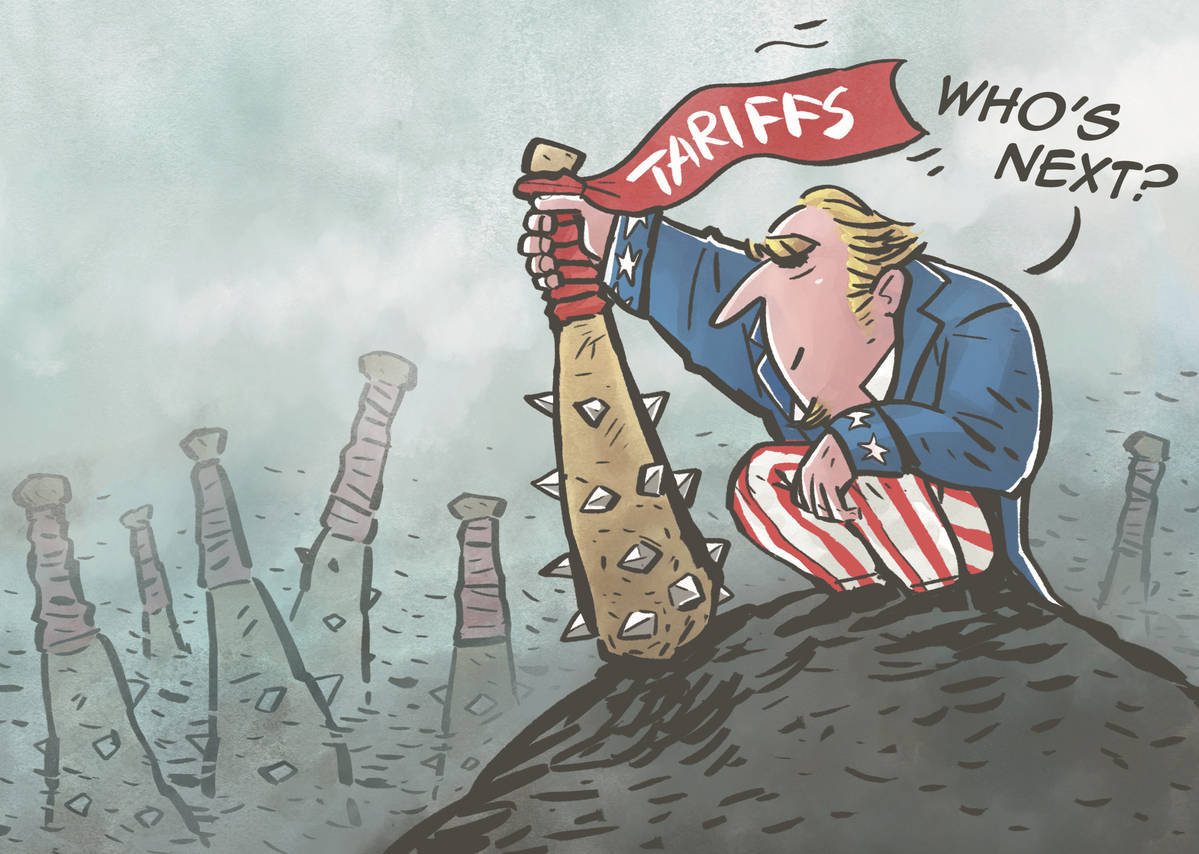
Group 1: Federal Reserve and Political Dynamics - Trump publicly criticized Federal Reserve Chairman Powell, expressing regret over his appointment and suggesting he underperformed [3][5] - The ongoing political tension surrounding the Federal Reserve raises concerns about its independence and potential impacts on U.S. Treasury rates and the dollar's stability [5][12] - Trump appears to support Kevin Warsh as a potential replacement for Powell, indicating intentions to challenge the Fed's structure and independence [5][12] Group 2: U.S.-Canada Trade Relations - Trump targeted Canada over the Gordie Howe Bridge, which is crucial to the $126 billion annual trade between the U.S. and Canada, demanding concessions on dairy and alcohol tariffs [7][8] - The Canadian government firmly rebutted Trump's claims, emphasizing that the bridge's construction cost of CAD 6.4 billion was fully borne by Canada, and asserting their sovereignty in the matter [7][8] - The trade dispute has heightened tensions, with Canadian provinces considering reducing reliance on U.S. supply chains, reflecting a unified stance against U.S. pressure [10][12]

耗时7年多 加拿大投入318亿元的跨国大桥完工在即 特朗普突然插手:美国得拿一半“干股” 否则不准通车!加市长:这简直疯了
Mei Ri Jing Ji Xin Wen· 2026-02-10 14:02
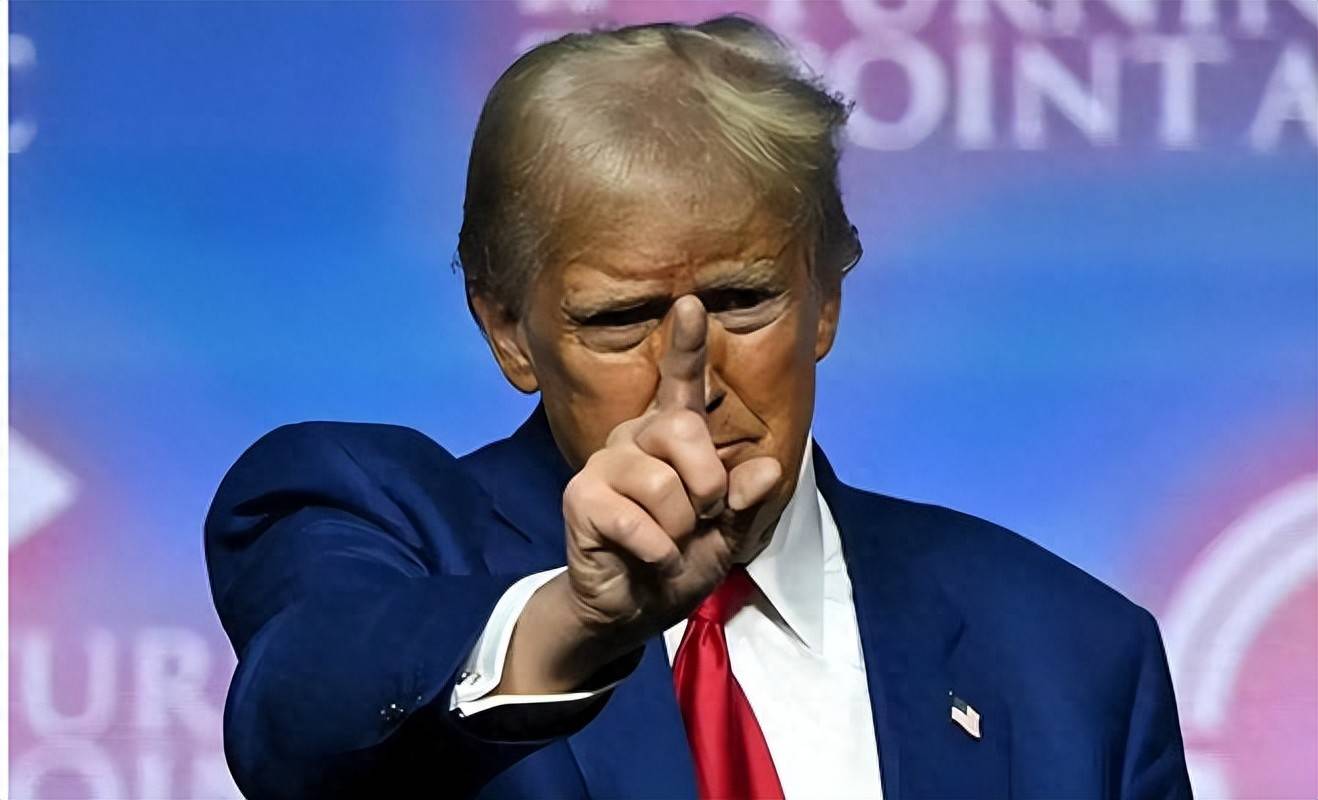
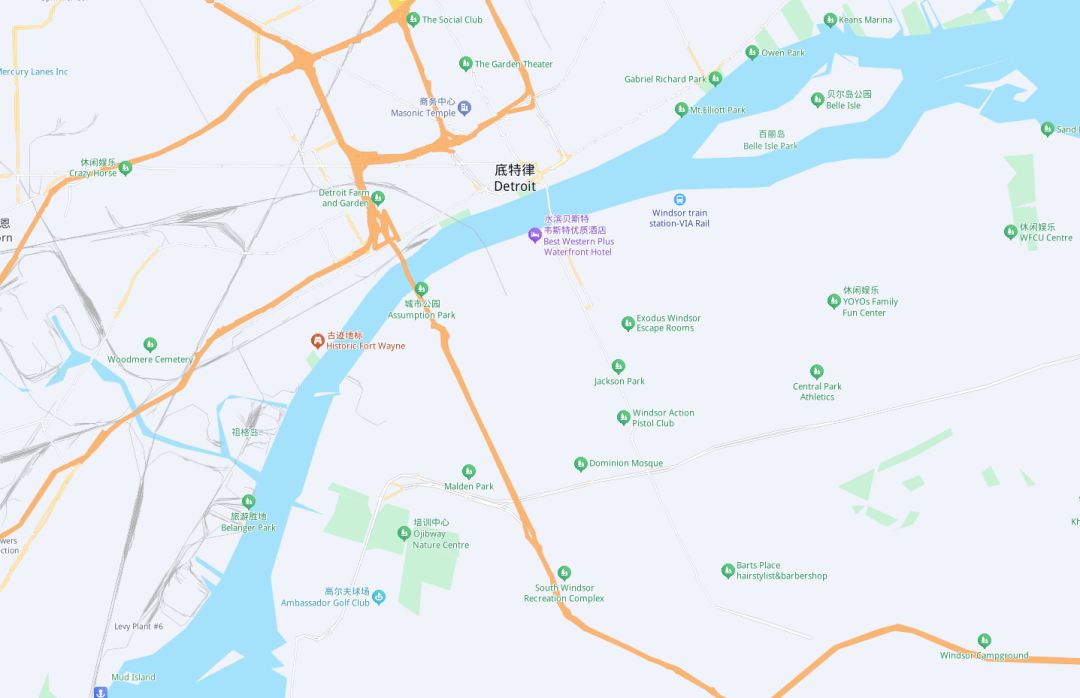
Core Viewpoint - President Trump threatens to block the opening of the Gordie Howe International Bridge unless the U.S. receives at least half of the ownership rights, citing unfair treatment by Canada over the years [1][3] Group 1: Bridge Construction and Ownership - The Gordie Howe International Bridge, named after the late Canadian hockey legend, has a total construction cost of $4.6 billion, approximately 31.8 billion RMB, and is nearing completion since its start in 2018 [3] - Trump claims that the bridge has used almost no American materials and demands that the U.S. should at least own half of the asset [1][3] - The design, construction, operation, and maintenance of the bridge are the responsibility of Canada, as per an agreement with Michigan [3] Group 2: Economic Impact - The bridge is expected to reduce cross-border truck transit time by about 20 minutes, saving drivers $2.3 billion over the next 30 years [5] - Currently, cross-border truck traffic relies on the Ambassador Bridge, which faces significant congestion issues [5] Group 3: Reactions from Canadian Officials - Canadian officials and business leaders have strongly condemned Trump's actions, with Windsor's mayor criticizing the disregard for mutual interests [1][2] - The President of the Canadian Chamber of Commerce described blocking the bridge as a self-destructive act, regardless of whether it is a real threat or a tactic to create uncertainty [3]
突然!特朗普,发出威胁!至少给一半,否则......
券商中国· 2026-02-10 05:37
Core Viewpoint - The article discusses President Trump's recent threats to Canada regarding the Gordie Howe International Bridge, emphasizing his demands for compensation and ownership rights over the bridge, which is part of ongoing trade tensions between the two countries [1][2]. Group 1: Trump's Threats and Demands - Trump threatened to block the opening of the $4.6 billion Gordie Howe International Bridge unless the U.S. receives "adequate compensation" and claims that the U.S. should own at least half of the asset [2][3]. - He expressed dissatisfaction with Canada's ownership of the bridge, high tariffs on U.S. dairy products, and restrictions on the sale of certain U.S. alcoholic beverages [2][3]. Group 2: Economic Impact and Trade Relations - The bridge is expected to alleviate traffic pressure on the Ambassador Bridge, handling $126 billion in trade annually through commercial trucks [3]. - A study from the University of Windsor indicates that the bridge will reduce crossing times by 20 minutes and save truck drivers $2.3 billion over 30 years [3]. Group 3: Broader Context of U.S.-Canada Relations - Tensions between the U.S. and Canada have escalated, with Trump previously threatening to impose a 50% tariff on Canadian aircraft due to certification disputes [4][5]. - Canadian Prime Minister Carney has publicly defended Canada's sovereignty and criticized U.S. policies, asserting that Canada does not rely on the U.S. for its existence [6][7].

加拿大有识之士痛斥美国加征关税:两国裂痕不断扩大
Sou Hu Cai Jing· 2025-07-22 09:23
Group 1 - The U.S. President Trump announced a 35% tariff on goods imported from Canada starting August 1, which is expected to exacerbate tensions between the two countries [1] - Canadian citizens express a sentiment of being treated less as partners by the U.S., reflecting a complex relationship where the U.S. is seen as both a major threat and an important ally [3] - Political analysts highlight that the structural imbalance between the two nations contributes to the perception of threat, with the U.S. imposing tariffs as a means to pressure Canada into concessions [3][4] Group 2 - The trade dispute has led to a significant decrease in Canadian travel to the U.S. and a shift in purchasing patterns, with some Canadian imports bypassing the U.S. entirely [4] - Despite the trade tensions, military and diplomatic cooperation between the two countries continues, indicating that the relationship is multifaceted [4]
加拿大央行如期维持利率不变,未来可能会降息,需进一步观察特朗普关税影响
Sou Hu Cai Jing· 2025-06-04 17:25
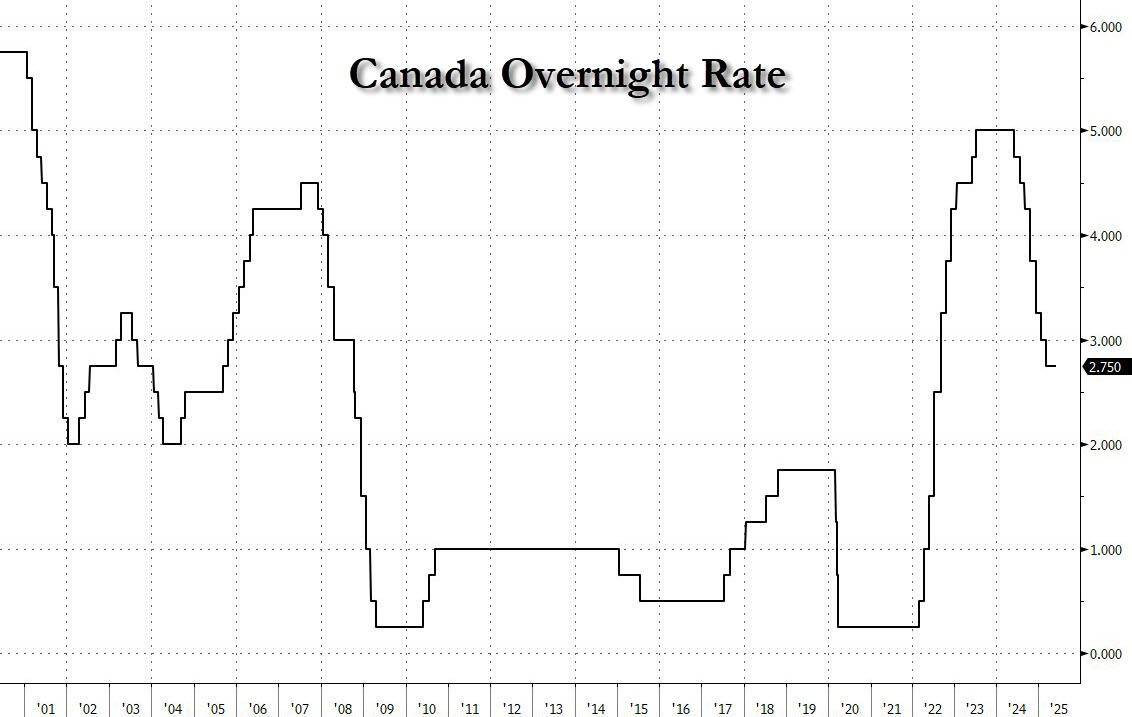
Core Viewpoint - The Bank of Canada has decided to maintain the interest rate at 2.75% for the second consecutive time, aligning with market expectations, while indicating the possibility of future rate cuts if economic conditions remain weak and inflation stays moderate [1] Group 1: Economic Conditions - The Bank of Canada is cautious due to the uncertainty surrounding U.S. trade policies, which are negatively impacting Canadian exports and increasing uncertainty for consumers and businesses [2][3] - The central bank is closely monitoring the potential chain reactions from tariffs, including impacts on exports, business investment, employment, and consumer spending [3] - Despite a stronger-than-expected economic performance in Q1, the central bank warns against excessive optimism, noting unexpected upward pressure on inflation with the core inflation rate rising to 3.2% in April, the highest in over a year [3][4] Group 2: Monetary Policy Decisions - The decision to hold rates steady is influenced by high uncertainty regarding U.S. tariffs, a soft Canadian economy, and unexpected inflation strength [4][5] - The Bank of Canada has shifted its approach by not providing specific GDP and inflation forecasts for the first time since the pandemic, indicating a more cautious stance [6] - The central bank's future policy will balance the downward pressure on inflation from economic weakness against the upward pressure from rising costs due to tariffs [5][6] Group 3: Market Reactions and Predictions - Analysts suggest that the Bank of Canada is adopting a wait-and-see approach amid unclear trade disputes, with expectations of continued economic weakness in the latter half of the year [7] - There is a consensus among economists that inflation may stabilize around the target level of 2%, but the potential for a 25 basis point rate cut in July remains if unemployment rises and inflation pressures ease [7][8] - The overall tone of the Bank of Canada's statement is perceived as dovish, indicating a higher likelihood of rate cuts later this year [8]