美国住房市场复苏

Search documents
美国楼市迎来“开年红” 大额利率触及2023年4月以来低位 签约量与再融资回暖
Zhi Tong Cai Jing· 2026-01-07 13:37
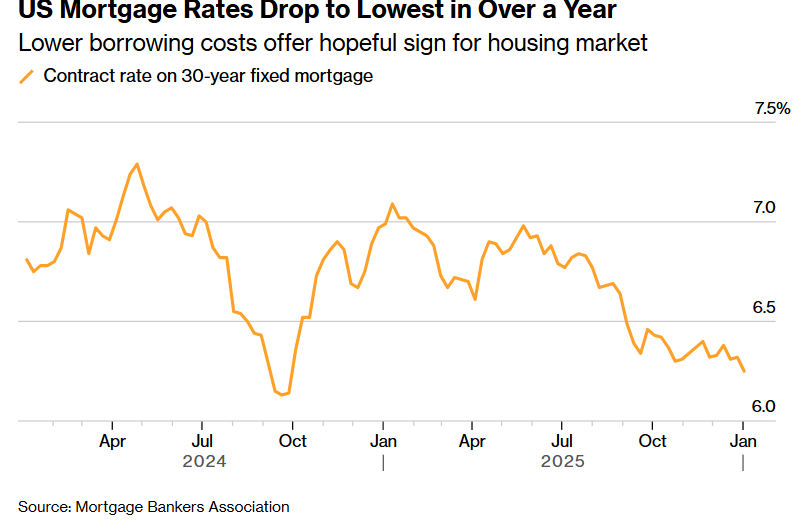
Group 1 - The core viewpoint of the articles indicates that the recent decline in mortgage rates in the U.S. brings renewed hope for the housing market, which has been struggling under high rates and inflation pressures [1][4] - The 30-year fixed mortgage rate fell by 7 basis points to 6.25%, while the rate for jumbo loans dropped to 6.32%, marking the lowest levels since April 2023 [1] - The National Association of Realtors (NAR) reported that contract signings have increased for four consecutive months, suggesting a strengthening momentum in U.S. real estate sales as the new year begins [1] Group 2 - Despite the decrease in borrowing costs, the Mortgage Bankers Association (MBA) reported a seasonally adjusted decline of 6.2% in the purchase index, which is typical during the holiday season [4] - Conversely, the refinancing index unexpectedly rose by 7.4% after seasonal adjustments, indicating a potential shift in borrower behavior [4] - The MBA's survey, conducted weekly since 1990, covers over 75% of retail residential mortgage applications in the U.S., providing a comprehensive view of the mortgage market [4]

美国楼市迎来“开年红” 大额利率触及2023年4月以来低位 签约量与再融资回暖
智通财经网· 2026-01-07 13:30
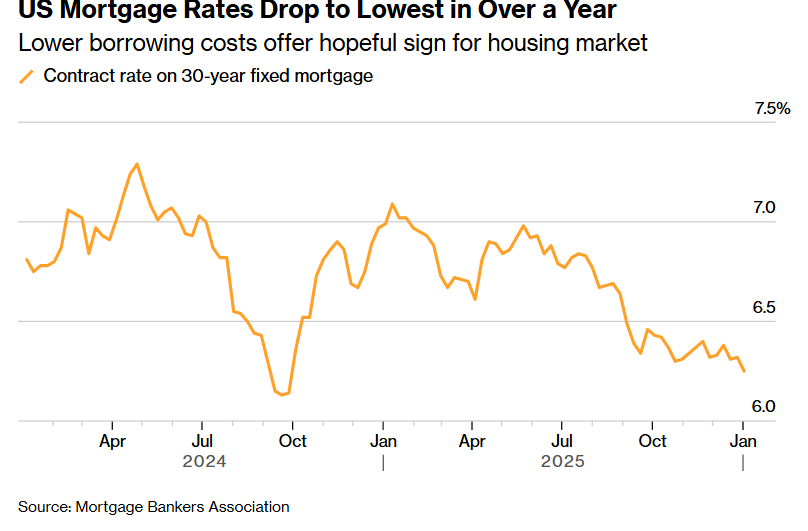
Group 1 - The core viewpoint of the articles indicates that the recent decline in mortgage rates in the U.S. brings a glimmer of hope for the struggling housing market, which has been under pressure from high rates and inflation since September 2024 [1][4] - The 30-year fixed mortgage rate fell by 7 basis points to 6.25%, while the rate for jumbo loans dropped to 6.32%, marking the lowest levels since April 2023 [1] - The National Association of Realtors (NAR) reported that contract signings have increased for four consecutive months, suggesting a strengthening momentum in U.S. real estate sales as buyers enter the new year [1] Group 2 - Despite the decrease in borrowing costs, the Mortgage Bankers Association (MBA) reported a seasonally adjusted decline of 6.2% in the purchase index, which is typical during the holiday season due to reduced buyer interest and increased market volatility [4] - Conversely, the refinancing index unexpectedly rose by 7.4% after seasonal adjustments, indicating a potential shift in borrower behavior [4] - The MBA's survey, conducted weekly since 1990, covers over 75% of retail residential mortgage applications in the U.S., providing a comprehensive view of the mortgage market [4]
中金:关注美国住房市场的潜在复苏
中金点睛· 2025-08-17 23:39
Core Viewpoint - The article suggests focusing on the potential recovery of the U.S. housing market, indicating that housing builders and related stocks may present investment opportunities due to current policy directions aimed at alleviating the stagnation-like state of the housing market [2][3]. Summary by Sections Current Market Conditions - Since the interest rate hikes began in the second half of 2022, the U.S. housing market has been characterized by "high prices and low transactions," a stagnation-like state that is rare in the past 40 years [2][7]. - The main variable to observe is interest rates, as a successful implementation of rate cuts could positively guide expectations for both households and businesses, improving affordability and gradually restoring housing transactions [2][3]. Reliability of Recovery - The reliability of the recovery is primarily attributed to the Trump administration's intention to restart the real estate market through financial conditions easing, which includes pushing for interest rate cuts and the potential relisting of government-sponsored enterprises (GSEs) to enhance credit expansion [3][9]. - However, the current stagnation-like conditions differ fundamentally from past market downturns, raising concerns about the sustainability of any recovery driven by financial easing [3][9]. Potential Recovery Scenarios - The article emphasizes that while U.S. home prices reached historical highs in 2021, the actual growth rate has turned negative since 2022, indicating limited space for further real gains in home prices [4][10]. - The focus should be on the recovery of transaction volumes, particularly in the resale market, as both resale and new home construction show potential for improvement [4][10]. Key Factors for Recovery - The ongoing uncertainty regarding the U.S. economic outlook and interest rate expectations has led to a cautious stance among consumers and real estate companies [9]. - The current housing supply-demand balance is tight, supported by demographic trends and immigration, which contrasts sharply with the post-2008 market conditions [9][10]. Policy Implications - The Trump administration's approach to easing financial conditions aims to mobilize the housing market, differing from the Democratic approach of providing direct subsidies for home purchases [11]. - While there are positive short-term expectations regarding policy impacts, there are concerns about potential long-term financial risks associated with artificially induced market conditions [11][12]. Investment Perspective - Overall, the article presents a bullish view on the potential recovery of U.S. housing transactions as a worthwhile investment direction, despite the uncertainties surrounding the impact of GSE privatization on housing finance costs [12].