美国对俄制裁

Search documents
消息人士:美国放缓出售卢克石油海外资产,将其作为俄乌谈判的筹码
Ge Long Hui A P P· 2026-02-26 17:13
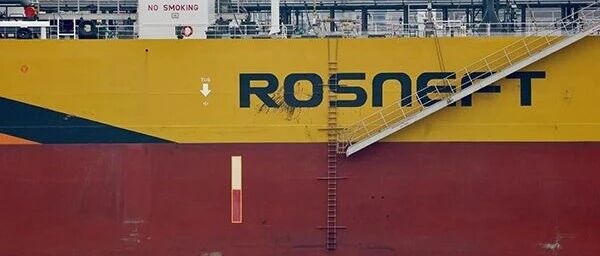
Core Viewpoint - The United States has slowed down the process of selling international assets of Russian oil giant Lukoil to third parties, intending to use these assets as leverage in peace negotiations regarding Ukraine [1] Group 1: Asset Sale and Negotiation - The U.S. Office of Foreign Assets Control has extended the deadline for the completion of the asset sale from February 28 to April 1 [1] - Recent talks among U.S., Russian, and Ukrainian officials in Geneva, Abu Dhabi, and Miami have not yielded substantial progress towards a peace agreement concerning Ukraine [1] - The discussions involve U.S. sanctions against Russia's largest oil producer, Rosneft, and the second-largest, Lukoil [1] Group 2: Future Talks - The next round of talks between the U.S., Russia, and Ukraine is scheduled for March [1]
特朗普再度威胁莫迪!印度若不按要求停购俄油,美国将加征关税
Sou Hu Cai Jing· 2026-01-07 08:09
Group 1 - The core issue revolves around the tension in US-India relations due to President Trump's threats to impose high tariffs on Indian goods if India continues to import oil from Russia [1][3] - The bilateral trade between the US and India reached $129 billion in 2022, with India having a trade surplus of $45.7 billion, primarily in electronics, textiles, and jewelry [1] - The US has previously imposed tariffs of up to 50% on certain Indian goods, and the current situation highlights the deep-seated trade disagreements, particularly regarding India's high tariff policies [1][5] Group 2 - India's reliance on Russian oil, which is priced $20-30 per ton lower than international benchmarks, is crucial for its economy, especially in the context of rising global inflation [3] - The potential increase in US tariffs could lead to an estimated economic loss of $57.6 million for India's core export sectors, threatening millions of jobs [3] - The US strategy aims to pressure allies to reduce energy imports from Russia while using tariffs as leverage in trade negotiations, particularly in agriculture [5] Group 3 - The ongoing trade friction is indicative of broader instability in the global economic order, with the US frequently using tariffs as a diplomatic tool, complicating international trade relationships [5][8] - India's strategy involves balancing its core interests with flexible diplomatic approaches to maintain energy security and international standing [7][8] - The current trade competition transcends mere economic interests, evolving into a struggle for strategic trust and international order, prompting countries to seek diversified cooperation models [8]

泽连斯基:俄乌冲突结束后美国将逐步解除对俄制裁
Xin Hua She· 2025-12-25 01:46
Core Viewpoint - The "peace plan" draft proposed by Ukraine does not include provisions for the U.S. to lift sanctions on Russia, but it is anticipated that the U.S. will gradually lift these sanctions after the conflict ends [1] Group 1 - Ukrainian President Zelensky stated that the "peace plan" draft does not contain clauses regarding the lifting of sanctions on Russia [1] - Zelensky expressed confidence that the U.S. will gradually lift sanctions on Russia following the end of the conflict [1] - He mentioned that it is unnecessary to specify the lifting of sanctions in the draft, as the future remains uncertain [1]
外媒:美国务卿称对俄制裁手段已几乎耗尽,“不知道还需要再做些什么”
Huan Qiu Wang· 2025-11-13 07:43
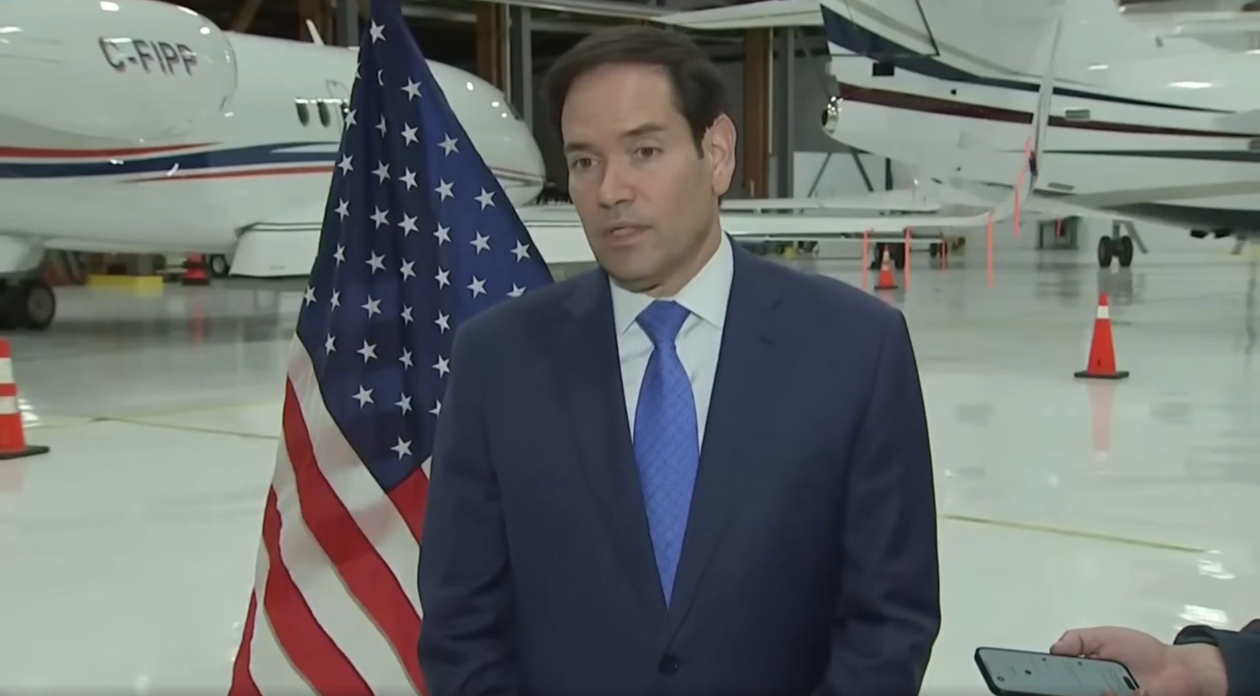
Group 1 - The core viewpoint is that the potential for further U.S. sanctions against Russia is nearly exhausted, as stated by U.S. Secretary of State Rubio after the G7 foreign ministers' meeting [1][2] - Rubio mentioned that the U.S. has already imposed sanctions on major Russian oil companies and expressed uncertainty about what additional measures could be taken [2][3] - On October 22, the U.S. announced sanctions against Russia's two largest oil companies, urging an immediate ceasefire between Russia and Ukraine [3] Group 2 - Russian Foreign Ministry spokesperson Zakharova responded to the U.S. sanctions, claiming that Russia has developed a "strong immunity" to such restrictions, indicating resilience against the impact of sanctions [3]
俄罗斯液化天然气低价流入中国
日经中文网· 2025-11-11 04:45
Core Viewpoint - The article discusses the impact of U.S. sanctions on Russian LNG exports and how these sanctions are inadvertently benefiting China, as Russian LNG is being sold at a discount to the Chinese market despite pressure on Japan and Europe to halt imports [2][4][10]. Group 1: Market Dynamics - Despite U.S. pressure on Japan and Europe to stop importing Russian LNG, the market has not shown significant signs of supply-demand tension due to increasing LNG supplies from the U.S. and other countries [2][4]. - The current spot price for LNG in Asia, as indicated by the January 2026 contract, is around $11.0 to $11.5 per million BTU, significantly lower than the peaks observed at the onset of the Russia-Ukraine crisis in 2022 [4][10]. Group 2: Russian LNG Flow to China - Russian LNG is being sold to China at prices 20-30% lower than the market rate, with shipments continuing despite sanctions [9][10]. - As of now, China has imported 13 shipments of LNG from Russia, with the latest shipment arriving at the Beihai terminal in Guangxi province [6][9]. Group 3: Japan's Energy Security Concerns - Japan relies on long-term contracts for Russian LNG, which account for approximately 9% of its total LNG imports, making an immediate halt to imports risky due to potential price increases from alternative sourcing [10][11]. - The Japanese government is cautious about U.S. calls for sanctions, emphasizing the need to balance energy security with international obligations [11][12]. Group 4: Future Projections - Analysts have adjusted the supply expectations for the Arctic 2 project, forecasting an increase to 1.3 million tons in 2025 and 3.9 million tons in 2026, reflecting ongoing shipments to China [10].
特朗普口风突变:很失望
第一财经· 2025-09-24 05:58
Core Viewpoint - The article discusses the recent shift in former President Trump's stance on the Russia-Ukraine conflict, expressing disappointment in the lack of progress despite his relationship with President Putin [3][4]. Group 1: Trump's Statements - Trump indicated that his personal relationship with Putin has not facilitated a resolution to the Ukraine crisis, which he initially believed would be easily solvable [3]. - He expressed intentions to impose high tariffs on Russia if they do not agree to end the conflict and urged European nations to join the U.S. in sanctions against Russia [3]. - During a meeting with Ukrainian President Zelensky, Trump suggested that NATO countries should consider shooting down Russian planes entering their airspace, depending on the situation [4]. Group 2: Military and Economic Insights - Trump acknowledged the military and economic conditions of both Ukraine and Russia, noting that the prolonged conflict has created economic difficulties for Russia [5]. - He stated that with EU financial support and NATO military backing, it is feasible for Ukraine to regain its original territory from the start of the war [5]. - Trump reaffirmed the U.S. commitment to continue supplying weapons to NATO allies [5]. Group 3: Analysis of Trump's Shift - Analysts suggest that Trump's recent change in tone may be linked to the stagnation of Russia-Ukraine negotiations following the Alaska summit on August 15 [5].

美国副总统:对俄实施新制裁“并非不可能”
Yang Shi Xin Wen· 2025-08-24 16:36
Core Viewpoint - The U.S. Vice President Vance indicated that imposing new sanctions on Russia to pressure it into ending the Russia-Ukraine conflict is a viable option, with multiple strategies available to exert pressure on Russia [1] Group 1 - Vance stated that during the Trump administration, the focus was on ending the Russia-Ukraine conflict without including U.S. ground troops in Ukraine's security assurances [1] - The U.S. will not deploy ground troops to Ukraine but will continue to play an active role in ensuring that Ukrainians receive necessary security assurances and confidence to halt the conflict [1]
鲁比奥称“俄方在阿拉斯加给飞机加油只能付现金”,俄外长回应
Huan Qiu Wang· 2025-08-19 23:49
Group 1 - The U.S. Secretary of State Rubio revealed details of the U.S.-Russia meeting in Alaska, highlighting that due to U.S. sanctions, the Russian delegation had to pay for fuel in cash while refueling in Alaska [1][3] - Rubio mentioned that despite President Trump's warnings of potential new sanctions if Russia does not agree to a ceasefire, the U.S. currently does not plan to impose additional restrictions [3] - The meeting between Presidents Putin and Trump on August 15 in Anchorage was positively evaluated, but no agreement was reached on issues such as a ceasefire in Ukraine [3] Group 2 - Russian Foreign Minister Lavrov responded to Rubio's comments, stating that the method of payment for fuel, whether cash or otherwise, is not significant [3] - Lavrov emphasized that additional sanctions from Washington could hinder peace talks regarding the Ukraine conflict [3] - President Putin expressed respect for the U.S. stance on ending the Ukraine conflict and hopes for a peaceful resolution [3]
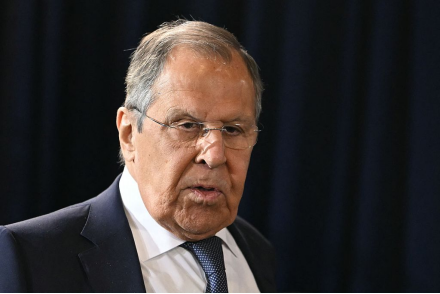
鲁比奥:俄罗斯想给飞机加油只能付现金
Zhong Guo Xin Wen Wang· 2025-08-18 15:28
Core Viewpoint - The U.S. Secretary of State Rubio revealed that due to sanctions against Russia, the Russian delegation had to pay cash for refueling their aircraft in Alaska, indicating the significant impact of these sanctions on Russia's operations [1]. Group 1: Sanctions Impact - Rubio stated that further sanctions are unlikely to compel Russia to agree to a ceasefire, as they have already faced severe sanctions [1]. - He emphasized that all existing sanctions remain effective and their impacts are still being felt [1]. Group 2: Operational Challenges - The inability to use the U.S. banking system forced the Russian delegation to pay cash for refueling in Alaska [1]. - Rubio indicated that any new sanctions announced by Washington would likely stall peace negotiations [1].
特朗普公开威胁普京
券商中国· 2025-08-14 03:56
Group 1 - The core viewpoint of the article is that President Trump has warned Russia of "very serious consequences" if President Putin does not agree to a ceasefire proposal during their upcoming meeting in Alaska [1] - Trump expressed hope for a trilateral meeting with both Putin and Ukrainian President Zelensky if the discussions with Putin go well [2] - The meeting between Trump and Putin is described as a "test meeting," with outcomes that could be either positive or negative [2]