美国工业复兴

Search documents
美银:别再迷信60/40股债组合!未来十年实际收益或为负,黄金看至4500美元
Hua Er Jie Jian Wen· 2025-12-11 07:45
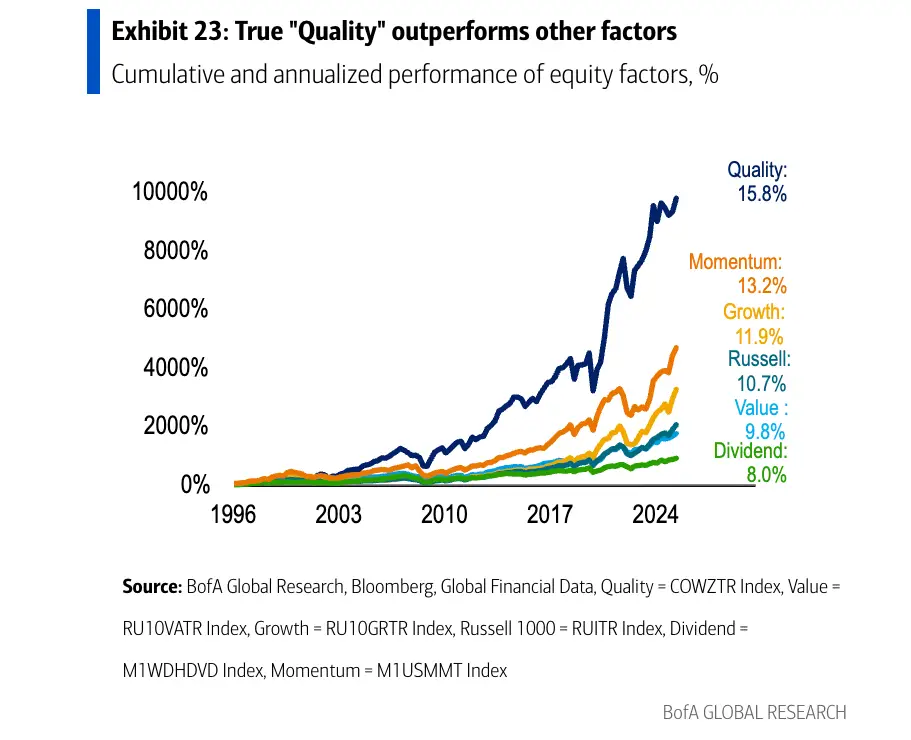
Group 1: Core Insights - The classic "60/40" stock-bond portfolio strategy is projected to face extremely weak returns over the next decade, with an expected annualized real return of -0.1% after inflation [1] - The main reason for this bleak outlook is the anticipated decline in the performance of U.S. large-cap stocks, which have seen over 15% growth for three consecutive years [1] - Investors are advised to adjust their positions and consider "satellite" assets outside the consensus, including international small and mid-cap stocks, high-yield bonds, emerging market assets, and gold [1] Group 2: Equity Assets - The report highlights international small and mid-cap stocks as a favorable investment, noting a 15% annualized return over the past five years, comparable to U.S. large-cap growth stocks [2] - Quality U.S. stocks, characterized by strong financial health and low debt levels, are also recommended, as they have consistently outperformed other major style factors since 1996 [2] Group 3: Fixed Income - In fixed income, high-yield bonds are seen as offering the best opportunities, with a current default rate of approximately 2.6%, lower than private credit and syndicated loans [5] - Emerging market fixed income has outperformed U.S. and global bonds over the past three years, with annualized returns of 9% to 12% for portfolios including high-dividend emerging market stocks [5] Group 4: Physical Assets and Thematic Investments - Gold is expected to rebound to $4,538 per ounce next year, representing an 8% increase from current levels, driven by strong global central bank demand and rising fiscal deficits [7] - Thematic investment opportunities include artificial intelligence and technology, U.S. industrial revival, and uranium resources, which are projected to have long-term growth potential [10]

This New GMO ETF Lets You Bet On America's Industrial Comeback
Benzinga· 2025-10-06 22:49
Core Viewpoint - The launch of GMO's Domestic Resilience ETF (DRES) provides investors with a focused investment vehicle aimed at benefiting from the reshoring of manufacturing and growth in key sectors such as energy, transportation, automation, and defense [1][3]. Group 1: ETF Overview - DRES is an actively managed fund that targets American companies with strong domestic revenue exposure, distinguishing itself from diversified U.S. equity indexes [2]. - The fund debuted on October 1, indicating a strategic entry into the market [2]. Group 2: Investment Strategy - The portfolio of DRES is designed to capitalize on firms that are expected to thrive as the U.S. strengthens its industrial base [3]. - The fund focuses on sectors including manufacturing, transportation, energy, automation, and defense, aligning with America's economic plans for reshoring and industrial innovation [5]. Group 3: Market Context - Portfolio managers express that a unique opportunity has arisen due to changes in public policy and corporate strategy, positioning DRES as a means for investors to engage in the next phase of U.S. growth [3]. - DRES complements GMO's existing range of ETFs, enhancing the options available for investors seeking exposure to domestic growth [4].