考古成果

Search documents
广西多项考古成果入选国家级榜单
Guang Xi Ri Bao· 2026-02-11 03:48
Core Insights - During the "14th Five-Year Plan" period, Guangxi's archaeological work has yielded significant results, with notable sites such as the Zengpi Rock site in Guilin and the Heping Han Tombs being recognized as part of the "Top 100 Archaeological Discoveries in China over the Past Century" [1] - The discoveries span various historical periods, including prehistoric, pre-Qin, Qin-Han, and Tang to Ming and Qing dynasties, showcasing the region's rich cultural heritage and historical significance [2] Prehistoric Archaeology - The Baise Basin's Huoshaoshan site revealed cultural layers dating back 800,000 years, highlighting advanced stone tool-making techniques of East Asian hominins [1] - The Fushui Jidou site is noted for having the most human fossils from the Upper Paleolithic period, while the Liuzhou Fengyan site provided crucial evidence for understanding human origins and cultural transitions [1] Pre-Qin Archaeology - The Hengcheng Niuluchong site, dating from the late Neolithic to the Shang Dynasty, is recognized as the earliest known city in the Lingnan region, contributing to the study of early civilization in the area [1] - Archaeological findings at the Heping Dalu Ancient City corroborate historical accounts of the migration of Yue people as recorded in the "Records of the Grand Historian" [1] Qin-Han Archaeology - The discovery of early city-building remains at the Xing'an Tongjicheng site illustrates the integration of the Lingnan region into the unified multi-ethnic state during the Qin and Han dynasties [2] - The Heping Caoxie Village site has been identified as the administrative center of the Heping Commandery during the Han Dynasty, providing valuable insights into the maritime Silk Road [2] - Excavations at the Heping Wangniuling and Heping Sizhong cemeteries reveal the evolution of burial practices from the Han to the Jin dynasties [2] Tang to Ming and Qing Archaeology - The Pu Bei Yuezhou Ancient City site reflects its status as a military and political stronghold in the southern part of the Lingnan region during the Southern Dynasties [2] - Discoveries at the Lingshan Zhinbanling site provide important references for studying the cultural transitions of ethnic groups in southeastern Guangxi during the Tang Dynasty [2] Public Engagement and Research Dissemination - The Guangxi Institute of Cultural Relics Protection and Archaeological Research is actively promoting archaeological findings through the publication of reports and popular science literature, including 15 reports and academic works, as well as the release of "Archaeology Guangxi" [2]
它们缘何入选?
Ren Min Ri Bao Hai Wai Ban· 2026-02-08 22:51
Core Viewpoint - The article discusses the recent archaeological findings in China, highlighting six significant sites that have been recognized for their contributions to understanding human evolution and cultural development in the region. These findings not only enhance historical knowledge but also illustrate the continuity of civilization in China [5]. Group 1: Archaeological Sites and Findings - The six selected archaeological projects include: 1. Xinjiang Wenshu County Husta Bronze Age site 2. Hebei Zhangjiakou Zhengjiagou Red Mountain Culture site 3. Hebei Yangyuan County Xinjiaozhuang Paleolithic site 4. Henan Xinzheng Peili Gang Paleolithic site 5. Shandong Qingdao Langyatai Warring States and Qin-Han period site 6. Xinjiang Turpan Bada Mu East Jin-Tang period tombs [5]. Group 2: Specific Site Highlights - The Yangyuan County Xinjiaozhuang site is noted for its significant academic value, contributing to the understanding of human evolution in East Asia, with discoveries dating back 120,000 to 13,000 years [6][9]. - The Peili Gang site in Xinzheng has revealed evidence of plant fiber utilization and early brewing techniques, dating back 36,000 to 14,000 years, indicating advanced cultural practices during the late Paleolithic [10][12]. - The Zhengjiagou site has extended the timeline of the Red Mountain culture, uncovering over 600 artifacts, including burial goods that provide insights into ritual practices [13][14]. - The Husta site is characterized as a large settlement from the late Bronze Age, with findings including over 300 artifacts, which are crucial for understanding the historical context of the region [16][17]. - The Langyatai site has confirmed historical records of Qin Shi Huang's construction activities, showcasing architectural advancements and cultural significance during the Qin and Han dynasties [18][19]. - The Bada Mu East tombs have yielded over 600 artifacts, including coins and decorative items, reflecting the cultural exchanges along the Silk Road during the Tang dynasty [20][21].

回望楚风余韵的绚烂
Xin Lang Cai Jing· 2026-01-14 10:20
Core Insights - The exhibition "Encountering King Kao Lie" showcases archaeological findings from the Wangdun No. 1 tomb in Huainan, Anhui, featuring over 200 artifacts that reflect the glory of the late Warring States period of the Chu state [1] Group 1: Tomb and Artifacts - The Wangdun tomb is a high-status burial site from the late Warring States period, characterized by its luxurious features, including a unique "Y" shaped wooden coffin structure, indicating the high status of the tomb's occupant [2] - A bronze vessel with an inscription is key evidence for identifying the tomb's owner as King Kao Lie of Chu, also known as Xiong Yuan, who was the 39th king of Chu [2][3] - The tomb's excavation exemplifies the integration of archaeology and multidisciplinary technology, showcasing advanced methods in artifact preservation and restoration [3][4] Group 2: Daily Life and Culture - The artifacts, including over 10,000 bronze, jade, pottery, and lacquer items, illustrate the ceremonial and daily life of the Chu royalty, revealing insights into their social customs and aesthetic values [5][6] - The exhibition features a pig-shaped lacquer food box, representing the Chu culture's unique craftsmanship and aesthetic preferences, particularly the use of red and black colors [6] - Various artifacts, such as bronze incense burners and jade ornaments, reflect the luxurious lifestyle and cultural practices of the Chu nobility [6] Group 3: Interactions and Exchanges - The artifacts from the Wangdun tomb indicate that the late Warring States period Chu state was part of a broad and active network of cultural and political exchanges, evidenced by items from different regions [7] - A bronze horse harness fitting found in the tomb illustrates the interaction between Chu culture and northern steppe cultures, highlighting the cross-cultural exchanges of the time [7] - The exhibition also reveals the complex relationship between the Qin and Chu states, with artifacts indicating political alliances through marriage, such as the mention of the Qin empress from the Chu royal family [8]
考古新成果 打开不同历史时期文明画卷
Yang Shi Wang· 2026-01-11 16:00
Core Insights - Recent archaeological discoveries have made significant breakthroughs, revealing the location of a royal capital from two thousand years ago, showcasing the luxurious lifestyle of a noblewoman during the Tang Dynasty, and illustrating the orderly social structure of a large settlement from the Western Zhou period [1] Group 1 - Important archaeological findings have uncovered the site of a royal capital dating back two thousand years [1] - Discoveries highlight the opulent lifestyle of a noblewoman during the prosperous Tang Dynasty, reflecting the richness of the Silk Road [1] - Excavations depict a large Western Zhou settlement characterized by a strict social hierarchy and organized planning [1]
2024年浙江考古成果集中展示 生动勾勒万年文化长卷
Ren Min Ri Bao Hai Wai Ban· 2025-05-13 07:30
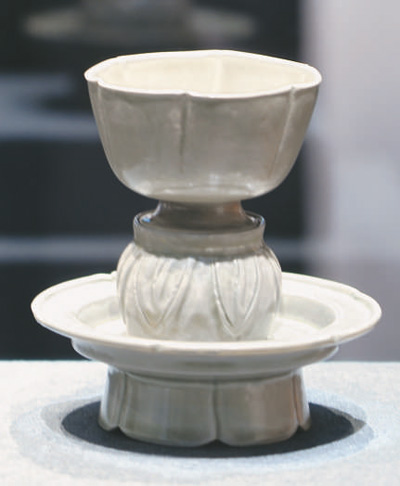
Core Viewpoint - The exhibition "Zhejiang's Treasures: 2024 Annual Archaeological Achievements" showcases over 400 artifacts from 26 significant archaeological sites in Zhejiang, highlighting the region's rich cultural history from prehistoric times to the Ming and Qing dynasties [4][12]. Group 1: Archaeological Discoveries - The exhibition is organized into four units: "New Evidence of Civilization," "Splendor of Yue," "Southeast Awakening," and "Symphony of Land and Sea," systematically outlining the development of civilization in Zhejiang [5]. - The Xiangju Xiaotang site, covering approximately 30,000 square meters with a cultural layer of 2.5 meters, is significant for its evidence of early rice cultivation and social structure [5][6]. - The discovery of the Shaoxing Qizhong site confirms the existence of large-scale buildings from the Warring States period, supporting historical records of the Yue Kingdom [7]. Group 2: Cultural Artifacts - Artifacts such as stone grinding plates and red pottery from the Xiaotang site exemplify the typical items of the Shangshan culture, indicating a breakthrough in understanding social structures of that era [6]. - The Ningbo Cixi Bay site yielded bronze fish hooks from the Warring States period, showcasing advanced fishing techniques of coastal residents [9]. - The Huzhou Wuxing Sanwan kiln site provides crucial evidence for the evolution of primitive celadon to mature celadon during the Han to Three Kingdoms periods [9]. Group 3: Architectural Insights - The architectural remains from the Shaoxing site reveal a combination of southern stilt houses and central plain foundation styles, marking a significant discovery in ancient Chinese architecture [10]. - The East Tower Temple site in Jiaxing demonstrates advanced construction techniques from the Northern Song period, including a complex foundation structure [11]. Group 4: Public Engagement and Education - This exhibition marks the first public display of annual archaeological findings in Zhejiang, aiming to enhance public interest in archaeology and cultural heritage [12]. - The exhibition features concise descriptions and video interpretations to help visitors understand the significance of each archaeological discovery [13].