职业教育升级

Search documents
市教委主任李奕详解教育路线图:扩学位、强AI、兴职教
Xin Jing Bao· 2026-01-27 00:49
Group 1: Education Development in Beijing - The Beijing government aims to add 10,000 new middle school seats this year, with 5,000 for junior high and 5,000 for senior high, to address the ongoing demand for educational resources despite a peak in elementary school enrollment having passed [2] - The focus is not only on increasing the quantity of school seats but also on enhancing the quality of education, as parents are increasingly concerned about the quality of student training and educational methods [2][3] - The city is implementing a vertical group-based education reform to connect elementary, junior high, and senior high schools, which aims to alleviate competition anxiety and create a continuous talent cultivation mechanism [3] Group 2: Early Childhood Education - By the end of the 14th Five-Year Plan, the proportion of public kindergartens offering nursery classes in Beijing has reached 51%, with a goal of achieving full coverage of public nursery classes [4] - Currently, there are over 64,000 childcare seats available, with 41,000 being affordable options, establishing a framework primarily based on public kindergartens [4] - The city plans to enhance early childhood services by introducing activities for parents and children, establishing growth records and digital archives for children aged 0-6, and exploring AI applications in early childhood education management [5] Group 3: Integration of Artificial Intelligence in Education - The government report emphasizes the need to strengthen AI integration across all educational stages, with plans to implement AI literacy courses starting in the fall of 2024 for first-year university students and in 2025 for middle and primary school students [6] - A framework called "Capital Education AI+" will be developed, focusing on policy supply, skill enhancement, large-scale application, ecological construction, and public capability [6] - The approach to AI in education will vary by age group, with a focus on preventing over-reliance on AI for younger students while fostering innovation in higher education through AI-driven initiatives [7] Group 4: Vocational Education Enhancement - The government aims to expand the enrollment scale of vocational undergraduate institutions and enhance the pathways for vocational and general education students [8] - Currently, there is only one vocational undergraduate institution in Beijing, which welcomed its first cohort of 600 students in September 2025 [8] - The focus is on improving the levels of vocational education and transforming talent cultivation models, emphasizing deep integration with industries and collaborative training between vocational and undergraduate institutions [9]
山东17所“新大学”密集布局
Xin Lang Cai Jing· 2026-01-21 16:26
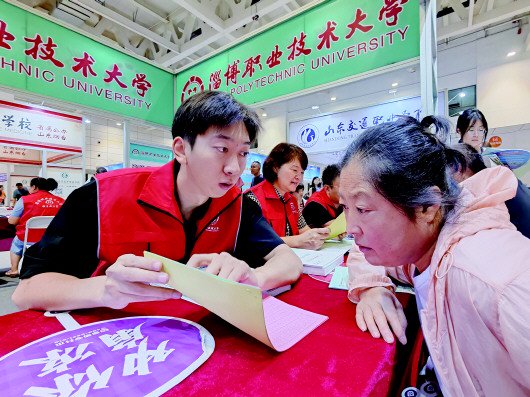
Group 1 - The establishment of Zibo Vocational Technical University marks a significant step in the development of public vocational higher education in Shandong Province, with the first batch of six undergraduate vocational programs set to enroll 22,000 full-time students [2] - Following Zibo's lead, other institutions such as Binzhou Vocational College and Rizhao Vocational Technical College are also planning to upgrade to vocational technical universities, indicating a trend towards enhancing vocational education in the region [2] - The Shandong Provincial Education Department has announced plans to upgrade several vocational colleges to undergraduate status, reflecting a commitment to improving the quality and accessibility of vocational education [3][4] Group 2 - New institutions in Shandong are being established with a focus on health, technology, and intelligent sectors, aligning educational offerings with regional industrial needs [3][4] - The introduction of new colleges such as Binzhou Health Technology Vocational College and Dezhou Intelligent Technology Vocational College highlights the emphasis on health and smart technology education [3][4] - Shandong's adjustment of approximately 20% of its higher education disciplines demonstrates a proactive approach to optimizing academic structures in response to emerging technologies and industries [4][5] Group 3 - The proposed establishment of Qilu University of Traditional Chinese Medicine and Linyi Institute of Technology reflects a broader strategy to elevate historically significant vocational institutions to undergraduate status [5] - The transition of Dongying Technology Vocational College from a private to a public institution signifies a shift towards more stable financial support for vocational education [5][6] - The renaming of Binzhou Medical College to Shandong Medical University is a strategic move to enhance its recognition and specialization in the medical field [6] Group 4 - The rapid development of 17 new higher education institutions in Shandong since March 2025 indicates a robust response to the demand for diverse and high-quality talent in the region [7] - The focus on health, intelligent, and ecological fields in new institutions reflects a strategic alignment with national priorities and regional economic development [7]

“新双高”来了!职业教育再升级
Yang Shi Xin Wen· 2025-12-16 16:09
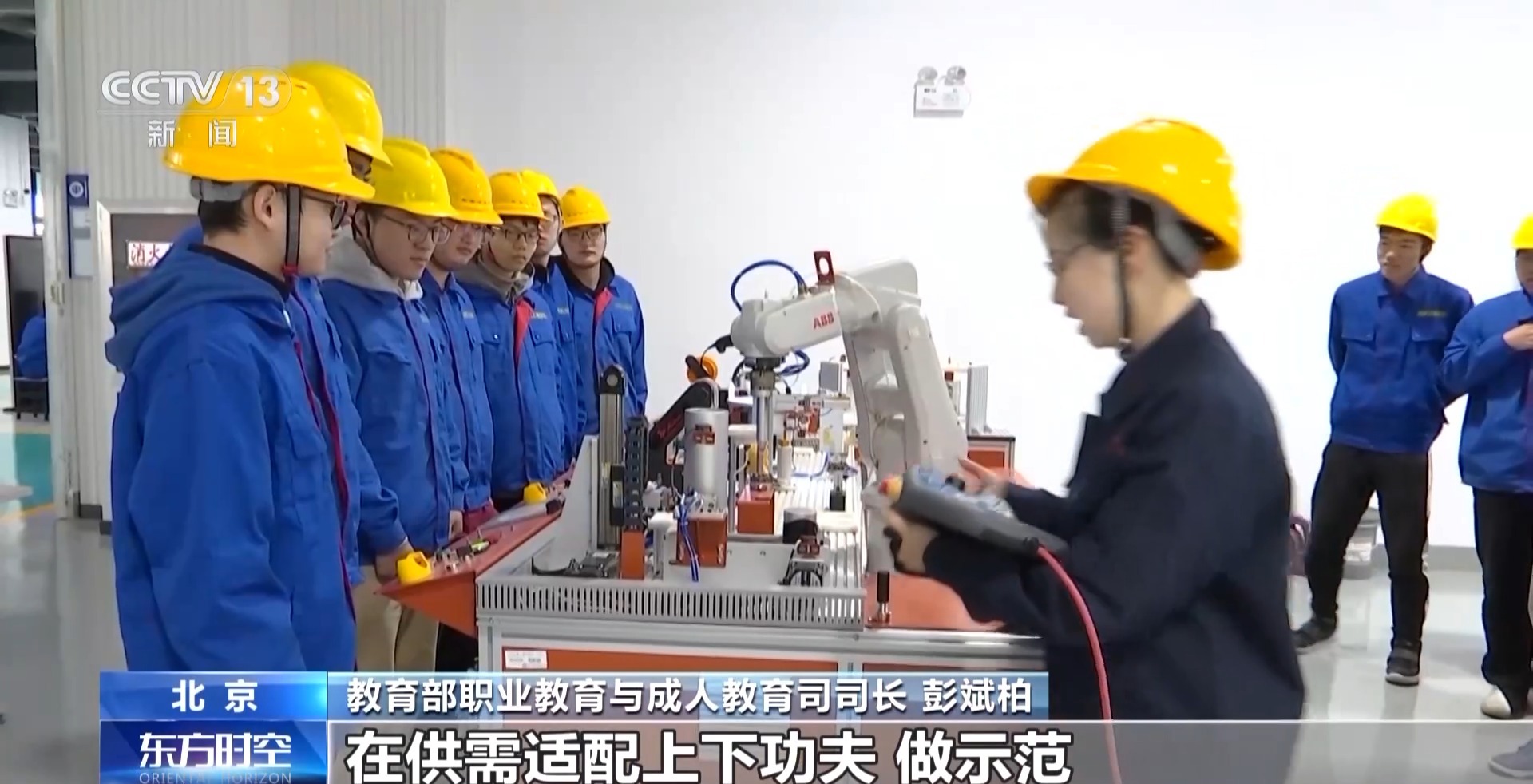
Core Viewpoint - The Ministry of Education is advancing the second phase of the "Double High Construction Plan" to enhance vocational education, focusing on cultivating high-level skilled talents to support the transformation of the manufacturing industry. Group 1: Overview of the "Double High Construction Plan" - The second phase of the "Double High Construction Plan" includes 220 schools, with 60 high-level vocational schools and 160 high-level professional groups, aimed at transforming vocational education to better serve and support industry needs [1][5] - The professional groups are aligned with national strategic emerging industries and advanced manufacturing, with 77.9% of them addressing these sectors [1] Group 2: Key Elements of Talent Development - The plan emphasizes the need for a talent supply mechanism that quickly matches industry demands, focusing on five key elements: professional courses, teaching materials, teachers, and practical training [3][7] - A new evaluation system for vocational schools will assess their educational quality, service capabilities, and contributions to society [5] Group 3: Case Studies of Successful Implementation - Jiangsu Agricultural and Forestry Vocational Technical College has reformed its curriculum to align with industry needs, resulting in a significant increase in student enrollment in agricultural machinery programs [8][10] - The college's graduates are now highly sought after, with many securing jobs in leading agricultural machinery companies, earning starting salaries around 6,000 yuan [18] Group 4: Innovative Teaching Methods - Chengdu Aviation Vocational Technical College has introduced digital textbooks that simulate real-world aircraft assembly processes, enhancing students' learning experiences [20][24] - The college has developed 3,570 new forms of teaching materials, including interactive and digital formats, to facilitate better learning outcomes [26] Group 5: Industry Collaboration and Impact - Wenzhou Vocational Technical College has actively engaged in industry collaboration, providing over 1,500 technical services to local businesses, resulting in efficiency gains exceeding 4.6 billion yuan [31] - Shaanxi Railway Engineering Vocational Technical College has integrated real-world engineering projects into its curriculum, partnering with over 400 leading companies to create specialized training programs [39][41]
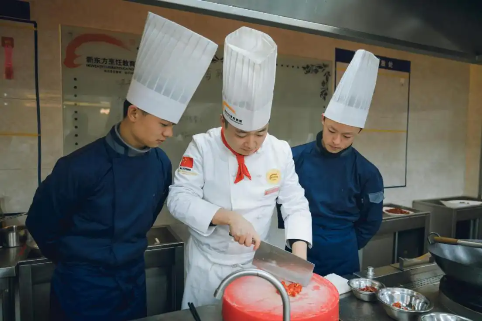
培养更高技能人才!贵州新东方烹饪技师学院获批设立
Xin Lang Zheng Quan· 2025-07-31 03:39
Core Viewpoint - The Guizhou Provincial Government has officially approved the elevation of Guizhou New Oriental Culinary Technician College, a subsidiary of China Oriental Education (00667.HK), to a technician college, marking a significant breakthrough in vocational education, particularly in culinary skills training [1][3]. Group 1: Institutional Upgrade - The elevation to a technician college signifies a qualitative leap in the school's educational qualifications, training levels, and social responsibilities [1]. - The upgraded college will focus on training higher-level skilled talents, including preparatory technicians and senior skilled workers, and will offer technician and senior skilled worker classes [1][3]. - The college aims to establish a comprehensive modern technician education system, providing graduates with relevant academic certificates and vocational skill level certificates, enhancing their competitiveness in the job market [1][3]. Group 2: Historical Context and Achievements - Guizhou New Oriental Culinary Technician College is the first private technician college in Guiyang, Guizhou Province, and has trained over 3,000 senior skilled talents since being approved as a national high-skilled talent training base in 2020 [3]. - The school specializes in the inheritance and innovation of culinary arts, including Chinese cuisine, Western pastries, and Western cuisine, and has built a strong reputation and substantial scale in its operations [3]. Group 3: Industry Impact and Future Directions - The upgrade is part of Guizhou Province's efforts to optimize vocational education structure and improve the skilled talent training system [3]. - The college will align with the urgent demand for high-quality, skilled culinary talents in the transformation and upgrading of the restaurant industry in Guizhou Province and nationwide [3]. - The institution plans to deepen industry-education integration and school-enterprise cooperation, innovate talent training models, and enhance educational quality to support local economic development and promote the restaurant industry's prosperity [3][5].