联邦公开市场委员会

Search documents
美联储高层人事“软着陆”:11位地区主席获一致连任,内部角力暂告段落
Xin Lang Cai Jing· 2025-12-11 23:39
Core Viewpoint - The Federal Reserve announced the unanimous reappointment of 11 regional Federal Reserve Bank presidents for a five-year term starting March 1 next year, with the exception of the Atlanta Fed president who has announced retirement [1][3]. Group 1: Reappointment Details - The reappointments were made after a comprehensive evaluation by the regional Federal Reserve Board and received unanimous consent from the Federal Reserve Board [1][3]. - All regional Fed presidents and first vice presidents serve five-year terms, which will expire on February 28, 2026 [1][3]. - This decision addresses a key issue regarding the future composition of the Federal Reserve's monetary policy committee [1][3]. Group 2: Context and Implications - There were speculations among central bank observers that the reappointment process could be more contentious than usual due to significant changes sought by Trump-appointed governors [1][3]. - The voting on the reappointments gained importance following the resignation of Fed governor Adriana Kugler and Trump's attempt to dismiss Fed governor Lisa Cook in August [1][3]. - U.S. Treasury Secretary Scott Basset indicated plans to establish new residency requirements for future regional presidents, mandating at least three years of residency in their respective districts [1][3]. Group 3: Structure and Future Considerations - The 12 regional Fed presidents operate within a unique public-private structure, selected by independent boards from local communities but requiring approval from the Washington-based board appointed by the president [2][4]. - They hold significant management and operational responsibilities and have rotating voting rights in the Federal Open Market Committee, with the New York Fed president holding permanent voting rights [2][4]. - The Atlanta Fed president, Raphael Bostic, has announced his retirement at the end of his term in February next year, while the market awaits the White House's announcement on Trump's choice to succeed Powell, whose term ends in May [2][4].
每周(7.21-7.25)大白外汇英语交易术语学习汇总we
Sou Hu Cai Jing· 2025-07-29 06:40
Core Insights - The articles provide a summary of various forex trading terms and concepts, focusing on technical indicators and risk management strategies. Group 1: Trading Terms - "Use obos" refers to Overbought/Oversold, applicable for multi-indicator cross-confirmation [1] - "Use stoch cros" involves Stochastic Crossover as an entry signal, indicating buy when K line crosses above D line and sell when K line crosses below D line [2] - "Optimal" denotes the ideal lot size for current account funds and risk, often calculated automatically by EA based on account balance [7] Group 2: Risk and Management - "Moderate" describes risk or trend intensity, used in settings like "moderate risk" or "moderate mode" [7] - "Opacity" refers to the degree of visual clarity in EA trading panels, allowing user customization [8] - "Capital management" involves built-in strategies in mature EAs for users to switch between different modes like Martingale, grid, or hedging [8] Group 3: Notifications and Formatting - "MQID© Push Notif" is a service in the MQL5 ecosystem for receiving alerts and notifications from EAs, useful for remote monitoring and mobile trading [9] - "Vertical spacing between lines" pertains to the line spacing in EA strategy displays, enhancing readability and user experience [9] Group 4: Economic Indicators - "FOMC" stands for Federal Open Market Committee, responsible for setting interest rates and monetary policy, significantly impacting markets [12] - "Federal Funds Rate" is the short-term borrowing rate between banks set by the Federal Reserve, crucial for influencing the dollar's movement and related assets [13]


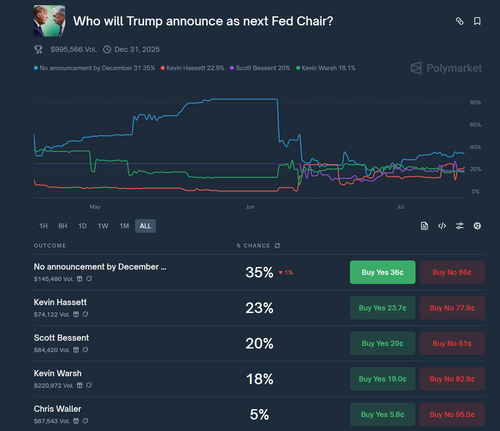
裁了鲍威尔也无济于事?大摩:"美联储影子主席"恐难撼动货币政策现状
Hua Er Jie Jian Wen· 2025-07-14 13:13
Core Viewpoint - The potential appointment of a "shadow chairman" to the Federal Reserve may not lead to an immediate shift in U.S. monetary policy as expected by the market [2][5]. Group 1: Market Expectations - Recent statements from Trump advocating for further interest rate cuts have heightened focus on the successor to Powell [2][3]. - Current market pricing indicates that investors expect the policy rate to be slightly above 3% by the end of next year, suggesting limited expectations for drastic policy changes after Powell's term ends [5]. Group 2: Federal Open Market Committee (FOMC) Dynamics - The collective decision-making process of the FOMC restricts the ability of a new chairman to rapidly alter monetary policy, as decisions are made through a voting process involving all committee members [5][6]. - Even if a new chairman is appointed, the existing policy framework is likely to persist due to the FOMC's structure and the influence of current members [5][6]. Group 3: Long-term Implications - While short-term policy changes may be limited, the new chairman could gradually reshape the committee's composition over time through nominations, potentially influencing future policy directions [6][7]. - Historical trends suggest that politically appointed officials often moderate their previous stances to fulfill the institution's mandates, indicating that market caution may remain even with a new "shadow chairman" [6][7].