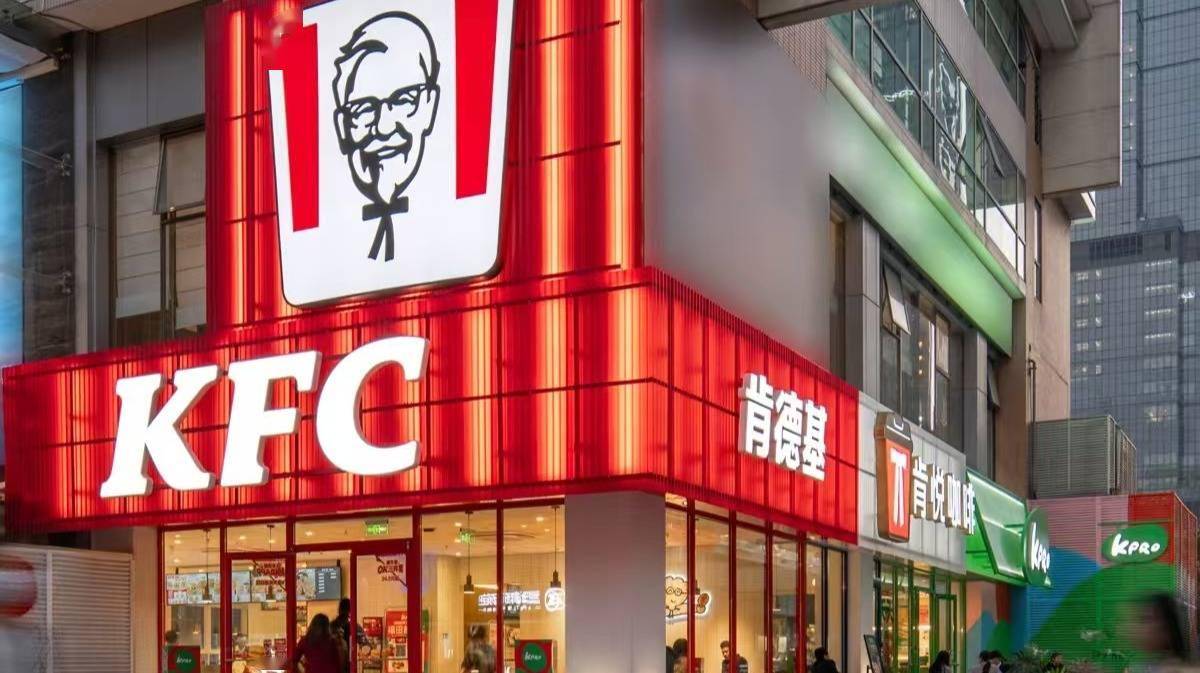
肩并肩模式

Search documents
百胜中国去年收入增长4%至118亿美元,KPRO为肯德基母店带来双位数销售提升
Cai Jing Wang· 2026-02-05 08:27
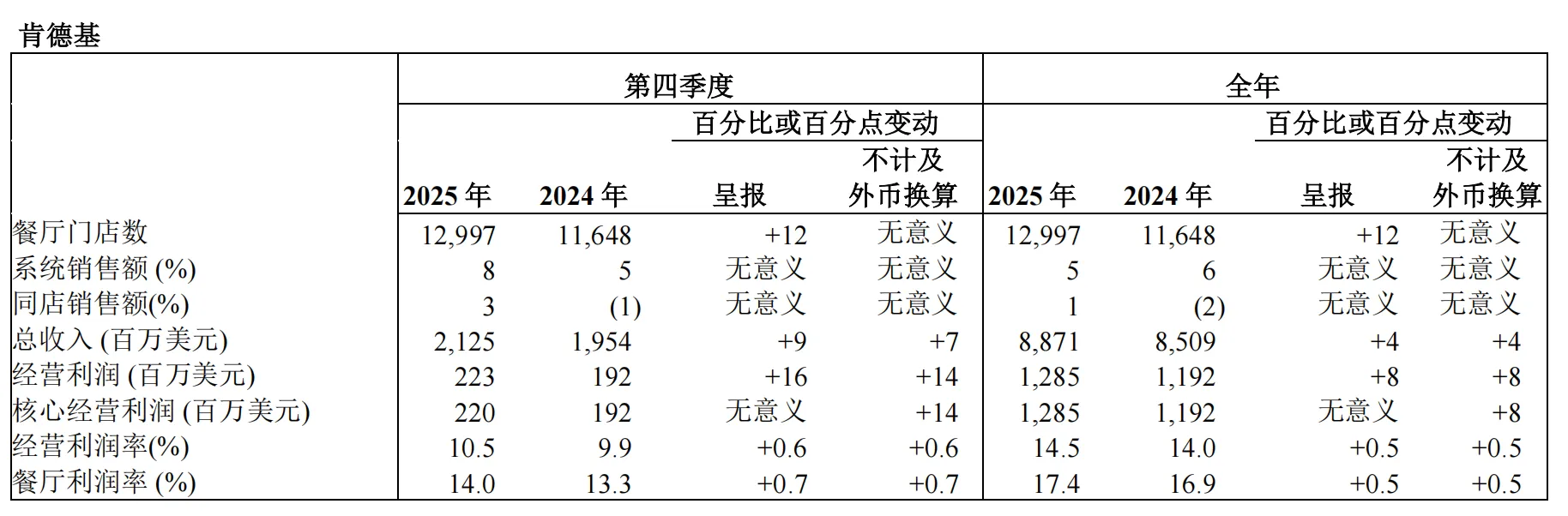
Core Insights - Yum China reported a 9% year-over-year increase in total revenue for Q4 2025, reaching $2.8 billion, with system sales up 7% and same-store sales up 3% for the third consecutive quarter [1] - The company achieved a 25% increase in operating profit to $187 million, with a core operating profit growth of 23% [1] - The net addition of stores reached a record high in Q4, totaling 587, with 36% being franchise stores [1] Financial Performance - Total revenue for the full year 2025 increased by 4% to $11.8 billion, with system sales also up 4% excluding foreign currency effects [1] - Same-store sales for the year grew by 1%, with a total of 1,706 net new stores added, 31% of which were franchise stores [1] - As of the end of the year, the total number of stores reached 18,101 [1] Operational Highlights - Delivery sales grew by 34% year-over-year, accounting for 53% of restaurant revenue, up from 42% in the previous year [1] - KFC and Pizza Hut's combined membership exceeded 590 million, a 13% increase year-over-year, with active members reaching 265 million [2] - KFC's new coffee concept, KPRO, and the WOW store model have successfully expanded into previously uncovered areas, particularly in lower-tier cities [2][7] Strategic Outlook - The company aims to exceed 20,000 stores by 2026, with plans to reach over 30,000 by 2030, utilizing a combination of self-operated and franchised models [2][10] - The RGM 3.0 strategy will continue to drive innovation and efficiency [2] - The company is focusing on expanding its presence in lower-tier cities and strategic locations, with a significant increase in franchise store contributions [9][10]

三万店“野心”背后,百胜中国如何重塑增长逻辑?
Sou Hu Cai Jing· 2025-12-09 03:32
Core Insights - Yum China plans to rapidly expand its store count from 10,000 to 20,000 in less than a decade, aiming for 30,000 by 2030, significantly accelerating its growth trajectory established over the past 33 years [2] - KFC aims to exceed 17,000 stores by 2028 and become the first restaurant brand in China to achieve an operating profit of 10 billion yuan, while Pizza Hut targets over 6,000 stores by 2028 and aims to double its operating profit by 2029 compared to 2024 [2] - The company is also expanding its coffee and light meal brands, with KFC Coffee projected to surpass 5,000 stores by 2029 and KPRO already opening over 100 locations in just one year [2] Expansion Strategy - The "Bamboo Forest Effect" describes Yum China's diverse brand portfolio, supported by a robust supply chain, digitalization, and membership systems developed over nearly 40 years in the Chinese market [3] - The company faces challenges in balancing scale, innovation, and profitability, especially as competitors adjust their strategies in a saturated market [3][4] - Yum China's CEO emphasizes the importance of focusing on internal strengths and adapting to market conditions rather than solely emphasizing localization [4] Digital Transformation - Yum China is integrating AI technology across its operations, from smart ordering to quality control, although challenges remain in unifying different technological platforms [7][8] - The company acknowledges that employee trust in AI will take time to develop, and human decision-making remains crucial in the restaurant management process [8] Financial Performance - Despite rapid expansion, Yum China maintains a strong investment return cycle, with KFC's return period around two years and Pizza Hut's reduced to 2-3 years [9] - The company has consistently added over 1,000 new stores annually, with same-store sales showing positive growth for two consecutive quarters [9] Business Model Innovation - Yum China is focusing on its main brands while incubating new modules and store formats, leveraging KFC's extensive network and infrastructure [11] - The "Shoulder-to-Shoulder" model allows KFC to share space and resources with new brands like KFC Coffee, optimizing costs and enhancing operational efficiency [13] - The company is adopting flexible rental agreements, with 70% of new store leases based on revenue sharing rather than fixed rents, allowing for better adaptability to market conditions [15] Organizational Adaptability - Yum China is learning to balance the advantages of a large corporation with the agility of smaller businesses, aiming to create a resilient and efficient growth model [16] - The company recognizes the importance of maintaining human elements in decision-making processes, even as it embraces technological advancements [16]