
能源绞杀战

Search documents
乌克兰祭出绝招!无人机狂轰俄罗斯能源命脉,普京的钱袋子快空了?半年内俄可能已经垮台!
Sou Hu Cai Jing· 2025-12-22 19:11
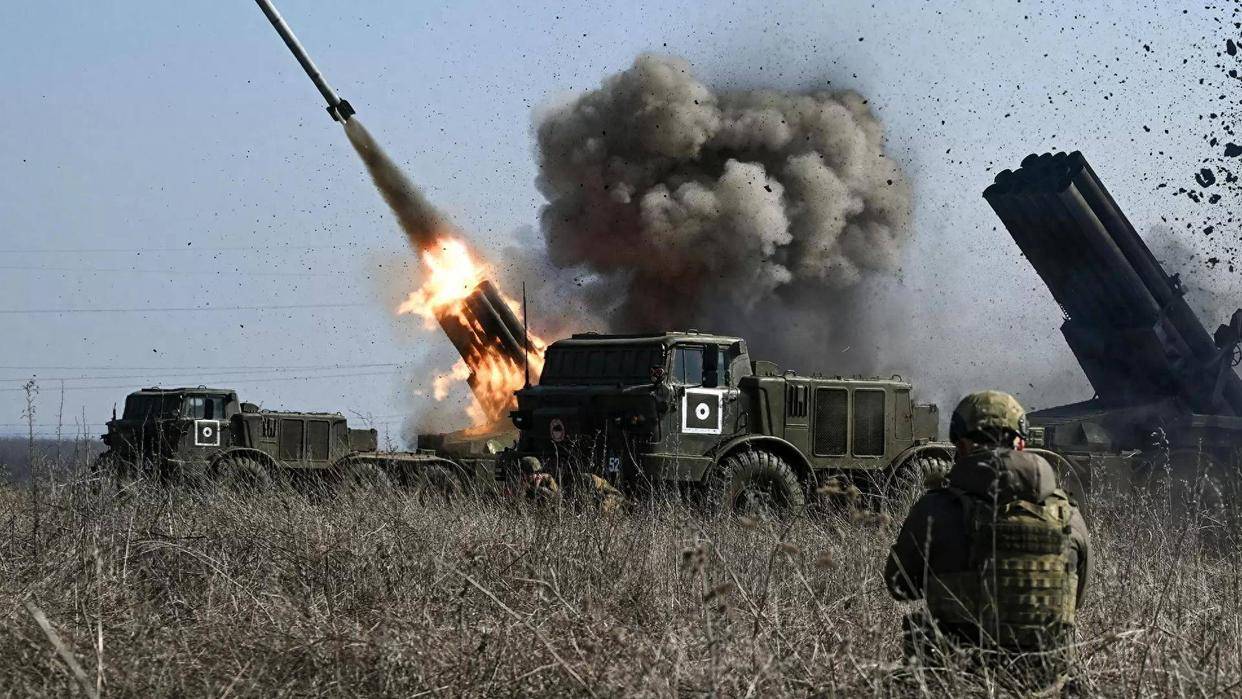
Core Insights - The article discusses Ukraine's strategic shift in warfare, focusing on targeting Russia's energy infrastructure to weaken its economy and military funding [1][6][10] Group 1: Strategic Shift - Ukraine has transitioned from traditional ground warfare to an "energy strangulation war," aiming to disrupt Russia's energy exports, which account for nearly one-third of its fiscal revenue [1] - The strategy involves a "full-chain strike" approach, targeting key components of Russia's energy system: sources, transportation lines, and terminals [1] Group 2: Key Attacks - Ukrainian forces have successfully executed multiple drone strikes, including a significant attack on the Filanovsky oil and gas platform in the Caspian Sea, halting production at one of Russia's largest oil fields [1] - The attack on the Tsimlyuk port resulted in the destruction of 70% of LNG storage facilities, leading to the cancellation of 400,000 tons of orders and crippling the port's operations [2] - The oil depot in Ulyanovsk was severely damaged, with 80% of its core facilities destroyed, disrupting fuel supplies to frontline armored units [4] Group 3: Cost-Effectiveness - This asymmetric warfare strategy allows Ukraine to achieve significant strategic gains at a low cost, with drones costing only thousands of dollars capable of destroying assets worth billions of rubles [6] Group 4: Economic Impact on Russia - While Ukraine's attacks have led to a sharp decline in Russian fiscal revenue and increased domestic discontent, Russia's economic foundation remains intact, with potential energy sales to Asian markets [6] - If Ukraine can maintain its offensive, Russia may struggle to sustain its war efforts in the long term due to frontline consumption and domestic pressures [7] Group 5: Dependency on Western Support - Ukraine's reliance on Western military aid for drones and missiles poses a risk; if supply chains falter, the effectiveness of the "energy strangulation war" may diminish [8] - The future of Ukraine's strategy hinges on continuous Western support and the precision of its strikes, indicating a broader conflict over energy, economic endurance, and national will [8]

俄罗斯能源战节节败退,普京政府加速“绑定中国”?
Sou Hu Cai Jing· 2025-11-30 12:40
Core Insights - The article discusses the impact of U.S.-led sanctions on the Russian economy, particularly in the energy sector, and highlights Russia's shift towards increased energy cooperation with China as a survival strategy [1][6]. Group 1: Sanctions and Economic Impact - U.S. sanctions have targeted major Russian oil companies, cutting them off from the global dollar financial system, leading to a significant drop in Russia's oil exports and prices [1][2]. - The price of Urals crude oil has plummeted to $45 per barrel, nearly $20 lower than Brent crude, with approximately 48 million barrels stranded at sea due to sanctions [1][2]. - Russian oil exports through traditional Baltic ports are declining, while exports to China via Pacific routes are increasing, indicating a forced pivot rather than a strategic choice [2][4]. Group 2: Energy Dependency on China - China has become the primary market for Russian energy exports, accounting for nearly 20% of its crude oil imports, with significant savings on oil costs due to discounted prices [6][7]. - Despite the reliance on China, Russian energy exports to China decreased by 19% in the first nine months of 2025, primarily due to falling international oil prices and logistical challenges [6][7]. - Russia is making concessions on energy prices to maintain market share in China, with the average price of Urals crude for China at $574 per ton, significantly lower than Saudi prices [6][7]. Group 3: Strategic Adjustments and Challenges - The sanctions have forced Russia to adopt clandestine oil trading methods, increasing logistics costs and reducing profit margins, while also compromising delivery reliability [4][6]. - Russia's economic structure reveals a critical vulnerability due to its heavy reliance on resource exports and lack of high-value-added industries [6][7]. - The relationship with China is viewed as a geopolitical refuge for Russia, but it risks becoming overly dependent on China, potentially leading to a status of "energy vassal" if economic reforms are not undertaken [7].
