
GPU(图形处理器)

Search documents
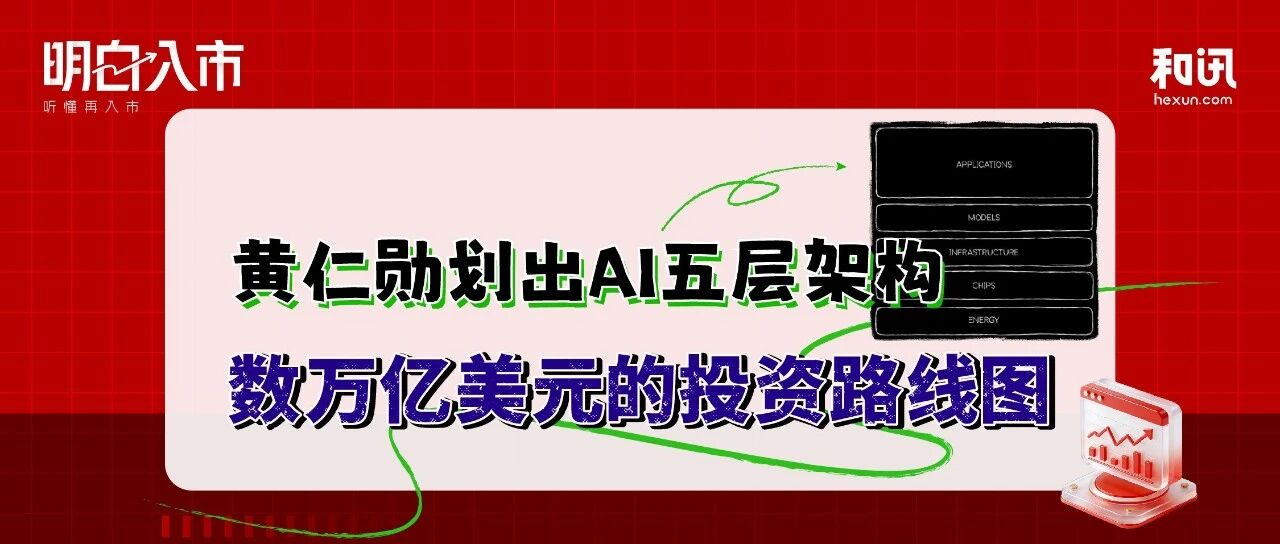
黄仁勋划出AI五层架构:数万亿美元的投资路线图
和讯· 2026-03-11 09:10
Core Viewpoint - The future of AI is characterized by the emergence of "AI agents," which will transform how users interact with technology, making it more intuitive and efficient [1][10]. Group 1: Five Layers of AI Wealth - The first layer is the Energy layer, which is essential for powering AI systems. The demand for energy is significant, as training large models consumes vast amounts of electricity, making energy a critical investment area [3]. - The second layer is the Chip layer, where high-performance chips, particularly GPUs, are crucial for AI operations. Companies that dominate chip technology will have a significant competitive advantage in the AI industry [4]. - The third layer is the Infrastructure layer, which includes data centers and servers necessary for AI operations. The demand for infrastructure is expected to grow as AI applications increase, presenting substantial investment opportunities [5]. - The fourth layer is the Model layer, where AI models are developed. This layer is highly competitive, with companies racing to create the most advanced models, which will dictate the success of applications in the next layer [6][7]. - The fifth layer is the Application layer, where AI technologies are monetized. This layer represents the most direct interaction with consumers, and companies that create compelling applications will have the strongest revenue potential [9][10]. Group 2: Investment Logic - The investment logic for the Energy and Chip layers is based on stability and long-term holding potential, as they serve as the foundation of the AI ecosystem [12]. - The Infrastructure and Model layers are seen as high-growth areas, akin to rockets, with significant potential for expansion as AI adoption increases [12]. - The Application layer is viewed as the most lucrative, with the ability to generate immediate revenue through user engagement and satisfaction [12]. Group 3: Implications for Individuals - As AI becomes more integrated into daily life, individuals will need to adapt, either by contributing to the AI ecosystem or by leveraging the services provided by AI agents [13].

英伟达的“神秘芯片”背后:推理时代开启“四大算力新趋势”
Hua Er Jie Jian Wen· 2026-03-01 13:53
Core Insights - Nvidia is shifting the AI computing competition focus from training to inference, with plans to unveil a new inference chip integrated with Groq's LPU technology at the upcoming GTC developer conference [1] - OpenAI has agreed to become a major customer for Nvidia's new processor, indicating a strong demand for dedicated inference capacity [1] - The report from Shenwan Hongyuan highlights four key trends in inference computing: increased deployment of pure CPU scenarios, the rise of specialized architectures like LPU, accelerated breakthroughs in domestic computing chips, and a shift in demand structure towards mass token consumption [2] Inference Demand Explosion - The demand for inference has surged, driven by the monetization of large models and the rapid deployment of agents in real-world applications, requiring substantial inference computing power [3] - Data shows a significant increase in inference volume during the Chinese New Year, with major models reaching record token consumption [3] LPU's Emergence - Nvidia's acquisition of Groq's core technology for $20 billion signifies the growing importance of pure inference chips, with LPU architecture offering efficiency advantages in inference scenarios [6] - The future AI chip landscape is expected to differentiate between training and inference, with training continuing to use GPU-HBM combinations while inference evolves towards ASIC+LPU-SRAM+SSD configurations [6] System-Level Innovations - The upgrade in inference computing also involves a shift from single chips to system-level innovations, with a three-layer network architecture emerging to meet the demands of low latency and high throughput [7] - Nvidia is expanding its collaboration with Meta Platforms to support large-scale pure CPU deployments, moving beyond a single GPU sales model [7] Domestic Chip Breakthroughs - Domestic inference chips are experiencing significant technological upgrades, with new designs supporting low-precision data formats and enhanced interconnect bandwidth [9] - The supply chain for domestic chips is also improving, as evidenced by the rapid growth in revenue from high-performance computing chip packaging services [9]

英伟达的“神秘芯片”背后--推理时代开启“四大算力新趋势”
Hua Er Jie Jian Wen· 2026-03-01 11:33
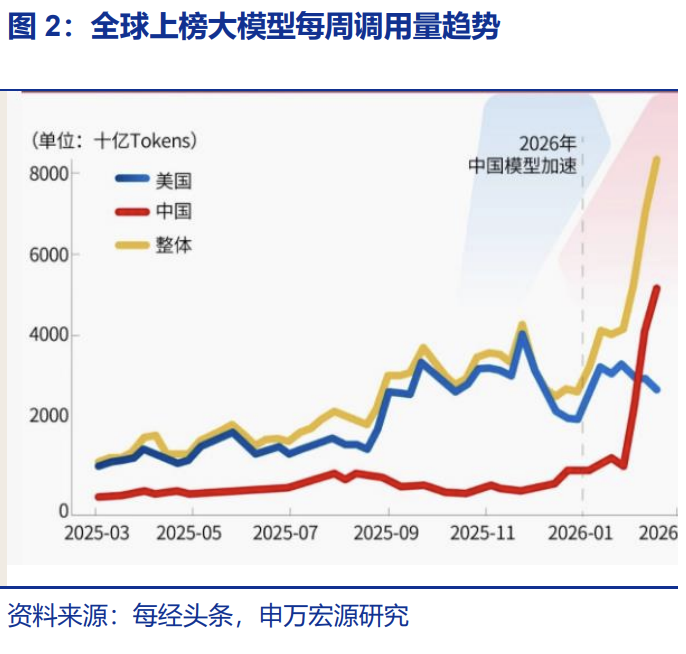
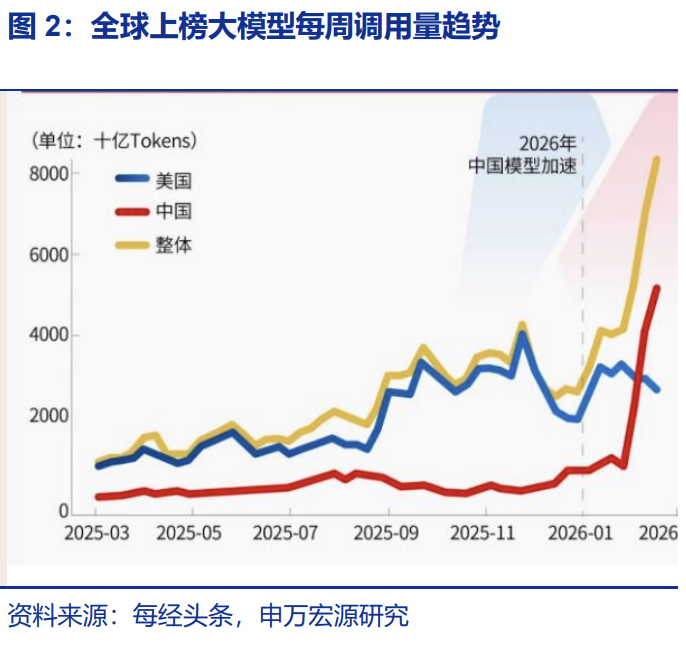
Core Insights - Nvidia is shifting the AI computing competition focus from training to inference, integrating LPU technology and collaborating with OpenAI for dedicated inference capabilities [1][2] - The demand for inference computing is surging, driven by the monetization of large models and the acceleration of agent deployment in real-world applications [3][6] Group 1: Inference Computing Trends - The report identifies four major trends in inference computing: increased deployment of pure CPU scenarios, the rise of specialized architectures like LPU challenging GPU dominance, accelerated breakthroughs in domestic computing chips, and a shift in demand structure from single training to mass token consumption [2][10] - Companies providing high-performance, cost-effective inference chips will benefit the most, as breakthroughs in CPU, LPU, and domestic chips reshape the computing landscape [2][10] Group 2: Demand and Usage Statistics - The demand for inference has exploded, with significant increases in token consumption during the Chinese New Year, including 63.3 billion tokens processed in a single day by a leading model [3][10] - Data from OpenRouter indicates that Chinese models surpassed U.S. models in token calls, with a notable increase of 127% in three weeks, highlighting the growing prominence of Chinese AI models [3][10] Group 3: Technological Developments - Nvidia's acquisition of Groq's core technology for $20 billion signifies the recognition of pure inference chips' importance by top players in the industry [6][10] - The architecture of LPU differs from traditional GPUs, providing efficiency advantages in inference scenarios, particularly in addressing latency and memory bandwidth issues [6][10] Group 4: System-Level Innovations - The evolution from single chips to system-level innovations is crucial for the upgrade of inference computing, with a three-layer network architecture emerging to meet the demands of low latency and high throughput [8][10] - Nvidia is expanding its collaboration with Meta Platforms to support large-scale pure CPU deployments, indicating a shift away from a single GPU sales model [8][10] Group 5: Domestic Chip Advancements - Domestic inference chips are experiencing significant technological upgrades, including support for low-precision data formats and increased interconnect bandwidth, with expectations for a new version to launch in Q1 2026 [10] - The growth of domestic packaging companies reflects the increasing supply capability of domestic computing chips, with revenues from high-performance computing chip packaging services projected to rise significantly [10]
美国拟推出严厉芯片出口管制新规,直指中国AI
制裁名单· 2026-01-26 23:50
Core Viewpoint - The "AI OVERWATCH Act" aims to impose strict licensing requirements on the export of advanced integrated circuits (chips) to "concerned countries," particularly targeting China's AI industry and military modernization efforts [1] Group 1: Legislation Overview - The act mandates the U.S. Department of Commerce to implement stringent licensing management for the export, re-export, or domestic transfer of "specific integrated circuits" to "concerned countries," with China being the primary focus [2] - The list of "concerned countries" includes China (including Hong Kong and Macau), Iran, North Korea, Russia, and Venezuela [2] Group 2: Definition of Targeted Integrated Circuits - The act defines "specific integrated circuits" as advanced computing chips essential for modern AI development, specifically targeting the latest GPUs and AI accelerator chips used for training large AI models [3] - The government is authorized to update the parameters of these chips based on technological advancements to ensure the regulations remain relevant [3] Group 3: Licensing Approval Process - The act establishes a nearly insurmountable approval process for exporting controlled chips to "concerned countries," particularly China [4] - It specifies that any integrated circuit meeting or exceeding certain performance thresholds will fall under regulatory control, including total processing performance and memory bandwidth requirements [4] Group 4: Congressional Oversight and Strategic Assessment - The act requires the Department of Commerce to submit detailed application materials to Congress at least 30 days before approving any licenses, including security risk certifications [5] - A temporary comprehensive ban on export license applications to "concerned countries" will be in place until a national security strategy report is submitted to Congress [7] - The act mandates a strategic report assessing the implications of "concerned countries" acquiring advanced chips on U.S. national security, particularly focusing on China's capabilities [7]

黄仁勋拿下200万美元大奖,罕见流露感性一面
Xin Lang Cai Jing· 2026-01-09 16:24
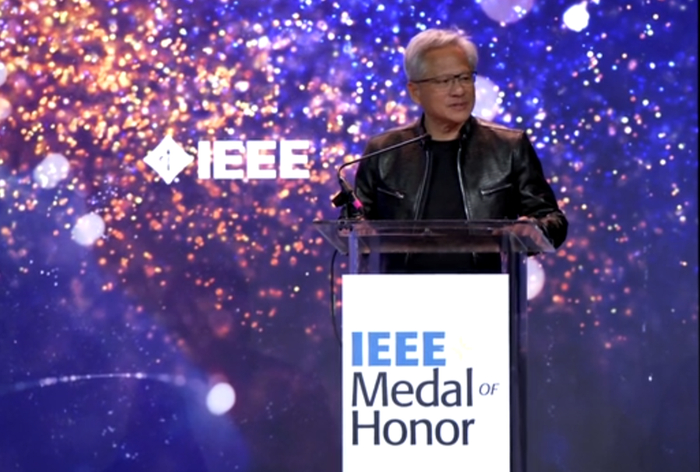
Core Points - The IEEE Medal of Honor was awarded to Jensen Huang, founder and CEO of NVIDIA, during the 2026 CES, recognizing his groundbreaking contributions in accelerated computing and artificial intelligence [2] - Huang's leadership and vision have been acknowledged as pivotal in advancing science, medicine, and engineering, laying the foundation for modern generative AI [2] - Huang expressed gratitude for the award, emphasizing that it represents recognition for all NVIDIA employees and their lifelong dedication to innovation [6][10] Group 1: Award and Recognition - The IEEE Medal of Honor, established in 1917, is one of the highest honors in the technology field, awarded to individuals who have made significant impacts [2] - Huang's name is now alongside legendary figures such as Vinton Cerf and Robert Noyce, highlighting his status in the tech community [2] - The award includes a monetary prize of $2 million, further underscoring its significance [2] Group 2: Huang's Background and Philosophy - Huang's entry into engineering was driven by a passion for mathematics and science rather than a complex career plan, showcasing a pure technical intuition [5] - He shared a personal story about his college choice, which led to meeting his future wife, emphasizing the importance of relationships in his journey [5][7] - Huang defined engineering as the application of scientific and mathematical principles to solve challenging problems, highlighting the resilience and dedication required in the field [3][8] Group 3: NVIDIA's Impact and Future - As of October 2025, NVIDIA's market capitalization surpassed $5 trillion, making it the highest-valued company globally [6] - Huang reflected on the company's journey from a small startup to a leader in reshaping computing and driving the AI revolution [6][7] - The recognition of the award is seen as a testament to the collective efforts of NVIDIA's employees, who have contributed to the company's transformative impact across various scientific fields and industries [8][10]
黄仁勋拿下200万美元大奖,罕见流露感性一面
21世纪经济报道· 2026-01-09 09:51
Core Viewpoint - The article highlights the recognition of Jensen Huang, CEO of NVIDIA, with the IEEE Medal of Honor for his groundbreaking contributions to accelerated computing and artificial intelligence, marking a significant achievement in the tech industry [1][2]. Group 1: Award and Recognition - The IEEE Medal of Honor, awarded to Huang, comes with a $2 million prize and is one of the highest honors in the tech field, recognizing individuals who have made profound impacts on the world [1]. - Huang's leadership and vision have been credited with initiating a new era of human innovation, particularly since the launch of the first GPU in 1999, which laid the foundation for advancements in science, medicine, and engineering [1][3]. Group 2: Personal Journey and Company History - Huang's entry into engineering was driven by a passion for mathematics and science rather than a complex career plan, emphasizing the importance of problem-solving and resilience in engineering [2][3]. - The founding of NVIDIA in 1993 is described as an unexpected journey, evolving from a small startup to a company valued at over $5 trillion by October 2025, reshaping computing and leading the AI revolution [3][4]. Group 3: Company Culture and Team Acknowledgment - Huang attributes the success of NVIDIA to the collective efforts of its employees, stating that the award is a recognition of their lifelong work [4][6]. - He expresses gratitude for the support from his family and colleagues, highlighting the collaborative spirit that has driven NVIDIA's achievements [7][8].

黄仁勋,拿下200万美元大奖
2 1 Shi Ji Jing Ji Bao Dao· 2026-01-09 05:12
Core Viewpoint - The IEEE Medal of Honor was awarded to Jensen Huang, founder and CEO of NVIDIA, recognizing his groundbreaking contributions in accelerated computing and artificial intelligence, alongside a monetary award of $2 million [1]. Group 1: Award Significance - The IEEE Medal of Honor is one of the highest honors in the technology field, established in 1917 to recognize individuals who have made profound impacts on the world [1]. - Huang's recognition places him among legendary figures in technology, such as Vinton Cerf, Robert Noyce, and Morris Chang [1]. Group 2: Huang's Contributions - Huang's leadership and vision have been pivotal in ushering in a new era of human innovation, starting with the launch of the first GPU in 1999, which laid the groundwork for advancements in science, medicine, and engineering, as well as the explosion of modern generative AI [1]. - As of October 2025, NVIDIA's market capitalization surpassed $5 trillion, solidifying its position as the highest-valued company globally [4]. Group 3: Personal Reflections - Huang shared that his entry into engineering was driven by a passion for mathematics and science rather than a complex career plan, highlighting the challenges and technical aspects of the field as his main attractions [2][6]. - He recounted a personal story about how a seemingly random choice of university led to meeting his future wife, which became a foundation for both his personal and professional life [2][6]. Group 4: Company Legacy - Huang emphasized that NVIDIA's achievements are a collective effort, attributing the award to all employees and recognizing their lifelong dedication to the company [4][7]. - The company has transformed every scientific field and industry, a feat Huang described as unimaginable and beyond their initial aspirations [4][7].
半导体有望“穿越风浪”稳健发展
Jin Rong Shi Bao· 2026-01-09 00:57
Core Insights - The comprehensive explosion and deep application of artificial intelligence (AI) technology in 2025 is the core driver of the global semiconductor industry [1] - The A-share semiconductor sector is expected to benefit from increased demand, leading to a new round of growth in the performance of related listed companies in 2025 [1] - The semiconductor industry index in the secondary market significantly outperformed the broader market, with a 45.99% increase in 2025 [1] Market Performance - In 2025, the semiconductor industry index rose by 45.99%, outperforming the CSI 300 index by 28 percentage points [2] - Among sub-sectors, printed circuit boards saw a 144% increase, semiconductor equipment rose by 60%, and semiconductor materials increased by 36% [2] - As of January 7, 2026, the semiconductor industry index had increased by 9.12% over three trading days [1] Company Performance - In the first three quarters of 2025, 172 listed companies in the semiconductor sector achieved a total revenue of approximately 506.1 billion yuan, a year-on-year increase of 15% [2] - The net profit attributable to shareholders reached approximately 43.1 billion yuan, reflecting a year-on-year growth of 43% [2] - 136 companies reported positive revenue growth, and 107 companies reported positive net profit growth [2] AI Industry Impact - The AI industry has become a major growth driver, with significant increases in revenue across the entire supply chain, including computing power, data transmission, storage, and applications [3] - Companies like Cambrian and Haiguang Information reported revenue growth of nearly 24 times and 55%, respectively, in the computing power segment [3] - The semiconductor industry is expected to exceed $800 billion in revenue in 2025, marking a nearly 20% increase from 2024 [3] Future Outlook - The semiconductor industry is anticipated to continue its growth trajectory in 2026, driven by AI as the core growth engine [4] - The expansion of the industry chain will focus on AI computing power, storage, and related equipment and materials [4] - The trend of domestic substitution is expected to remain a key driver for the semiconductor industry's development [4][5]
紧抓稀缺性
Hua Xia Shi Bao· 2026-01-08 10:32
Core Viewpoint - Scarcity is defined as the limitation in obtaining resources needed by people, with a focus on time as a crucial factor in both enhancing and destroying scarcity [2][4]. Group 1: Definition of Scarcity - Scarcity in investment refers to a situation where demand for a product remains stable or grows while supply cannot keep pace, often due to a lack of adequate substitutes [2][3][4]. - The definition emphasizes limited supply and the absence of sufficient substitutes [2]. Group 2: Types of Scarcity - Geographic scarcity occurs when a product is unique to a specific location, making it irreplaceable, such as Moutai liquor, which can only be produced in Maotai Town, Guizhou [4]. - Technological scarcity is characterized by monopolistic advantages, as seen with companies like NVIDIA, which have maintained a strong market position through innovation [5][6]. - Non-renewable scarcity refers to resources that are inherently limited and diminish with use, such as indium, which has a very low natural reserve [11]. Group 3: Impact of Time on Scarcity - Scarcity is not constant and can be altered by supply factors; for example, cocoa has seen increasing scarcity due to rising demand and limited production areas [13][14]. - The cocoa market is particularly sensitive to environmental conditions, which can drastically affect supply and prices [14][15]. Group 4: Market Dynamics and Investment Implications - The investment value of certain products can fluctuate significantly over time, influenced by market conditions and consumer behavior [4][17]. - Companies must adapt to changing market dynamics, especially during periods of consumer downgrading, to maintain their competitive edge [17].




培育算力创新生态
Jing Ji Ri Bao· 2026-01-05 22:23
Group 1 - The GPU has become a core computing engine for the AI revolution and digital economy amid increasing global tech competition [1] - The first MUSA Developer Conference, themed "Independent Computing Innovation and Developer Ecosystem Co-construction," was held in Haidian District, Beijing, serving as an important platform for deep communication and collaborative innovation among industry, academia, and research [1] - The Haidian District has over 240 integrated circuit companies and 12 listed companies, showcasing its role as a hub for hard technology innovation [1] Group 2 - Haidian District is committed to nurturing leading hard tech enterprises and building a competitive industrial ecosystem, particularly in the integrated circuit sector [2] - The district has implemented a comprehensive service system for the entire industrial chain and introduced policies to reduce innovation costs, supporting the innovation cycle from basic research to technology breakthroughs and results transformation [2] - Future plans for Haidian District include focusing on design and AI chips to build an AI ecosystem, promoting the transformation of university research results, and enhancing talent recruitment and service efforts [2]