
脑卒中防治

Search documents
文登区高村中心卫生院开展脑卒中防治巡回宣传活动
Xin Lang Cai Jing· 2025-12-23 17:03
Core Viewpoint - The article highlights a health awareness campaign organized by the Wengden District Gao Village Central Hospital, focusing on early identification and immediate medical attention for stroke prevention and treatment [1] Group 1: Campaign Overview - The campaign was led by the hospital's vice president, who has extensive experience in cardiovascular disease prevention, along with a team of senior nurses and family doctors [1] - The event took place in Tangpoyang Village, where the medical team conducted health education and consultations [1] Group 2: Educational Focus - Family doctors explained the key points of the "2025 World Stroke Day" campaign, emphasizing the "Stroke 120" and "BEFAST" mnemonics to help villagers quickly recognize stroke symptoms and emergency response techniques [1] - The vice president also provided guidance on stroke prevention and rehabilitation based on traditional Chinese medicine principles [1] Group 3: Impact and Future Plans - The campaign effectively increased the local community's awareness of early stroke recognition and emergency treatment, reinforcing the importance of scientific prevention [1] - The hospital plans to continue such beneficial activities, aiming to mobilize societal participation in stroke prevention efforts to reduce incidence, disability, and mortality rates, thereby improving the quality of life and happiness of the community [1]
脑卒中发病持续增长,我国将推动30岁以上居民测量血压
Xin Jing Bao· 2025-11-09 08:44
Core Insights - The incidence of stroke in China continues to rise, with no sign of a turning point, indicating a growing healthcare burden related to cerebrovascular diseases [2] - High blood pressure remains the primary risk factor for stroke, with nearly 80% prevalence among high-risk groups, necessitating increased awareness and screening efforts [4][5] - The government aims to improve hypertension awareness among citizens aged 30 and above to 65% by 2030, emphasizing the importance of regular blood pressure checks [4][5] Group 1: Stroke Prevention and Management - Over the past 14 years, more than 17 million individuals have undergone stroke screening and intervention in China [1][4] - The number of hospitalized stroke patients is increasing, reflecting both a growing workload for healthcare professionals and an aging population [2] - The government plans to ensure that by 2025, at least one secondary hospital in cities and counties with populations over 300,000 will routinely perform intravenous thrombolysis and thrombectomy [3] Group 2: Risk Factors and Public Awareness - High blood pressure is identified as the leading cause of stroke, with other contributing factors including dyslipidemia, smoking, obesity, and lifestyle choices [4][6] - There is a concerning trend of low awareness regarding hypertension, particularly among younger populations, highlighting the need for enhanced health education [5] - Weight management should begin at age 20, as it is crucial for reducing the risk of diabetes and stroke later in life [6][7]
视频丨打造1小时“救治圈” 我国卒中中心建设已覆盖超70%区县
Yang Shi Xin Wen Ke Hu Duan· 2025-11-09 01:46
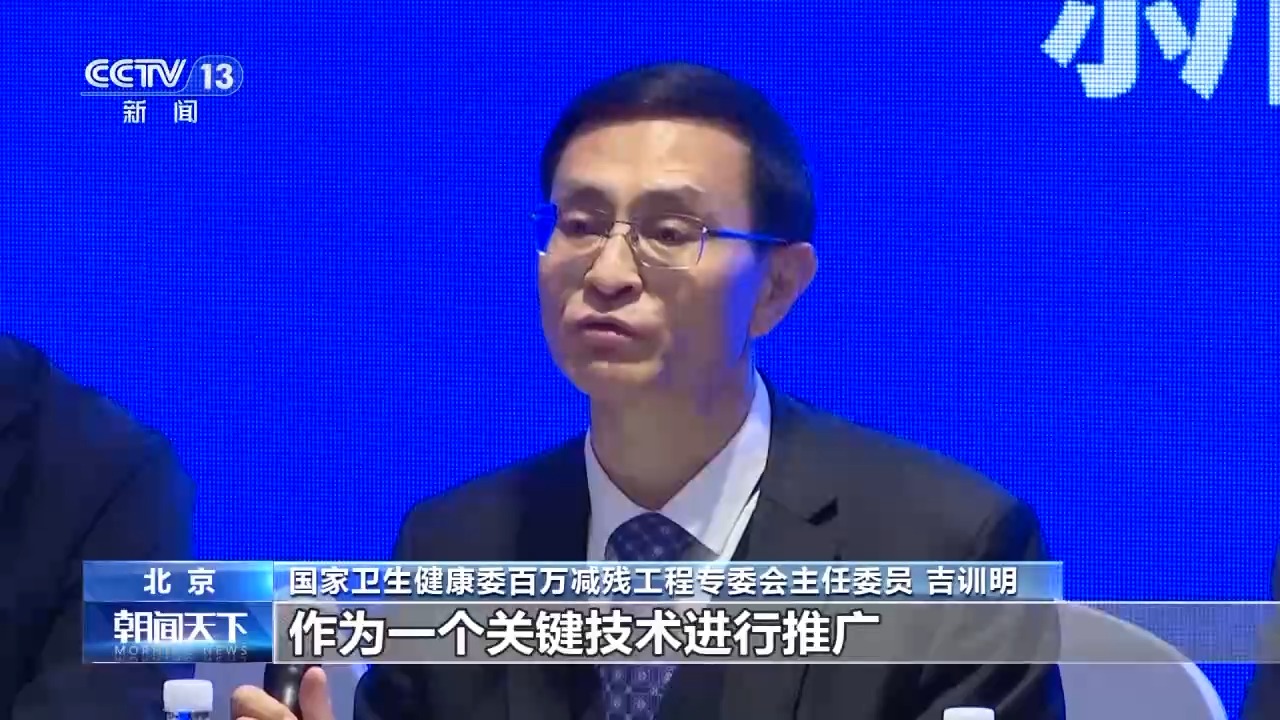
Core Insights - The 2025 China Stroke Conference was held in Beijing from November 7 to 9, highlighting significant advancements in stroke center construction across the country [1] Group 1: Stroke Center Development - As of the end of October this year, stroke center construction has covered over 70% of districts and counties nationwide [1] - A total of 745 tertiary hospital stroke centers and 1,681 secondary hospital stroke centers have been established, representing increases of 16.8% and 15.1% respectively compared to the previous year [3] - Stroke centers now cover 97.9% of cities and 70.6% of districts and counties [3] Group 2: Stroke Prevention Initiatives - The "Million Disability Reduction Project" aims to reduce 1 million new disabilities by 2030, with a focus on hypertension as a key risk factor for stroke prevention [3] - Citizens aged 30 and above are encouraged to undergo annual blood pressure checks [3] Group 3: Treatment Improvements - The median time from hospital admission to thrombolysis for stroke patients has been reduced to 40 minutes, which is better than the international standard of 60 minutes [6] - In 2024, 1,175 counties are expected to meet standards for intravenous thrombolysis, covering a population of 850 million [5] - A total of 733 counties are expected to meet standards for thrombectomy [5] Group 4: Future Directions - The National Health Commission plans to guide the reasonable arrangement of stroke center construction to meet treatment needs [8] - There will be an emphasis on building a continuous service system for stroke diagnosis and treatment, as well as a graded diagnosis and treatment model for stroke [8]

佰仁医疗:经导管主动脉瓣系统全年植入量目标为1000例
Cai Jing Wang· 2025-09-04 04:31
Core Viewpoint - The company is in the early stages of production for its interventional valve products, with expected fluctuations in gross margin due to the introduction of new products and the anticipated clinical launch of the transcatheter aortic valve system next year [1] Group 1: Product Development and Market Strategy - The company aims to achieve a target of 1,000 implantations for its transcatheter aortic valve system this year, with expectations for continuous growth as hospital coverage increases and product experiences improve [1] - The company has covered 35 of the top hospitals, which account for approximately 60% of the market share, and plans to achieve full coverage by the end of the year [1] - The newly launched transcatheter valve-in-valve product is expected to have a faster market penetration compared to the transcatheter aortic valve system due to its unique positioning [1] Group 2: Regulatory Approvals and Product Pipeline - The management outlined a series of products expected to be registered this year, including "ocular biological patches," "collagen fiber fillers," and "interventional pulmonary valves," with several more planned for submission in the next four months [2] - The ePTFE pericardial membrane and collagen fiber filler-I are anticipated to receive approval in the fourth quarter, while other products will be approved by the end of this year or in the first and second quarters of next year [2] Group 3: Market Potential and Clinical Needs - The company’s vascular biological patches aim to fill a domestic gap in carotid plaque excision and vascular reconstruction surgeries, which are crucial for preventing ischemic strokes [3] - Data indicates that in 2020, approximately 460,000 deaths in China were attributed to ischemic strokes caused by carotid plaque detachment, highlighting the urgent need for surgical interventions [3] - The company is actively promoting its vascular biological patches as a standard treatment for carotid endarterectomy (CEA), which is currently underutilized in China compared to the potential patient population [3]
