
自免领域药物研发

Search documents
一个自免新星的非意外“死亡”
3 6 Ke· 2026-02-03 13:36
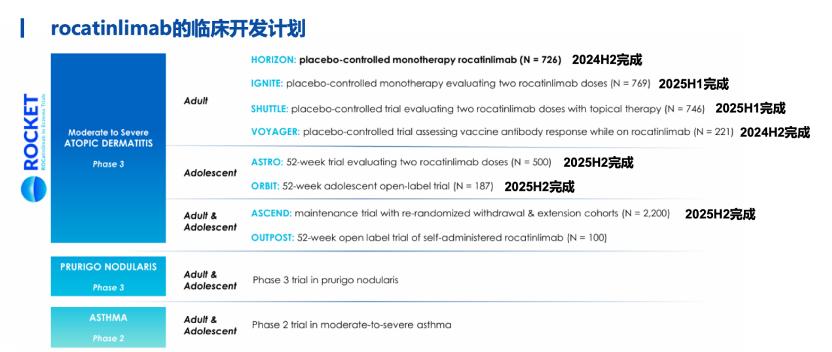
Core Insights - Amgen's acquisition of rocatinlimab from Kyowa Kirin for $400 million upfront, with potential milestone payments up to $850 million, aimed to capitalize on the future of autoimmune therapies [1] - Despite initial success in clinical trials, Amgen and Kyowa Kirin announced the termination of their collaboration on January 30, 2026, indicating that rocatinlimab could not compete effectively against existing therapies like Dupilumab [1][5] - The challenges faced by rocatinlimab reflect broader difficulties in the development of next-generation autoimmune drugs, which struggle to displace established treatments [1][11] Group 1: Amgen's Strategy and Clinical Trials - Amgen's introduction of rocatinlimab was a strategic gamble on the future of autoimmune treatments, particularly targeting the OX40/OX40L pathway, which plays a crucial role in T cell activation [2] - Rocatinlimab showed promising results in early trials, with significant improvements in EASI scores for atopic dermatitis patients compared to placebo, achieving reductions of 57.4% and 61.1% in different dosage groups [3] - Despite successful phase III trials (IGNITE and SHUTTLE) in 2025, rocatinlimab's efficacy was found to be inferior to Dupilumab, which posed a significant barrier to its market success [4][5] Group 2: Market Dynamics and Competitive Landscape - The atopic dermatitis market is highly competitive, with Dupilumab having established a strong foothold, making it difficult for new entrants like rocatinlimab to gain traction [4][9] - The ongoing clinical trials for rocatinlimab include multiple phase III studies targeting moderate to severe atopic dermatitis and other conditions, with over 3,300 patients recruited [7][8] - The substantial market potential for atopic dermatitis treatments, coupled with unmet clinical needs, continues to attract new players, but the path to success is fraught with challenges [9][10]


康诺亚20251209
2025-12-10 01:57
Summary of the Conference Call for 康诺亚 Company Overview - 康诺亚 is a leading company focused on autoimmune diseases, with core products including CM310 (思普曲帕单抗) and the next-generation dual antibody CM512 [2][3]. Key Products and Market Potential - **CM310 (思普曲帕单抗)**: - Recently included in the medical insurance directory, expected to see rapid market growth [2]. - Approved for three indications: adult moderate to severe atopic dermatitis, chronic rhinosinusitis with nasal polyps, and seasonal allergic rhinitis, with plans to expand to adolescents and children [2][3]. - Clinical trial results show a 52-week EASI75 response rate of 92.5% and EASI90 response rate of 77% in adult atopic dermatitis patients [4]. - In chronic rhinosinusitis, 90% of patients showed at least a 50% reduction in nasal polyps after 52 weeks [5]. - For seasonal allergic rhinitis, approximately 84% of patients experienced relief from nasal symptoms, and 94% from ocular symptoms [6]. - **CM512**: - A next-generation dual antibody targeting TSLP and IL-13, with a half-life of 70 days, allowing for dosing every three months [3][7]. - Phase I data shows EASI75 and EASI90 response rates of 58.3% and 41.7% respectively at 12 weeks, indicating competitive advantages over existing therapies [3][8]. - **CMG901 (Claudin 18.2 ADC)**: - Leading in the development for gastric and pancreatic cancer, with a phase III trial expected to complete by October 2026 [3][9]. - Early data shows a PFS of 4.8 months and OS of 11.8 months, indicating promising market potential [9]. Financial Projections - Revenue for CM310 is projected to grow rapidly, from approximately 300 million RMB in 2025 to about 750 million RMB in 2026 [10]. - Overall revenue estimates for 康诺亚 from 2025 to 2027 are 637 million, 764 million, and 480 million RMB, with year-on-year growth rates of 47%, 21%, and 94% respectively [10]. Valuation - Using a DCF model, 康诺亚's valuation is estimated at approximately 24.5 billion RMB, with a target price increase of 82%, leading to a buy rating [11]. Additional Insights - CM310 shows lower relapse rates and better safety and tolerability compared to Sanofi's Dupilumab, with a relapse rate of approximately 0.9% after 52 weeks [4]. - The company is positioned strongly in the market due to its innovative products and competitive advantages over existing therapies [7].