自然科学

Search documents
论坛| 杜雨博士在第32届中国技术经济学年会发言:在科研中坚守人文温度
未可知人工智能研究院· 2025-11-22 03:02
Core Insights - The article discusses the transformative impact of artificial intelligence (AI) on academic research and publishing, highlighting a revolution in knowledge production, dissemination, and innovation [1]. Group 1: AI in Academic Research and Publishing - AI is becoming a powerful tool in the transition from academic research to popular science publishing, enabling complex knowledge to be communicated in simpler terms [3][4]. - The integration of AI allows for the rapid identification of key academic findings and the optimization of communication strategies tailored to different audiences [4]. Group 2: Discipline-Specific Applications of AI - In natural sciences, AI has significantly enhanced research efficiency, particularly in fields like life sciences, where platforms like AlphaFold have revolutionized protein structure prediction and drug development [6]. - Conversely, the application of AI in social sciences is still developing, as the complexity of human relationships and emotions cannot be fully captured by data alone [7]. Group 3: Paradigm Shift in Research Methodology - The emergence of AI challenges traditional econometric models, prompting a shift from "simple science" to "complex science," allowing researchers to handle multidimensional and nonlinear data without oversimplification [8][9]. - Future academic research will require a blend of AI tools and human insight to navigate complexity and extract meaningful patterns from data [9]. Group 4: The Role of AI in Knowledge Dissemination - AI not only enhances efficiency in knowledge dissemination but also reshapes the underlying thought processes, emphasizing the importance of maintaining the essence of research while embracing technological advancements [11].


英国顶尖生态学家:中国“好得令人无法拒绝”
Huan Qiu Wang Zi Xun· 2025-07-08 22:56
Core Insights - The article highlights the increasing global influence of China in the field of natural sciences, particularly in insect migration research, as evidenced by the decision of top ecologist Jason Chapman to join a Chinese university [1][2] - China's advanced radar technology for tracking flying insects is a significant factor attracting international researchers, showcasing the country's leadership in radar entomology [1][2] Group 1: Research and Development - Jason Chapman, a leading expert in insect migration, has left the University of Exeter to join Nanjing Agricultural University, citing superior research funding and efficient collaboration as key reasons for his move [2] - The Chinese government’s emphasis on agricultural research and substantial funding has enabled the development of world-class insect radar technology, positioning China as a global leader in this field [1][2] Group 2: Academic Contributions - Chapman has published over 140 academic papers and has played a crucial role in fostering collaboration between Chinese and British research institutions [2] - Nanjing Agricultural University has committed to providing top-notch research conditions and platforms for Chapman’s team, aiming to address pressing issues in food security, climate change, and smart agriculture [2]
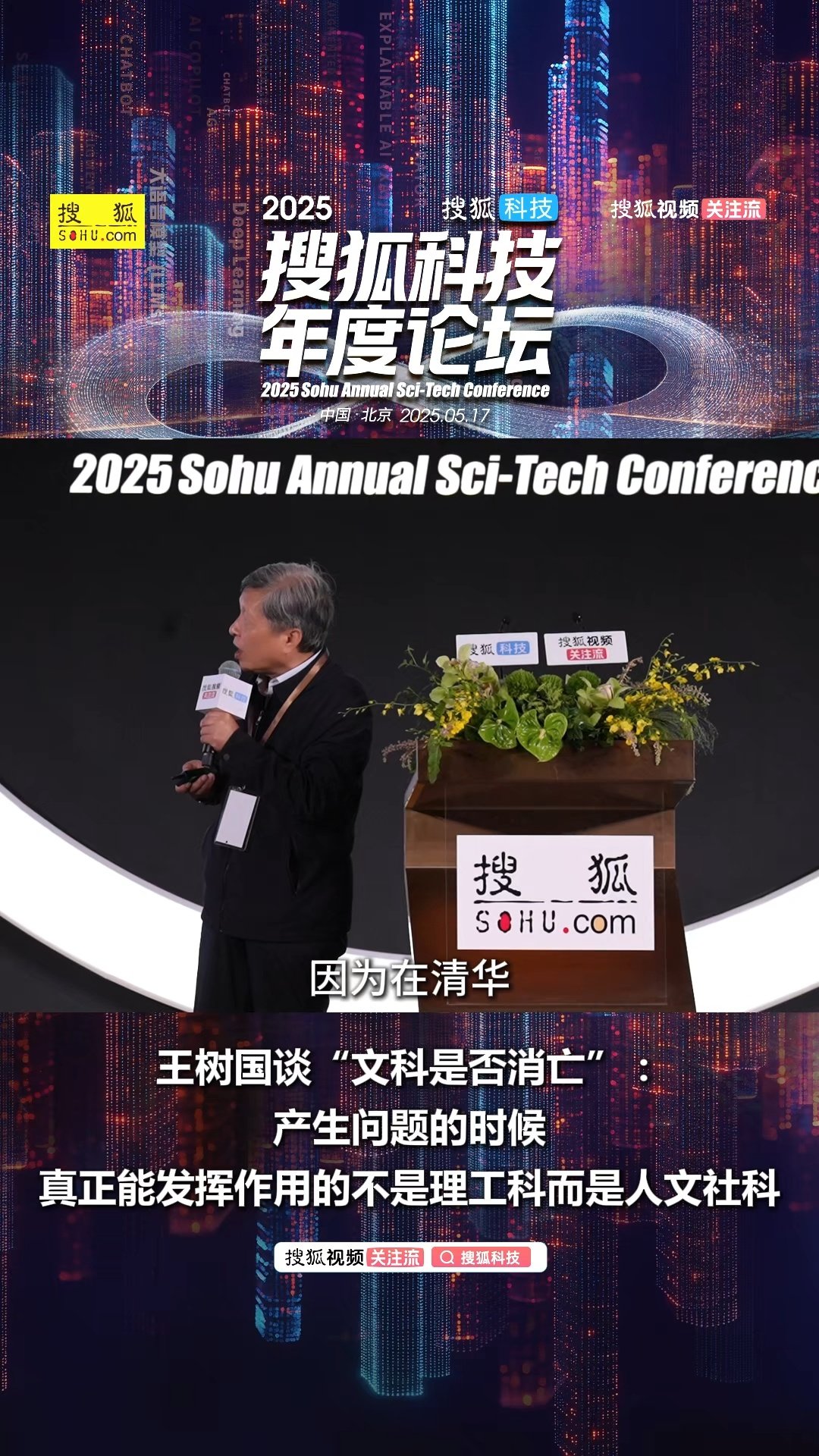
“文科要消亡”?王树国:产生问题时,真正发挥作用的还是人文社科
2 1 Shi Ji Jing Ji Bao Dao· 2025-05-22 06:41
Group 1 - The core viewpoint emphasizes the necessity of humanities and social sciences in guiding new technologies like artificial intelligence, highlighting their role in establishing legal and ethical frameworks to mitigate risks and maximize benefits [1][2][3] - The argument against the "uselessness of humanities" is presented, asserting that both humanities and natural sciences are essential for human progress, with each discipline addressing different aspects of societal development [2] - The current technological revolution is seen as an opportunity for the humanities and social sciences to evolve, addressing emerging social issues such as ethical concerns in gene editing and algorithmic discrimination [2] Group 2 - The integration of natural sciences and humanities is crucial for ensuring that technological innovations serve the long-term welfare of humanity, combining "hard power" and "soft power" [3]
福耀科技大学校长王树国谈文科是否消亡:产生问题的时候,真正能发挥作用的不是理工科而是人文社科
Xin Lang Cai Jing· 2025-05-18 10:03
Group 1 - The core viewpoint emphasizes the need to reassess the relationship between humanities and sciences in the era of new technologies like artificial intelligence, highlighting that humanities and social sciences play a crucial role in addressing technological challenges and ensuring regulations to minimize harm while maximizing benefits [1][4]. - Wang Shuguo argues against the notion that humanities will disappear, stating that neglecting social sciences could lead to significant harm to human civilization [1]. - The changing role of universities is discussed, with the assertion that artificial intelligence can outperform human educators in certain aspects, raising questions about the future of academic evaluation [4]. Group 2 - Wang Shuguo has a distinguished background, having led two top-tier universities in China and recently appointed as the president of Fujian Fuyou Technology University, which was approved in March this year [7]. - His research focuses on various advanced technologies, including robotics and biomedical applications, indicating a strong foundation in both practical and theoretical aspects of technology [7]. - Wang Shuguo is committed to his role at the university as a voluntary position, driven by educational ideals rather than financial gain, aiming to establish a leading research-oriented institution [7].
福耀科技大学校长发问:如果梁文锋读博士,还有今天的DeepSeek吗?
第一财经· 2025-05-17 10:53
Core Viewpoint - The article emphasizes the need for a transformation in university education to keep pace with societal changes and technological advancements, particularly in the context of the Fourth Industrial Revolution and artificial intelligence [2][3][4]. Group 1: Education Reform - The current educational system is criticized for being outdated and not aligning with the rapid changes in society and technology [3]. - The president of Fuyao University, Wang Shuguo, argues that traditional education methods are insufficient and advocates for allowing students to explore their potential without unnecessary constraints [3][4]. - There is a call to break down barriers between universities and society, promoting direct dialogue and collaboration to foster innovation and practical skills [3][4]. Group 2: Role of Technology - The rapid development of technologies, including AI, is reshaping the educational landscape, with AI potentially outperforming human educators in certain aspects [3][4]. - By 2035, a significant transition from old to new knowledge systems is anticipated, with the next decade expected to produce a wave of talented individuals contributing to societal progress [4]. Group 3: Interdisciplinary Approach - Wang Shuguo highlights the importance of integrating humanities and social sciences with natural sciences, arguing that neglecting the former could lead to detrimental consequences for civilization [4]. - The article stresses that both fields are essential for addressing the challenges posed by new technologies and ensuring their benefits are maximized while minimizing harm [4].