
自营商品

Search documents
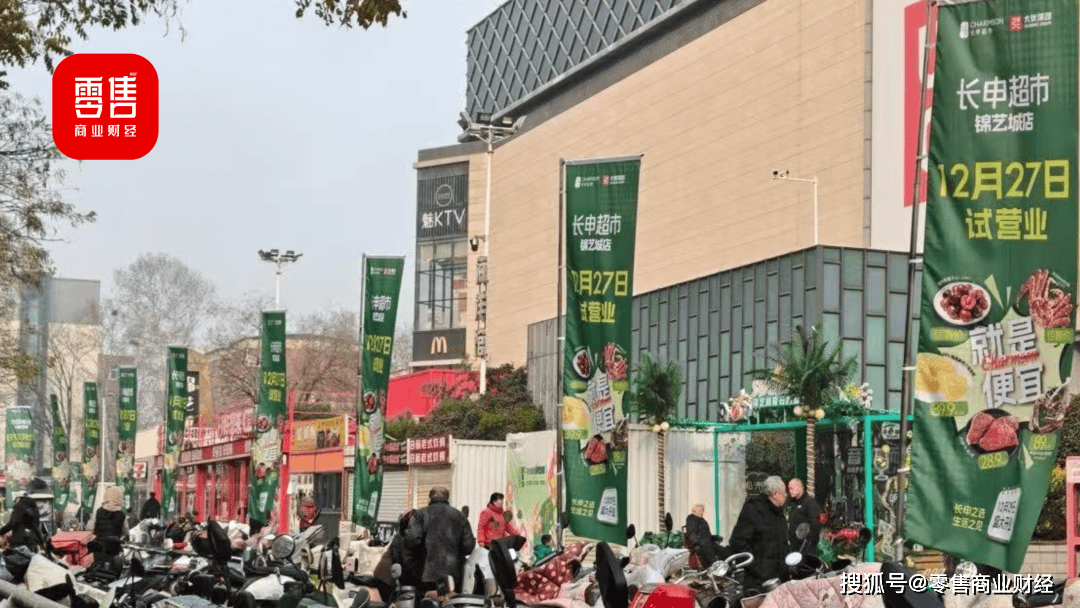
实探大张旗下长申超市郑州新店与盒马贴身肉搏
Sou Hu Cai Jing· 2026-01-12 15:14
Core Viewpoint - Traditional regional supermarkets must continuously evolve and maintain deep insights into consumer needs and product strength to find a way out in the "retail warring states" era as consumers become more cautious with their spending [2] Group 1: Store Opening and Competition - Changshen Supermarket, under Dazhang, opened a new store in Zhengzhou after seven years, with a total area of over 5,000 square meters, half of which is dedicated to fresh produce [2] - The new store is located just 700 meters from a Hema store, marking a rare close competition in China's retail history [2][4] - The entry of Changshen Supermarket into Zhengzhou is expected to intensify regional retail competition, as local brands like Taoxiaopang and Xianfeng Life are also thriving in the area [4] Group 2: Store Design and Consumer Experience - The new store has seen a significant influx of customers, particularly in the fresh produce and meat sections, indicating a successful consumer engagement strategy [5] - The store's design features transparent glass materials for display areas, enhancing the spatial perception and overall aesthetic [9] - The layout includes a bakery section at the entrance, followed by fresh produce, seafood, and a cooking area, aligning with modern supermarket design trends [9] Group 3: Product Offering and Self-Branding - The new store has significantly expanded its self-branded product range, including various dairy products and baked goods, to meet diverse consumer needs [20] - Pricing strategies have been implemented to ensure high cost-performance ratios, with many self-branded items priced below 10 yuan [22] - Changshen's self-branded products are positioned to compete directly with Hema, often priced slightly lower, indicating a strategic focus on price competitiveness [24] Group 4: Transformation and Market Positioning - 2025 marks a pivotal year for Dazhang Group as it embarks on a comprehensive transformation in response to competitive pressures from Hema [28] - The company is enhancing its supply chain and operational details while also focusing on a younger, more agile organizational structure [29] - Dazhang aims to increase the sales proportion of its private label products to 35% within three years, reflecting a commitment to internal growth and adaptation [30]

2025,大厂“押注”硬折扣
Xin Lang Cai Jing· 2025-09-12 06:09
Core Viewpoint - The launch of Meituan's discount supermarket "Happy Monkey" in Hangzhou marks a significant move by major internet companies into the hard discount retail sector, which is expected to reshape the future of instant retail and enhance supply chain efficiency [1][2][4]. Group 1: Hard Discount Market Dynamics - The hard discount model focuses on extreme cost reduction and efficiency in operations and supply chains, typically achieving gross margins of 10%-15% [2]. - Major players like Meituan, Alibaba's Hema NB, and JD.com are entering the hard discount space, indicating a competitive landscape that extends from online to offline retail [1][4]. - The competition among these companies is characterized by strategic positioning in different geographic areas, with Meituan targeting first-tier cities, Hema NB focusing on the Yangtze River Delta, and JD.com expanding in northern cities [4]. Group 2: Retail Efficiency Revolution - The hard discount model is expected to drive a new wave of retail efficiency by reducing unnecessary distribution costs and directly engaging with manufacturers [5][6]. - The shift towards hard discounting is supported by changing consumer preferences, with a projected compound annual growth rate of 5.6% for hard discount formats over the next decade, outpacing traditional supermarkets [7][8]. - Consumers are increasingly seeking value-driven purchasing options, leading to a decline in luxury goods sales and a rise in outlet sales [6][7]. Group 3: Self-Operated Products and Quality Assurance - Major retailers are focusing on self-operated products to enhance price competitiveness while maintaining quality, with Hema NB's self-operated products accounting for approximately 60% of its offerings [10][12]. - The development of self-operated products allows retailers to collaborate closely with top suppliers, ensuring that pricing reflects true production costs and quality standards [11][12]. - Companies like JD.com are also introducing their own brands to compete effectively in the hard discount market, emphasizing quality and supply chain optimization as core strengths [12].


东方甄选想成为“东方山姆”
Xin Lang Cai Jing· 2025-08-16 11:18
Core Viewpoint - The company Oriental Selection has shown significant stock price recovery and operational improvement after the departure of its key figure, Dong Yuhui, with a focus on becoming a sustainable e-commerce platform akin to Sam's Club [2][6][12]. Group 1: Stock Performance - Oriental Selection's stock price has increased by approximately 248% since July, and by 357% from the low point of 8.92 HKD per share when Dong Yuhui left [2][4]. - As of August 15, the stock price rose by 17.9%, bringing the total market capitalization to over 43 billion HKD [2]. Group 2: Financial Performance - For the fourth quarter of the 2025 fiscal year, revenue is projected to be around 150 million USD, reflecting a year-on-year decline of about 30%, but with a narrowing decline compared to previous quarters [4]. - The company reported a net loss of 96.5 million RMB for the first half of the 2025 fiscal year, primarily due to the separation from "Hui Tongxing," but if this impact is excluded, the net profit would be 32.7 million RMB [5]. Group 3: Business Strategy and Development - Oriental Selection aims to transform into a membership-based e-commerce platform, similar to Sam's Club, having launched a paid membership service in October 2023 [12][13]. - The number of paid subscribers reached 228,000, nearly doubling year-on-year, indicating a strong potential for customer retention and revenue growth [13]. - The company has been increasing its self-operated product offerings, with self-operated products accounting for 46% of total sales in 2024, and the gross margin for these products rising from 10% to 21% [13][14]. Group 4: Market Position and Future Outlook - The company is focusing on developing "explosive" products, such as a self-operated sanitary napkin that sold 180,000 units in two days, indicating a positive trend in product development [14]. - Despite the optimistic outlook, challenges remain in scaling membership numbers, enhancing product explosiveness, and expanding sales channels beyond live streaming [14].