
航天新技术

Search documents
视频丨在轨驻留203天 神二十乘组完成了哪些任务?
Yang Shi Xin Wen Ke Hu Duan· 2025-11-14 07:26
Core Viewpoint - The Shenzhou-20 crew successfully completed their mission in space, spending 203 days in orbit and achieving significant scientific results before returning to Earth on November 14 [1][12]. Group 1: Mission Achievements - The Shenzhou-20 mission covered various fields including space life sciences, microgravity fundamental physics, space materials science, aerospace medicine, and new aerospace technologies, yielding several key results [3]. - Notable achievements include the production of high-quality protein crystals that may provide potential targets for cancer treatment, the successful heating of tungsten alloy to 3100 degrees Celsius, setting a new record for space materials science experiments, and the first discovery of charged colloids crystallizing into long-lived metastable structures in microgravity [6]. - The crew conducted four extravehicular activities and seven payload operations, completing tasks such as the installation of space debris protection devices and external facility inspections, which enhanced the efficiency of extravehicular operations [10]. Group 2: Collaboration and Logistics - In July, the Shenzhou-20 welcomed the arrival of the Tianzhou-9 cargo spacecraft, which delivered 6.5 tons of supplies, including consumables, propellants, and new extravehicular spacesuits, while also allowing for a "lifespan assessment" of existing suits [8]. - During the extended stay due to a suspected impact from micro-debris, the Shenzhou-20 crew collaborated with the Shenzhou-21 crew to conduct in-orbit scientific experiments, sharing experiences and data [12].

即将收获满满返回地球 神二十乘组“太空出差”期间完成了哪些任务?
Yang Shi Wang· 2025-11-14 02:32
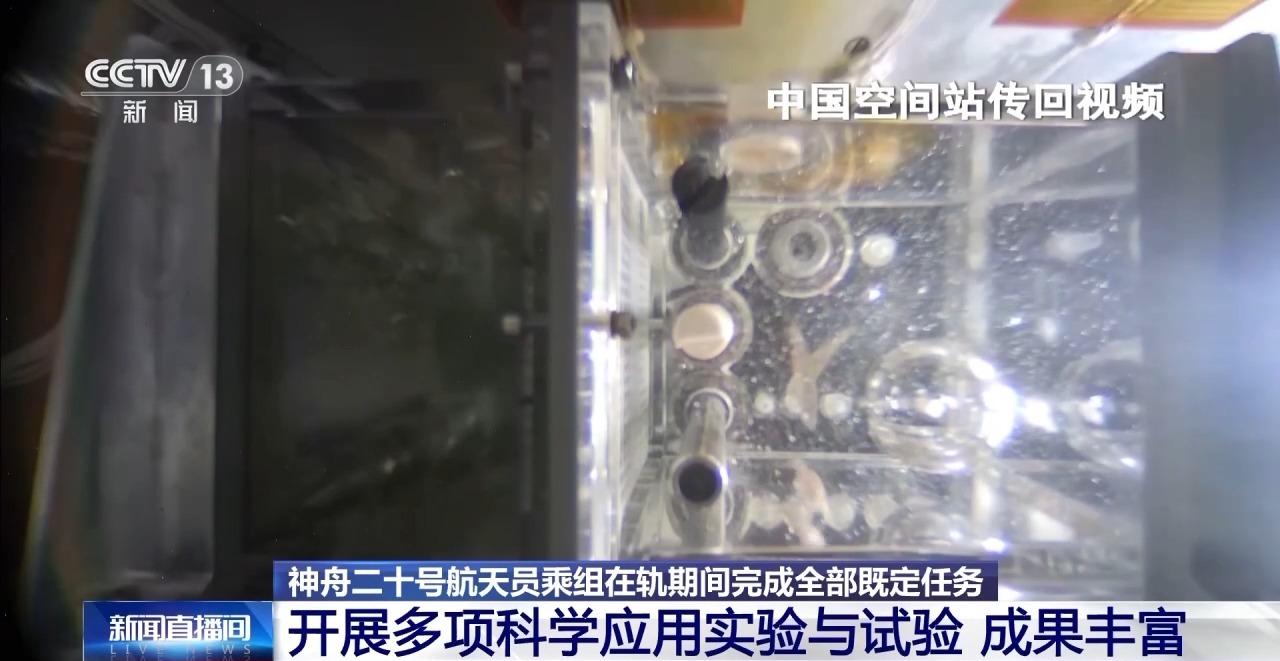
Core Points - The Shenzhou 20 astronaut crew is scheduled to return on November 14 aboard the Shenzhou 21 spacecraft, with all crew members in good condition and preparations underway at the landing site [1] - The Shenzhou 20 mission lasted 203 days, during which the crew completed all planned tasks, achieving significant results in various scientific fields [2][4] Group 1: Mission Achievements - The crew conducted experiments in space life sciences, microgravity fundamental physics, space materials science, aerospace medicine, and new aerospace technologies, yielding phase results [2] - Notable achievements include the successful growth of high-quality protein crystals, which may provide potential targets for cancer treatment, and the heating of tungsten alloy to 3100 degrees Celsius, setting a new record for international space materials science experiments [2] - The crew also discovered charged colloids crystallizing into long-lived metastable structures in microgravity [2] Group 2: Additional Activities - During the mission, the crew took care of zebrafish and a space vegetable garden, contributing to the life atmosphere of the space station and providing valuable experimental data [4] - In July, the Shenzhou 20 received a cargo delivery from the Tianzhou 9 spacecraft, which included supplies for the astronauts and new extravehicular spacesuits, along with valuable data from the evaluation of existing suits [7] - The crew completed four extravehicular activities and seven payload transfer tasks, including the installation of space debris protection devices and external auxiliary equipment, enhancing the efficiency of extravehicular operations [10] Group 3: Delays and Collaboration - The return of the Shenzhou 20 was delayed due to a suspected impact from small space debris, allowing the crew to collaborate with the Shenzhou 21 crew on in-orbit scientific experiments [13]
神舟二十一号乘组将首次在太空养小鼠
Zhong Guo Xin Wen Wang· 2025-10-30 02:35
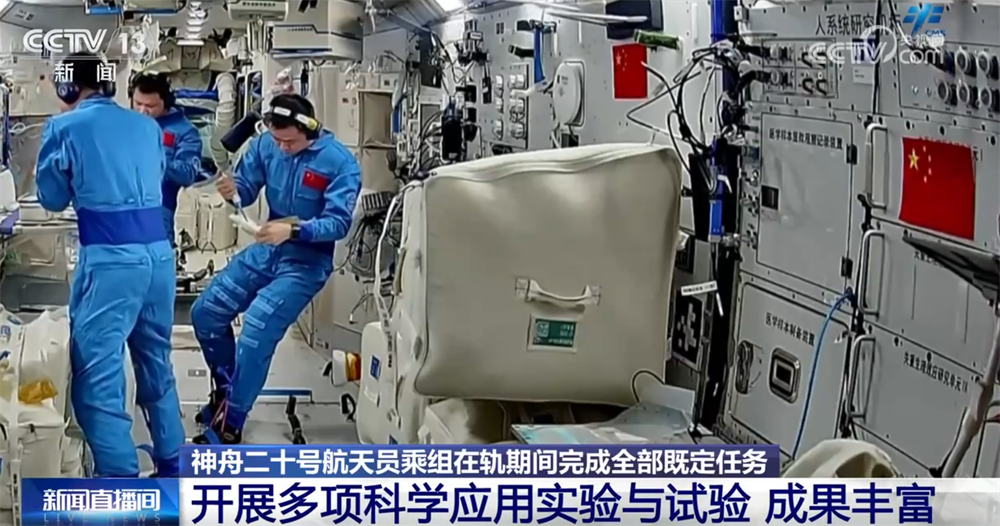
Core Viewpoint - The Shenzhou 21 mission will conduct the first domestic space experiment with rodents in orbit, focusing on the effects of microgravity on behavior and physiological responses [1] Group 1: Mission Overview - The Shenzhou 21 crew will implement 27 scientific and application projects during their mission, addressing key scientific issues in various fields such as space life sciences, biotechnology, aerospace medicine, space materials science, microgravity fluid physics, and combustion [1] - The mission will involve the use of four mice (two males and two females) to study the impact of weightlessness and confined conditions on their behavior [1] Group 2: Research Focus - The primary research will explore the stress responses and adaptive changes of multiple organ systems in mice under space conditions, with further analysis to be conducted after their return to Earth [1]