
空间材料科学

Search documents
视频丨神二十一乘组太空“出差”满70天 多项在轨训练有序开展
Xin Lang Cai Jing· 2026-01-11 03:47
Core Viewpoint - The Shenzhou-21 astronauts have been working in orbit for over 70 days, continuing their busy schedule with various training and scientific experiments during the New Year holiday [1]. Group 1: In-Orbit Training - The astronauts conducted remote operation rendezvous docking training, utilizing translation and attitude control handles for speed and attitude control skills [4]. - Medical rescue training was completed, familiarizing the crew with rescue operations in microgravity, equipment locations, and operational procedures [4]. - Emergency evacuation training was performed under simulated fire conditions in the space station [4]. Group 2: Space Science Experiments - In the field of space medicine, the crew conducted experiments using EEG devices and VR glasses to explore brain control signal characteristics in microgravity [6]. - Research on intuitive physics in microgravity and space cooperation coding and regulation was also undertaken [6]. Group 3: Material Science Research - Progress was made in the electrochemical optical in-situ research of lithium-ion batteries, which is expected to provide important theoretical support for future space missions [8]. Group 4: Equipment Maintenance and Management - The crew completed various tasks including the replacement of burners in combustion science experiments, disassembly of fluid physics experiment modules, and maintenance of experimental equipment [10]. - Continuous inspection and maintenance of the space station platform and life support systems were carried out [12].

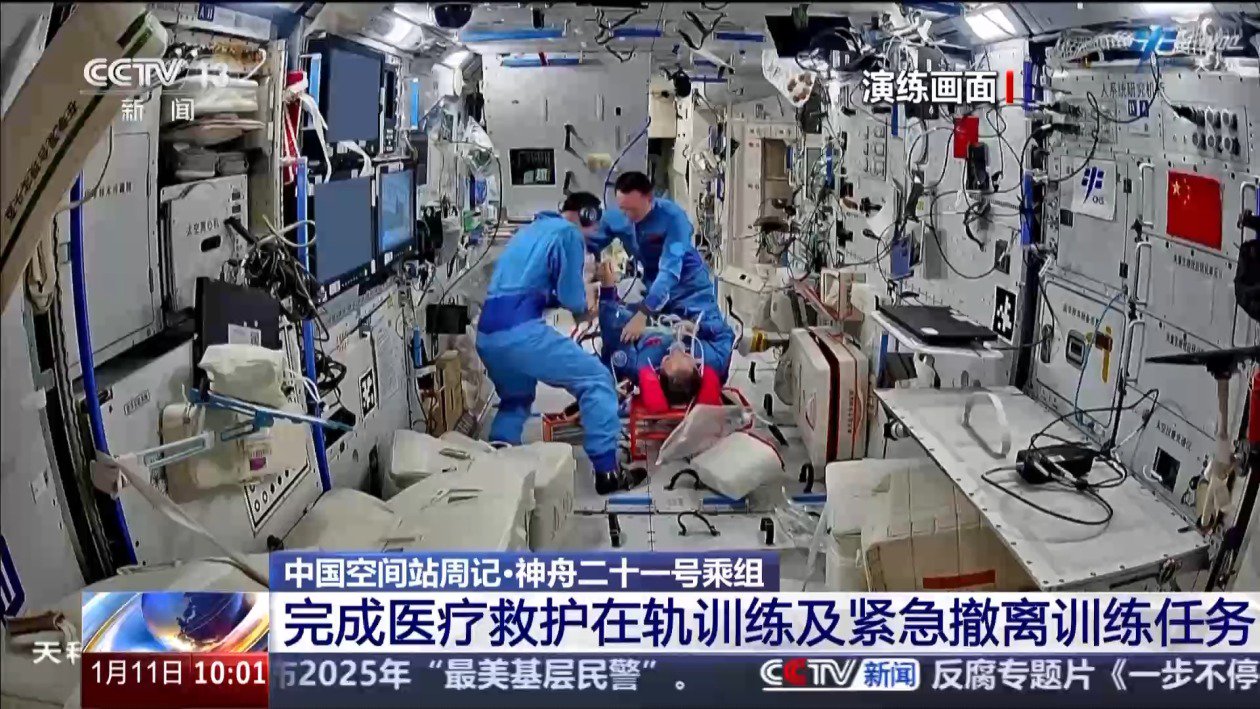
神二十一乘组太空“出差”满70天,多项在轨训练有序开展
Yang Shi Xin Wen· 2026-01-11 03:13
Group 1 - The Shenzhou 21 astronauts have been working in orbit for over 70 days, maintaining a busy schedule even during the New Year holiday [1] - Various in-orbit training activities are being conducted as planned, including remote operation docking training and medical rescue training [2] - The crew has completed emergency evacuation training under simulated fire conditions in the space station [2] Group 2 - In the field of space medicine, the crew is conducting experiments using EEG devices and VR glasses to explore brain control signal characteristics under microgravity [3] - Progress is being made in the field of space materials science, particularly in the electrochemical optical in-situ research of lithium-ion batteries, which may support future space missions [3] - The crew has also completed maintenance tasks such as replacing combustion devices and cleaning experimental modules [3] Group 3 - Continuous inspection and maintenance of the space station platform and life support systems are being carried out [4]
联播一瞬丨“太空出差”203天 神舟二十号航天员乘组做了啥?
Huan Qiu Wang Zi Xun· 2025-11-15 09:28
Core Points - The Shenzhou-20 astronaut crew has successfully completed 4 extravehicular activities and 7 payload operations, contributing to research in space life sciences, microgravity fundamental physics, and space materials science [1] - The crew has achieved significant results in their research and has successfully maintained the health of the space station's zebrafish and vegetable garden [1]
视频丨在轨驻留203天 神二十乘组完成了哪些任务?
Yang Shi Xin Wen Ke Hu Duan· 2025-11-14 07:26
Core Viewpoint - The Shenzhou-20 crew successfully completed their mission in space, spending 203 days in orbit and achieving significant scientific results before returning to Earth on November 14 [1][12]. Group 1: Mission Achievements - The Shenzhou-20 mission covered various fields including space life sciences, microgravity fundamental physics, space materials science, aerospace medicine, and new aerospace technologies, yielding several key results [3]. - Notable achievements include the production of high-quality protein crystals that may provide potential targets for cancer treatment, the successful heating of tungsten alloy to 3100 degrees Celsius, setting a new record for space materials science experiments, and the first discovery of charged colloids crystallizing into long-lived metastable structures in microgravity [6]. - The crew conducted four extravehicular activities and seven payload operations, completing tasks such as the installation of space debris protection devices and external facility inspections, which enhanced the efficiency of extravehicular operations [10]. Group 2: Collaboration and Logistics - In July, the Shenzhou-20 welcomed the arrival of the Tianzhou-9 cargo spacecraft, which delivered 6.5 tons of supplies, including consumables, propellants, and new extravehicular spacesuits, while also allowing for a "lifespan assessment" of existing suits [8]. - During the extended stay due to a suspected impact from micro-debris, the Shenzhou-20 crew collaborated with the Shenzhou-21 crew to conduct in-orbit scientific experiments, sharing experiences and data [12].
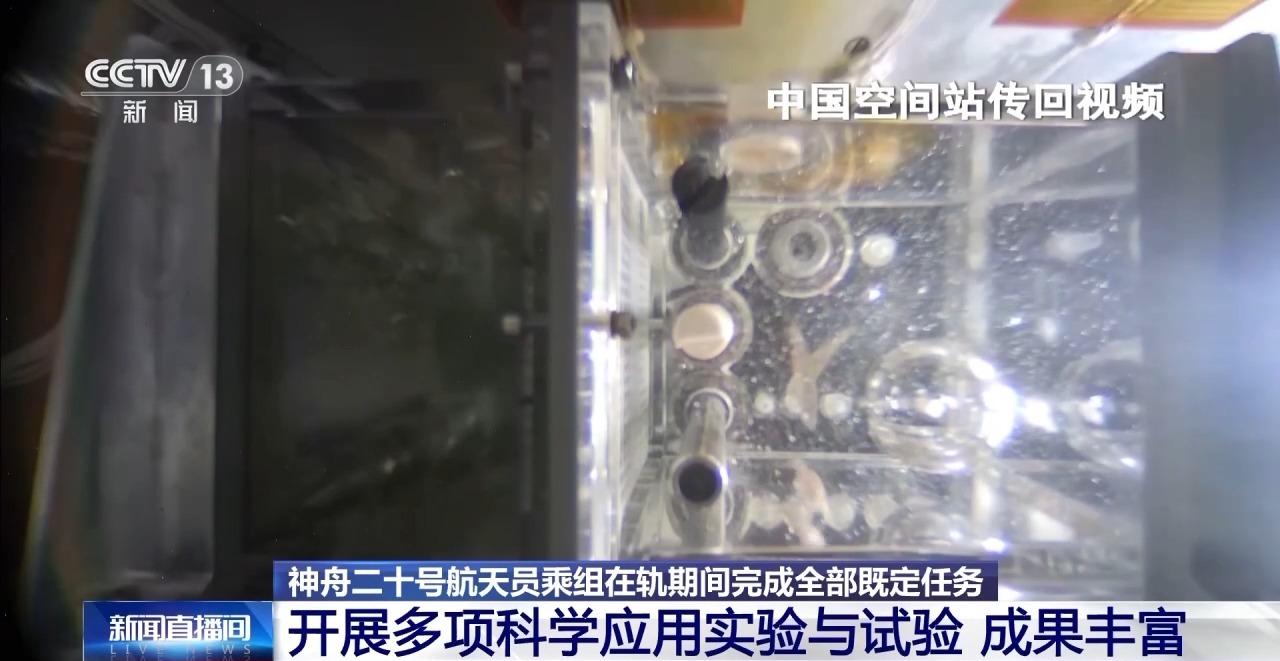
即将收获满满返回地球 神二十乘组“太空出差”期间完成了哪些任务?
Yang Shi Wang· 2025-11-14 02:32
Core Points - The Shenzhou 20 astronaut crew is scheduled to return on November 14 aboard the Shenzhou 21 spacecraft, with all crew members in good condition and preparations underway at the landing site [1] - The Shenzhou 20 mission lasted 203 days, during which the crew completed all planned tasks, achieving significant results in various scientific fields [2][4] Group 1: Mission Achievements - The crew conducted experiments in space life sciences, microgravity fundamental physics, space materials science, aerospace medicine, and new aerospace technologies, yielding phase results [2] - Notable achievements include the successful growth of high-quality protein crystals, which may provide potential targets for cancer treatment, and the heating of tungsten alloy to 3100 degrees Celsius, setting a new record for international space materials science experiments [2] - The crew also discovered charged colloids crystallizing into long-lived metastable structures in microgravity [2] Group 2: Additional Activities - During the mission, the crew took care of zebrafish and a space vegetable garden, contributing to the life atmosphere of the space station and providing valuable experimental data [4] - In July, the Shenzhou 20 received a cargo delivery from the Tianzhou 9 spacecraft, which included supplies for the astronauts and new extravehicular spacesuits, along with valuable data from the evaluation of existing suits [7] - The crew completed four extravehicular activities and seven payload transfer tasks, including the installation of space debris protection devices and external auxiliary equipment, enhancing the efficiency of extravehicular operations [10] Group 3: Delays and Collaboration - The return of the Shenzhou 20 was delayed due to a suspected impact from small space debris, allowing the crew to collaborate with the Shenzhou 21 crew on in-orbit scientific experiments [13]
神舟二十一号乘组将首次在太空养小鼠
Zhong Guo Xin Wen Wang· 2025-10-30 02:35
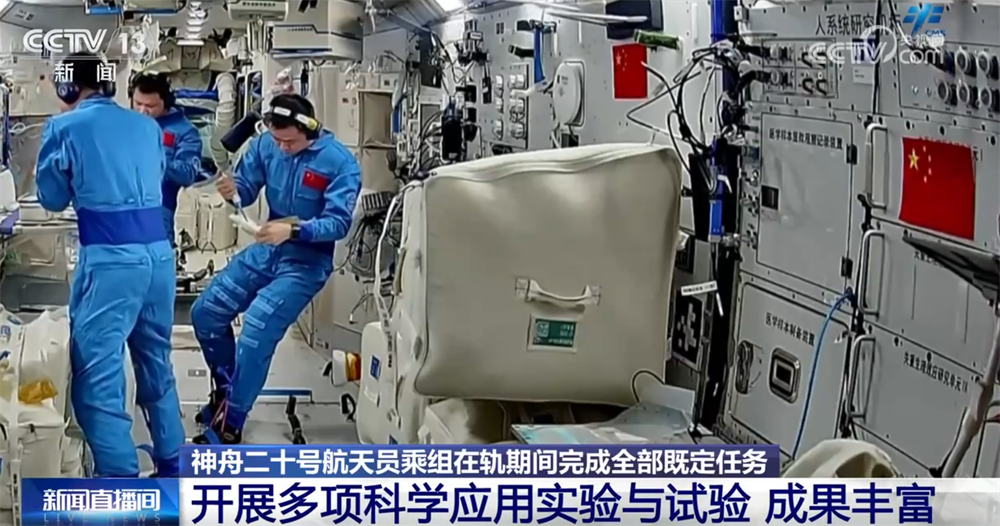
Core Viewpoint - The Shenzhou 21 mission will conduct the first domestic space experiment with rodents in orbit, focusing on the effects of microgravity on behavior and physiological responses [1] Group 1: Mission Overview - The Shenzhou 21 crew will implement 27 scientific and application projects during their mission, addressing key scientific issues in various fields such as space life sciences, biotechnology, aerospace medicine, space materials science, microgravity fluid physics, and combustion [1] - The mission will involve the use of four mice (two males and two females) to study the impact of weightlessness and confined conditions on their behavior [1] Group 2: Research Focus - The primary research will explore the stress responses and adaptive changes of multiple organ systems in mice under space conditions, with further analysis to be conducted after their return to Earth [1]
运送20多项实验物资,新增近30种航天菜肴,天舟九号对接空间站仅用3小时
Huan Qiu Wang Zi Xun· 2025-07-15 23:22
Core Points - The successful launch of the Tianzhou-9 cargo spacecraft using the Long March 7 rocket marks a significant achievement in China's space station supply missions [1][3] - Tianzhou-9 set a new record for cargo weight, carrying approximately 6.5 tons of supplies, including materials for astronauts, space station systems, and various scientific experiments [3][5] - The mission demonstrated enhanced emergency launch capabilities, with Tianzhou-9 being prepared for a three-month emergency launch window [3][4] Launch and Docking - The Long March 7 rocket completed its 10th flight, while the Tianzhou-9 mission achieved a rapid autonomous docking with the Chinese space station in just three hours [3][4] - This three-hour docking mode has become a standard for cargo spacecraft, improving reliability and reducing the requirements for launch conditions and precision [4] Scientific Experiments - The mission included 23 scientific experiments across various fields, such as life sciences, material sciences, and fluid dynamics, with a total of 776.5 kilograms of experimental materials sent to the space station [5][6] - Key experiments focus on the effects of microgravity on human cells and materials, aiming to enhance understanding of physiological and pathological processes [5][6][9] Equipment and Supplies - Tianzhou-9 delivered new equipment, including two sets of upgraded extravehicular suits, which will extend their operational lifespan from 3 years and 15 missions to 4 years and 20 missions [7][8] - The mission also included new exercise equipment designed to prevent muscle atrophy in astronauts during long-duration space missions [7][8] Food and Nutrition - The variety of space food has been expanded, adding nearly 30 new dishes, bringing the total to over 190 types, and extending the flight food cycle from 7 days to 10 days [9]
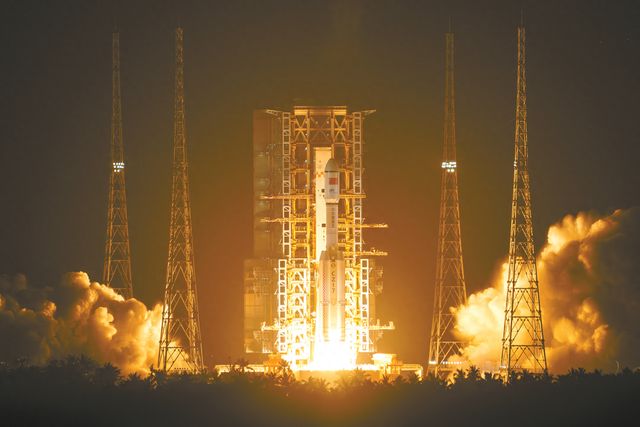
天舟九号货运飞船搭载空间应用系统物资776.5千克
Huan Qiu Wang Zi Xun· 2025-07-14 23:02
Core Insights - The successful launch of the Tianzhou-9 cargo spacecraft marks a significant advancement in China's space station program, with a total payload of 776.5 kilograms aimed at supporting scientific experiments in various fields [1] Group 1: Space Life Sciences and Biotechnology - The mission includes three key experiments focusing on the effects of microgravity on human health, specifically studying the impact on the blood-brain barrier, the migration of skeletal muscle precursor cells, and the biological functions of nucleic acid lipid nanocarriers [2] - These experiments aim to deepen the understanding of physiological and pathological processes in living organisms, providing foundational support for human health [2] Group 2: Microgravity Fluid Physics and Combustion Science - Research in this area will utilize various experimental cabinets to investigate multiphase flow, phase change heat transfer, and fluid dynamics under microgravity conditions [2] - The experiments will focus on understanding the mechanisms of gravity's influence on fluid behavior and developing related theories and models to support innovations in space fluid management and soft matter technologies [2] Group 3: Space Materials Science - The mission will conduct experiments on high-temperature niobium-silicon intermetallic compounds and their application performance, as well as studies on material behavior and properties under space conditions [3] - Research will also include the solidification mechanisms of hydrated salt phase change materials, contributing to advancements in material science [3]