
神舟二十一号飞船

Search documents
从5圈返回到3圈自主快速返回 神二十乘组这样“换乘”回家
Huan Qiu Wang Zi Xun· 2026-02-16 00:28
Core Viewpoint - The article discusses the emergency response initiated by China's manned space program following an anomaly with the Shenzhou-20 spacecraft, leading to the crew's transfer to Shenzhou-21 for their return to Earth and the launch of Shenzhou-22 for an emergency mission. Group 1: Emergency Response - On November 10, 2025, the Chinese manned space program officially activated an emergency plan due to an anomaly with Shenzhou-20, deciding to transfer the three astronauts to Shenzhou-21 for their return to Earth [1] - The Shenzhou-21 spacecraft will utilize a "3-circle autonomous rapid return" method, which was originally planned for the 2026 mission, but is now being implemented early due to the emergency situation [3] Group 2: Training and Preparation - The crew had to relearn procedures due to the change from a 5-circle return to a 3-circle return, which shortens the return time by three hours [5] - The astronauts engaged in multiple training sessions and discussions to familiarize themselves with the new manual and procedures for the return [8] Group 3: Emotional Aspects - The astronauts expressed feelings of reluctance and attachment to the space station after spending 204 days there, describing it as a home and a companion [10] - The farewell moment was filled with emotions, as the astronauts felt a deep connection to the space station [10] Group 4: Successful Return - On November 14, 2025, the Shenzhou-21 spacecraft successfully separated its orbital module from the return module, marking the beginning of the return journey for the astronauts [12] - The return process was noted to be well-prepared and executed, with the crew closely monitoring instrument parameters during the descent [14] - The new return method allowed for a smoother and quicker return, reducing the time from leaving the space station to landing on Earth by over three hours [16] Group 5: Record Achievement - The mission set a new record for the longest single crew stay in orbit for Chinese astronauts, with a total of 204 days [23] - Following the crew's return, Shenzhou-22 was launched on November 25, 2025, marking China's first emergency launch in manned spaceflight history [23]


神二十一乘组工作Vlog“上新” 中国空间站“周记”都发生了啥?
Yang Shi Wang· 2026-01-25 04:31
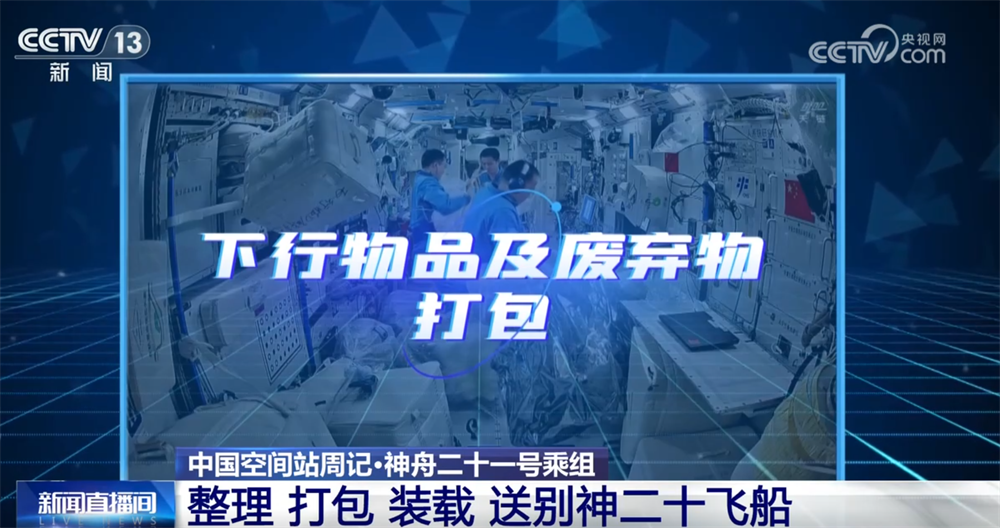
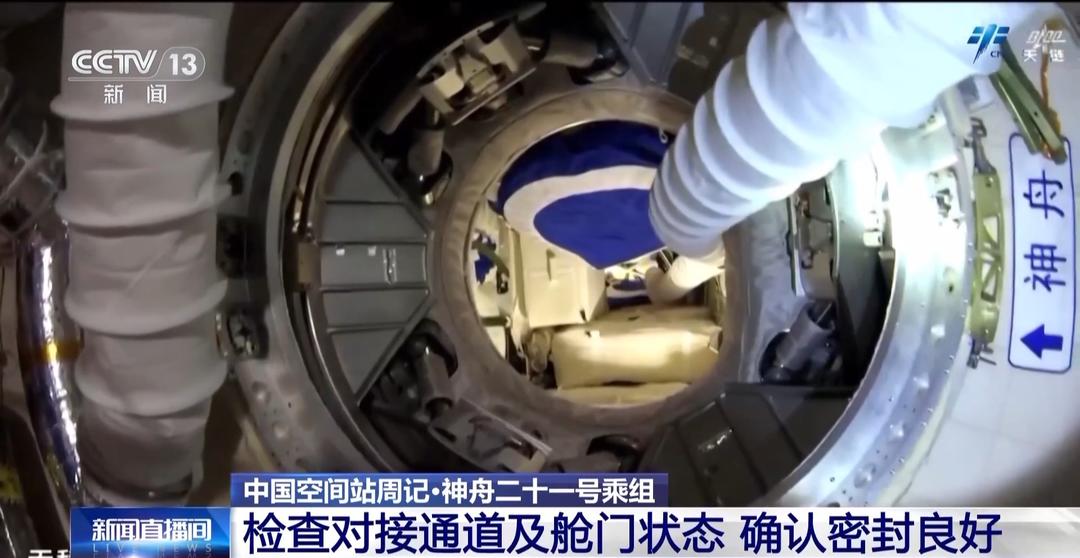
Core Points - The Shenzhou-20 spacecraft successfully returned to Earth on January 19, 2026, marking a significant achievement for China's space program [1] - The return involved meticulous preparations by the Shenzhou-21 crew, including the organization and packing of downlink items and waste [3] - The Shenzhou-20 spacecraft returned in an unmanned state, with the amount of downlink materials reaching a historical high [5] - The crew conducted detailed inspections of the docking passage and hatch to ensure proper sealing performance [7] - Prior to its return, the spacecraft's window was suspected to have been hit by small space debris, but post-return assessments confirmed the overall normal condition of the spacecraft [10] Summary by Categories Mission Success - The Shenzhou-20 spacecraft completed its mission successfully, with the return capsule in good condition [10] - The spacecraft's return marked a significant milestone in China's ongoing space exploration efforts [1] Preparations and Inspections - The Shenzhou-21 crew engaged in systematic organization and packing of downlink items, including retired space suits and large payloads [3] - A thorough inspection of the docking passage and hatch was performed to confirm the integrity of the spacecraft's sealing [7] Material Management - The return of the Shenzhou-20 spacecraft involved the highest volume of downlink materials recorded to date, emphasizing the mission's logistical success [5]
神二十飞船返回前 航天员做了哪些准备工作?
Yang Shi Xin Wen· 2026-01-25 04:21
Core Points - The Shenzhou-20 spacecraft successfully landed at the Dongfeng landing site on January 19, 2026, marking a significant achievement in China's space exploration efforts [1] - The Shenzhou-21 crew, consisting of astronauts Zhang Lu, Wu Fei, and Zhang Hongzhang, undertook various preparatory tasks before the return of the Shenzhou-20 spacecraft [1] Group 1: Preparatory Work - The astronauts organized and packed downlink items and waste, including retired extravehicular spacesuits and several large payloads from space application systems [1] - The downlink items and waste were loaded onto the spacecraft, with the amount of downlink materials reaching a historical high. The astronauts ensured proper mass balancing during the transfer and fixation of materials to maintain the spacecraft's stability during return [1] Group 2: Technical Checks - The crew conducted a detailed inspection of the docking passage and hatch status, confirming that the hatch sealing performance was good [3] Group 3: Departure from Space Station - On January 19, the spacecraft successfully detached from the space station assembly and began its journey back to Earth [4]
人类成功应对过哪些太空紧急事件?
Xin Lang Cai Jing· 2026-01-21 19:36
Core Viewpoint - The article discusses the challenges and protocols related to astronaut health in space, highlighting a recent medical evacuation from the International Space Station (ISS) and the historical context of similar incidents in space exploration [4][7]. Group 1: Medical Protocols and Training - All astronauts undergo professional medical training to perform basic medical procedures in emergencies, such as suturing wounds and administering injections [4][5]. - NASA has a dedicated ground team of medical professionals who monitor astronauts' health throughout their missions, ensuring they are prepared for potential medical issues [5][6]. - The ISS is equipped with a pharmacy and medical equipment to address various health issues, but serious emergencies may require astronauts to return to Earth for advanced care [5][6]. Group 2: Historical Context of Medical Emergencies - The article notes that the recent medical evacuation is the first of its kind since the ISS began hosting rotating crews in November 2000, marking a significant event in spaceflight history [4]. - Historical incidents, such as the Soviet "Soyuz" missions and the Apollo 13 crisis, illustrate the risks astronauts face, including health emergencies and spacecraft malfunctions [7][8]. - Recent events, including the Russian "Soyuz MS-22" coolant leak and the Boeing "Starliner" delays, further emphasize the ongoing challenges in ensuring astronaut safety during missions [9].
神20舷窗裂纹维修方式披露:从舱内实施加固,后续将加强舷窗结构,能硬扛空间碎片
Yang Shi Xin Wen· 2026-01-20 02:50
Group 1 - The Shenzhou-20 spacecraft successfully landed at the Dongfeng landing site, confirming the overall normal condition of the capsule and the good status of items inside, marking a successful return mission [1] - The main concern during the return mission was the window crack on the Shenzhou-20 spacecraft, which led to the installation of a window crack treatment device by astronauts, providing valuable experience for China's space program in dealing with space debris impacts [2][4] - The window of the Shenzhou spacecraft is made of a three-layer composite glass structure, with the outer layer designed to withstand temperatures exceeding 1000 degrees Celsius during atmospheric re-entry. A penetrating crack was found, prompting the decision for the crew to return via the Shenzhou-21 spacecraft [2][4] Group 2 - Due to the infeasibility of external repairs, the team opted for an internal reinforcement solution, which was successfully installed by astronauts in the Shenzhou-20 capsule, enhancing thermal protection and sealing capabilities during the return process [4] - The window serves critical functions, including allowing astronauts to observe the landing environment and ensuring safety during emergency situations, making it an indispensable part of the spacecraft [11][9] - The window also acts as a backup for attitude determination, enabling astronauts to manually control the spacecraft's stability in case of automatic control system failure [11]

神舟二十号飞船安全返回东风着陆场
Jing Ji Ri Bao· 2026-01-19 22:17
Core Points - The Shenzhou-20 spacecraft successfully landed on January 19, 2026, after a mission duration of 270 days, demonstrating its capability for a 9-month stay in orbit [1] - The spacecraft was launched on April 24, 2025, and initially delayed its return due to suspected impact from space debris, leading to extended experiments in orbit [1] - To mitigate return risks, a close-up inspection of the spacecraft's return capsule window was conducted, confirming the status of cracks, and a device for handling these cracks was developed and installed by astronauts [1] Summary by Sections - **Mission Overview** - Shenzhou-20 spacecraft launched on April 24, 2025, and successfully docked with the space station [1] - The return was delayed due to potential damage from micro-debris, leading to additional experiments in orbit [1] - **Return and Safety Measures** - The spacecraft returned to Earth on January 19, 2026, after 270 days in orbit [1] - Prior to the return, astronauts conducted an external inspection of the return capsule window to assess crack conditions [1] - A crack handling device was developed and installed to enhance thermal protection and sealing during the return process [1]
神舟二十号飞船安全顺利回家
Xin Lang Cai Jing· 2026-01-19 22:17
Core Viewpoint - The Shenzhou-20 spacecraft successfully returned to Earth, completing its mission and demonstrating its capability for a 9-month stay in orbit [2] Group 1: Mission Accomplishments - The Shenzhou-20 spacecraft spent a total of 270 days in orbit, successfully completing all primary tasks related to China's space station emergency operations [2] - The spacecraft was originally scheduled to return on November 5, 2025, but adjustments were made due to a discovered crack in the window [2] Group 2: Technical Developments - A triangular crack was identified on the spacecraft's window, prompting the crew to install a window crack treatment device to enhance thermal protection and sealing during re-entry [2] - The Shenzhou-21 crew utilized an EVA opportunity to closely photograph the window crack for further assessment [2] Group 3: Future Missions - The Shenzhou-23 spacecraft has arrived at the Jiuquan Satellite Launch Center, with the Long March 2F Yao-23 rocket set to be launched soon as part of the ongoing backup mission [2]
神舟二十号飞船安全回家
Xin Lang Cai Jing· 2026-01-19 18:11
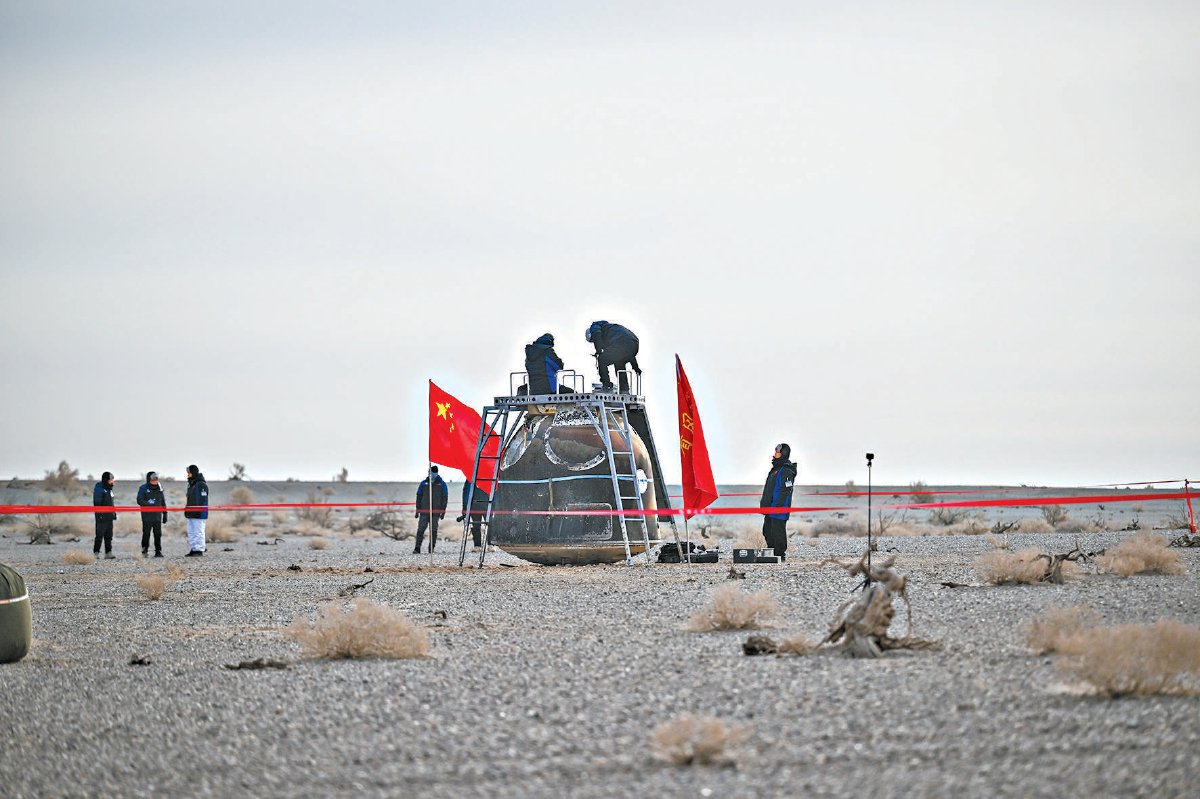
Core Viewpoint - The main mission of China's space station emergency action has been successfully completed with the safe return of the Shenzhou-20 spacecraft on January 19, 2026, marking a significant achievement in China's manned spaceflight program [3][4]. Group 1: Mission Completion - The Shenzhou-20 spacecraft successfully landed at the Dongfeng landing site at 9:34 AM on January 19, 2026, confirming the overall normal condition of the spacecraft and its internal items [3]. - The spacecraft was launched on April 24, 2025, and had a total in-orbit duration of 270 days, validating its capability for a 9-month stay in orbit [3][4]. - The mission faced a delay in return due to suspected impact from space debris, leading to the implementation of emergency measures and the successful return of the crew aboard Shenzhou-21 on November 14, 2025 [4]. Group 2: Search and Recovery Operations - The search and recovery operation for the Shenzhou-20 spacecraft utilized an unmanned mode for the first time, incorporating drone and unmanned vehicle teams, which replaced traditional helicopter units [5][6]. - The search teams quickly arrived at the landing site and successfully located the spacecraft, demonstrating the effectiveness of the new unmanned search model [5][6]. Group 3: Extravehicular Suit Retirement - The Shenzhou-20 mission also marked the retirement of China's first set of extravehicular suits, which had successfully supported 20 extravehicular activities [7][8]. - The extravehicular suit, weighing over 100 kilograms, was designed for a lifespan of three years and had exceeded its usage expectations by completing 20 extravehicular activities [8][9]. - The suit's successful performance in various missions has provided valuable data for future developments in space suit technology [11]. Group 4: Future Developments - The data and experiences gained from the Shenzhou-20 mission and the retired extravehicular suit will contribute to the development of future space suits, including the lunar exploration suit [11].
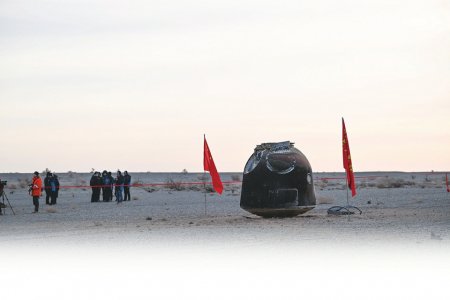
破晓——中国载人航天首次应急行动始末
Xin Hua She· 2026-01-19 16:02
Core Viewpoint - The article details China's first emergency response action in manned spaceflight, highlighting the challenges faced by the Shenzhou 20 mission after a space debris incident and the subsequent measures taken to ensure the safety of the astronauts and the success of the mission [1][6]. Group 1: Incident and Response - A piece of space debris struck the Shenzhou 20 spacecraft, leading to the discovery of a crack in the outer layer of the spacecraft's window, which prompted an immediate emergency response [3][5]. - The emergency response mechanism was swiftly activated, involving multiple teams across various locations including Beijing, Jiuquan, and Shanghai to analyze the situation [4][5]. - A consensus was reached during a critical meeting that prioritized astronaut safety and mission success, resulting in the decision to delay the return of the Shenzhou 20 mission [6][8]. Group 2: Safety Assessments and Preparations - Simulations and tests were conducted to assess the impact of the crack on the spacecraft's ability to safely re-enter the atmosphere, with various experiments being performed to replicate the damage [7][8]. - A comprehensive safety assessment report was prepared, incorporating findings from multiple experiments and expert opinions to evaluate the return strategy for the astronauts [8][9]. - The mission control decided to launch an emergency backup mission, Shenzhou 22, to ensure the safety of the astronauts and facilitate their return [9][10]. Group 3: Execution of Emergency Launch - The emergency launch process was initiated, compressing the timeline for testing and preparation of the backup rocket and spacecraft to just 16 days [10][19]. - The team faced significant time constraints and resource challenges, leading to a collaborative effort across various departments to ensure all necessary preparations were completed on time [12][18]. - The Shenzhou 22 spacecraft was successfully launched on November 25, 2025, demonstrating the effectiveness of the emergency response protocols [19][20]. Group 4: Successful Return and Future Prospects - The Shenzhou 20 crew successfully returned to Earth on November 14, 2025, after overcoming the challenges posed by the initial incident [13][19]. - The successful return highlighted the dedication and resilience of the Chinese space program, reinforcing the commitment to astronaut safety and mission integrity [19][21]. - Looking ahead, the article emphasizes the potential advancements in China's manned space missions, including long-term stays in space and lunar exploration, as part of the ongoing development of the country's space capabilities [20][21].
神舟二十号飞船安全顺利返回东风着陆场 中国空间站太空应急行动主要任务圆满完成
Xin Hua She· 2026-01-19 04:36
Core Viewpoint - The Shenzhou-20 spacecraft successfully completed its return mission, marking the successful conclusion of China's space station emergency operations [1][2] Group 1: Mission Details - The Shenzhou-20 spacecraft returned safely to the Dongfeng landing site at 9:34 AM on January 19, 2026, with overall normal conditions confirmed for the return capsule [1] - The spacecraft was launched on April 24, 2025, and docked with the space station, but its return was delayed due to suspected impact from space debris, leading to an extended stay in orbit for related experiments [1] - The spacecraft spent a total of 270 days in orbit, validating its capability for a 9-month docking period [1] Group 2: Risk Mitigation and Emergency Response - Following the discovery of potential damage to the spacecraft's window, the mission command quickly organized simulations and tests, leading to adjustments in the mission plan and the activation of emergency protocols [2] - The Shenzhou-21 crew returned safely on November 14, 2025, and the Shenzhou-22 was launched as an emergency mission on November 25, marking the first successful emergency launch in China's manned space history [2] - The Shenzhou-23 spacecraft, which will take over the backup role, has arrived at the Jiuquan Satellite Launch Center, with the Long March 2F rocket set to be launched soon [2]