航班化运行

Search documents
一大堆鳖版星链堆在仓库,马斯克倒吸一口冷气:中方要动真格的了
Sou Hu Cai Jing· 2025-10-25 07:32
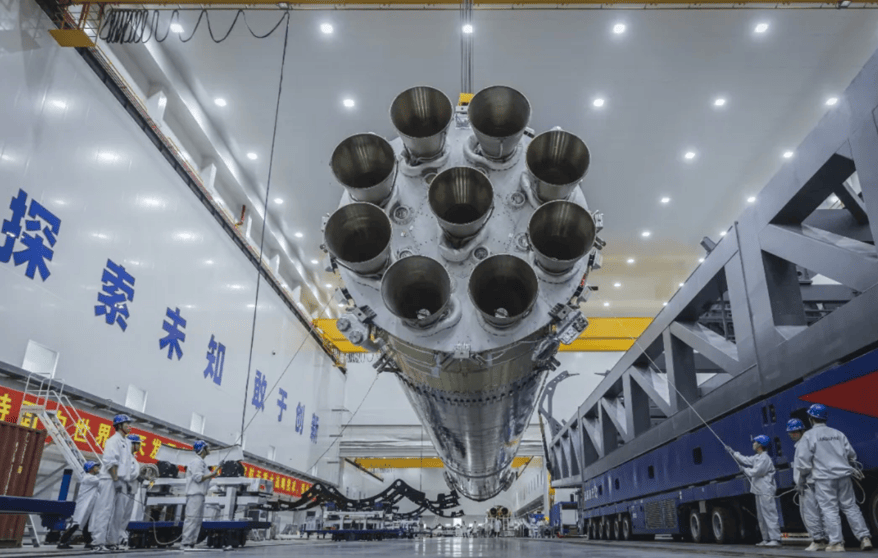
Core Viewpoint - The successful testing of the reusable Zhuque-3 rocket's first stage by Chinese private aerospace company Landspace marks a strategic step for China in catching up with SpaceX's Falcon 9 rocket, with the first flight and recovery planned for November [1] Group 1: Industry Context - Elon Musk acknowledged that excluding SpaceX, China's annual rocket launch numbers far exceed those of the United States, highlighting the limited success of American aerospace companies in producing competitive launch service providers [3] - The American aerospace industry has largely been dominated by SpaceX, with other companies like Blue Origin and United Launch Alliance struggling to achieve significant advancements, particularly in reusable technology [3][4] Group 2: Market Opportunities - The global satellite internet market presents significant opportunities, as many countries lack advanced fiber optic networks, making low-orbit satellite internet services valuable [6] - Chinese companies are actively developing two major satellite constellations, Xingwang and Qianfan, to compete in the satellite internet space, with production capacities of over 200 satellites annually for Xingwang and an average of one satellite per day for Qianfan, aiming for 600 satellites by 2026 [7][9] Group 3: Cost and Operational Efficiency - The significance of reusable rockets lies in their ability to drastically reduce launch costs, as demonstrated by SpaceX's Falcon 9, which lowered the cost per launch from $67 million to $28 million [9] - Achieving reusable rocket technology could lead to a dramatic decrease in China's launch service prices, facilitating rapid deployment of satellite constellations and providing competitive pricing for domestic and international clients [9] Group 4: Future Prospects - The potential for achieving flight-like operations in the rocket industry could be accelerated if multiple commercial rocket companies succeed in reusable technology, potentially allowing China to realize its goal of regularized launches by 2030 instead of 2045 [10][12] - This advancement would enable China's satellite constellations to compete effectively with SpaceX's Starlink and position China as a leading provider of aerospace services globally [12]