航空+

Search documents
我国成为全球第一航空人口大国 民航业上市公司以多元化服务“护航”
Shang Hai Zheng Quan Bao· 2026-01-08 16:49
Core Insights - China's aviation population has surpassed 500 million, making it the world's largest aviation population country, with fixed asset investment in civil aviation reaching 630 billion yuan during the 14th Five-Year Plan period [1] - The growth in aviation population is supported by the steady expansion of the aviation industry's transport scale and accelerated infrastructure development, alongside measures to boost domestic demand and consumption [1] Group 1: Industry Growth and Performance - In 2025, China's civil aviation industry achieved a total transport turnover of 1,640.8 billion ton-kilometers and a passenger transport volume of 770 million, representing year-on-year growth of 10.5% and 5.5% respectively [2] - The international flight recovery reached over 90% of 2019 levels, with international passenger transport volume increasing by 21.6% year-on-year [2] - The civil aviation industry aims to achieve a transport turnover of 1,750 billion ton-kilometers and a passenger transport volume of 810 million in 2026, driven by macroeconomic development and policies to expand domestic demand [2] Group 2: Capacity and Operational Efficiency - The passenger load factor in 2025 reached 85.1%, an increase of 1.8 percentage points year-on-year, indicating a strong recovery in the passenger market [3] - Analysts predict that the load factor will continue to rise in 2026, suggesting potential for high price elasticity due to elevated load factors [3] - In 2025, the civil aviation industry reported a profit of 6.5 billion yuan, reflecting improved operational efficiency [4] Group 3: Route Expansion and Fleet Development - In 2025, significant route expansions were noted, including the resumption of regular flights between China and India and the launch of the longest single-route flight from Shanghai to Buenos Aires [4] - Airlines are actively opening new routes and increasing flight frequencies to enhance travel convenience, with Spring Airlines planning to open and restore several international and domestic routes in 2026 [4] - Major airlines have announced plans to purchase a total of 118 Airbus A320 aircraft, with a catalog price exceeding 18.1 billion USD, scheduled for delivery starting in 2028 [6] Group 4: Innovative Service Models - Airlines are exploring "Aviation+" business models, integrating services such as travel, culture, and education to enhance customer experience and stimulate consumption [7] - China Eastern Airlines plans to invest over 100 million yuan in aviation consumption vouchers in 2026 to promote travel and tourism consumption [7] - The average flight distance for domestic routes increased to 1,262 kilometers in 2025, indicating a shift towards longer-distance travel and a focus on underdeveloped markets [7][8] Group 5: Market Trends and Consumer Behavior - The demand for long-distance international routes is growing faster than domestic routes, indicating a structural improvement in overall aviation demand [8] - Airlines are leveraging local tourism resources to create unique travel experiences, contributing to local economic growth [8] - The recovery in business travel sentiment is expected to further drive aviation demand, supported by enhanced service quality and expanded consumer bases [8]




中国东方航空 “三飞”连接各大洲 新思路促新发展
Ren Min Ri Bao· 2025-12-10 22:05
Core Viewpoint - China Eastern Airlines (CEA) has successfully launched the world's longest one-way route from Shanghai to Buenos Aires via Auckland, marking a significant expansion in its international network and enhancing its global connectivity [2][3]. Group 1: International Route Expansion - CEA has opened 24 new international routes in 2025, achieving 108.2% of its international and regional flight transport volume compared to 2019 [3]. - The airline's global route network now covers 40 countries and regions, with 245 cities and 255 destinations, including 83 international and 6 regional points [3][4]. - CEA has significantly increased flight frequencies to key markets in Europe, the Middle East, and Oceania, with flight volumes to the Middle East reaching 332.6% and to Europe 177.3% of 2019 levels [4]. Group 2: Domestic Route Optimization - CEA is optimizing its domestic route network, focusing on key economic regions such as the Beijing-Tianjin-Hebei, Yangtze River Delta, and Guangdong-Hong Kong-Macau Greater Bay Area [5]. - The airline has established new branches in Northeast China and Xinjiang, expanding its route network and enhancing its service capabilities [5]. Group 3: Domestic Aircraft Development - CEA has commenced regular commercial flights with the domestically produced C919 aircraft, marking a milestone in China's aviation industry [6][7]. - The airline has successfully operated 15 routes with the C919, achieving over 43,000 flight hours and transporting more than 2.45 million passengers with an average load factor exceeding 85% [7][8]. Group 4: Integrated Service Innovations - CEA has launched various service innovations, including pet-friendly flights, upgraded in-flight WiFi, and integrated travel products combining air and cruise services [9][10]. - The airline has developed a comprehensive transportation network, including intermodal services that connect air travel with high-speed rail and bus services, enhancing passenger convenience [10][11]. Group 5: Cultural and Economic Contributions - CEA has partnered with cultural institutions to promote tourism and cultural events, significantly boosting local economies and consumer spending [9][11]. - The airline's initiatives in cultural tourism and integrated services aim to create a vibrant "aviation ecosystem," contributing to the broader economic development [11].


领跑行业,今夏境外航点达86处:东航赋能上海国际航空枢纽建设
Zhong Guo Min Hang Wang· 2025-08-12 04:16
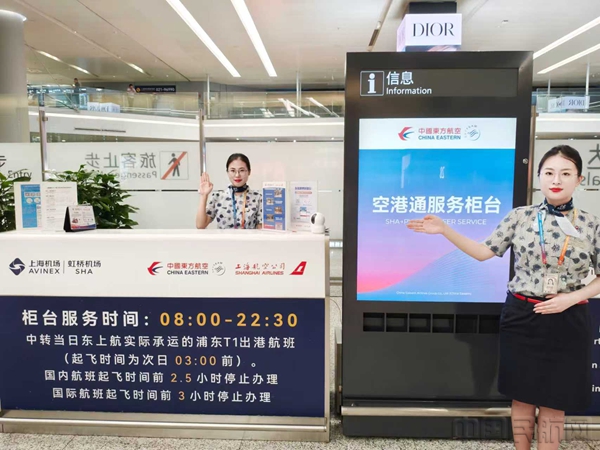
Core Insights - The article highlights the robust growth of passenger traffic during the summer travel season, driven by China Eastern Airlines' active participation and strategic initiatives to enhance travel experiences and support the development of Shanghai as an international aviation hub [1] Group 1: Network Expansion - China Eastern Airlines has expanded its international route network significantly, launching new direct flights from Shanghai to cities such as Milan, Geneva, Copenhagen, and Kumamoto, while also increasing domestic connections to Europe, the Middle East, and Central Asia [2] - As of July this year, the airline's international and regional route network covers over 37 countries and 86 international destinations, with a total of 225 international routes, making it the airline with the most international destinations and the highest international transport turnover in China [2] - The airline has established major transit corridors through its hub in Shanghai, facilitating connections between Asia and Europe, Australia, and Southeast Asia, thereby reinforcing Shanghai's position as the largest passenger transport hub in China [2] Group 2: Hub Efficiency - Enhancements in hub efficiency at Shanghai Pudong International Airport include 24-hour check-in services and the introduction of the "Overnight Transfer" project, allowing passengers to check in and transfer seamlessly between domestic and international flights [5][6] - The "Airport Link" service enables quick transfers between Hongqiao and Pudong airports, allowing passengers to check in and handle luggage at their departure point without needing to retrieve it upon arrival [5] - The airline's international transfer passenger volume at Pudong Airport is projected to account for 78% of the airport's total transfer volume in 2024, with significant year-on-year growth in transfer passenger numbers [6] Group 3: "Aviation+" Ecosystem - China Eastern Airlines is actively exploring the "Aviation+" concept, collaborating with cultural institutions and global brands to enhance travel experiences, such as the "Sky Museum" initiative and partnerships with Starbucks China [8][9] - The airline has launched various promotional activities during the "Shanghai Summer" international consumption season, distributing over 1 million discounted tickets and other travel incentives to attract domestic and international tourists [9] - The ongoing development of the "Aviation+" ecosystem aims to integrate various sectors, including culture, sports, and tourism, to create a more comprehensive travel experience and support the high-quality development of Shanghai's international hub [9]