空客A320系列飞机

Search documents
空中客车2025年收入同比增长6%至734亿欧元
Cai Jing Wang· 2026-02-24 03:38
Core Insights - Airbus reported a 6% year-over-year revenue growth for 2025, reaching €73.4 billion [1] - Adjusted EBIT amounted to €7.1 billion, while reported EBIT was €6.1 billion [1] - Earnings per share (EPS) for the reporting period stood at €6.61 [1] Delivery and Revenue Breakdown - A total of 793 commercial aircraft were delivered during the reporting period, including 93 A220s, 607 A320 family aircraft, 36 A330s, and 57 A350s [1] - Revenue from the commercial aircraft segment increased by 4%, totaling €52.6 billion [1]

最“抠”的春秋航空,凭什么这么赚钱?
商业洞察· 2026-02-19 09:22
Core Viewpoint - Spring Airlines, despite being perceived as "stingy," has achieved significant profitability through extreme cost control and a focus on providing the best value for money in the airline industry [7][13]. Group 1: Profitability and Performance - In 2024, among seven listed airlines in A-shares, only Spring Airlines, along with Huaxia Airlines and Juneyao Airlines, reported profits, with Spring Airlines leading at a net profit of 2.273 billion yuan [8]. - For the first quarter of 2025, Spring Airlines maintained its position as the most profitable airline with a net profit of 677 million yuan [9]. - Spring Airlines achieved an average passenger load factor of 91.5% in 2024, surpassing the industry average of 83.5% by 8 percentage points [35]. Group 2: Cost Control Strategies - The core strategy of Spring Airlines revolves around extreme cost control, encapsulated in the "two singles, two highs, two lows" model [19]. - The "two singles" refer to a single aircraft type (Airbus A320) and a single cabin class (economy), which reduces procurement and training costs significantly [20][21]. - The "two lows" indicate low sales and management expenses, with 98.4% of tickets sold through its own platforms, saving over 200 million yuan annually in commissions [24][25]. Group 3: Operational Efficiency - Spring Airlines maximizes aircraft utilization, achieving 6-8 flights per day compared to the industry standard of 4-5 [33]. - The airline's operational efficiency is further enhanced by a low staff-to-aircraft ratio of 80.8:1, the lowest in the domestic market [26]. Group 4: Revenue Generation Model - Spring Airlines employs an innovative revenue model that separates the base fare from ancillary services, allowing customers to choose additional paid services [38]. - In 2024, ancillary revenue reached 1.03 billion yuan, a 14% increase year-on-year, accounting for 5.15% of total revenue [41]. - This model caters to both budget-conscious travelers and those willing to pay for enhanced services, creating a win-win situation [44]. Group 5: Future of Low-Cost Airlines - The article suggests that the future of China's civil aviation may lean towards low-cost models, as the current market share of low-cost airlines is only 12.7%, compared to over 30% globally [53]. - The industry is expected to see a bifurcation, with low-cost airlines like Spring Airlines targeting mass market needs while traditional carriers focus on premium services [58].



成都航空获超13亿“燃油包” 商飞仍稳坐第一大股东
Xin Jing Bao· 2026-02-11 13:33
Core Insights - Chengdu Airlines Co., Ltd. has recently undergone a business change, increasing its registered capital from 680 million yuan to 2 billion yuan, representing an increase of approximately 194% [1][2] Company Overview - Chengdu Airlines was established in June 2004, with Tang Jin as the legal representative. The company's business scope includes public air transportation, civil aircraft maintenance, food sales, internet food sales, import and export of goods, aviation business services, software development, and information technology consulting services [1][2] Shareholder Information - The company is jointly held by three shareholders: Commercial Aircraft Corporation of China, Sichuan Airlines Group, and Chengdu Transportation Investment Aviation Group. The recent capital increase of 1.32 billion yuan was contributed by these three shareholders [1][2] - After the capital increase, Commercial Aircraft Corporation of China remains the largest shareholder of Chengdu Airlines, holding a 48% stake, with the actual controller being the State-owned Assets Supervision and Administration Commission of the State Council [1][2] Fleet Information - As the first operator of the domestically produced C909 aircraft, Chengdu Airlines is expected to have a fleet size of 81 aircraft by December 2024, which includes 30 C909 aircraft and 51 Airbus A320 series aircraft [1][2]
成都航空获超13亿“燃油包”,商飞仍稳坐第一大股东
Bei Ke Cai Jing· 2026-02-11 13:21
Core Viewpoint - Chengdu Airlines has significantly increased its registered capital from 680 million to 2 billion yuan, marking an increase of approximately 194% [1][2]. Group 1: Company Overview - Chengdu Airlines was established in June 2004 and is involved in various operations including public air transport, civil aircraft maintenance, food sales, and software development [1]. - The company is jointly owned by China Commercial Aircraft Corporation, Sichuan Airlines Group, and Chengdu Transportation Investment Group [1][2]. Group 2: Capital Increase - The recent capital increase of 1.32 billion yuan was contributed by the three shareholders: China Commercial Aircraft, Sichuan Airlines Group, and Chengdu Transportation Investment Group [2]. - Following the capital increase, China Commercial Aircraft remains the largest shareholder with a 48% stake, under the control of the State-owned Assets Supervision and Administration Commission [2]. Group 3: Fleet Expansion - Chengdu Airlines is set to operate a fleet of 81 aircraft by December 2024, which includes 30 C909 aircraft and 51 Airbus A320 series aircraft [3].
普惠多措应对GTF发动机问题
Xin Lang Cai Jing· 2026-01-23 04:26
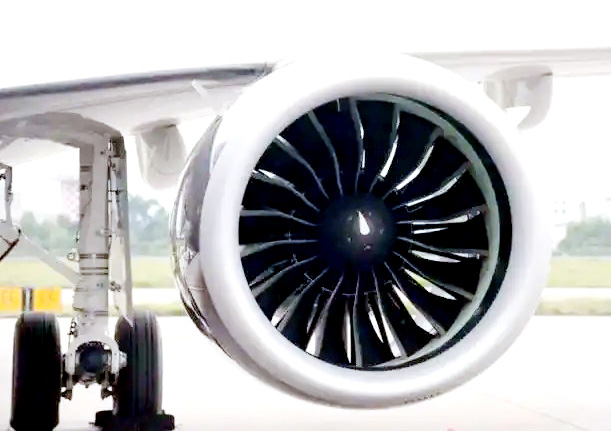
Core Insights - The recent durability issues with the Pratt & Whitney GTF engine have led to significant fluctuations in aircraft ground time, drawing attention within the aviation industry [2] - The ground time issues are attributed to engine failures and maintenance turnaround, contrasting sharply with the stable performance of competing engines, indicating a clear industry divergence [2] Summary by Category Engine Performance - In 2023, Pratt & Whitney disclosed defects in the high-pressure turbine blades of the GTF engine, necessitating inspections of 600 units, which has forced several airlines to ground some aircraft due to a shortage of backup planes [2] - The Airbus A320 series has been the most severely affected, with ground rates soaring above 40% in early 2024, followed by a decline in summer and a rebound by the end of the year, with projections suggesting a return to over 30% by the end of 2025 [2] - The ground rates for the Airbus A220 and Embraer E2 series are approximately 25%, while the industry benchmark CFM56 narrowbody fleet is projected to have a ground rate of 21% by December 2025, and its successor, the Leap series, is performing well with a stable ground rate of around 12% [2] Company Response - The parent company of Pratt & Whitney is advancing the implementation of enhanced kits for high-temperature components and promoting an upgraded version of the engine set for 2026 to alleviate operational pressures [2]

我国成为全球第一航空人口大国 民航业上市公司以多元化服务“护航”
Shang Hai Zheng Quan Bao· 2026-01-08 16:49
Core Insights - China's aviation population has surpassed 500 million, making it the world's largest aviation population country, with fixed asset investment in civil aviation reaching 630 billion yuan during the 14th Five-Year Plan period [1] - The growth in aviation population is supported by the steady expansion of the aviation industry's transport scale and accelerated infrastructure development, alongside measures to boost domestic demand and consumption [1] Group 1: Industry Growth and Performance - In 2025, China's civil aviation industry achieved a total transport turnover of 1,640.8 billion ton-kilometers and a passenger transport volume of 770 million, representing year-on-year growth of 10.5% and 5.5% respectively [2] - The international flight recovery reached over 90% of 2019 levels, with international passenger transport volume increasing by 21.6% year-on-year [2] - The civil aviation industry aims to achieve a transport turnover of 1,750 billion ton-kilometers and a passenger transport volume of 810 million in 2026, driven by macroeconomic development and policies to expand domestic demand [2] Group 2: Capacity and Operational Efficiency - The passenger load factor in 2025 reached 85.1%, an increase of 1.8 percentage points year-on-year, indicating a strong recovery in the passenger market [3] - Analysts predict that the load factor will continue to rise in 2026, suggesting potential for high price elasticity due to elevated load factors [3] - In 2025, the civil aviation industry reported a profit of 6.5 billion yuan, reflecting improved operational efficiency [4] Group 3: Route Expansion and Fleet Development - In 2025, significant route expansions were noted, including the resumption of regular flights between China and India and the launch of the longest single-route flight from Shanghai to Buenos Aires [4] - Airlines are actively opening new routes and increasing flight frequencies to enhance travel convenience, with Spring Airlines planning to open and restore several international and domestic routes in 2026 [4] - Major airlines have announced plans to purchase a total of 118 Airbus A320 aircraft, with a catalog price exceeding 18.1 billion USD, scheduled for delivery starting in 2028 [6] Group 4: Innovative Service Models - Airlines are exploring "Aviation+" business models, integrating services such as travel, culture, and education to enhance customer experience and stimulate consumption [7] - China Eastern Airlines plans to invest over 100 million yuan in aviation consumption vouchers in 2026 to promote travel and tourism consumption [7] - The average flight distance for domestic routes increased to 1,262 kilometers in 2025, indicating a shift towards longer-distance travel and a focus on underdeveloped markets [7][8] Group 5: Market Trends and Consumer Behavior - The demand for long-distance international routes is growing faster than domestic routes, indicating a structural improvement in overall aviation demand [8] - Airlines are leveraging local tourism resources to create unique travel experiences, contributing to local economic growth [8] - The recovery in business travel sentiment is expected to further drive aviation demand, supported by enhanced service quality and expanded consumer bases [8]



中信证券:汇率升值传导利润端 再次强调“重视航司盈利拐点”
Zhi Tong Cai Jing· 2026-01-05 01:42
Core Insights - The report from CITIC Securities indicates a significant increase in cross-regional passenger flow during the New Year's holiday, with a year-on-year growth of 16.3% in daily average passenger flow [1][2] - The aviation sector is expected to see a turning point in profitability due to high demand and limited supply, leading to a potential increase in average ticket prices during the holiday [3][4] Passenger Flow Statistics - Daily average passenger flow for civil aviation, railways, highways, and non-commercial vehicles increased by 8.4%, 42.0%, and 14.2% respectively during the first two days of the New Year holiday [2][5] - The total daily average cross-regional passenger flow reached 19.6087 million, with civil aviation achieving a daily average of 1.901 million passengers, marking a 9.9% increase compared to the same period in 2024 [2][3] Demand Drivers - The increase in passenger flow is attributed to the three-day holiday and the "3 days off, 8 days off" policy, which stimulated travel demand [2][5] - Popular travel destinations, such as Harbin and Sanya, saw significant growth in flight bookings, with increases of 18% to 52% for various routes [2][3] Airline Capacity and Pricing - The growth in passenger volume outpaced the increase in flight numbers, which only grew by 2.0%, indicating a tightening supply situation [3][4] - The average ticket price for the holiday is expected to turn positive year-on-year due to high demand and industry price discipline [3][4] New Aircraft Orders - Three airlines, including Air China and Spring Airlines, announced the purchase of 115 Airbus A320 aircraft, with a total value of approximately $17.76 billion, expected to be delivered between 2028 and 2032 [4] - The impact of these new orders on capacity during the 14th Five-Year Plan period is expected to be limited due to various factors affecting delivery timelines [4] Cash Flow and Dividend Appeal - The increase in passenger flow during the holiday is expected to stabilize cash flow for transportation companies, making high-dividend stocks more attractive, with dividend yields returning to around 4.5% [5][6]

四航企与空客签1270亿购机合同 中国国航拟添60架新机扩大运力
Chang Jiang Shang Bao· 2026-01-05 00:18
Core Viewpoint - The recent announcements from multiple Chinese airlines regarding the purchase of A320 series aircraft indicate a strong recovery in the civil aviation industry, reflecting confidence in future market prospects and a willingness to invest in fleet expansion and optimization [9]. Group 1: Aircraft Purchases - China National Airlines (Air China) has signed an agreement with Airbus to purchase 60 A320NEO aircraft for approximately $9.53 billion (about 66.6 billion RMB), with deliveries scheduled between 2028 and 2032 [2][3]. - Other airlines, including Juneyao Airlines, Spring Airlines, and Huaxia Airlines, have also announced purchases of 25, 30, and 3 A320 series aircraft, respectively, totaling 118 aircraft with a combined value of approximately 127 billion RMB [2][9]. - The A320 series is noted as one of the best-selling aircraft models globally and the most widely used single-aisle aircraft in China [3]. Group 2: Financial Performance - For the first three quarters of 2025, Air China reported a revenue of 129.83 billion RMB, a year-on-year increase of 1.31%, and a net profit of 1.87 billion RMB, up 37.31% [5]. - The company has indicated that the recent increase in revenue is attributed to improved cost control measures [6]. - Air China plans to raise up to 20 billion RMB through a targeted A-share issuance to repay debts and improve liquidity, addressing its high debt-to-asset ratio, which stood at 87.88% as of September 2025 [6]. Group 3: Market Outlook - The collective aircraft purchases by multiple airlines are seen as a significant signal of the civil aviation industry's recovery, suggesting that airlines believe they have moved past challenging times and are entering a new growth phase [9]. - The planned acquisitions are expected to enhance the operational capacity of these airlines, supporting their strategic goals, including international expansion [7].

元旦出行供需两旺,关注油运淡季运价支撑和布局节奏
GOLDEN SUN SECURITIES· 2026-01-04 09:58
Investment Rating - The report maintains an "Accumulate" rating for the transportation industry [5] Core Views - The domestic flight ticket bookings for the New Year period in 2026 exceeded 3.83 million, a year-on-year increase of 28%, while international flight bookings surpassed 740,000, up 14% year-on-year, indicating strong demand [1][2] - The report remains optimistic about the long-term outlook for the aviation sector under the themes of "expanding domestic demand" and "anti-involution" [2][12] - In the oil shipping sector, attention is drawn to the support for freight rates during the off-season and the timing of investments, particularly focusing on China Merchants Energy Shipping and COSCO Shipping Energy [3][15] Summary by Sections Weekly Insights and Market Review - The transportation sector index fell by 0.70% during the week of December 29, 2025, to January 2, 2026, underperforming the Shanghai Composite Index by 0.83 percentage points [18] - The best-performing segments were air transportation and warehousing logistics, with increases of 5.14% and 0.41%, respectively [18][19] Travel - The report highlights the strong recovery in air travel demand, with a focus on the low growth rate of capacity supply and the continuous recovery of demand, which is expected to narrow the supply-demand gap [2][12] Shipping and Ports - Oil shipping rates have continued to decline, with VLCC market rates dropping to $34,158 per day as of December 31 [3][13] - The dry bulk shipping indices have also seen a decline, with the BDI index at 1,882 points on January 2, 2026 [14] - The report emphasizes the importance of monitoring the support for freight rates during the off-season and the potential impact of geopolitical developments on shipping logistics [15] Logistics - The report identifies two main investment themes in the express delivery sector: 1. Expansion into overseas markets, with Jitu Express planning significant investments in new market operations [4][16] 2. The impact of anti-involution on the industry, where the growth rate is slowing due to increased competition and rising prices, leading to a concentration of market share among leading companies [4][17]


148架!中国航司年末给空客送大单,运力过剩为何还要买飞机
Di Yi Cai Jing· 2025-12-31 11:45
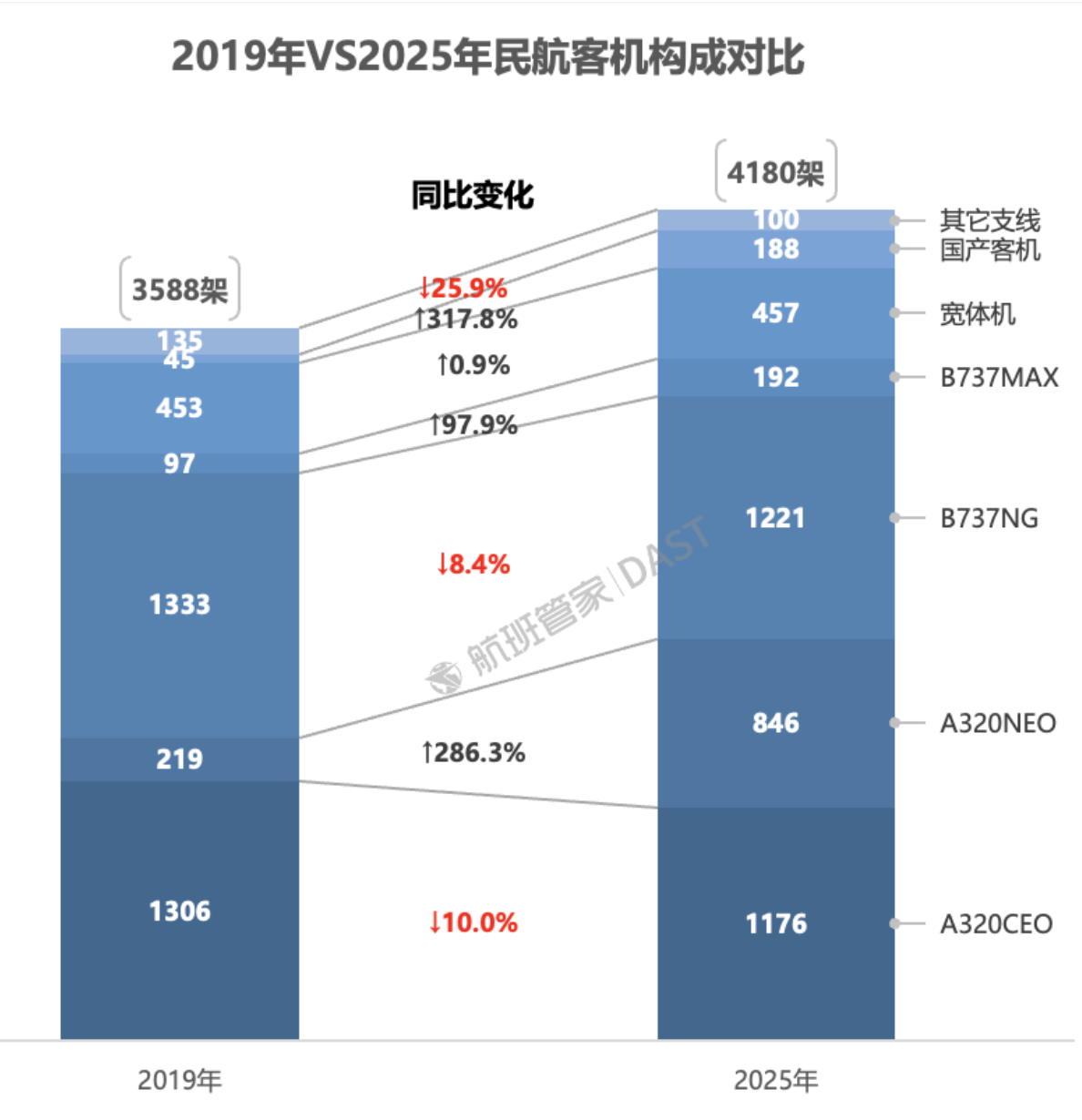
Core Insights - Airbus has secured a significant order for 148 narrow-body aircraft from multiple Chinese airlines, indicating strong demand in the narrow-body segment [1][5]. Group 1: Aircraft Orders - China National Airlines and its subsidiary signed a purchase agreement for 60 Airbus A320neo aircraft, with a total catalog price of approximately $9.53 billion, scheduled for delivery between 2028 and 2032 [2]. - Huaxia Airlines ordered 3 A320 series aircraft, while Spring Airlines and Juneyao Airlines ordered 30 and 25 A320neo aircraft, respectively, with deliveries planned from 2028 to 2032 [3]. - China Aircraft Leasing Company also signed an agreement for 30 A320neo aircraft, with deliveries expected before 2033 [4]. Group 2: Market Dynamics - Airbus's market share in China is projected to exceed Boeing's, reaching 55% by 2025, making China Airbus's largest single-country market for several consecutive years [6]. - The global second-largest aircraft leasing company, Avolon, indicated that models like Boeing 737 MAX and Airbus A320neo are expected to be sold out by 2030, highlighting the demand for these narrow-body aircraft [6]. Group 3: Production Capacity - To meet increasing demand, Airbus is enhancing its production capacity by activating a second A320 assembly line in Tianjin, aiming for a monthly production target of 75 A320 aircraft by 2027 [7]. Group 4: Industry Challenges - The recent aircraft orders may be a strategic move by Chinese airlines to secure aircraft availability and mitigate operational challenges caused by engine issues, which have led to temporary groundings [8]. - Despite a shortage of new aircraft, over 5,000 grounded planes represent a historical high, exacerbated by trade tensions affecting supply chains and increasing maintenance costs [8]. - The domestic market is experiencing a slowdown in fleet growth, with a projected fleet size of 4,180 aircraft by the end of 2025, reflecting a compound annual growth rate of 2.6% since 2019 [8]. Group 5: Aircraft Composition - The narrow-body aircraft segment is seeing a shift, with older models like A320 CEO and B737 NG decreasing by 10% and 8.4%, while new models like A320neo and B737 MAX have surged by 286.3% and 97.9% respectively [9]. - The introduction of wide-body aircraft has stagnated, with only a net increase of 4 aircraft from 2019 to 2025, largely due to slow recovery in international routes [10]. - Domestic airlines are accelerating the retirement of older wide-body aircraft, focusing on acquiring narrow-body models, which explains the recent orders being exclusively for narrow-body aircraft [10].