良知

Search documents
法律人应有三重修为
Xin Lang Cai Jing· 2026-01-15 23:34
Core Viewpoint - The article emphasizes the essential role of legal professionals in advancing the rule of law in China, highlighting the need for high-quality legal teams to support the country's modernization and national rejuvenation efforts [1] Group 1: Role of Legal Professionals - Legal professionals are described as practitioners who operate within the framework of laws and justice, embodying the core values of the rule of law [1] - The article calls for legal professionals to maintain rigorous academic research and solid legal knowledge while also embodying their belief in the rule of law in their daily practices [1] Group 2: Importance of Reading and Thinking - Reading is presented as a fundamental prerequisite for knowledge accumulation and a means to engage with the world, allowing legal professionals to understand complex issues and enhance their perspectives [2] - The article stresses the importance of deep thinking as a bridge between knowledge and action, advocating for a thorough understanding of legal concepts through careful contemplation [2] Group 3: Writing as a Reflection of Thought - Writing is portrayed as a crucial means of crystallizing thoughts and demonstrating professional competence, with an emphasis on precision and clarity in legal discourse [3] - The article highlights the necessity for legal professionals to adhere to three core principles: maintaining a sincere belief in the law, following their conscience, and demonstrating perseverance in legal practice [3] Group 4: Ethical Standards and Professional Integrity - Legal professionals are urged to uphold their conscience as an inviolable boundary, ensuring objectivity and fairness in complex cases while resisting temptations of personal gain [4][5] - The article emphasizes that maintaining ethical standards is vital for ensuring that legal practices resonate with the spirit of the law [5] Group 5: Practical Application of Legal Knowledge - The article advocates for legal professionals to engage actively in practical applications of the law, emphasizing the importance of meticulous case handling and clear communication of legal principles to the public [5]
周月亮:真理是“良知”在敞开状态下的涌现
Xin Lang Cai Jing· 2025-12-07 01:05
Core Insights - The conference emphasizes the transformation of entrepreneurs into cultural entrepreneurs, focusing on producing not just material products but also intellectual and cultural products [3][22][25] - The concept of "first principles" is highlighted as a return to inherent goodness and truth, suggesting that true innovation emerges from understanding the essence of things [20][27][33] - The importance of human consciousness as a driving force for innovation in the AI era is stressed, indicating that without innovation, humanity lacks meaning [22][33] Group 1 - Entrepreneurs are encouraged to elevate their roles by integrating cultural dimensions into their businesses, thus transitioning from mere producers to educators [3][25] - The discussion categorizes AI into three schools of thought: "taming," "rule-setting," and "emergent," with the latter being the most optimistic and aligned with natural laws [24] - The role of entrepreneurs as societal contributors is emphasized, with examples illustrating how they can transform scientific discoveries into lifestyle changes [24][25] Group 2 - The notion of "cultural entrepreneurs" is derived from the work of Nobel laureate Mokyr, distinguishing between "growth culture" and "cultural growth" [24][25] - The conference highlights the necessity for entrepreneurs to possess original thoughts and ideas, especially in an age where AI can store vast amounts of knowledge [25][26] - The concept of "goodness" is presented as an innate quality within everyone, which can be obscured but is essential for true understanding and action [26][28] Group 3 - The idea of "creative door" is introduced, suggesting that entrepreneurs should adopt a mindset focused on creation and cultural enhancement [27][28] - The discussion includes the philosophical perspective that true knowledge and action are intertwined, advocating for a return to fundamental principles of goodness [26][27] - The importance of emotional intelligence and empathy in entrepreneurship is highlighted, linking it to the ability to innovate and connect with others [30][31]


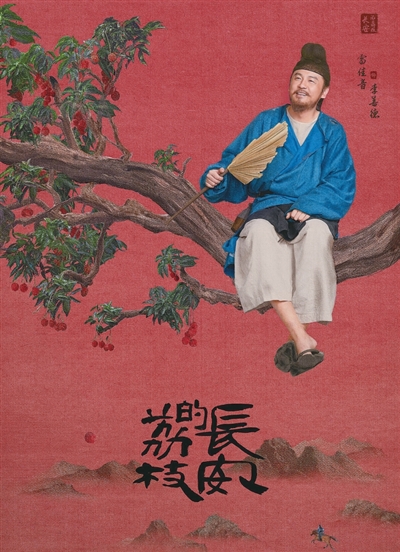
良知是李善德的通关法宝
Ren Min Ri Bao· 2025-06-18 21:53
Core Viewpoint - The narrative of "Longan's Lychee" revolves around the character Li Shande, who embodies the struggle of an ordinary person facing an impossible task, highlighting themes of perseverance and moral integrity in the face of adversity [1][3]. Group 1: Character Analysis - Li Shande is depicted as a "logistics officer of the Tang Dynasty," tasked with transporting lychees from Lingnan to Chang'an, a seemingly impossible mission that he approaches with a sense of faith and determination [1]. - The character's journey reflects a transformation from a predetermined life path to one filled with unexpected challenges, showcasing his resilience and commitment to his beliefs [1][3]. - Li Shande's background in mathematics and his passion for gardening illustrate the blend of professional skills and personal interests, which he utilizes to navigate his challenges [1]. Group 2: Themes and Messages - The story emphasizes that true success is not measured by fame or wealth, but by maintaining one's conscience and integrity throughout struggles [3]. - Li Shande's repeated encounters with despair and his refusal to give up serve as a testament to the human spirit's capacity to endure and take responsibility, even when faced with overwhelming odds [3]. - The narrative ultimately conveys a message about the importance of personal values and the strength derived from adhering to one's principles, even in the face of adversity [3].