文化企业家

Search documents
文化繁荣如何带来经济持续增长:2025年诺贝尔经济学奖的启示
Xin Jing Bao· 2026-01-28 05:40
Core Insights - The article discusses the cultural transformation that enabled sustained economic growth in Europe since the 18th century, as articulated by Joel Mokyr, the 2025 Nobel Prize winner in Economics [1][6][31] - Mokyr's work emphasizes the importance of "useful knowledge" and cultural evolution in shaping economic systems and technological paths, rather than merely focusing on institutional or geographical factors [4][31] Group 1: Cultural Evolution and Economic Growth - Mokyr argues that the key to modern economic growth lies in a "growth-friendly culture" that emerged in Europe between the 16th and 18th centuries, characterized by a belief in controlling nature, valuing empirical evidence, and promoting open communication among intellectuals [3][4][31] - The concept of "cultural entrepreneurs" is introduced, highlighting figures like Francis Bacon and Isaac Newton, who reshaped societal attitudes towards knowledge and innovation [15][18] Group 2: Knowledge Structures - Mokyr distinguishes between propositional knowledge (understanding why) and prescriptive knowledge (knowing how), asserting that the interaction between these two forms of knowledge is crucial for technological advancement [10][12][31] - The article notes that the scientific revolution in the early modern period led to a systematic approach to knowledge accumulation, allowing for continuous innovation rather than sporadic advancements [11][12] Group 3: The Role of Institutions and Competition - Mokyr emphasizes that the political fragmentation of early modern Europe fostered a competitive "market of ideas," which encouraged innovation and the dissemination of new knowledge [18][19] - The concept of a "republic of letters" is introduced, where intellectuals could freely exchange ideas, contributing to a culture of knowledge sharing and collaboration [19][22] Group 4: Industrial Enlightenment - The article discusses the "Industrial Enlightenment," which connects the application of systematic knowledge to practical improvements in production processes and living standards [23][24] - Mokyr highlights the rise of "philosophical engineers," who combined theoretical knowledge with practical skills, thus enhancing the precision and effectiveness of industrial practices [26][27] Group 5: Comparative Analysis with China - Mokyr contrasts the cultural and institutional environments of Europe and ancient China, suggesting that China's centralized governance stifled innovation and the exploration of new ideas, which hindered its industrial development [28][29][30] - The article critiques the Chinese examination system for promoting rote learning over innovative thinking, which limited the integration of practical and theoretical knowledge [29][30] Group 6: Implications for Modern Economic Growth - Mokyr's insights suggest that fostering a culture that values knowledge, encourages innovation, and supports the integration of theory and practice is essential for sustained economic growth [31][32] - The article concludes that understanding the historical context of knowledge production and dissemination can inform contemporary policies aimed at enhancing innovation and economic development [41][42]

周月亮:真理是“良知”在敞开状态下的涌现
Xin Lang Cai Jing· 2025-12-07 01:05
Core Insights - The conference emphasizes the transformation of entrepreneurs into cultural entrepreneurs, focusing on producing not just material products but also intellectual and cultural products [3][22][25] - The concept of "first principles" is highlighted as a return to inherent goodness and truth, suggesting that true innovation emerges from understanding the essence of things [20][27][33] - The importance of human consciousness as a driving force for innovation in the AI era is stressed, indicating that without innovation, humanity lacks meaning [22][33] Group 1 - Entrepreneurs are encouraged to elevate their roles by integrating cultural dimensions into their businesses, thus transitioning from mere producers to educators [3][25] - The discussion categorizes AI into three schools of thought: "taming," "rule-setting," and "emergent," with the latter being the most optimistic and aligned with natural laws [24] - The role of entrepreneurs as societal contributors is emphasized, with examples illustrating how they can transform scientific discoveries into lifestyle changes [24][25] Group 2 - The notion of "cultural entrepreneurs" is derived from the work of Nobel laureate Mokyr, distinguishing between "growth culture" and "cultural growth" [24][25] - The conference highlights the necessity for entrepreneurs to possess original thoughts and ideas, especially in an age where AI can store vast amounts of knowledge [25][26] - The concept of "goodness" is presented as an innate quality within everyone, which can be obscured but is essential for true understanding and action [26][28] Group 3 - The idea of "creative door" is introduced, suggesting that entrepreneurs should adopt a mindset focused on creation and cultural enhancement [27][28] - The discussion includes the philosophical perspective that true knowledge and action are intertwined, advocating for a return to fundamental principles of goodness [26][27] - The importance of emotional intelligence and empathy in entrepreneurship is highlighted, linking it to the ability to innovate and connect with others [30][31]
2025年诺贝尔经济学奖得主乔尔·莫基尔,论培根和世界经济史
Xin Jing Bao· 2025-10-14 12:19
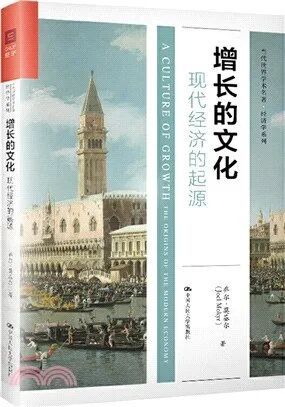
Group 1 - The 2025 Nobel Prize in Economic Sciences was awarded to Joel Mokyr, Philippe Aghion, and Peter Howitt for their contributions to the understanding of "innovation-driven economic growth" [1] - The prize amount for this year is 11 million Swedish Krona, with half awarded to Joel Mokyr and the other half shared between Philippe Aghion and Peter Howitt [1] Group 2 - Joel Mokyr, born in 1946 in Leiden, Netherlands, is a professor of economics and history at Northwestern University and has a PhD from Yale University [3] - Mokyr's work emphasizes the relationship between economic history and institutional economics, particularly in his book "The Culture of Growth: The Origins of Modern Economy," which discusses the impact of experimental science on the Industrial Revolution and economic history [3][5] Group 3 - The concept of knowledge integration in science and technology, as proposed by Francis Bacon, is highlighted as a foundation for economic progress in the 18th century [5][6] - Bacon's ideas about the importance of practical knowledge and the role of craftsmen in technological advancement are noted as significant influences on the development of modern economic thought [30][32]