艺术收藏

Search documents
平均220万美元!中国内地高净值人群艺术收藏支出连续居首
第一财经· 2025-11-13 10:00
Core Insights - Despite increasing global economic uncertainty, high-net-worth individuals are continuing to invest in art, with a projected increase in wealth allocation to 20% by 2025, up from 15% in 2024 [2] Group 1: Investment Trends - Ultra-high-net-worth individuals with assets exceeding $50 million have an average art asset allocation of 28% [4] - Gen Z collectors are leading trends in new categories such as luxury bags and sneakers, with their average spending on sneakers being nearly five times that of other groups [4] - Millennials are spending more in decorative arts, design, and jewelry, indicating a cross-category investment trend among younger collectors [4] Group 2: Chinese Market Insights - The proportion of ultra-high-net-worth individuals surveyed in mainland China is the highest at 44%, with an average wealth of $27.4 million, ranking first among the top ten markets [5] - Chinese collectors lead global spending in pure art, decorative arts, and antiques, with an average expenditure of $2.2 million, significantly higher than the median of $650,000 in other regions [5] - High-net-worth female collectors in mainland China are spending more than their male counterparts, with their average expenditure being over twice that of men, contributing to a more innovative and diverse art market [6]


平均220万美元!中国内地高净值人群艺术收藏支出连续居首
Di Yi Cai Jing· 2025-11-13 08:59
Core Insights - The report indicates that high-net-worth individuals are increasingly allocating their wealth to the art sector, with a projected increase from 15% in 2024 to 20% in 2025 [1] - The trend is particularly pronounced among ultra-high-net-worth individuals and the younger generation, specifically Generation Z, who are leading in new categories of collectibles [4] Group 1: Investment Trends - Ultra-high-net-worth individuals with assets over $50 million have an average art asset allocation of 28% [4] - Generation Z collectors have an art asset allocation of 26%, showing a strong interest in luxury items such as designer bags and sneakers, with their average spending on sneakers being nearly five times that of other groups [4] Group 2: Market Dynamics in China - The report highlights that 44% of respondents from mainland China are ultra-high-net-worth individuals, with an average wealth of $27.4 million, the highest among the surveyed markets [5] - Chinese high-net-worth individuals lead global spending in pure art, decorative art, and antiques, with an average expenditure of $2.2 million, significantly higher than other regions [5] - Female collectors in mainland China are spending more than twice as much as their male counterparts on art and antiques, contributing to a more inclusive and diverse art market [5]
身家7000亿,沃尔玛公主成为全球第一富婆:不上班、没小孩、只消费
Sou Hu Cai Jing· 2025-09-02 04:05
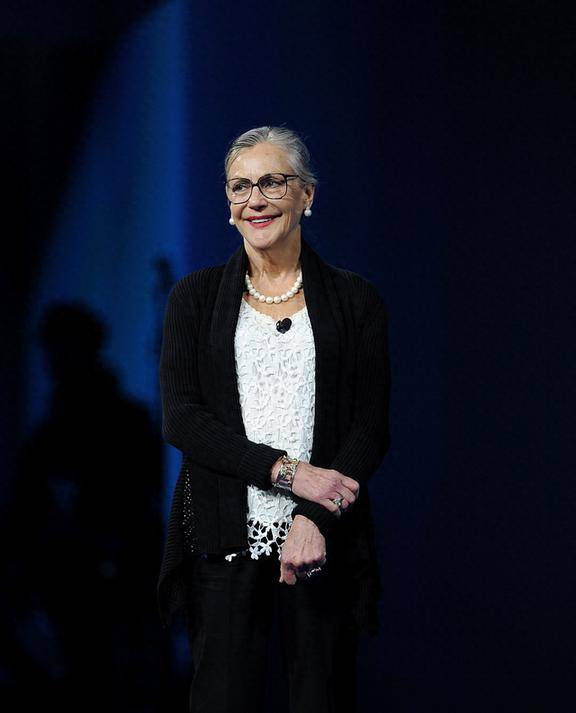
Core Points - Alice Walton, the world's richest woman, has established the Alice L. Walton Medical School, which recently welcomed its first cohort of 48 students, with tuition fees waived for the first five years [2][4][18] - The medical school aims to integrate arts and humanities into traditional medical education, promoting a more holistic approach to medical training [4][20] - The school is designed with a focus on nature and well-being, featuring extensive greenery and thoughtful architectural elements [10][12][16] Summary by Sections Medical School Overview - The Alice L. Walton Medical School (AWSOM) was funded by Alice Walton, who has a net worth of $101 billion [4] - The school is located in Arkansas and emphasizes a unique educational model that combines medical training with arts and humanities [4][20] Architectural and Environmental Design - The medical school spans 14,000 square meters and features a glass facade that reflects the surrounding nature, creating a visually appealing environment [6][8] - The campus includes over 550 trees and 140,000 local plants, designed to promote student well-being and reduce stress [10] Educational Philosophy - The school adopts a "whole person education" approach, focusing on self-care, preventive medicine, and community service [22][24] - Alice Walton's vision is to cultivate well-rounded physicians who are not only skilled but also committed to serving their communities [18][24] Financial Model - Walton has committed to covering the tuition for the first five graduating classes, viewing it as an investment in future healthcare providers [18][20] - The school will only admit 48 students annually, ensuring a focused and personalized educational experience [20] Personal Background of Alice Walton - Alice Walton's motivation for establishing the medical school stems from her personal experiences with healthcare and a desire to improve medical access in underserved areas [26][28] - Despite her wealth, Walton maintains a low profile and is known for her philanthropic efforts, including the establishment of an art museum that is free to the public [40][46]
看展女孩消失在朋友圈
Hu Xiu· 2025-08-18 06:01
Core Insights - The article discusses the decline of the "art exhibition girl" phenomenon, highlighting a shift in cultural values among younger generations who prioritize financial independence and practicality over artistic pursuits [1][9][10]. Group 1: Changing Trends in Art Exhibitions - Traditional art exhibitions are losing popularity, with galleries and museums closing down, while low-cost, trendy exhibitions like immersive light shows and brand collaborations are gaining traction [2][19]. - The social media appeal of art exhibitions has diminished, leading to a decline in attendance and interest among younger audiences [13][31]. - The shift in focus from highbrow art appreciation to more accessible, commercialized art experiences reflects broader societal changes [34][37]. Group 2: Economic Challenges for Art Institutions - Galleries primarily rely on sales to collectors for revenue, but the purchasing power of collectors has significantly decreased, impacting gallery sustainability [21][22]. - The financial performance of galleries has declined, with annual revenues dropping from 3 million to 1.5-2 million [23]. - The operational costs for art institutions, including rent and insurance for artworks, are substantial, making it difficult for many to survive without adequate funding [30][31]. Group 3: The Future of the Art Market - The art market is increasingly seen as a niche for the wealthy, with a disconnect between the general public and high-value art transactions [33][45]. - There is a growing trend of low-cost, experience-driven exhibitions that prioritize entertainment over artistic value, which may dilute the cultural significance of art [34][36]. - The need for art institutions to adapt to changing consumer preferences and explore new revenue streams, such as in-house cafes or merchandise, is becoming critical for survival [40][41].
探秘2025春拍:从书画到珠宝,谁将引领收藏热潮?
3 6 Ke· 2025-04-21 02:52
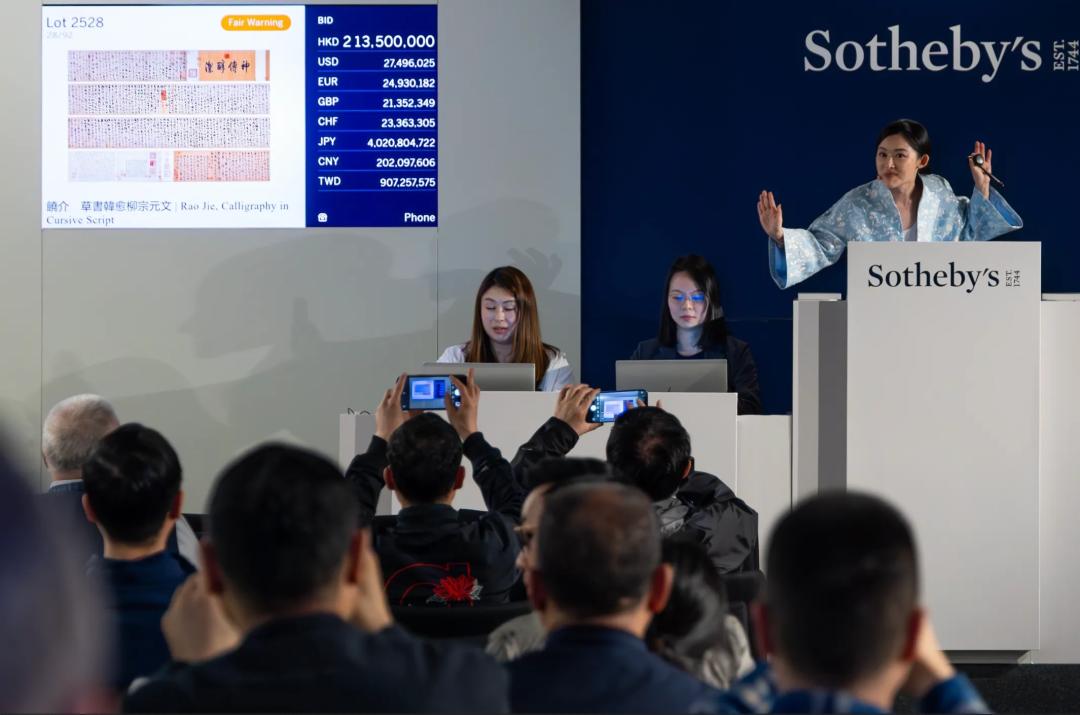
Group 1: Art Market Overview - The 2025 Spring Auction season has seen a vibrant art market with major auction houses like Sotheby's, Christie's, and Phillips showcasing a variety of art pieces, including paintings, antiques, and contemporary art, attracting collectors and art enthusiasts [1] - The demand for ancient Chinese paintings remains strong, with Sotheby's achieving a total transaction amount of 328,165,630 HKD and a transaction rate of 85% in its ancient Chinese painting auction [2][4] Group 2: Ancient Chinese Paintings - Sotheby's set a record with the sale of a significant work by the Yuan dynasty calligrapher Rao Jie, which sold for 250.1 million HKD, making it the highest price ever for a Chinese calligraphy piece at Sotheby's [2][6] - The auction highlighted the rarity and historical significance of ancient works, with increasing interest from younger collectors, as 32% of bidders were under 40 years old, marking the highest growth rate across regions [6][8] Group 3: Jewelry Market - The demand for colored gemstones remains robust, with Phillips' recent auction achieving a total transaction amount of nearly 50 million HKD, a 55% increase from the previous year [9][11] - High-quality colored gemstones, particularly from traditional sources, continue to attract collectors, with notable sales of emeralds, sapphires, and diamonds [11][13] Group 4: Watch Market - The auction season has seen a strong interest in antique watches, particularly those with complex functions, with Sotheby's featuring exquisite court clocks from the Qing dynasty [18][20] - Independent watchmakers are gaining attention, with collectors increasingly seeking unique and innovative timepieces, reflecting a growing trend in the market [21][26] Group 5: Contemporary Art - The contemporary art segment is characterized by cross-disciplinary integration and the rise of emerging artists, with significant works by Zhao Wuji and Yayoi Kusama featured in auctions [28][30] - Sotheby's achieved a total transaction amount of 297,519,500 HKD in a recent contemporary art auction, with strong participation from collectors in Greater China and Southeast Asia [30][34] Group 6: Changing Collector Preferences - Chinese collectors are evolving in their approach, increasingly considering global perspectives while maintaining a strong preference for Asian and Chinese artists [35] - This shift reflects a broader trend of collectors seeking a balance between personal taste and international market recognition in their acquisitions [35]