芯片集群

Search documents
韩国计划到2047年投入700万亿韩元,打造全球最大芯片集群
Xin Lang Cai Jing· 2025-12-10 07:31
Core Viewpoint - The South Korean government has announced a comprehensive strategy to establish the country as a leading player in the global semiconductor industry by creating the world's largest chip cluster, with a total investment of 700 trillion KRW (approximately 476 billion USD) by 2047 [1][4]. Investment and Development Plans - The plan includes the construction of 10 new semiconductor manufacturing plants to position South Korea as the largest chip production center globally [1][4]. - By 2032, the government will invest 215.9 trillion KRW to develop next-generation storage chip technologies, including Neural Processing Units (NPU) and Processing In Memory (PIM) [1][4]. AI and Semiconductor Technology - The government will invest 12.7 trillion KRW over the next five years to develop semiconductors suitable for artificial intelligence, with an additional 26.01 trillion KRW allocated for compound semiconductors and 36.06 trillion KRW for advanced packaging technologies by 2031 [2][5]. - A collaborative ecosystem will be established to enhance capabilities in the relatively weaker system semiconductor sector, focusing on AI technologies and intermediate technology semiconductors [2][5]. Manufacturing and Ecosystem Development - The government and private sector will jointly establish South Korea's first "cooperative foundry" to allocate dedicated production capacity for domestic non-foundry companies, aiding in the manufacturing of intermediate technology chips [2][5]. - Efforts will be made to improve the competitiveness of materials, components, and equipment in the semiconductor industry, alongside the cultivation of advanced talent [2][5]. Talent Development - Plans are in place to increase the number of semiconductor graduate schools from 6 to 10 by 2030 [3][6]. - A preliminary agreement has been signed with UK semiconductor design company Arm to train 1,400 chip design experts in South Korea [3][6]. Regional Development Initiatives - The semiconductor development plan will be integrated with regional balanced development initiatives, establishing specialized parks for advanced chip packaging in Gwangju, power semiconductor industry in Busan, and semiconductor materials and components in Gumi [3][6].
任正非:我们芯片落后美国一代,但通过集群,能补上来
Sou Hu Cai Jing· 2025-06-14 07:08
Core Viewpoint - The discussion highlights the resilience of China's chip industry and its ability to adapt to restrictions imposed by the U.S., emphasizing that performance can be achieved through the use of multiple lower-end chips rather than relying solely on high-end chips [1][3][7]. Group 1: Huawei's Position - Huawei's founder Ren Zhengfei stated that while many Chinese companies are making progress in chip production, Huawei is just one of them and that the U.S. has exaggerated Huawei's capabilities [1]. - Ren acknowledged that Huawei's single-chip technology is still a generation behind the U.S., but the company can compensate for this through cluster computing [1]. Group 2: NVIDIA's Response - NVIDIA's founder Jensen Huang agreed with Ren's perspective, noting that China has ample energy resources and will utilize more chips to meet performance needs, indicating that U.S. restrictions cannot fully hinder China's progress [3]. - Huang pointed out that AI chips are typically used in clusters rather than as single units, which allows for effective performance even without high-end chips [3]. Group 3: Cluster Computing Strategy - The strategy of using multiple chips to achieve desired performance levels is emphasized, suggesting that if one chip is insufficient, additional chips can be employed to create a powerful cluster [5]. - This approach may incur higher costs and power consumption, but given China's resource availability and manufacturing costs, it will not significantly impact overall efficiency [5]. Group 4: Implications of U.S. Restrictions - Huang expressed concern that the U.S. believes it can stifle China's AI industry by restricting high-end chip sales, failing to recognize that AI chip usage relies on cluster computing rather than just high-performance single chips [7]. - The Chinese industry is not overly concerned about the lack of high-end chips, as it can still achieve similar results using a greater number of lower-end chips [7]. Group 5: Alternative Chip Technologies - The discussion also mentions alternative technologies such as small chip technology and chip stacking, which can enhance chip performance even in the absence of advanced chips [9]. - The notion that the U.S. can effectively suppress China's chip industry through import restrictions is deemed ineffective, as China has a sufficient supply of mid- and low-end chips to address performance challenges [9].


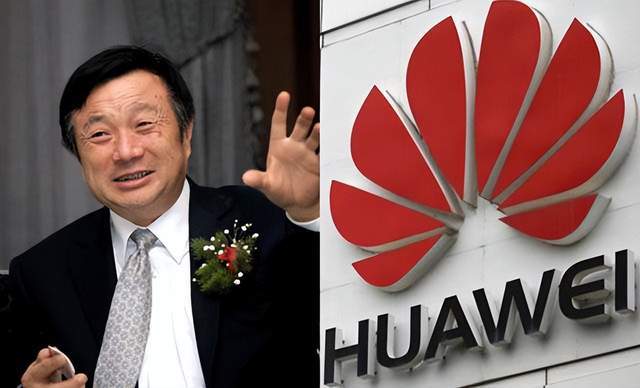
“被误解”的任正非:芯片“断章取义”报道何时休?
是说芯语· 2025-06-11 01:00
Core Viewpoint - The article discusses the misinterpretation of Ren Zhengfei's statements regarding China's chip industry and the implications of U.S. sanctions, emphasizing the need for a more nuanced understanding of his comments [1][3][10]. Group 1: Misinterpretation of Statements - Ren Zhengfei's original statement was about the AI chip issue, indicating that there is no need for concern, but this was misrepresented in media headlines [1][3]. - The article highlights that many foreign reports have inaccurately portrayed Ren's views, suggesting that China should not worry about U.S. chip sanctions, which is a distortion of his actual comments [3][10]. - Ren's remarks were intended to convey humility and a focus on practical solutions rather than an overestimation of Huawei's capabilities [4][6]. Group 2: Current State of China's Chip Industry - Ren acknowledged that while many Chinese companies are making progress in chip development, Huawei still lags behind U.S. companies in single-chip performance [4][8]. - He emphasized the importance of foundational research, stating that Huawei invests 180 billion yuan annually in R&D, with 60 billion yuan dedicated to basic theoretical research [4][8]. - The article notes that the Chinese chip industry requires collective effort and cannot rely solely on a few companies to achieve breakthroughs [4][10]. Group 3: Technological Innovations - Huawei's Ascend AI cluster technology, particularly the CloudMatrix 384 super-node cluster, showcases significant advancements, achieving 300 PFLOPs of performance, nearly double that of NVIDIA's systems [8][9]. - The article discusses the challenges faced by data centers, including stability issues and the need for innovative solutions to improve efficiency in AI training [8][9]. - Ren's focus on cluster computing as a method to enhance performance reflects a strategic approach to overcoming current limitations in chip technology [7][9].