芯粒

Search documents
巨头入局,珠海面向全球打造中国RISC-V 生态之城
Nan Fang Du Shi Bao· 2025-12-18 02:45
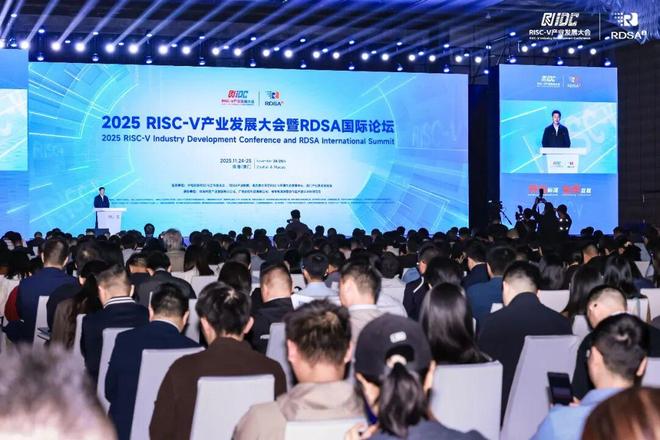
Core Insights - Qualcomm's acquisition of Ventana Micro Systems strengthens its position in the RISC-V sector, highlighting the potential of RISC-V architecture in the AI era [1][5] - The establishment of the RDSA industry alliance in Zhuhai, which includes global leaders, is expected to enhance international collaboration and resource integration [1][6] Group 1: Qualcomm and Ventana Acquisition - Qualcomm completed the acquisition of Ventana Micro Systems, focusing on RISC-V technology [1] - Ventana specializes in high-performance, scalable computing solutions based on RISC-V architecture, which was a key factor in Qualcomm's acquisition decision [4] - The acquisition is seen as a strategic move to capitalize on the growing demand for customized computing solutions in the AI landscape [5] Group 2: RDSA Industry Alliance - The RDSA industry alliance, initiated by Ventana in collaboration with Zhuhai Technology Industry Group, aims to foster innovation in the RISC-V ecosystem [1][6] - The alliance has attracted nearly 50 leading companies, covering the entire semiconductor industry chain, which enhances its ecological aggregation effect [6] - Qualcomm's entry into the alliance is expected to provide access to a global customer network and enhance the alliance's influence in setting international industry standards [6] Group 3: Zhuhai's Strategic Positioning - Zhuhai is positioning itself as a significant hub for RISC-V innovation, with plans to leverage the RDSA alliance for international development [1][8] - The city has a robust integrated circuit industry, with revenues reaching 18.487 billion yuan in 2024, ranking third in the province [8] - Zhuhai's strategy includes creating a national-level RISC-V ecological innovation center, integrating resources from Zhuhai, Hengqin, and Macau [8][9] Group 4: Policy and Market Trends - The RISC-V market is projected to grow significantly, with a forecasted penetration rate increasing from 2.5% in 2021 to 33.7% by 2031 [12] - The demand for high-performance RISC-V solutions is expected to surge, driven by the entry of major players into the market [12] - Zhuhai's government is committed to enhancing policy support and fostering an ecosystem that promotes RISC-V technology and applications [13]

Arm发布《芯片新思维:人工智能时代的新根基》行业报告
半导体芯闻· 2025-04-24 10:39
Core Viewpoint - The semiconductor industry is undergoing unprecedented changes, driven by the limitations of Moore's Law and the explosive growth of artificial intelligence (AI), which presents new opportunities and challenges for computing architecture [1][2]. Group 1: Evolution of Chip Technology - Over the past four decades, chip technology has evolved from early VLSI and ULSI designs to mobile chipsets, and now to AI-optimized custom chip solutions, significantly impacting chip architecture and industry strategies [2]. - The traditional methods of scaling semiconductors through Moore's Law have reached physical and economic limits, prompting a shift towards innovative alternatives like custom chips, computing subsystems (CSS), and chiplets to enhance performance and energy efficiency [3][6]. Group 2: AI and Energy Efficiency - The demand for energy efficiency has become paramount in AI computing, as AI workloads increasingly require intensive computational tasks [3][9]. - The report emphasizes a "full-stack optimization path" to address the dual challenges of computing power and energy efficiency, involving collaboration with foundries and optimizing various layers from transistors to data center operations [18]. Group 3: Custom Chips and Market Dynamics - Custom chips are emerging as a crucial solution to meet diverse application needs, with major cloud service providers accounting for nearly half of global cloud server procurement spending in 2024 [8][10]. - The rise of chiplets is facilitating the widespread adoption of custom chips, allowing manufacturers to enhance performance without redesigning entire chips, thus accelerating time-to-market [11][12]. Group 4: Security and Collaboration - As AI technology evolves, so do security threats, necessitating a multi-layered hardware and software defense system to counter AI-driven cyberattacks [3][20]. - Successful chip design increasingly relies on close collaboration among IP providers, foundries, and system integrators, alongside system-level optimizations and standardized interfaces to support modular designs [20][22]. Group 5: Future Outlook - The future of chip design will depend on the integration of various processing units (CPU, GPU, TPU) to support different workloads, with a focus on creating a sustainable ecosystem that leverages the strengths of all industry players [20][22]. - Arm's commitment to standardization and collaboration is expected to drive the next generation of AI computing architectures, ensuring rapid innovation and widespread adoption [22][23].