
无土栽培

Search documents
春花“赶春”有新招(年味里的新质生产力)
Ren Min Ri Bao· 2026-02-10 22:37
Core Insights - The article highlights the transformation of the flower industry in Yunnan, particularly in Kunming, where technology and innovative practices are reshaping the production and sale of flowers, especially during the Spring Festival season. Group 1: Industry Overview - The Kunming flower auction center covers over 4,000 varieties across 65 categories, with a significant market reach extending to Southeast Asia, facilitating competitive pricing for flowers like peonies from Shandong [4][5]. - In 2025, the flower industry in Dou Nan is projected to trade 15.476 billion stems of flowers, generating a transaction value of 13.484 billion yuan, maintaining its position as the top flower trading hub in China for over 20 years [4][5]. Group 2: Technological Advancements - The introduction of smart greenhouses and automated systems in flower cultivation has led to a significant increase in production efficiency, with yields per acre rising to three times that of traditional methods [8][9]. - The use of big data in the flower auction center allows for better market insights and production planning, benefiting both farmers and policymakers [4][5]. Group 3: Market Dynamics - The daily supply of flowers in Dou Nan exceeds 6 million stems, with peak days approaching 7 million, reflecting a nearly 30% increase compared to the previous year [5][6]. - The auction model combines online bidding, direct sourcing from bases, and offline transactions, ensuring a steady supply of flowers at competitive prices for merchants [5][6]. Group 4: Breeding and Innovation - The breeding process for new flower varieties is lengthy and selective, with only 0.1% to 0.2% of varieties making it to market after rigorous testing [10][11]. - The focus on local genetic resources and the development of unique Chinese flower varieties is seen as a key strategy for reducing dependency on imported flower seeds, which currently account for about 85% of the market [10][11].
餐桌上那份新鲜从何而来?
Xin Lang Cai Jing· 2026-02-10 01:34
Core Viewpoint - The article highlights the advancements in China's agricultural practices and logistics that enable the continuous supply of fresh produce throughout the year, even in winter, showcasing the effectiveness of modern farming techniques and cold chain logistics [8][10][14]. Group 1: Agricultural Practices - China's agricultural output for grains, meat, peanuts, tea, fruits, and seafood ranks first in the world, with continuous optimization of agricultural structures and the development of modern facility agriculture [8]. - The use of scientific methods in fruit cultivation, such as the promotion of advanced techniques like dwarfing and green cultivation, has significantly improved the quality and yield of fruits like the "Yaba Gan" citrus, with expected yields reaching 4,500 pounds per acre [10][11]. - The cultivation of strawberries has been extended from December to May, allowing for a longer growing period and sweeter fruit due to greater temperature variation [11][12]. Group 2: Logistics and Supply Chain - The logistics system in China has become increasingly sophisticated, incorporating cold chain transportation and green channels to ensure rapid delivery of fresh produce from farms to consumers [8][14]. - The development of cold storage facilities has enhanced the preservation of fruits and vegetables, allowing for better quality and freshness during transportation [13]. - The integration of online sales channels with offline distribution has enabled farmers to reach broader markets, including regions like Hunan, Hubei, Shandong, and Hebei [10]. Group 3: Market Dynamics - The Beijing Xinfadi market showcases a variety of fresh fruits from around the world, emphasizing the importance of controlling quality from source to logistics [14][15]. - Modern logistics improvements have reduced transportation times for imported fruits, such as cherries from Chile, which can now be shipped directly in 23 days [15]. - The use of technology in ripening processes, such as the gas adjustment method for bananas, has significantly reduced the time required for uniform ripening from 10 days to 3 days [15]. Group 4: Retail Innovations - Supermarkets like JD's Seven Fresh utilize a differentiated preservation system to ensure that fresh produce is delivered to consumers in optimal condition, with a focus on direct sourcing and rapid transportation [19][20]. - The implementation of strict temperature and humidity monitoring in storage and display areas helps maintain the quality of fresh products [20]. - The use of advanced packaging techniques, such as dry ice and aluminum foil bags, ensures that perishable items remain fresh during delivery, adapting to seasonal temperature variations [20].

餐桌上那份新鲜从何而来?(外国网友“趣”问中国)
Ren Min Ri Bao Hai Wai Ban· 2026-02-09 22:48
Core Viewpoint - The article highlights the advancements in China's agricultural practices and logistics that enable the delivery of fresh produce year-round, showcasing the integration of modern technology and efficient supply chains to meet consumer demand for freshness [6][12]. Group 1: Agricultural Practices - China's agricultural output for grains, meat, peanuts, tea, fruits, and seafood ranks first globally, with continuous optimization of agricultural structures and the development of modern facility agriculture [6]. - In Sichuan's Yibin City, the quality of citrus fruits, such as Yaba Gan, has significantly improved due to scientific cultivation methods, with expected yields reaching 4,500 pounds per acre [8]. - The "小时候" strawberry farm utilizes advanced techniques like mist cultivation, allowing for higher yields and earlier market availability compared to traditional methods [10][11]. Group 2: Logistics and Supply Chain - The logistics system in China has evolved with cold chain transportation and green channels, ensuring that fresh produce reaches consumers quickly [6]. - The New Fa Di market in Beijing showcases a variety of imported fruits, with a focus on maintaining quality through controlled logistics from source to delivery [12][13]. - The integration of both cold and warm chain logistics is essential for preserving the quality of tropical fruits during transportation [15]. Group 3: Retail and Consumer Experience - Supermarkets like JD's Seven Fresh employ differentiated preservation systems to ensure freshness, with direct sourcing and rapid delivery processes [16][18]. - Advanced storage management and smart hardware enhance the preservation of fresh products, with strict monitoring of temperature and humidity [19][20]. - Seven Fresh's delivery service adapts to weather conditions to maintain product quality, ensuring timely and fresh delivery to consumers [21][22].
蓝莓江苏“越冬记”
Xin Hua Ri Bao· 2026-02-07 20:31
Core Viewpoint - The article highlights the innovative approach of a blueberry cultivation company in Jiangsu, focusing on high-quality blueberry production through advanced technology and local adaptation, aiming to meet the demand for fresh blueberries in the Yangtze River Delta region. Group 1: Company Operations - The company, Shenglan Agricultural Technology Co., is preparing to enhance its blueberry base for the upcoming Spring Festival, aiming to provide fresh blueberries locally [1] - The company utilizes a soilless cultivation method with a specialized blueberry substrate and automated nutrient delivery systems, referred to as the "central brain" of the operation [1] - The entire greenhouse is connected to the Internet of Things (IoT), allowing for remote management of environmental controls to ensure optimal growth conditions for blueberries [2] Group 2: Market Strategy - The company aims to reduce the supply chain time for high-quality blueberries by growing them locally in Jiangsu, rather than relying on imports from Yunnan, which can take over ten days to reach consumers [2] - The company plans to expand its blueberry production from 70,000 plants to 100,000 plants, with each plant expected to yield approximately 5 pounds of blueberries [3] Group 3: Technological Support - The company benefits from the expertise of a research team led by Zeng Qilong from the Chinese Academy of Sciences, which has been instrumental in adapting blueberry cultivation techniques to local conditions since the 1980s [2] - Local agricultural technology support from Yangzhou Vocational Technical College is also aiding in the propagation of blueberry seedlings, addressing the challenges of high costs and cultivation difficulties [3] Group 4: Production Efficiency - The company has successfully advanced the maturity timeline of blueberries, with the first harvest now occurring as early as January, compared to previous years when it was in March or April [3] - Continuous innovation and technological advancements have shifted blueberry production from being dependent on weather conditions to a more controlled, technology-driven process [3]
新疆柯坪县:设施农业释放戈壁生产潜力
Xin Lang Cai Jing· 2026-01-17 10:33
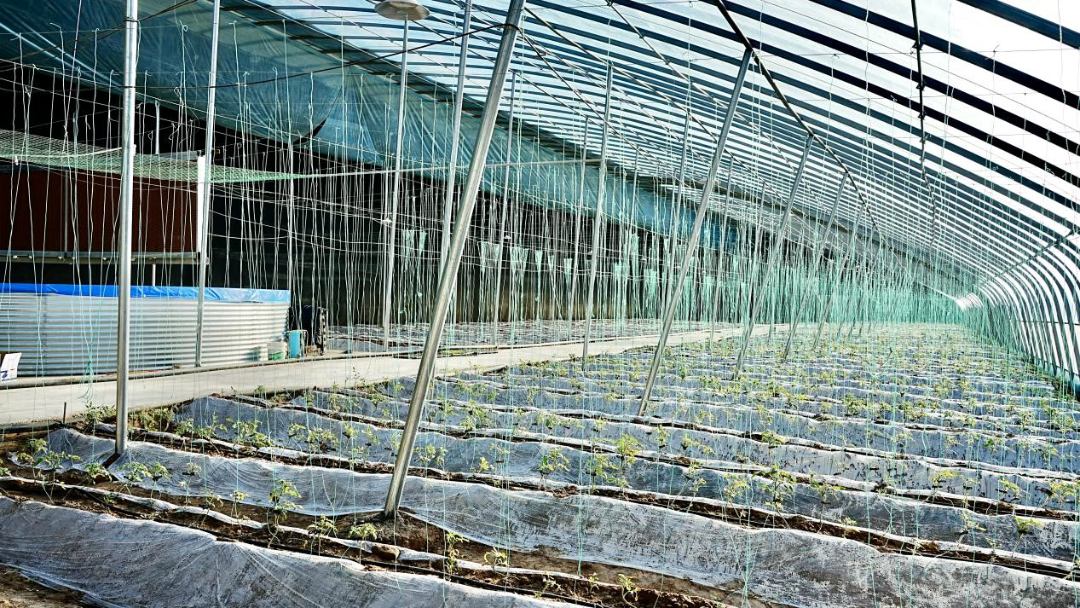
Core Viewpoint - The development of the Keping County agricultural industry park in Xinjiang utilizes innovative techniques to overcome environmental challenges, leading to successful production and local employment opportunities [1][2][4]. Group 1: Agricultural Innovation - The agricultural park employs a sand-based cultivation model with a drip irrigation system, effectively addressing soil and salinity issues in the Gobi Desert [2]. - The park has established 250 new solar greenhouses and a 12,000 square meter smart agricultural exhibition hall, producing approximately 3,000 tons of various vegetables and 50 tons of aquatic products annually [2]. Group 2: Product Development and Sales - Keping tomatoes, known for their unique flavor and quality, were included in the national list of special agricultural products by December 2025 [2]. - The sales strategy combines online live streaming with offline wholesale, and the introduction of a deep processing production line has increased product value by converting secondary fruits into canned goods, achieving nearly 1,000 daily sales [2]. Group 3: Community Impact - The agricultural park has created over 300 stable job opportunities for local residents, enabling them to work close to home and improve their income [4]. - The park supports local farmers by providing seedlings and guaranteed purchase agreements, further enhancing their income [4]. Group 4: Future Plans - The company plans to expand production and deepen its processing product line, aiming to establish a modern agricultural industry park that integrates production, processing, and sales [6].
2026年第一天的劳动者剪影
Xin Lang Cai Jing· 2026-01-02 05:02
Group 1 - The article highlights the dedication of various workers on the first day of 2026, showcasing their contributions to different sectors, including maritime navigation, agriculture, and tourism [1][2][3]. - The maritime sector is represented by Yao Gaole, who leads a team at the Tianjin Navigation Center, focusing on the development of domestic AIS systems to enhance maritime safety [4][5]. - In agriculture, Zhang Jinlin operates a smart greenhouse in Yunnan, producing 2 million roses annually with a revenue exceeding 5 million yuan, emphasizing the continuous operation of his farm to meet market demand [6][7]. Group 2 - The tourism sector is represented by Li Keliang, who is preparing for the opening of the Ocean Ice and Snow Kingdom in Liaoning, aiming to enhance visitor experience through improved facilities and attractions [8][9]. - The logistics and customs sector is illustrated by Bai Defu, who oversees operations at the Haikou New Port, ensuring efficient cargo processing as part of Hainan's free trade port initiative [10][11].

(乡村行·看振兴)“雾”里“生金” 广西返乡创业夫妇巧用“气雾”种菜
Zhong Guo Xin Wen Wang· 2025-12-27 01:55
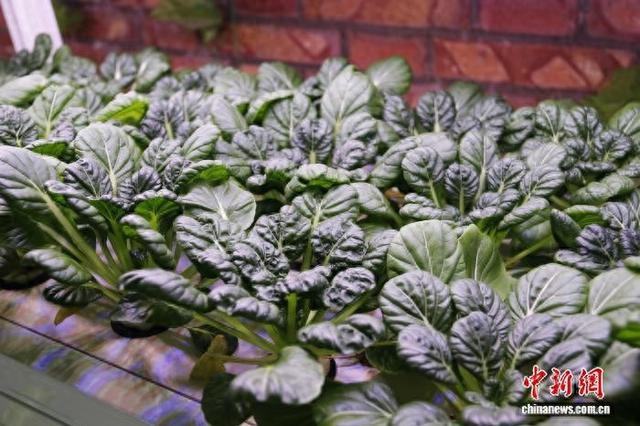
Core Insights - The article highlights the innovative agricultural practices of a couple who returned to their hometown in Guangxi to establish a fog-based vegetable farming business, utilizing advanced technology to enhance crop yield and quality [1][2]. Group 1: Business Model and Technology - The couple, Li Jirong and Wang Yan, established a fog farm using a nutrient solution mist created from spring water, which nourishes the crops without soil [1][2]. - This method, known as fog cultivation, is noted for its high fertilizer absorption rate of 98% and a water usage that is only 5% of traditional soil-based farming [4]. - The couple aims to make advanced agricultural technology accessible to ordinary farmers, adapting techniques from urban farming in Shenzhen to local conditions [2][7]. Group 2: Crop Performance and Market Potential - The couple has successfully grown various vegetables, including Shanghai green, celery, and tomatoes, with a notable reduction in growth time; Shanghai green can be harvested in about 25 days, which is 7 to 10 days faster than traditional methods [4][6]. - The potential yield for well-managed crops can reach approximately 10,000 pounds per acre, indicating significant productivity [4]. - Initial market feedback has been positive, with local supermarkets and distribution centers expressing strong interest in their clean and sweet-tasting vegetables [6][7]. Group 3: Future Plans and Community Impact - The couple plans to experiment with growing strawberries next, as fog cultivation is expected to produce high-quality fruit with good market demand [7]. - Their entrepreneurial journey reflects a broader trend of rural revitalization, aiming to improve local agricultural practices and increase income for the community [7].

宁夏原州活体蔬菜“鲜”声夺人 冷凉蔬菜产业再升级
Xin Lang Cai Jing· 2025-12-25 13:18
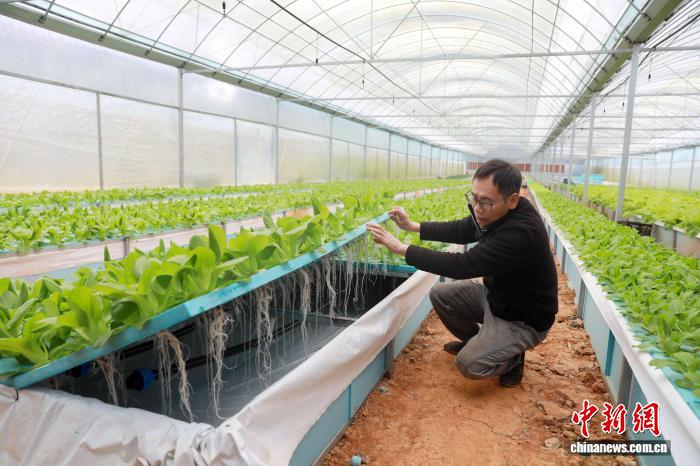
Core Insights - The introduction of hydroponic vegetable cultivation technology in Guyuan City, Ningxia, marks a significant advancement in the local live vegetable industry, filling a gap in production capabilities [2][3] - The technology emphasizes green and high-quality production, utilizing smart temperature and humidity control, and precise nutrient solutions, ensuring a seamless "from farm to table" experience [3][5] Industry Development - Guyuan District has established itself as a hub for cold-weather vegetables, leveraging its unique climate to develop a leading industry, with six standardized planting bases covering over 10,000 acres and 16 bases over 1,000 acres [6] - By 2025, the planting area for cold-weather vegetables is projected to exceed 250,000 acres, with an output surpassing 1 million tons and a production value exceeding 3 billion yuan [6] - The successful implementation of hydroponic technology is expected to inject innovation into the mature industry, transitioning it from large-scale planting to diversified market scenarios [6] Collaboration and Talent Development - The success of this technology is attributed to strong collaboration between local enterprises and vocational schools, creating a model of "technology introduction + adaptation + talent cultivation" [6] - This partnership accelerates the promotion of advanced planting techniques and cultivates a skilled workforce, enhancing the quality of the industry and contributing to farmers' income growth [6]
“洋产品”华丽变身“中国新特产” 凭借高品质种植与中式美食文化圈粉世界
Yang Shi Wang· 2025-08-24 09:25
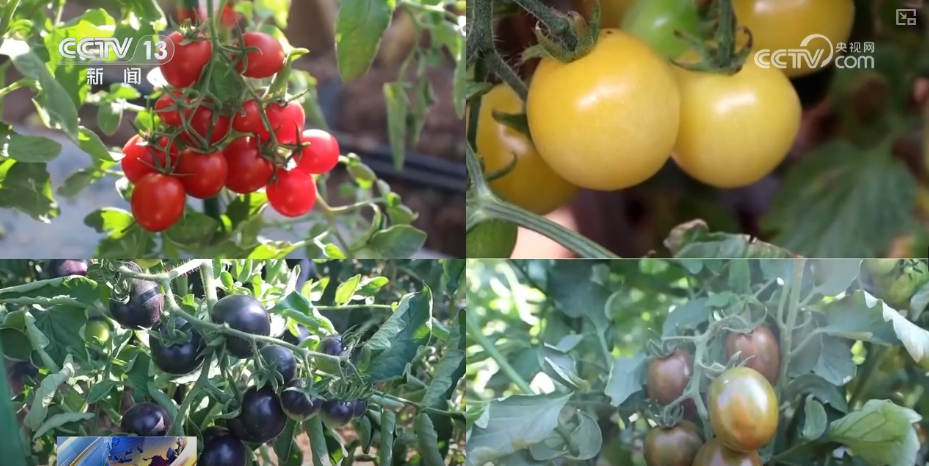
Core Insights - The article discusses the cultivation and significance of cherry tomatoes in Yunnan, China, highlighting their unique characteristics and the innovative agricultural practices employed in their production [4][19][21]. Group 1: Cultivation and Production - Yunnan Province is a major production base for cherry tomatoes in China, with the area and yield of cherry tomatoes accounting for over half of the province's total [4][19]. - The cherry tomatoes in Yuanmou County are grown in a favorable climate, allowing for year-round cultivation and a diverse range of varieties available throughout the year [19][10]. - The cultivation area for cherry tomatoes in Yunnan is projected to reach 73,000 acres with a total yield of 173,000 tons in 2024, with Yuanmou County contributing over 40,000 acres and 130,000 tons [19][21]. Group 2: Agricultural Innovations - Advanced agricultural techniques such as "soilless cultivation" and high-standard planting methods have been adopted, leading to faster growth, higher yield, and reduced pest issues [15][17]. - The use of organic fertilizers and controlled growth conditions has improved the quality and uniformity of cherry tomatoes, with sugar content reaching up to 15 degrees [10][13]. - The introduction of domestic seed varieties has reduced reliance on expensive foreign seeds, with 70% of the cherry tomatoes now grown from local varieties [29][31]. Group 3: Market and Economic Impact - The processing of cherry tomatoes into products like fruit preserves has extended their shelf life and opened new market opportunities, with exports to countries like Russia, Japan, and South Korea [21][23]. - The transformation from imported seeds to domestically developed varieties has enhanced the local agricultural economy and contributed to rural revitalization [23][27]. - Cherry tomatoes have become a popular ingredient in both Western and Chinese cuisines, showcasing their versatility and appeal in the global market [32][34].
新都中学多元力量协同推进科学教育发展
Qi Lu Wan Bao Wang· 2025-06-20 09:24
Group 1 - The event aimed to deepen the construction of science and technology clubs, fostering well-rounded talents with both cultural and scientific backgrounds [1] - A diverse team of experts provided professional guidance to the school’s science and technology club, focusing on art integration, technical practice, and industrial application [1] - Interactive sessions with students encouraged innovative thinking, with discussions on practical applications of electrical components and technology [2][3] Group 2 - Teachers presented various technological concepts, including robotics, artificial intelligence, and drone applications, using engaging methods such as animations and real-life examples [2][3][4] - The importance of safety and technical specifications was emphasized during discussions about drone operations and the principles of algorithms in resource optimization [3][4] - The event concluded with a focus on the integration of science and art, encouraging students to explore their creativity while grounding their ideas in scientific principles [5]